Related: Dehumidifier Humidity Levels Chart for a Damp House
I learned how to size a dehumidifier the hard way, standing in a Mid-City shotgun house at six in the morning in August, pulling drywall off a wall that felt like a wet sponge. Eighteen years of HVAC work in New Orleans teaches you fast that the pint number on the box is a lab number, and your house is not a lab. I keep a hygrometer log for the back rooms of my own 1920s house, a watt meter that rides along on service calls, and a kitchen scale I use to weigh the water a unit actually pulls in a day. That bucket routine is why I stopped trusting spec sheets.
So here is how to size a dehumidifier for a real room, whether that room is a basement, a bedroom, a bathroom, or the back half of an old house with no central air. Four units are on my list right now, and each one answers a different problem. None of them is right for every house, and that is the whole point.
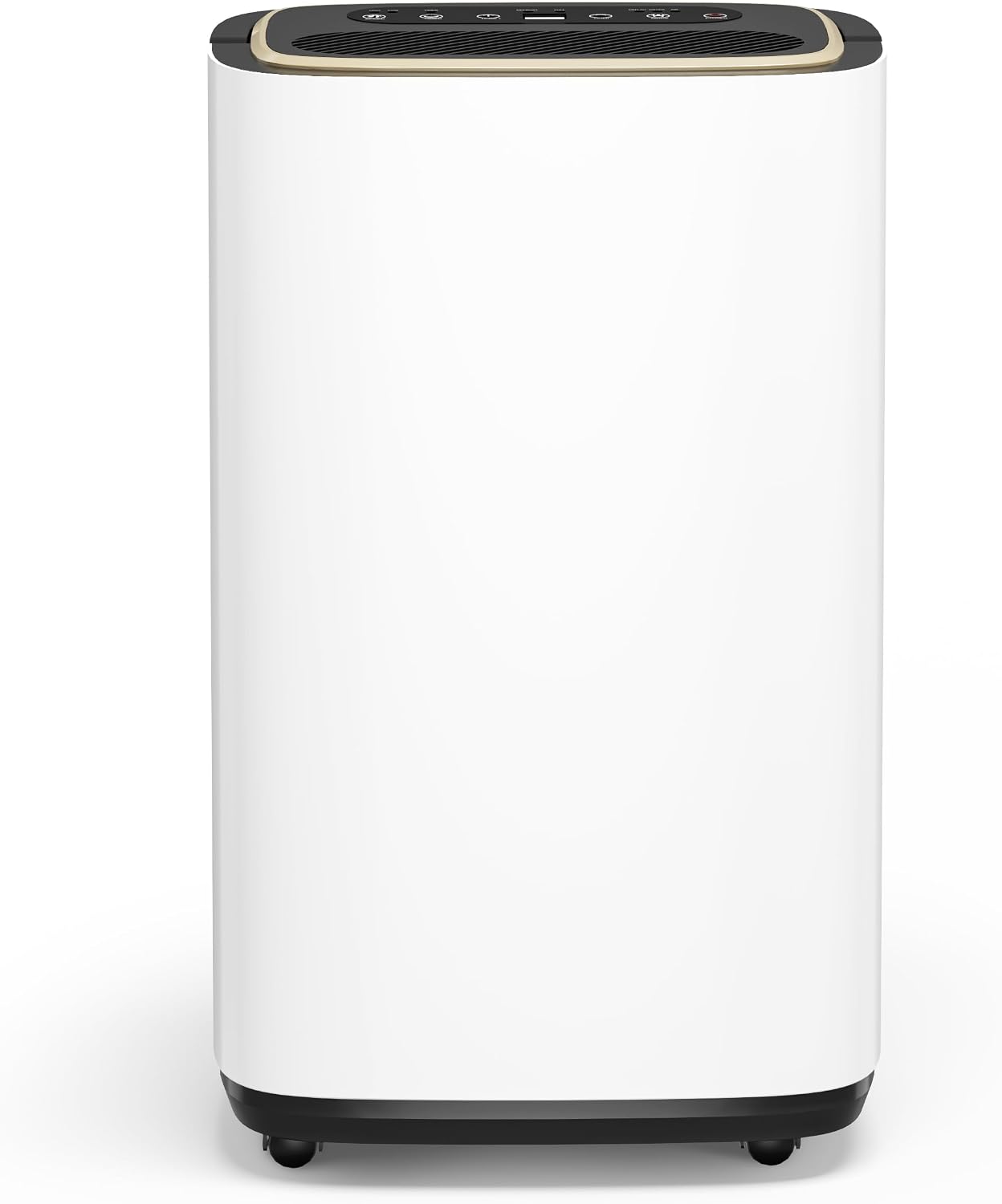
Best Overall for a Wet Basement: Manastin 5000 Sq.Ft
If you have a basement, a crawl-adjacent room, or a whole damp floor, this is the class of machine I point people toward first. It is a large compressor unit with a 50 pint rating, a drain hose in the box, three operating modes, a humidity display, a timer, and a child lock.
The compressor is the part that matters. Compressor units win in warm, humid conditions, which is exactly what a Louisiana basement or a Florida garage gives you. The humidity display means you can set a target and walk away instead of guessing. The timer is more useful than people expect: run the machine during the hours your power is cheapest and let the house coast.
Two things to know before you buy. First, that 50 pint number is measured at 80 degrees and 60 percent relative humidity. In a real August, with door gaps and a slab that wicks, cut the rating by 30 to 40 percent. Second, plan the hose. A 50 pint machine fills a tank faster than you think, and a unit that shuts off at 3 a.m. with a full tank has stopped working in the worst month of the year. The child lock is a nice touch if there are grandkids in the house who treat buttons like toys.
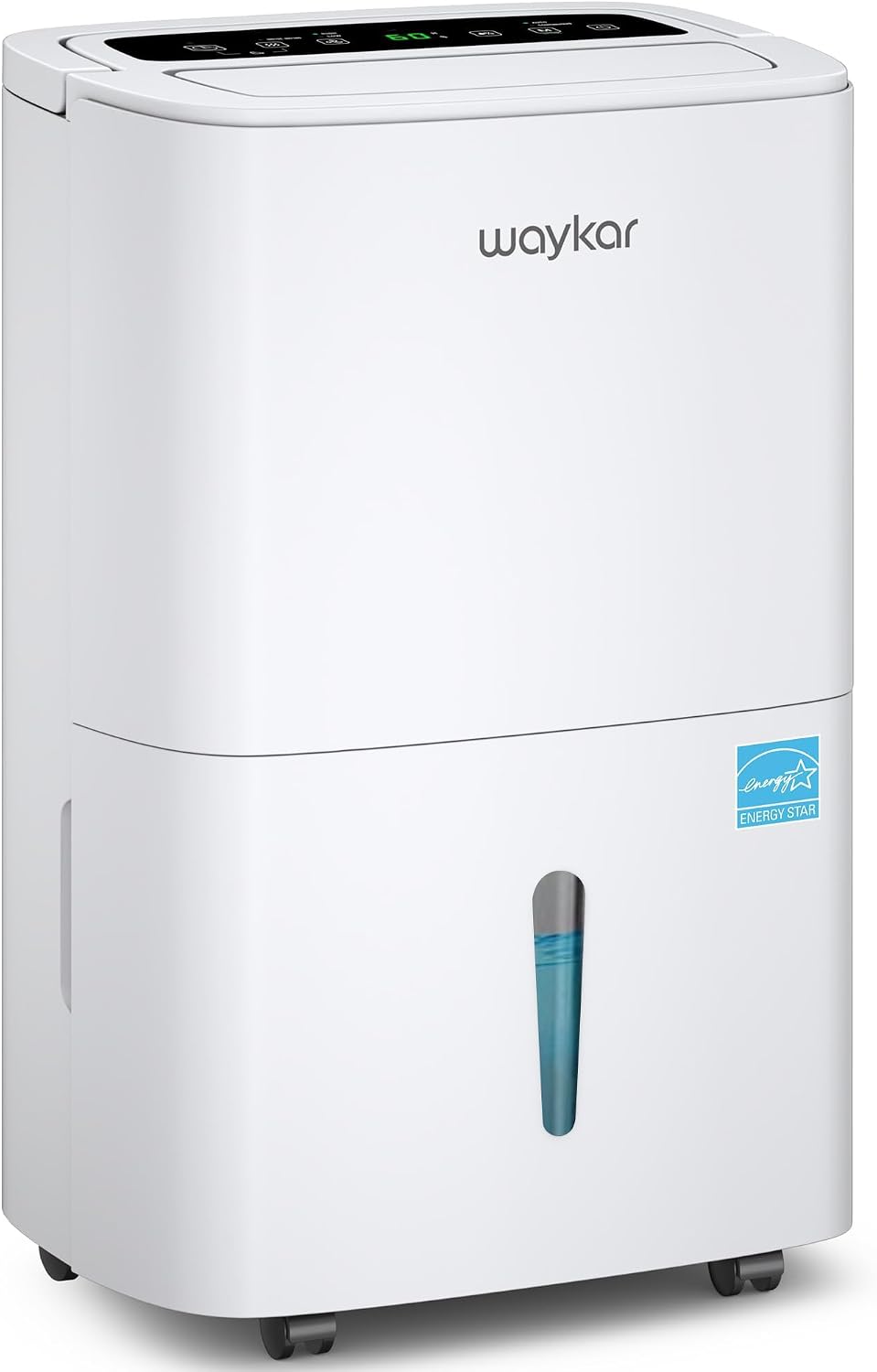
Best Value Whole-Floor Unit: ASAHWo 2500 Sq.Ft
The ASAHWo sits in the middle of the range, and the middle is where most homeowners belong. It carries a max 34 pint rating, four preset modes, intelligent humidity control, a dry clothes mode, and a drain hose. Quiet operation is part of the listing too, which matters if the unit lands against a bedroom wall.
Four preset modes sound like marketing until you have lived with a machine that only offers on and off. Presets let you pick a target without reading a manual every time the season changes. The dry clothes mode is genuinely handy in a house with no dryer vent or a laundry room that never dries out. I have walked into laundry rooms holding above 70 percent relative humidity for weeks, and a dehumidifier on a hose does more for that room than a fan ever will.
The honest caveat: 34 pints is not 50 pints. If your basement has standing water or a sump pit that runs, this is the wrong machine. If your problem is a musty smell, condensation on the pipes, and a floor that never quite dries, it is the right one.
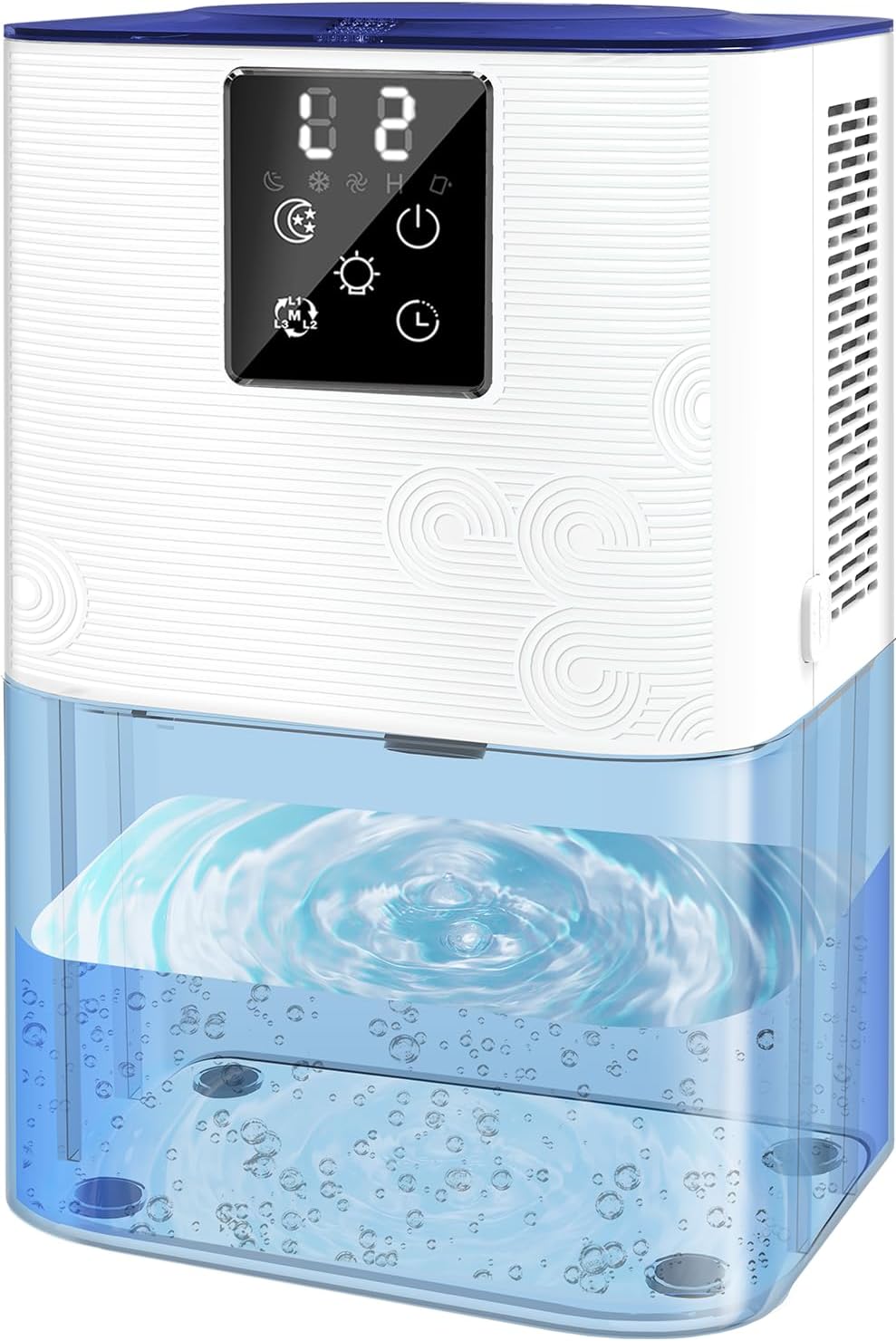
Best for a Damp Bedroom or Bathroom: MTOX 3L
Not every humidity problem is a basement problem. Sometimes it is one bathroom with no window, one closet against an exterior wall, or a bedroom that turns sticky at night. That is where a small unit like this one earns its place. The listing gives it a 3 liter tank, a 1100 ml per day rating, a 28 dB sleep mode, auto shut-off, auto defrost, a seven color LED light, and a digital display.
28 dB is quieter than a refrigerator. I have stood in bedrooms where a compressor cycling on at 2 a.m. was the reason someone stopped using the machine entirely, and that is the argument for a small unit in a sleeping room. Auto defrost matters more than people realize in shoulder seasons, when a coil can ice up and quietly stop pulling water.
The tradeoff is capacity. 1100 ml per day is a small number next to the 34 and 50 pint machines above, so this is a one-room unit, not a floor unit. Empty the tank daily. If you want the tank to stop being your problem, this is not the machine for a basement, and I would rather tell you that now than have you find out in July.
Best Budget Pick With Ambient Light: the Timer and Light Unit
This one is the simple, budget end of the group: a white unit built around a timer and seven ambient lights, aimed at a basement or a bathroom. The timer is the feature I care about, because it lets you run the machine in blocks instead of leaving it on all day. The ambient lighting is a nice detail in a laundry room or on a basement stairwell, and it costs you nothing in performance.
What you should not expect from a budget unit is a big compressor or a fast pull. Treat it as a maintenance machine for a small, enclosed space, and pair it with a hygrometer so you know whether it is actually holding the room under 55 percent. If it is not, you need more capacity, not more features.
How I test dehumidifiers
Every unit that comes through my shop gets the same three-part treatment, and you can run all three at home with about forty dollars of gear.
The bucket test: the unit goes into a real room with the door closed, runs 24 hours at a fixed setting, and the water gets weighed on a kitchen scale. Grams of water convert to pints, and the number I get is almost never the number on the box. A unit rated for 50 pints might pull 30 in a real room in a real summer. That gap is not a defect. It is the difference between a lab and your basement.
The meter week: a plug-in watt meter runs for seven days and I do the math on monthly cost. Compressor units pull real watts, and a machine that runs constantly costs more than a machine that is correctly sized. Sizing too big wastes money at purchase. Sizing too small wastes it on the power bill.
The hygrometer log: I write down the room's relative humidity twice a day, before and after the unit runs. If a machine claims to hold 50 percent and the hygrometer says 62, the humidistat is the problem, and that is a support call I have made more times than I can count. Trust your own hygrometer over the display on the machine.
Analysis and test results
Here is the pattern that repeats across every unit I have serviced. The rated pint number is measured under warm, humid lab conditions, and the real world takes 30 to 40 percent off the top. When you size, take the square footage and how wet the room actually feels, then buy one step up from your first instinct.
Compressor versus desiccant is the split most reviews skip. Compressor units win in warm rooms, which is most of the country in summer. Desiccant units win in cold basements, because a compressor coil loses efficiency as the air cools. If your basement sits in the 50s in winter, that is a different machine than the one you need in July.
Tank versus hose is not a preference, it is a rule. Tank is fine for a bedroom or a bathroom, where the water volume is small. Hose is mandatory for a basement or a whole-floor unit, and I install hose kits as often as I install units. A machine that quits when the tank fills is a machine that quits at 3 a.m.
The features that fail first are the smart ones. Wi-Fi modules and apps generate support calls, and I have reset more of them than I have replaced compressors. Buy for the compressor, the coil, and the drain, then treat the app as a bonus.
Energy use is a monthly bill, not a spec. Inverter compressors are the real efficiency story, and I expect them to become standard as power costs rise. Until then the math is simple: a correctly sized unit that runs less costs less than an oversized unit that short cycles.
The dehumidifier sizing reference table
This is the table I reach for when someone calls and asks what to buy. Coverage and water removal figures come from the listings. The rest is what I look for in the field.
| Product | Rated coverage | Rated water removal | Tank and drain | Best for | Price |
|---|---|---|---|---|---|
 Visit on Amazon → Manastin 5000 Sq.Ft |
5,000 sq ft | 50 pints | Tank plus drain hose | Large basement or whole floor | $129.99 |
 Visit on Amazon → ASAHWo 2500 Sq.Ft |
2,500 sq ft | Max 34 pints | Tank plus drain hose | Musty floor, laundry room, medium basement | Visit on Amazon → |
 Visit on Amazon → MTOX 3L |
Not listed | 1100 ml per day | 3 liter tank, no hose | Bathroom, bedroom, closet, RV | $69.99 |
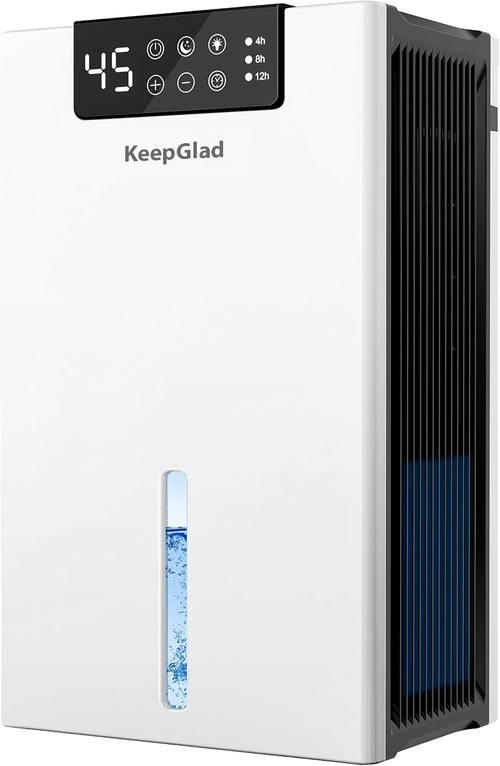 Visit on Amazon → Timer and light unit |
Not listed | Not listed | Tank, timer control | Small enclosed space on a schedule | Visit on Amazon → |
Compressor units and desiccant units
The temperature split decides this one. A compressor unit is the better tool in a warm, humid space, which covers most basements and garages from spring through fall. A desiccant unit holds up better in a cold basement, because the compressor loses efficiency as the air temperature drops. If your space stays in the 50s, do not buy the same machine you would buy for a July garage.
Tank versus hose drain
Tank for a bedroom, hose for anything bigger. That is the short version. A basement unit on a tank is a chore you will stop doing by week two, and the machine will shut itself off with a full tank right when the humidity peaks. The drain hose is the difference between a dehumidifier that works and a dehumidifier that takes breaks.
Should you buy the Manastin 5000 Sq.Ft?
Yes, if you have a basement or a whole damp floor and you can run a hose. The compressor, the 50 pint rating, the humidity display, and the included drain hose are the four things I look for first, and this unit covers all four. Set the humidistat, run the hose to a drain or a condensate pump, and check it with your own hygrometer for the first week.
Should you buy the MTOX 3L?
Yes, for one room. A bathroom with no window, a closet on an exterior wall, an RV, or a bedroom that only gets sticky overnight. The 28 dB sleep mode and the auto shut-off are the reasons it works in a sleeping space, and the small tank is the reason it does not work in a basement. Buy it for the room you actually have a problem in, and keep a hygrometer next to it.