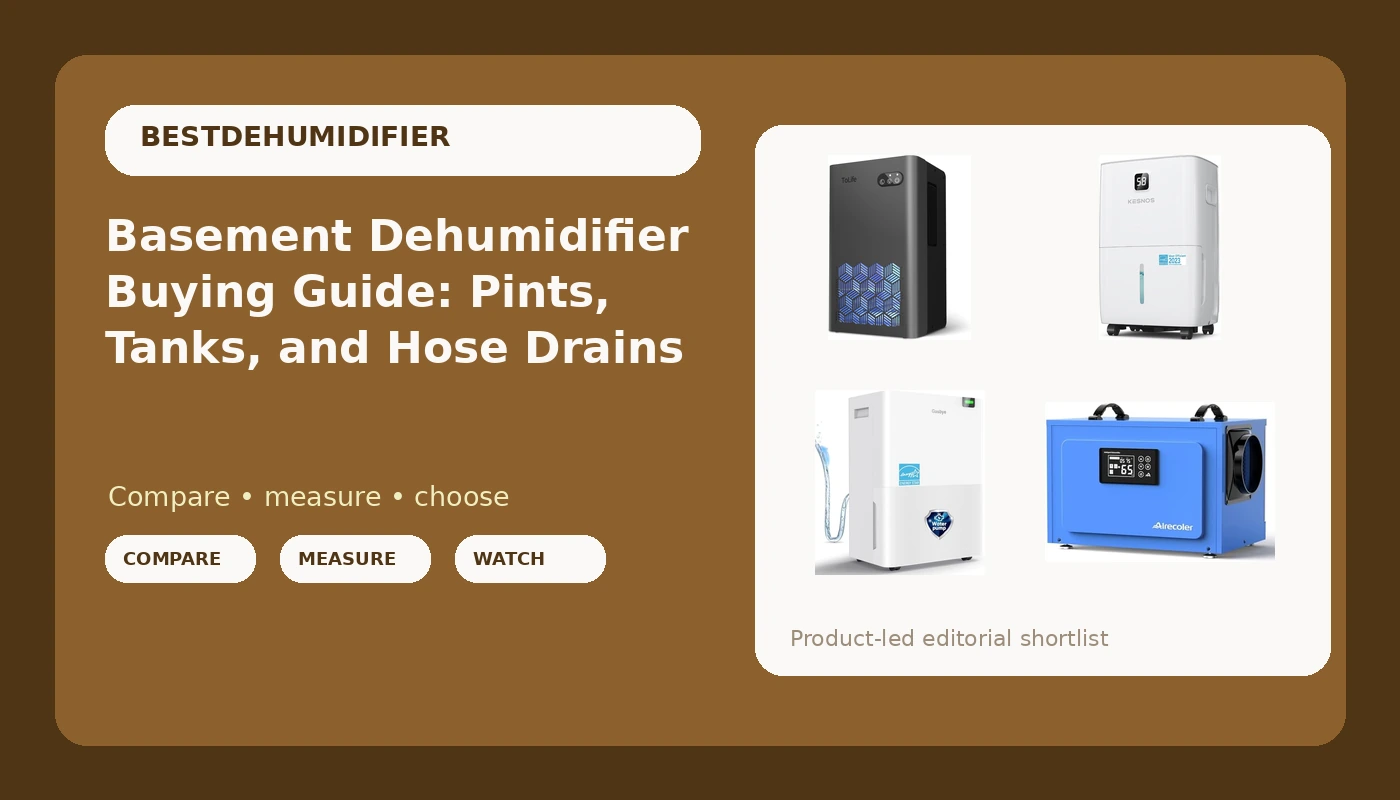
Related: How to Read a Dehumidifier Pint Rating Without Getting Fooled
I field the same call every August. Somebody in Metairie bought a dehumidifier in June, ran it all summer, and their back bedroom still smells like a wet dog. Nine times out of ten the machine works fine. It is the wrong machine for that room, or the right machine wired into the wrong expectations. This basement dehumidifier buying guide is the version of that conversation I can have with everybody at once.
Here is the short version. Pints per day is a lab number, measured at a temperature and humidity your house will not hold in July. The tank is the product, because a unit that shuts off at 3 a.m. with a full bucket is a unit that quits working in the worst month of the year. And a hose drain stops being a convenience and becomes a requirement the moment you put a machine in a basement or a crawl space.
I have pulled moldy drywall out of more Louisiana homes than I want to count, and I have run portable units through Gulf Coast summers in a 1920s shotgun house with no central air in the back rooms. That is the lens here. Four machines, four jobs, and the specs that actually decide which one goes where.
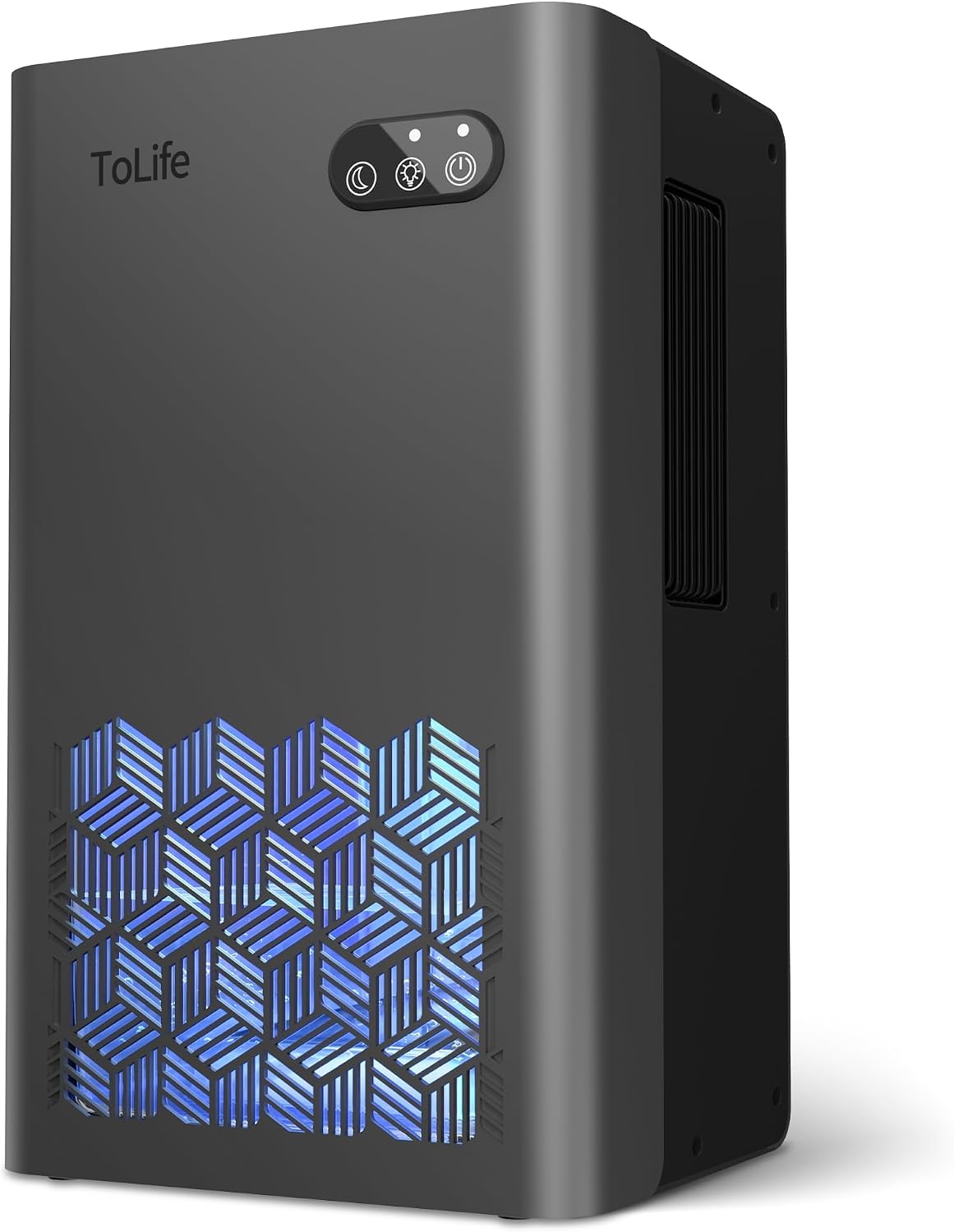
Best for a Small Room: ToLife Dehumidifier
Start here if the problem is one room and one room only. The ToLife is built around a 95 ounce tank, which is a little under three quarts, and it is rated for spaces up to 1,000 square feet. Sleep mode and auto shutoff are the two features that matter in a bedroom, and both are in the name for a reason. You want the fan noise down at night, and you want the machine to stop when the bucket fills instead of overflowing onto a wood floor.
That tank is also the catch. Ninety-five ounces does not go far when the air is soup. In a Louisiana August a small compressor unit can work through a bucket like that in a day, which means a daily chore whether you feel like it or not. If the room has a floor drain, or a window you can run a hose out of, do that and forget the tank exists. If it does not, know what you are signing up for before it arrives.
For a closet, a laundry room, a damp guest bedroom, or a bathroom that never dries out, this is the right size and the right kind of machine. It is not a basement unit and it was never meant to be one.
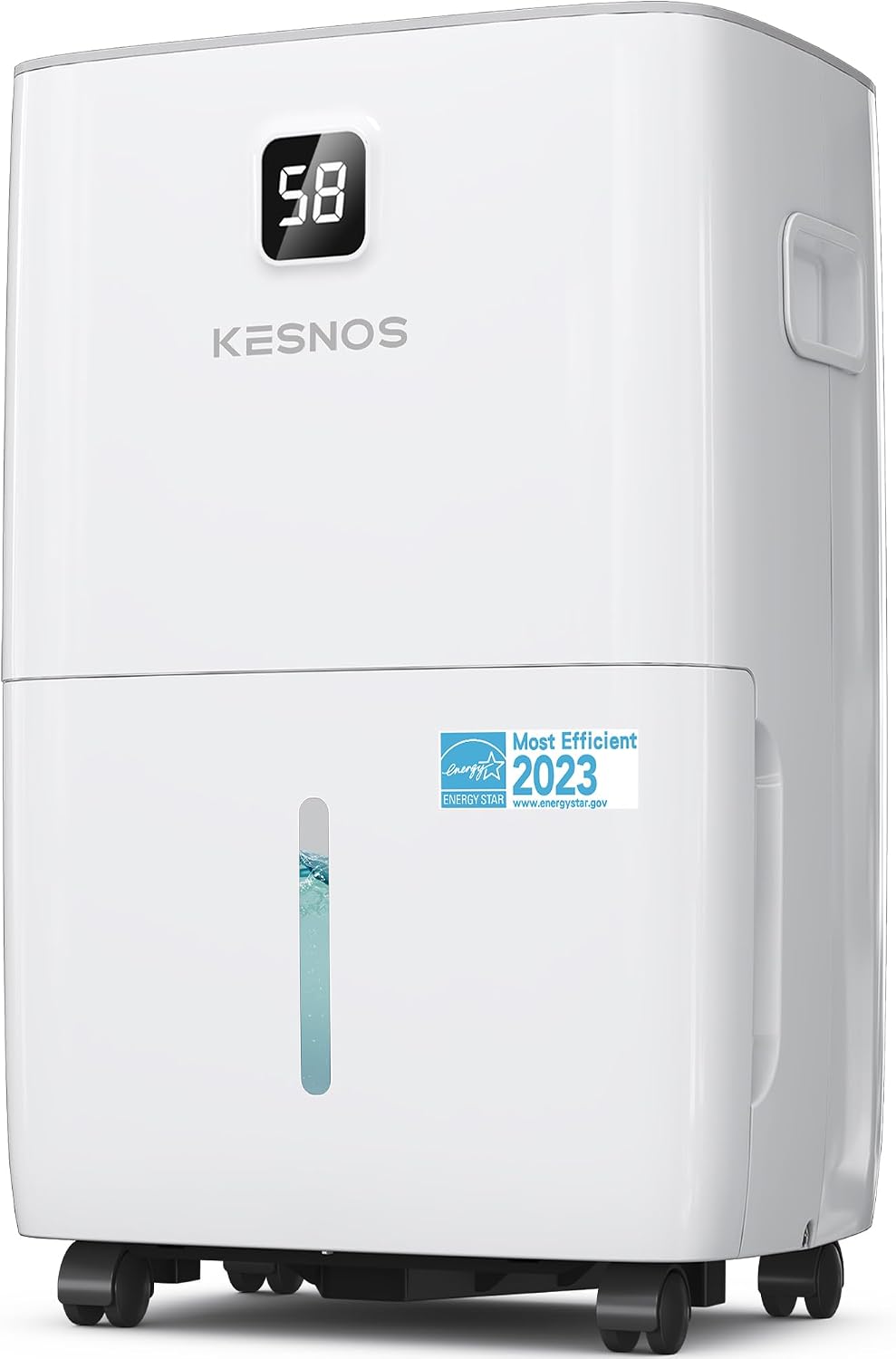
Best All-Around for a Damp House: Kesnos 80 Pints
The front humidity display is the feature I care about most on this one, and it is the feature most buyers ignore. I keep a hygrometer in every room I service, and the single most common complaint I hear is that a unit's built-in humidistat reads 15 percent off from what the air is actually doing. When the display is on the front and readable from across the room, you can catch that drift in a week instead of arguing with a machine for a season.
Eighty pints is a lab rating, taken at a temperature and humidity your house will not hold. Cut it by 30 to 40 percent for real door gaps, real traffic, and real Gulf Coast air, and you land somewhere around 50 pints of actual work per day. That is a genuine machine for a main floor, a finished basement, or a damp bedroom suite. It is Energy Star rated, which matters more than the marketing number, because this is a compressor that runs for months.
This is the unit I would put in the middle of a house that feels clammy but is not flooding. It handles a normal floor without being a commercial monster you have to bolt to a wall.
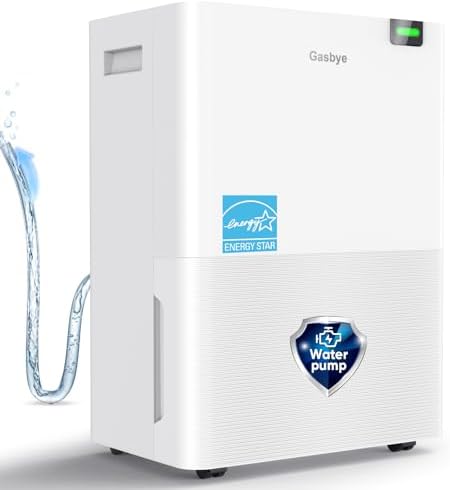
Best for a Big Basement: Gasbye 115 Pints
If the space is big and open, this is the one that earns its footprint. The Gasbye is rated to 4,500 square feet and up to 115 pints per day, which puts it in the class where a basement stops feeling like a cave and starts feeling like a room. The compressor is rated at 45 dB, so you can hold a conversation next to it, and the 1.7 gallon tank gives you some slack if you are not ready to run a hose on day one.
The two specs I would underline are the drain hose in the box and the auto shut-off and restart. The hose is the difference between a machine you use and a machine you abandon in October, because nobody wants to carry a gallon and a half of water up basement stairs. Auto restart is the fix for a problem I see constantly: a storm knocks the power out, the unit comes back on in fan only, and the homeowner does not notice for two weeks while the humidity climbs. A machine that returns to your settings is a machine you can trust when you are not standing next to it.
It is Energy Star rated, it is built for basements and large rooms, and it comes in black, which sounds trivial until you have a white appliance glowing in a finished space.
Best for a Crawl Space: 125 Pints Commercial Unit
Crawl spaces are where the mold starts. I have said that to more homeowners than I can count, and it is still the part of the job people want to skip. A 125 pint commercial unit is built for exactly that space: a low, dark, unvisited area that has to stay dry year round so the floor above it does not rot and the air handler above it is not pulling damp air into the house.
Commercial means duty cycle. These machines are designed to run continuously, and you drain them with a hose, not a bucket, because nobody is crawling under a house twice a day in July. If you are encapsulating a crawl space or drying out a basement that takes on water, this is the class of machine the job calls for. It is not the unit you wheel into a living room.
Pair it with a real hose run to a condensate pump or a floor drain, and check the filter on a schedule. Commercial units move a lot of air, and a clogged filter is the fastest way to turn a good machine into a bad one.
The reference table
This is how I sort them in my own head, and it is the table I would hand a homeowner who asked me what to buy at a hardware counter.
| Unit | Capacity and coverage | Tank and drain | Best for | Price |
|---|---|---|---|---|
 Visit on Amazon → Visit on Amazon →ToLife Dehumidifier |
95 oz tank, up to 1,000 sq ft | Tank, sleep mode, auto shutoff | A bedroom, closet, or single damp room | $59.99 |
 Visit on Amazon → Visit on Amazon →Kesnos 80 Pints |
80 pints, Energy Star, front humidity display | Tank plus drain option, readable humidistat | A clammy main floor or finished basement | Visit on Amazon → |
 Visit on Amazon → Visit on Amazon →Gasbye 115 Pints |
Up to 115 pints per day, 4,500 sq ft, 45 dB | 1.7 gal tank, drain hose included, auto shutoff and restart | A large open basement or whole-floor drying | $249.99 |
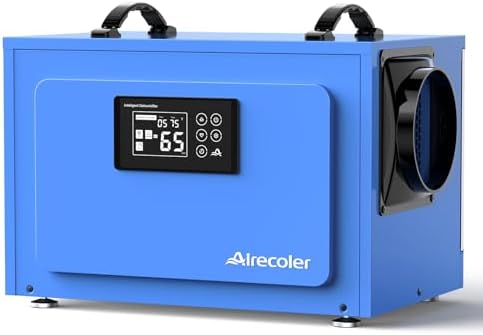 Visit on Amazon → Visit on Amazon →125 Pints Commercial |
125 pints, continuous duty | Hose drain, no tank routine | Crawl spaces, unfinished basements, job sites | $393.59 |
How I size a unit in real humidity
Take the pint rating and treat it as a ceiling, not an expectation. Those numbers come off a test at a fixed temperature and a fixed relative humidity, and your house does not hold either one. Door gaps, foot traffic, cooking, showers, and a dryer venting indoors all add load the lab never saw.
My working rule on the Gulf Coast is to cut the rated number by 30 to 40 percent, then ask whether the result covers the space I am standing in. An 80 pint unit doing 50 pints of real work is a fine machine for a floor. The same 80 pint unit in a wide open basement with a wet slab is going to run nonstop and never catch up.
Square footage ratings are a starting point too. They assume a normal ceiling height and a closed space. A basement that is open to a stairwell is connected to the whole house, so the machine is fighting every room above it.
The tank, the hose, and the 3 a.m. problem
Every machine on this list has auto shutoff, and that is a good thing. It is also the reason you should think hard about the tank. Auto shutoff means the unit stops when the bucket is full. If that happens at 3 a.m. in the worst month of the year, the machine is off until somebody wakes up and empties it.
Below about 60 percent relative humidity conditions, a hose drain is not optional in my book. Run it to a floor drain, a condensate pump, or outside through a window. Two of these four units ship with a hose in the box. For the others, a drain kit is cheap and it is the best money you will spend on the whole setup.
A tank is fine for a bedroom where you are in and out every day. A tank is a liability in a basement.
Compressor or desiccant
Compressor units win in warm, humid air, which is most of the country for most of the year. All four machines here are compressor units, and that is the right call for a Louisiana summer or a damp basement that stays above 60 degrees.
Desiccant units win in cold basements, garages, and unheated spaces where a compressor's coils frost up and it spends its life in defrost. If your space sits in the 40s and 50s all winter, that is a different shopping trip, and the pint ratings on compressor units stop meaning much.
The temperature split is the part most reviews skip. It is the first question I ask.
Should you buy the ToLife?
Yes, if the problem is one room. The 95 ounce tank, sleep mode, and auto shutoff make it a sensible bedroom or closet machine, and the 1,000 square foot rating covers a normal room. Just go in knowing the tank is a daily chore in a real summer. If you can run a hose, run a hose.
Should you buy the Kesnos 80 Pints?
Yes, for a clammy house that is not flooding. The front humidity display is the feature that keeps it honest, because you can compare it to a cheap hygrometer without crawling behind the unit. Energy Star matters here, since this is a compressor that runs for months at a time.
Should you buy the Gasbye 115 Pints?
Yes, for a large basement or a whole floor. Up to 115 pints per day, a 45 dB compressor, a 1.7 gallon tank, and a drain hose in the box is the combination I want in a big space. Auto shutoff and restart is the quiet feature that saves you after a storm.
Should you buy the 125 Pints Commercial unit?
Yes, if you are drying a crawl space or an unfinished basement. It is built for continuous duty and hose drainage, which is the only routine that works in a space you visit twice a year. Bring a hose and a plan for where the water goes.