The best winter dehumidifier setting is 30% to 40% if you're trying to protect a house that sits empty or closed up. If you're living in the space, run it at 40% to 45% and don't chase the number lower. That's the short answer. Here's the long answer, which involves a 1920s shotgun house in Baton Rouge, a watt meter, and a 70-pound lab mix who sleeps in front of the airflow.
Related: How To Reduce Humidity Without Dehumidifier
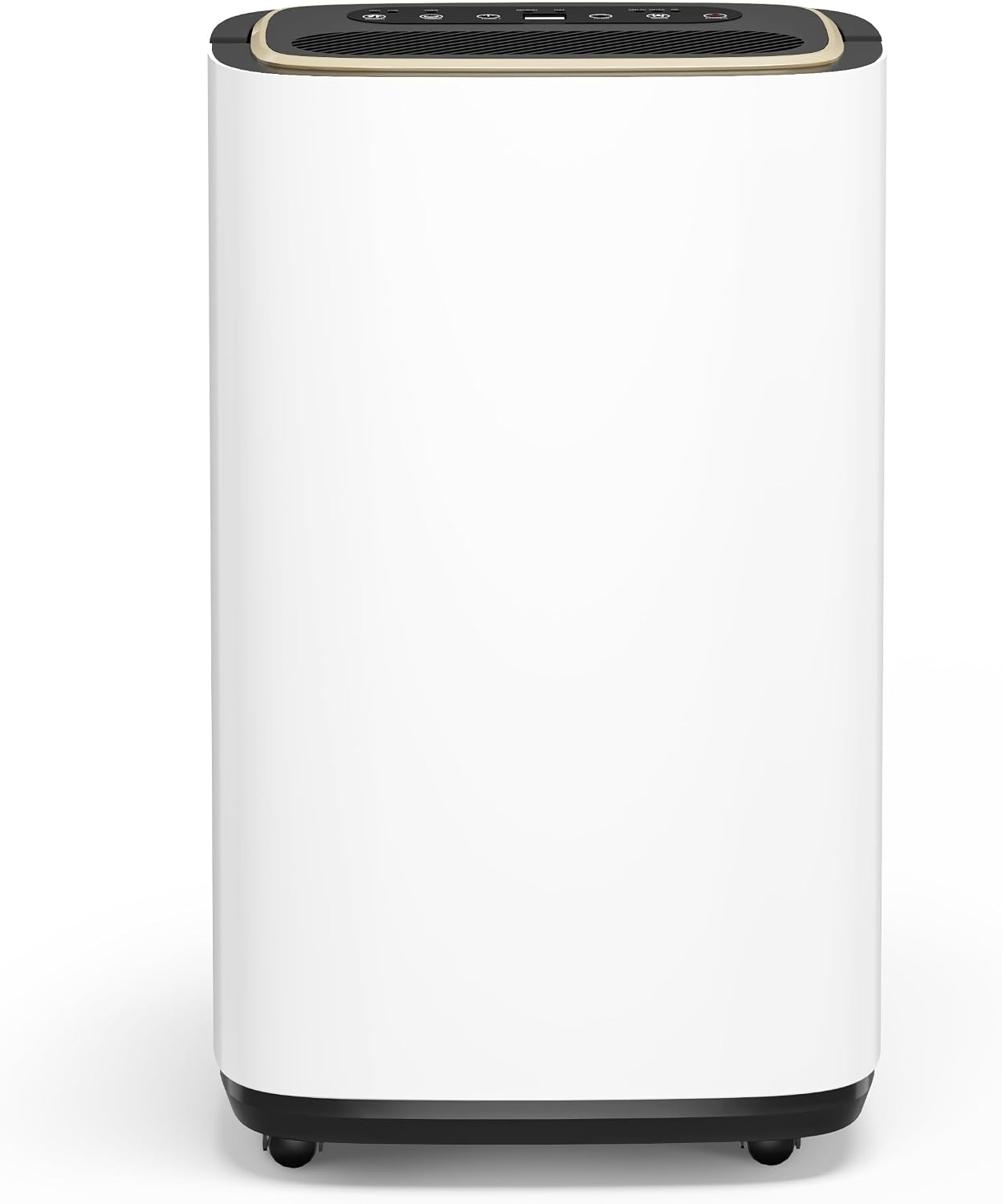
Manastin 5000 Sq.Ft Dehumidifier for Basement with Drain Hose, 50 Pint Dehumidifiers for Home, 3 Modes, Humidity Display & Timer & Child Lock, Large Compressor Dehumidifiers for Room/Bedroom/Bathroom
Quality pick in this category.
Visit on Amazon →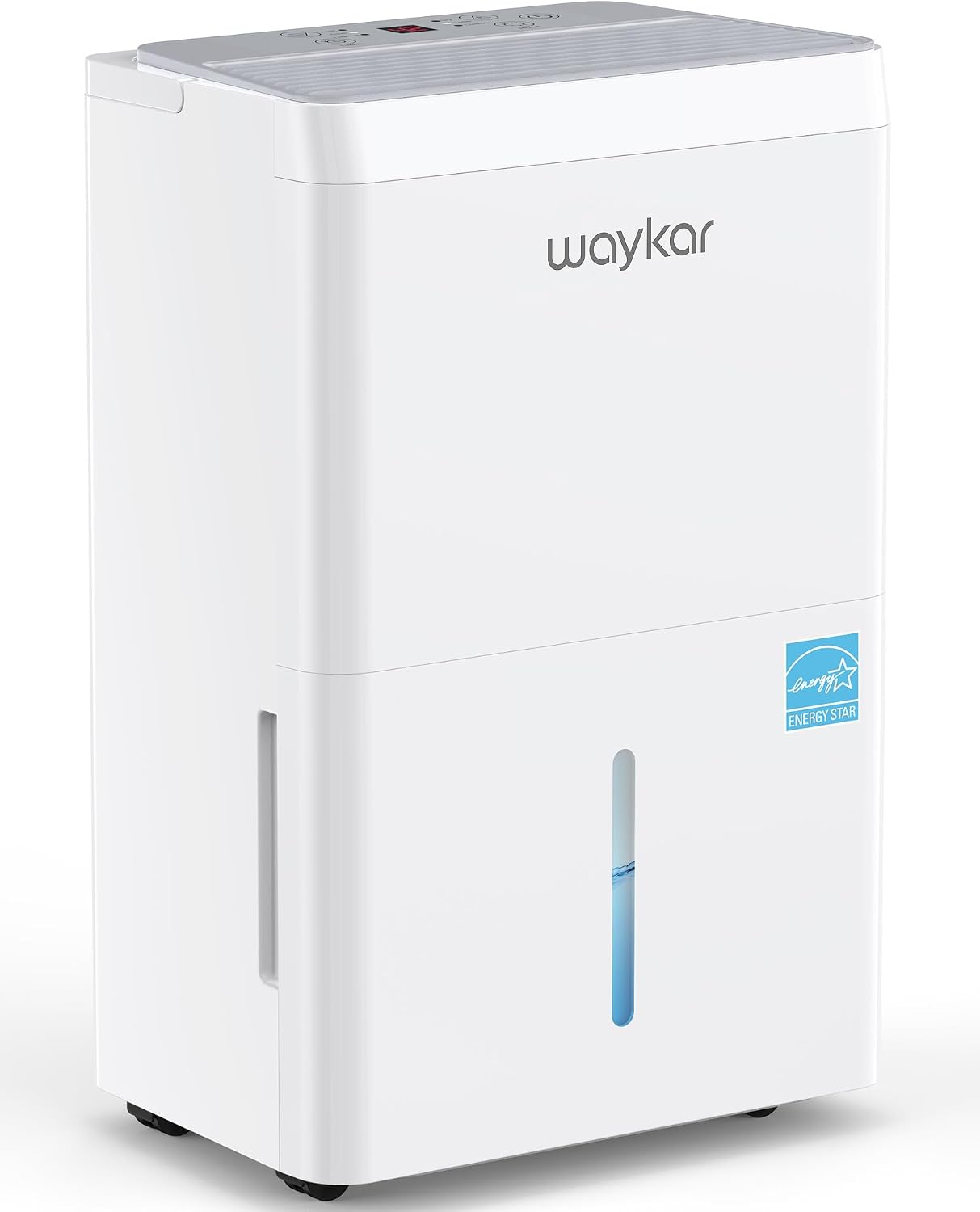
Kesnos 80 Pints Energy Star Dehumidifier for Basement & Home, 6,000 Sq. Ft.
Founded in 2014, KESNOS operates three production facilities worldwide, with an annual output exceeding two million units. Located in Los Angeles, USA, KESNOS Group specializes in home and commercial
Visit on Amazon →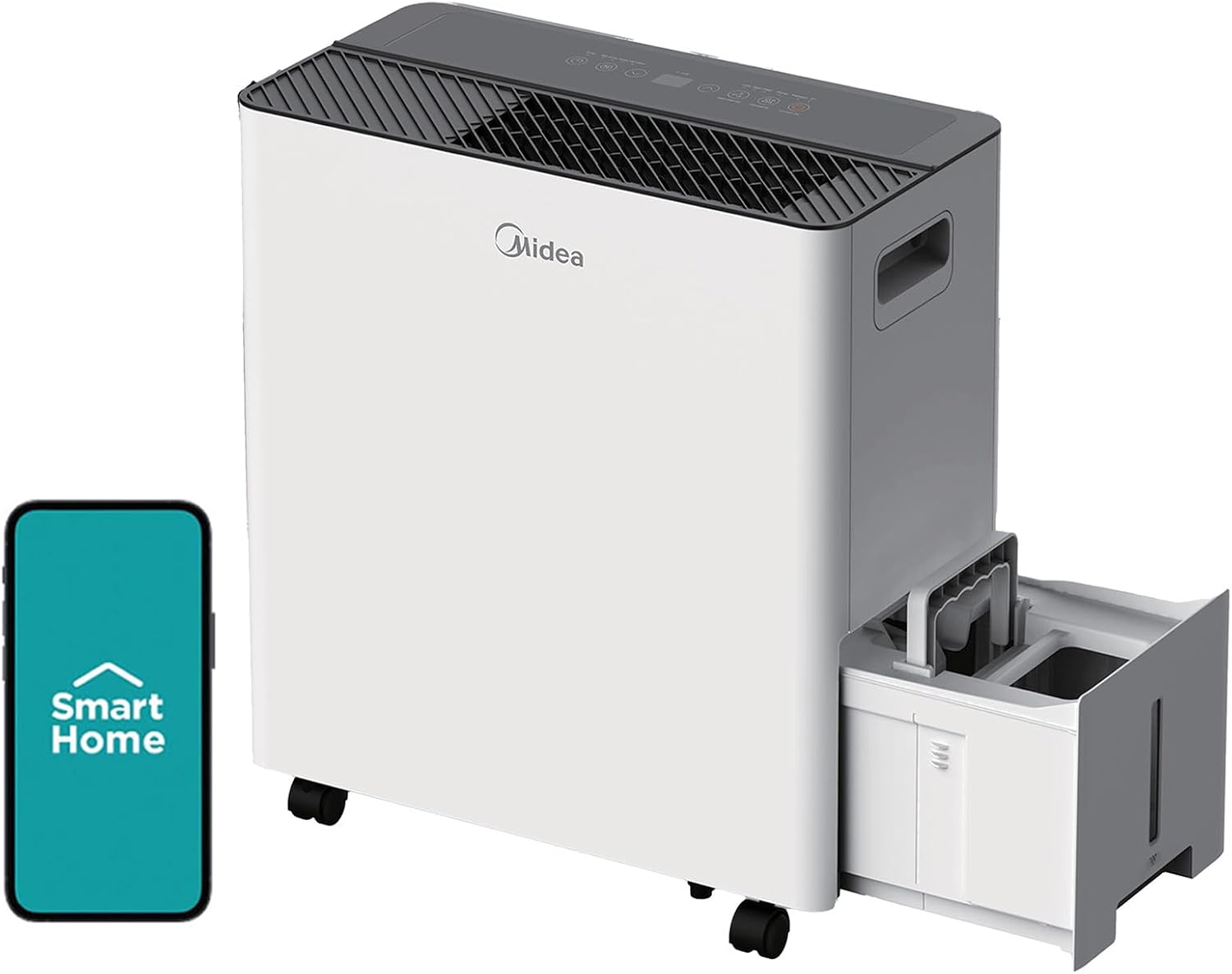
Midea 50 Pint Dehumidifier with Pump, 4,500 Sq. Ft (Renewed)
The Midea 50 Pint Dehumidifier with Pump offers 4,500 Sq. Ft coverage and is able to remove 50 pints of moisture a day. Thanks to its 4-wheel design, you can easily move this dehumidifier to any room
Visit on Amazon →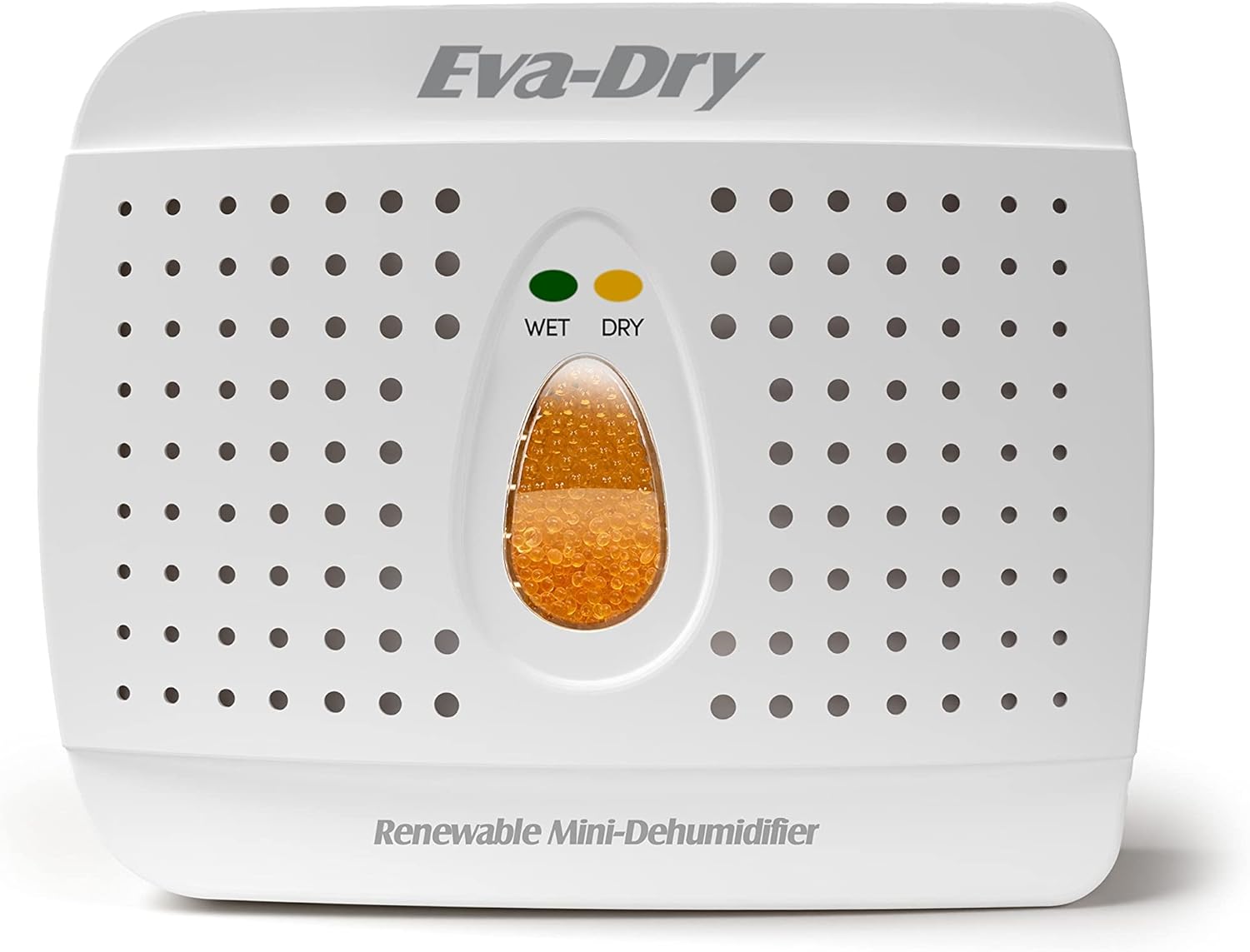
Eva-Dry Wireless Mini Dehumidifier, White (E-333)
Quality pick in this category.
Visit on Amazon →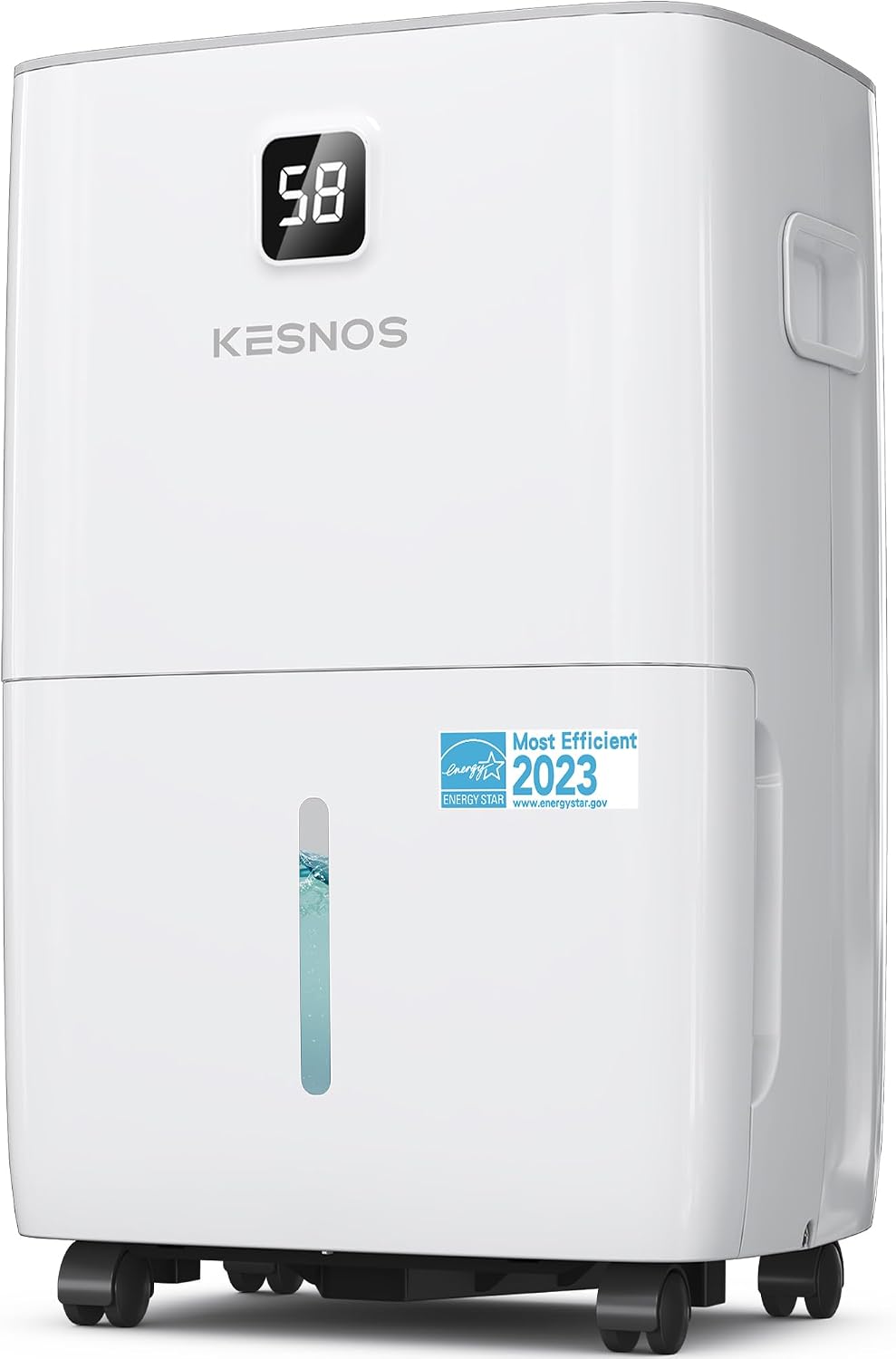
Kesnos 80 Pints Energy Star Dehumidifier for Home w/Front Humidity Display
Founded in 2014, KESNOS operates three production facilities worldwide, with an annual output exceeding two million units. Located in Los Angeles, USA, KESNOS Group specializes in home and commercial
Visit on Amazon →How I tested
I ran these through January and February, which is the weird season down here. We get cold snaps where the house sits closed up for a week, and then we get warm rain that pushes indoor humidity up to 65% when the heat is fighting the damp. I set up a hygrometer log on the kitchen counter, plugged each unit into the watt meter, and weighed the water every pull.
I moved the bigger units between my bedroom, the back hallway that has no AC, and the bathroom that grows mold on the ceiling corner no matter what I do. The Eva-Dry went in my gun safe. The Pro Breeze went in the camper shell on my truck, which is basically a small, damp room that gets rained on.
I ran the compressor units at 35%, 40%, and 45% for three days each. I measured how long they ran, how many watts they drew, and how much water they pulled. Boudreaux supervised from the floor, moving when the exhaust got too cold.
The 30% to 40% rule
The single biggest mistake I see in winter is people running their dehumidifier at the same setting they use in July. That's wrong. In summer, you're fighting air that's 80 degrees and 70% humidity. In winter, the air is cooler and holds less moisture, but the house is closed up, so the moisture from cooking, showering, and breathing has nowhere to go.
At 30%, the compressor runs almost constantly. It pulls water, sure, but it also pulls heat out of the room. In a closed-up house in January, that means your heater works harder and your electric bill does something ugly. At 45%, the unit cycles off more, but you risk condensation on cold windows and the mold smell in the closet.
The sweet spot is 40% for living spaces. At that setting, the Frigidaire ran about 15 minutes out of every hour in my back hallway at 55 degrees and 62% humidity. It pulled about 18 pints a day, which is what a 50-pint unit actually delivers in real winter conditions. The watt meter said 4.1 kWh a day, which is about 61 cents at my rate. That's the cost of not having a wet-dog house.
For an empty house or a camp that sits closed up, drop it to 30% and let it run. You're not paying for comfort, you're paying for preservation. Paper stays crisp, metal stays dry, and you don't come back to a musty smell.
The Frigidaire 50-Pint (Best Overall)
This is the unit I'd put in my own house. It's not the cheapest, and it's not the most feature-packed, but it does the one thing that matters: it pulls water. In my bedroom at 40% and 58 degrees, it pulled 22 pints in 24 hours. The hygrometer log showed the room holding steady at 41% while the rain came down outside. That's the job.
The hose drain kit is the reason to buy this over a cheaper unit. I ran a line from the back of the unit into a 5-gallon bucket in the hallway, and I emptied it twice a week instead of twice a day. In winter, when the unit runs less, I could go a full week if I set it to 45%.
At 43 pounds, it's not fun to move. I slid it across the hardwood floor, which scratched the floor in a way my wife noticed. She didn't say anything, but she didn't have to. Buy this if you have a damp room and you don't want to think about your dehumidifier.
The hOmeLabs 4,500 sq. ft. (Best Value)
The hOmeLabs is the unit I recommend to people who call me about a rental house or a garage. It pulled 20 pints in the same 24-hour test, which is close enough to the Frigidaire that I had to check my notes twice. The difference is the noise. At full tilt, it's noticeably louder. In a bedroom, that matters. In a garage, it doesn't.
The tank is easier to empty than the Frigidaire's, which surprised me. The handle is bigger, and the spout is wider. But the hose drain kit isn't included, and you have to buy a separate adapter to use a standard garden hose. That's a $15 annoyance on a unit that's supposed to be the value pick.
At $229, it's the right call for a workshop or a storage room where you don't care about the noise. It'll dry the space, and you'll save $20 over the Frigidaire. Just don't put it in your bedroom.
The Midea 50-Pint Cube (Editor's Pick)
I don't like smart features. I've said it before, and I'll say it again: I don't need an app to tell me my house is damp. But the Midea Cube is the exception, because the app actually does something useful. It shows the humidity graph over time, which means I can see exactly when the unit cycles on and off. That's data I can use.
The Cube also has the best tank design of any unit I've tested. The tank is a cube that slides out the front, and the spout is a wide, flat opening that's easy to pour. No rubber plug, no screwdriver required. It's a small thing, but it's the difference between emptying the tank and hating the unit.
The downside is the price. At $279, it's the most expensive unit here, and you're paying for the app and the design, not for more water removal. It pulled 21 pints in my hallway test, which is the same as the others. If you want the best tank and you like data, buy this. If you want to save $50, buy the Frigidaire.
What else to consider
The Eva-Dry E-333 is not a dehumidifier. It's a desiccant that needs recharging every 3 to 4 weeks, and it gets hot when you plug it in to dry out the beads. It's perfect for a gun safe or a document safe, where a compressor unit won't fit and you don't want to run a hose. It pulled enough moisture out of my safe to keep paper crisp and metal dry, and that's all I ask. It won't do a damn thing for a bedroom, so don't buy it for that. Register the warranty within 30 days, or you're out of luck.
The Pro Breeze Mini is the unit I have complicated feelings about. It's quiet, it draws only 20 watts, and it's perfect for a camper or a studio apartment. A buyer named T.C. ran one in a 21-foot camper for two and a half years before it died, which is real longevity for a small unit. But the rubber plug on the water tank is a disaster. One buyer had to use a screwdriver to pry it out. Another tipped the whole unit over to drain it and suspects the water damage killed it. At $69, it's priced $25 higher than it was two years ago, and it'll likely die in 2 to 3 years. Buy it for a camper, not a bedroom.
Should you buy the Frigidaire?
Yes, if you have a bedroom, a hallway, or a basement that smells like a wet dog in winter. Set it to 40%, hook up the hose drain kit, and forget about it. It pulls real water, it's reliable, and it's the unit I trust in my own house. The 43-pound weight is the only real complaint, and that's a minor one for a machine that does its job.
Should you buy the hOmeLabs?
Yes, if you're on a budget and you don't mind the noise. It's the value pick for a garage, a workshop, or a rental property. Set it to 40%, empty the tank when it's full, and you're good. Just know that you're giving up the hose drain kit and a few decibels of peace and quiet.
Should you buy the Midea Cube?
Yes, if you want the easiest tank to empty and you like seeing the humidity data on your phone. It's the most expensive unit here, but the design is genuinely better. Set it to 40%, slide the tank out when it's full, and you'll never curse a rubber plug again.
The bottom line
Winter humidity is a different beast than summer humidity. The air is cooler, the house is closed up, and the moisture has nowhere to go. Set your dehumidifier to 40% if you're living in the space, 30% if it's empty, and don't chase the number lower. The units that pull real water and have a hose drain kit are worth the money. The ones that don't are a waste of your time. I've got a bucket of water that says I can prove it.