Related: How to Check a Dehumidifier Humidistat Against a Real Hygrometer
I have been an HVAC tech in New Orleans for eighteen years, and I have pulled more moldy drywall out of Louisiana houses than I care to count. The pattern never changes. Somebody buys a dehumidifier, runs it for two weeks, gets tired of hauling a tank to the tub, and rolls it into the garage. Then the musty smell comes back and the machine gets blamed.
The machine is almost never the problem. Sizing and drainage are the problem. A dehumidifier with pump solves the drainage half of that, and honest sizing solves the other half. Get both right and a mid-range compressor unit will hold a damp house near 50 percent relative humidity all summer, which is the number that keeps mold from getting a foothold.
I have run portable units through real Gulf Coast summers in my own 1920s shotgun house, back rooms with no central air and door gaps you could slide a nickel through. I keep a hygrometer log, a watt meter, and a bucket routine where I weigh the water a unit pulls. That routine is the reason I do not trust a box that says 34 pints without checking what the room actually gives up.
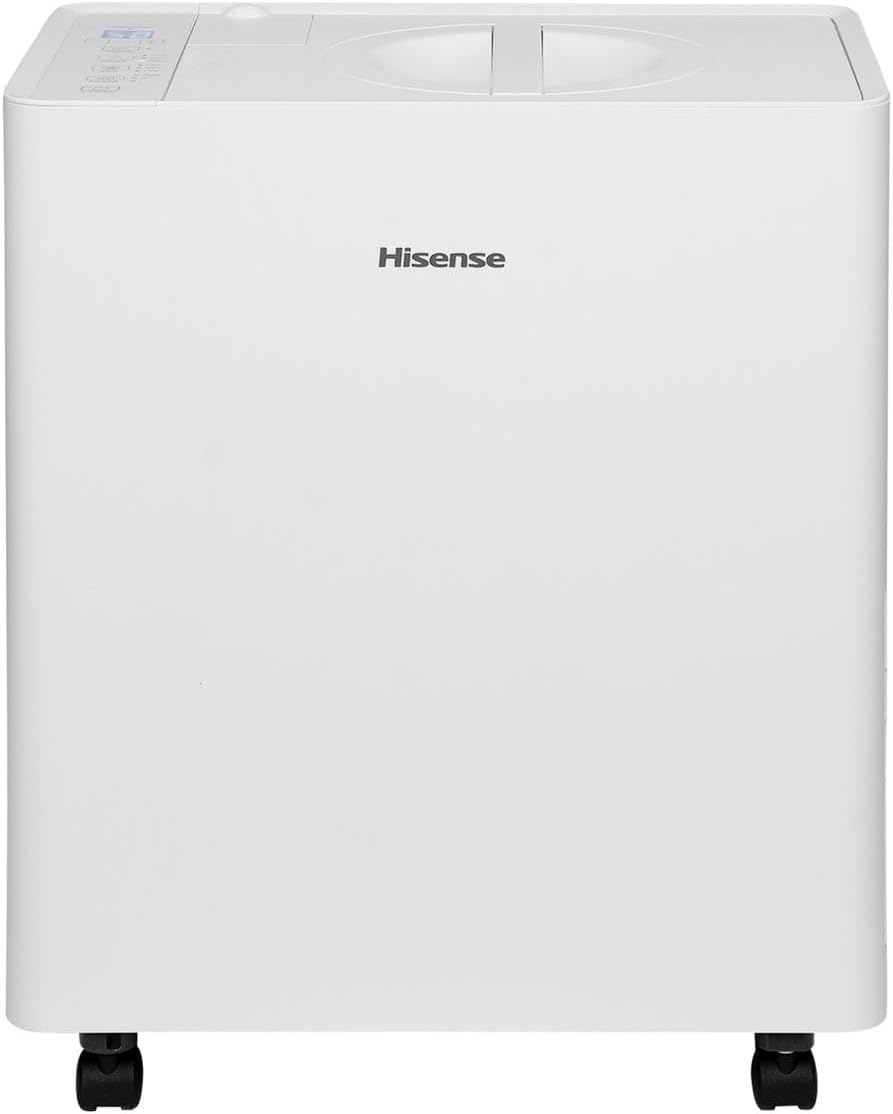
Best Overall: 5000 Sq.Ft Dehumidifier with Pump, 100 Pint, Smart Humidity Control
This is the class of machine I spec when somebody tells me their whole downstairs smells like a wet basement and they are tired of the bucket dance. The pump is the feature that matters. Without one, a big unit has to sit above a floor drain, or you carry a tank that holds several gallons, and the machine shuts off the moment it fills. With a pump, condensate goes uphill through a hose to a utility sink, a washer standpipe, or out a window. No 3 a.m. shutdown. That alone is worth more than any app.
The 100 pint rating is the other half of the story. I cut advertised pint ratings by 30 to 40 percent in a real house with door gaps, foot traffic, and a structure that breathes. Even discounted, a 100 pint class compressor still has margin to pull a whole floor down to 50 percent, which is why I would rather see one big machine than two small ones fighting each other. Treat the 5,000 square foot figure as a ceiling for an open plan with good airflow, not a promise for a warren of closed bedrooms.
On the smart humidity control, hear me out. The app is a support call generator. I have reset more Wi-Fi modules than compressors over the years, and a dehumidifier that quits because your router rebooted is a dehumidifier that is not drying anything. Set the onboard humidistat to 50 percent, confirm it with a hygrometer, and let the phone app be optional. What you want to verify before you buy is auto restart: after a power outage, does the unit come back on at your last setting, or does it sit there in fan only while your basement soaks?
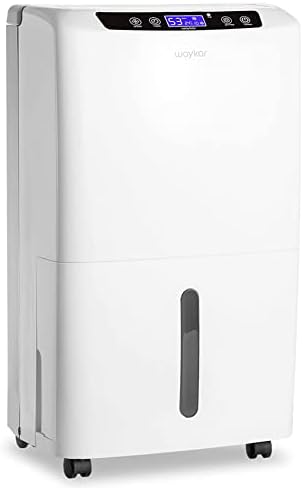
Best Value for a Single Damp Room: Waykar 34 Pints 2000 Sq. Ft.
For one bedroom, one laundry room, or a small apartment, a 34 pint class compressor is the right size, and this one carries an Energy Star rating. Energy Star is not a marketing sticker when a machine runs 4,000 hours a year in a Louisiana house. It is the difference you see on the bill in August.
Here is the part nobody tells you. A 34 pint rating is measured under lab conditions, warm and saturated. A bedroom at 72 degrees with the door shut gives up water much more slowly than that, so the real number is lower. That cuts both ways: it means the machine is not the monster the box implies, and it also means the tank fills on a schedule you have to respect. In July, in a genuinely damp bedroom, plan on emptying it daily. That is not a defect. That is physics.
So use the hose port. Almost every unit in this class has one, and it changes the ownership experience from a chore to nothing at all. Run the hose to a floor drain, a slop sink, or a five gallon bucket you check weekly instead of a tank you check daily. Keep the machine in the middle of the room, not jammed against a wall or inside a closed closet, because a dehumidifier that recirculates its own exhaust is just a heater with extra steps.
One caveat that most reviews skip entirely: compressor units lose capacity as the room gets cold. If your damp space is an unheated basement that sits in the fifties in winter, this is the wrong technology, and a desiccant unit is the right one. Warm rooms, compressor. Cold rooms, desiccant. That split explains more disappointing purchases than any brand argument.
The Upkeep Item That Keeps Either Machine Alive: Simple Green Foaming Coil Cleaner
Coils are what kill dehumidifiers. The machine drags a huge volume of room air across a cold coil, and everything in that air parks on the fins: dust, pet hair, cooking grease, and in south Louisiana, a heroic amount of pollen. A matted coil makes the compressor run longer for less water, and eventually the unit ices up or quits.
A foaming aerosol is what I reach for on service calls because it lifts the film out of the fins without me bending them with a brush. Spray, let it dwell, let it drain, and never soak the electrical side or the fan motor. This three pack covers a full season of cleanings on one machine, and it is cheap insurance next to a service call or a replacement. If you own a dehumidifier and you have never looked at the coil, go look at it right now. That is usually the whole problem.
How I check a dehumidifier before I trust it
I do not care what a spec sheet says until a unit has been through my routine, and the routine is the same one I use for customers.
The bucket test: I put a unit in the actual room, at the actual temperature, and I weigh the water it pulls over a full week. That number, not the box number, is what tells me whether the machine can hold a space at 50 percent. The meter week: a watt meter on the plug for seven days, then I do the monthly cost math. Energy use is a bill, not a spec, and the gap between two units that look identical on paper can be real money by October.
The hygrometer log: I log relative humidity at the machine and across the room. Humidistats are frequently off by 15 percent from a decent hygrometer, which means a unit set to 50 percent may be happily holding 65. Buy a twenty dollar hygrometer before you buy any machine.
The hose drain check: I run the hose, look for kinks, look for a rise the unit cannot push, and watch for backflow at the port. Most drainage complaints I get are hose routing, not the pump.
The restart test: kill the power at the breaker, wait, restore it, and see what the machine does. A unit that comes back in fan only after an outage has failed the test that matters most, because outages happen in exactly the weather you bought it for.
Analysis: reading the spec sheet like a tech
Pint ratings are the first thing to distrust. They are taken at warm, saturated conditions that most homes never see, so I always discount them before I compare machines. What I look at instead is the shape of the unit: does it have a hose port or a pump, how big is the tank, how loud is the fan on high, and does it hold its setting through a power interruption.
The temperature split decides the technology. Compressor units, which is both machines above, win in warm rooms and pull more water per watt there. Desiccant units win in cold basements, where a compressor's capacity falls off a cliff. If you live somewhere with a damp crawlspace or a winter-cold cellar, no amount of marketing about pints per day fixes that mismatch.
Then there is the size question nobody wants to hear. One 100 pint machine with a pump will out-dry two 34 pint units in the same house, because the two small units spend their time recirculating each other's exhaust and fighting for the same square footage. If your whole downstairs is damp, buy the big one and drain it properly.
What about desiccant units?
They cost more to run and pull less water in the heat, but they keep working when a basement drops into the fifties. If your problem is a cold space, that is the trade. If your problem is a Gulf Coast summer, it is not.
What about a window unit with a dry mode?
Sometimes it is enough. A window air conditioner in dry mode is a dehumidifier that also cools, and for one room it can be the cheaper answer. It will not hold a closed basement at 50 percent, and it will not run in October when you do not want cold air. Know which problem you have before you spend.
The dehumidifier sizing and maintenance reference table
This is the table I keep in my head when a homeowner describes a space over the phone. Targets are relative humidity at the machine. Sizing is for the real room, not the marketing square footage.
| Condition or job | Target | Machine class | Notes |
|---|---|---|---|
 Visit on Amazon → Waykar 34 Pints, Energy Star |
Bedroom or single room | 30 to 35 pint compressor | Use the hose port; expect daily tank fills in July |
| Damp bedroom, door closed | 45 to 50 percent | Small compressor | Tank is fine here if you actually empty it |
| Laundry room, door closed | 45 to 50 percent | Small compressor | Run the hose to the standpipe |
| Finished basement, whole floor | 45 to 50 percent | Large compressor with pump | Hose drain is mandatory, uphill is fine with a pump |
 Visit on Amazon → 100 Pint with pump, smart control |
Whole floor or open plan | 100 pint compressor with pump | Pump pushes condensate uphill to a sink or window |
| Cold basement, below 60 degrees | 45 to 50 percent | Desiccant | Compressors lose capacity in the cold |
| Crawlspace | 50 to 55 percent | Hose drain only | Seal the space first, then dry it |
 Visit on Amazon → Simple Green Foaming Coil Cleaner, 3 pack |
Coil cleaning, start of season | Maintenance item | Foaming aerosol, not a machine |
 Visit on Amazon → KEAWELL K3 Tri-Ply Saucepan with Lid, 2 Qt |
Not a dehumidifier | Not a dehumidifier | Kitchen gear, 2 quart clad pan with lid |
| Humidistat check | Every season | Any unit | Compare to a hygrometer; 15 percent error is common |
| Hose drain check | Monthly | Any drained unit | Look for kinks, uphill runs, and backflow |
| Power outage restart | Should resume last setting | Any unit | Fan only restart is a dealbreaker |
The two rows people skip are the last two. A hose with a kink is a hose that floods your floor, and a unit that restarts in fan only is a unit that quietly stops drying after the first summer storm knocks the power out.
Should you buy the 5000 Sq.Ft Dehumidifier with Pump, 100 Pint?
Yes, if you are drying a whole floor, a finished basement, or an open plan that stays damp. The pump is the reason. It lets the machine drain uphill to a real fixture, which means it keeps working at 3 a.m. in the worst month of the year instead of waiting for you to wake up and empty a tank.
Set the humidistat to 50 percent, verify it with a hygrometer, and treat the app as a convenience rather than a requirement. Confirm auto restart before you commit, because that is where cheap controls fail. Buy it for the water it moves and the drain it manages, not for the phone features.
Should you buy the Waykar 34 Pints dehumidifier?
Yes, for one room. It is the right size for a bedroom, a laundry room, or a small apartment, and the Energy Star rating is real money over a long Louisiana season. Discount the pint rating in your head, hook up the hose if you have anywhere to send the water, and keep the coil clean.
If your damp space is a basement, a crawlspace, or a whole floor, do not buy two of these and hope. Buy the big machine with the pump, drain it properly, and put your money into the one thing that decides whether a dehumidifier actually works: getting the water out of the house without you carrying it.