Related: How to Read a Dehumidifier Spec Sheet
I have spent 18 years doing HVAC work around New Orleans, and the enemy in most of those houses has been water vapor, not heat. When a homeowner asks me to help choose a dehumidifier for basement use or a damp back bedroom, I ask the same question I ask on every service call: where does the water go when the tank fills at 2 a.m. in August?
Pints per day is a lab number, measured at a temperature and humidity your house will never hold steady. In real humidity, with real door gaps and a leaky return, cut the rating by 30 to 40 percent. A 22 pint machine is a bedroom machine. An 80 pint machine is a basement machine. Most listings do not say that out loud, so this guide does.
Sizing comes down to two questions. First, how big is the space you are actually drying, not the square footage of the whole house? Second, what is the temperature in that space when the problem is worst? Warm and wet means a compressor unit. Cold and wet means a desiccant unit, and that is a different shopping trip. Everything below assumes warm space, which is what almost every Louisiana and Gulf Coast homeowner has.
I will tell you which of these four machines I would put in which room, what I would check before the box is even open, and where the money is wasted.
Best for a Whole Basement: Waykar 80 Pints
If you have a basement that stays above 60 degrees and smells like a wet towel, this is the class of machine you want: an 80 pint compressor unit rated for 5,000 square feet and Energy Star listed. In my experience the big compressor units are the only ones that hold a basement under 50 percent relative humidity in a Gulf Coast July, and they hold it while the door is opening and closing all day.
The tank on a unit this size is a formality. In a wet month it fills faster than you want to carry it, and carrying heavy water up a staircase is how people stop using a dehumidifier. Run a hose. A gravity drain to a floor drain is the cleanest setup. If you do not have a floor drain, a condensate pump is a small extra and it is worth it.
Compressor versus desiccant matters here. Compressor units win in warmth. If your basement runs cold, under 60 degrees, a compressor unit will ice up and cycle, and a desiccant unit is the honest answer. That is a different machine than this one, and no amount of marketing changes the physics.
Waykar builds these with the same general layout as the other dedicated brands, and the dedicated brands have the compressor supply chains. Check the humidistat against a separate hygrometer once it is running, because onboard humidistats are frequently off by a wide margin, and a unit that thinks the room is drier than it is will shut off early and leave you guessing why the space still smells.
Best for a Mid-Size Home: Waykar 34 Pints
This is the size I recommend most often to people who do not have a basement but do have a floor that never quite dries. It is a 34 pint unit rated for 2,000 square feet and Energy Star listed. It is a compressor unit, so it belongs in warm space: a living room, an open first floor, a finished attic in summer.
For a whole-floor job, hose drain again. The tank is fine for a bedroom, but a machine working on 2,000 square feet is not a bedroom machine, it is a floor machine, and a floor machine needs to drain itself. Set it near a sink, a floor drain, or a laundry standpipe and forget it exists.
What I like about this size class is that it does not try to be clever. It has a humidistat, a fan, and a compressor. Two things to check before you buy: the filter cost and the restart behavior. A filter that needs replacing monthly at a high price turns a cheap machine into an expensive one, and a unit that restarts in fan-only mode after a power outage is a unit that quietly stops dehumidifying after the first summer storm. That one gets people every year.
Best for One Damp Room: Midea 22 Pint
The Midea 22 pint is a bedroom and single-room machine, rated for 1,500 square feet and Energy Star listed. I know the coverage number looks generous. In a real house, with a door you actually open and close, treat it as one room plus a hallway.
This is where a tank is fine. If you are emptying a bedroom unit once a day in the worst month, that is a normal chore and not a design failure. What I would check is the carry: a tank that sloshes and dribbles on the way to the sink is a tank that ends up staying in the machine, full.
Midea is one of the dedicated brands I trust for compressors. The 22 pint class is the right answer for a damp bedroom, a laundry room, or a small apartment, and it is the wrong answer for a basement. I have watched people buy this size for a wet basement and then buy again two months later, which is the most expensive way to do this.
Set it on a level surface, keep it a few inches off the wall, and let the humidistat do its job, but verify it with a hygrometer. Every humidistat I have checked has been off, some by 15 percent, and you want to know which direction yours is off in. If the room has a drain nearby, run the hose and skip the tank entirely.
Budget Pick: Dehumidifier
The listing name on this one is just Dehumidifier, and that tells you something about the class it is in. It is the entry-level machine of the group, and I would treat it that way.
Below the $200 range you are mostly looking at small compressors that cannot keep up with a real Gulf Coast summer in a large space. That does not make them useless. A small unit in a closet, a bathroom, a laundry nook, or a single small bedroom is a legitimate job, and a compact machine that runs all day is better than a big machine you cannot afford.
What to watch on any budget unit: the tank, the humidistat, and the filter. Empty the tank before bed, or run a hose if the drain port takes one. Put an inexpensive hygrometer in the room and trust it over the display. And check the filter price before you commit, because a costly filter on a monthly schedule is a hidden subscription.
If your problem is a whole basement, skip this class and save for the 80 pint. If your problem is one small room that smells musty in July, this is enough machine.
How I evaluate a dehumidifier
I have run more than ten portable units through real Louisiana summers, and I judge every one of them the same four ways.
Bucket test: I weigh the water the unit pulls, in real humidity, in a real room, not in a lab. The pint number on the box is a starting point, and the bucket is the truth.
Meter week: I put a watt meter on the unit for a week and do the monthly cost math. Energy use is a bill, not a spec, and the difference between two units of the same pint rating can show up on your statement every month for years. This is also why I am watching inverter compressors closely. The efficiency claims are real in principle, and my meter will say whether the marketing holds up over a full summer.
Hygrometer check: I put a calibrated hygrometer next to the unit's sensor and compare. Humidistats are the weakest part of almost every dehumidifier I have serviced, and they are also the part that decides when the machine runs.
Living with it: tank carry, noise, where the hose port sits, whether the unit restarts in the right mode after an outage, and whether the filter is a reasonable price. These are the things that decide whether a machine is still running in September or sitting unplugged in a corner.
What the specs leave out
Three things, and they matter more than the pint rating.
Temperature. Compressor units win in warm space; desiccant units win in cold basements. Most reviews ignore the split entirely, and it is the first thing I ask about, because a compressor unit in a 55 degree basement will ice up, cycle, and pull almost nothing while the display glows happily.
Drain. A hose drain is close to non-negotiable below 60 percent humidity conditions. I install hose kits as often as I install units. Tank-only operation is fine for a bedroom and a bad plan for a basement or a whole floor.
The tank is the product. A unit that shuts off when the tank is full is a unit that stops working at 3 a.m. in the worst month of the year. If you are going to rely on the tank, the handle and the pour spout matter as much as the compressor.
Smart features are last on my list. The app is a support call generator. I have reset more Wi-Fi modules than compressors, and none of those modules ever pulled a pint of water.
The reference table
This is how the four machines line up. Pints and coverage are the rated numbers from the listings, not measured output, so apply the 30 to 40 percent reality discount in your head.
| Unit | Rated pints per day | Rated coverage | Drain setup | Where it fits | Price |
|---|---|---|---|---|---|
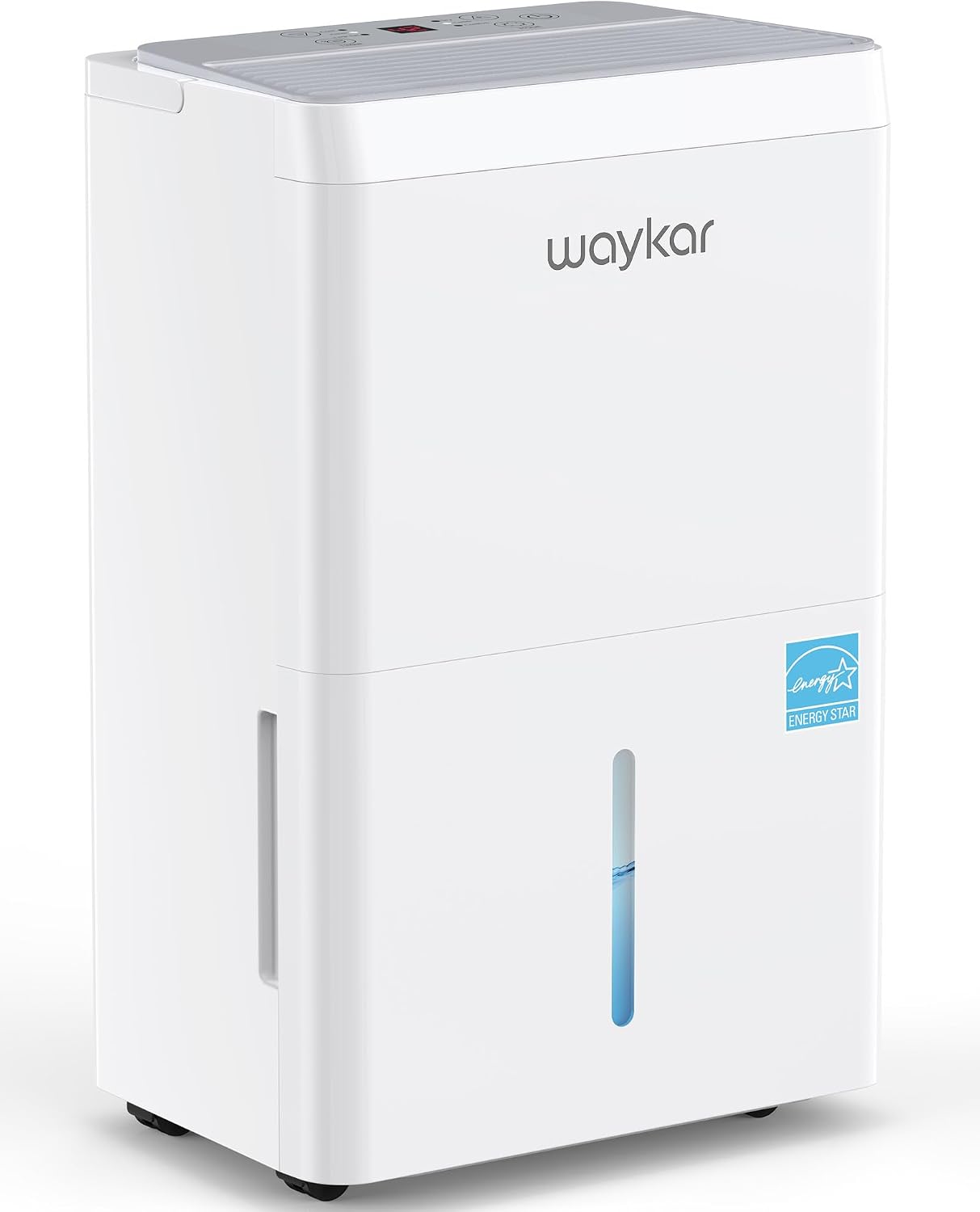 Visit on Amazon → Visit on Amazon →Waykar 80 Pints |
80 | 5,000 sq. ft. | Hose drain | Full basements, large wet spaces | $208.98 |
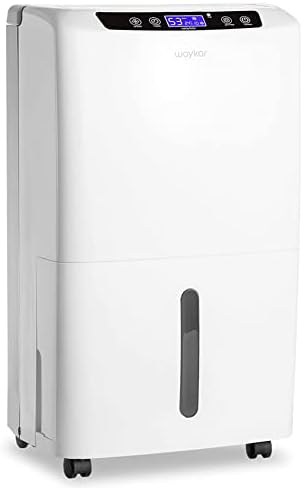 Visit on Amazon → Visit on Amazon →Waykar 34 Pints |
34 | 2,000 sq. ft. | Hose drain preferred | Whole floors, open-plan homes | Check current Amazon price |
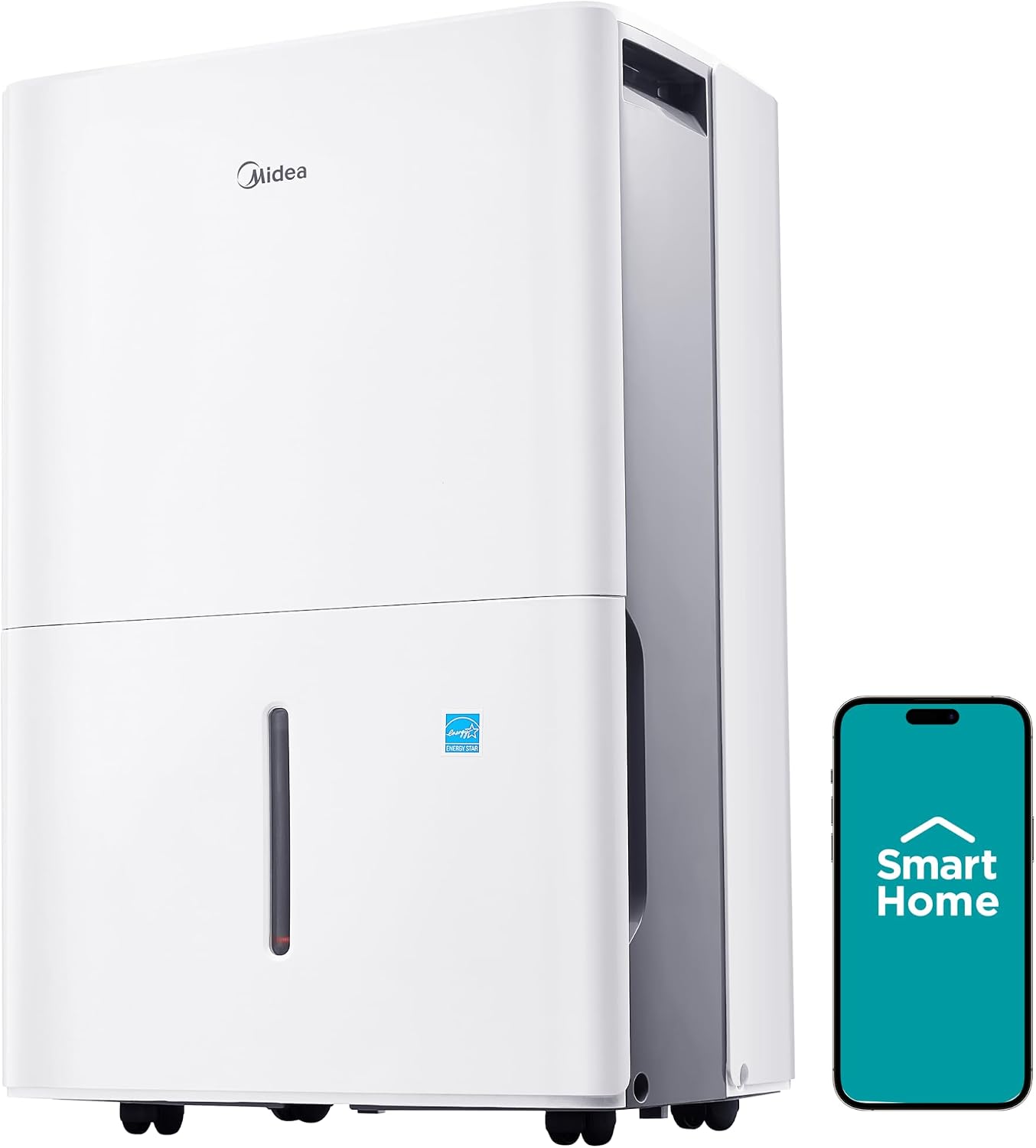 Visit on Amazon → Visit on Amazon →Midea 22 Pint |
22 | 1,500 sq. ft. | Tank or hose | Bedrooms, offices, single rooms | $194.99 |
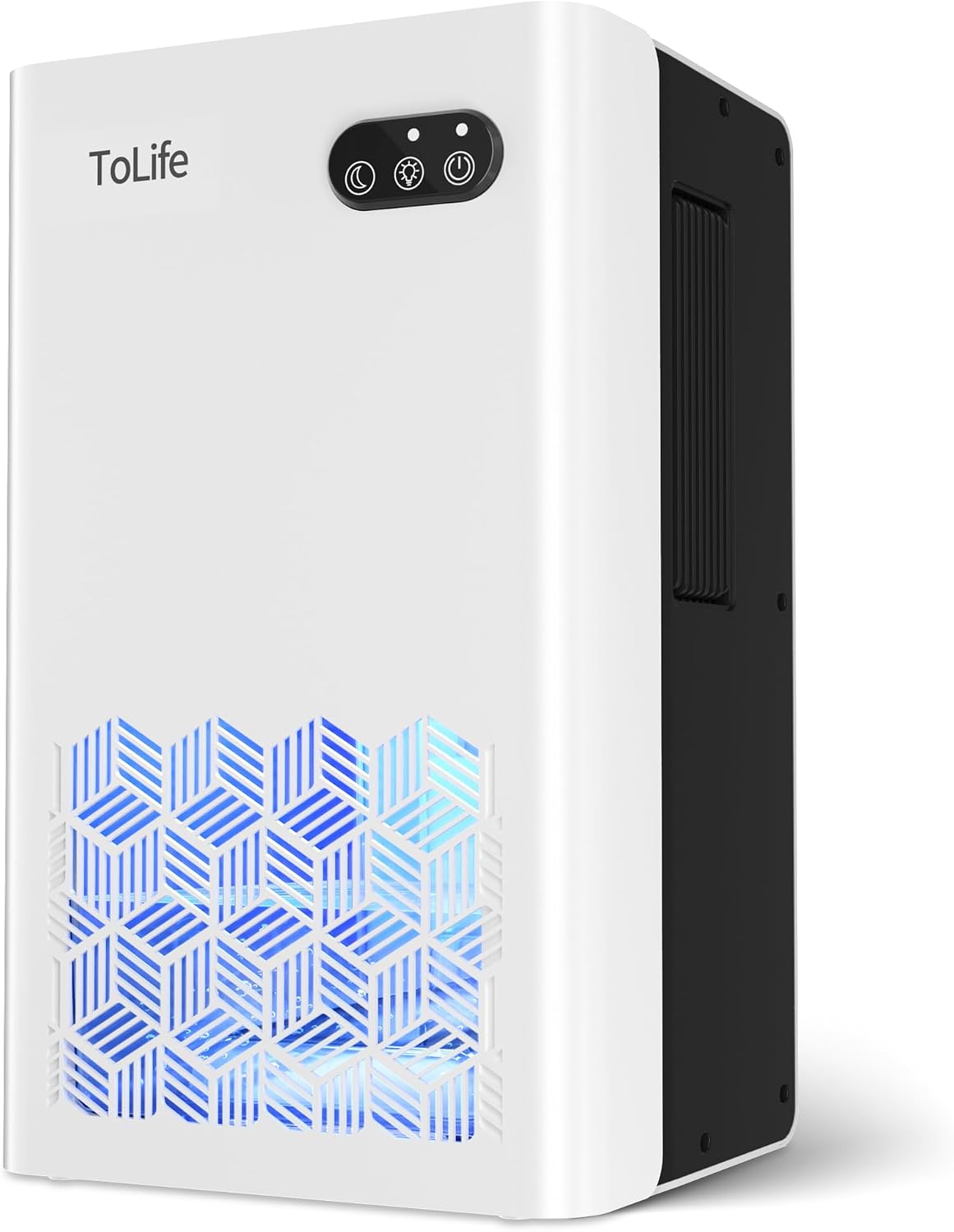 Visit on Amazon → Visit on Amazon →Dehumidifier (budget) |
Not stated in the listing name | Small rooms | Tank | Closets, bathrooms, small rooms | Check current Amazon price |
Should you buy the Waykar 80 Pints?
Yes, if you have a basement, a crawlspace-adjacent room, or a large space that stays above 60 degrees and stays damp. This is the machine that will actually hold a big wet space under control, and the hose drain makes it livable instead of a chore you abandon by week three. Check the current Amazon price and compare it against a desiccant unit if your basement runs cold. If your space is one bedroom, this is overkill and you will hate the noise.
Should you buy the budget Dehumidifier?
Yes, for one small room, and no, for a basement. It is the cheapest way into the category, and small spaces are a real job. But if you are fighting a whole floor or a wet basement, put the money toward the 34 or the 80 pint instead of buying this and then buying again. That is the most expensive path through this decision.
The bottom line
Match the machine to the space, not to the price tag you were hoping for. One damp bedroom: the Midea 22 pint. A whole floor: the Waykar 34. A basement: the Waykar 80, drained by hose. A closet or a bathroom: the budget unit. Then buy a cheap hygrometer, verify the humidistat, and run a hose wherever you possibly can. That is the whole game, and it has not changed in 18 years.