Related: How to Read a Hygrometer Without Lying to Yourself
I have pulled moldy drywall out of more Louisiana homes than I can count. The story is almost always the same. The front of the house is fine, the back bedroom smells like a wet towel, and the homeowner has been running a box fan for two years hoping the smell would leave on its own. A dehumidifier for basement duty is not the same machine as the little unit on a nightstand, and choosing between those two jobs is where most people get it wrong.
Here is the first thing I tell a homeowner before they spend a dollar. The pints per day number on the box is a lab number. It gets measured at a temperature and humidity you will never see in a real house with door gaps, a leaky return, and a bathroom fan that vents into the attic. In real Gulf Coast humidity, cut that rating by 30 to 40 percent and plan from there. A unit rated at 80 pints is not pulling 80 pints out of your basement in July. It is pulling something closer to 50 on a good day.
The second thing is the tank. The tank is the product. A machine that shuts itself off when the tank fills is a machine that stops working at 3 a.m. in the worst month of the year, and you will not notice until the musty smell comes back. If the space runs below 60 percent humidity conditions, which every finished basement in this state does, a hose drain is non-negotiable. I install hose kits as often as I install units.
The third thing is temperature. Compressor units win in warm rooms. Desiccant units win in cold ones. A cold basement in January changes which machine makes sense, and almost no review mentions the temperature split at all.
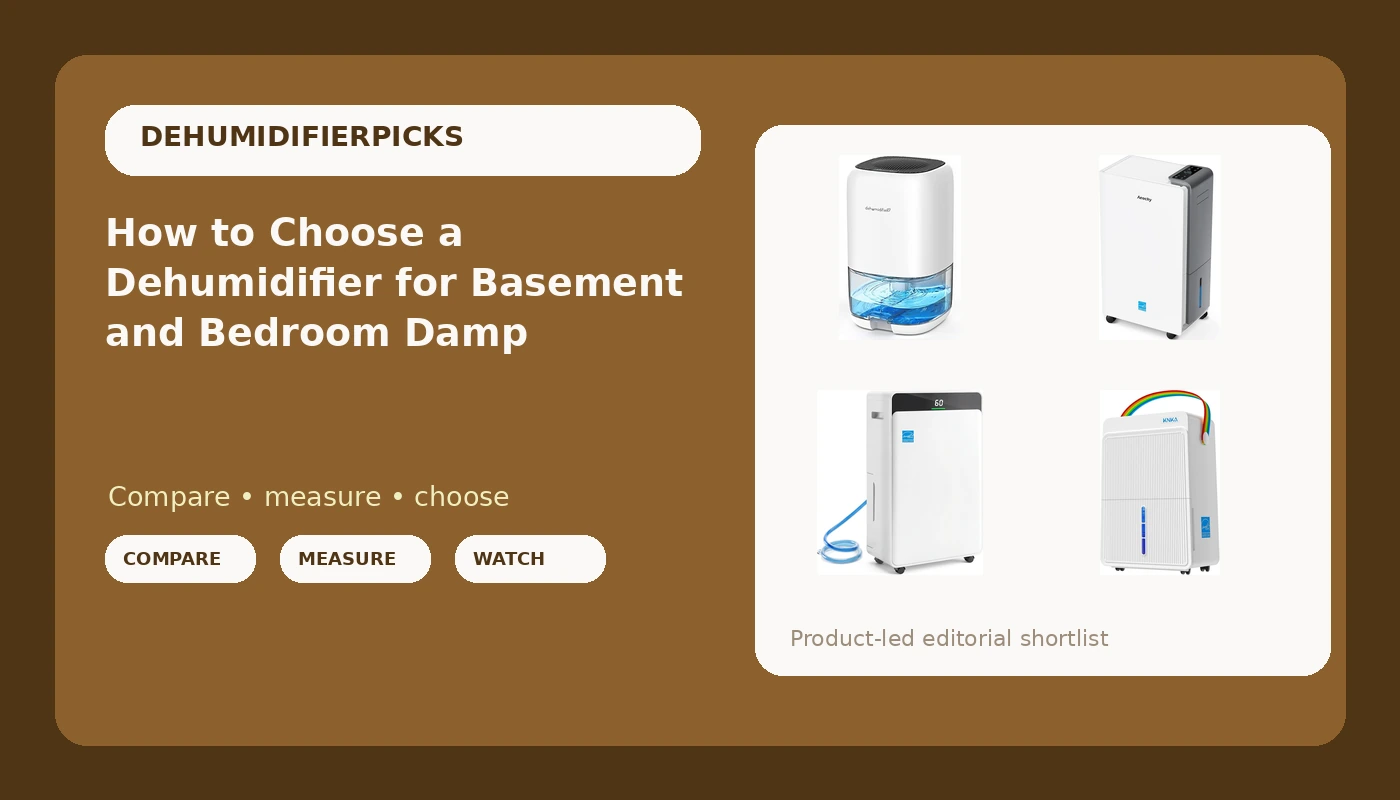
The four machines below cover the range. Two are full size basement units with an 80 pint per day claim. One carries the Energy Star Most Efficient 2025 label and the largest coverage number here. One is a small, quiet unit built for a bedroom or an RV. I will tell you where each one belongs, and where it does not.
Best Overall for a Large Basement: AEOCKY 5500 Sq.Ft
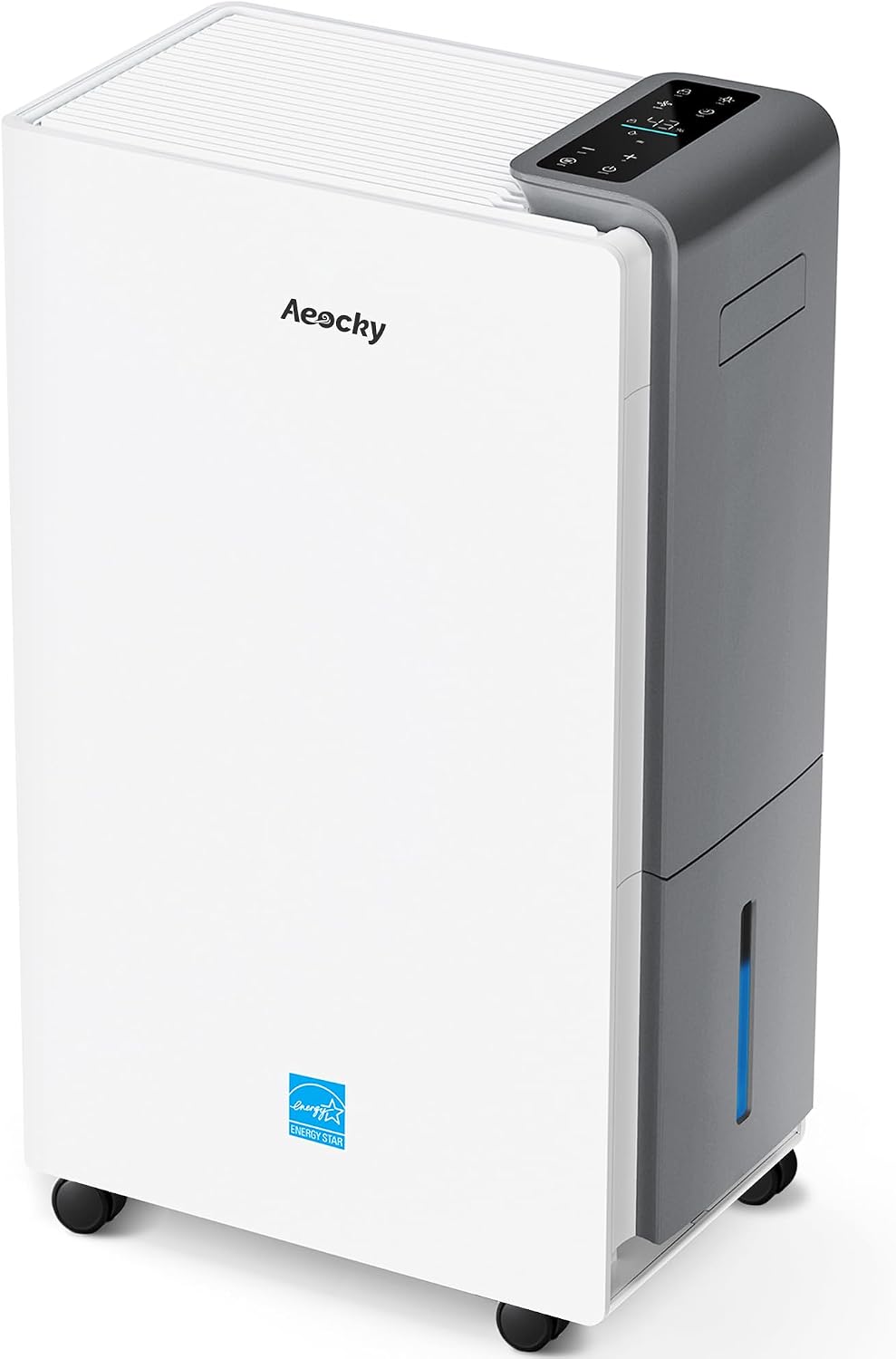
This is the unit I would start with for an open basement. The AEOCKY carries the Energy Star Most Efficient 2025 label, which is the top tier of that program, and it claims 5,500 square feet of coverage with a max of 80 pints per day. Those are manufacturer claims, not my measurements, and I want you to read them the way I do. Apply the real world derate of 30 to 40 percent and you still have a machine that can hold a damp basement, which is more than most of the category can say.
The 5,500 square foot number assumes open space, no interior walls, and a closed house. Your basement is not that. Divide the space into zones, put the unit where the air actually moves, and let it run. Pair it with a hose drain on day one, because you are not going to empty a tank every day for six months.
That Energy Star Most Efficient label matters to me because energy use is a monthly bill, not a spec sheet line. I run a watt meter on every unit I live with for a week and do the math to a Louisiana utility bill. A machine that runs eight months a year at a lower draw pays for its own difference.
Best for a Bedroom or an RV: TABYIK 35 OZ
Thirty five ounces is a tank measured in ounces, not pints, and that tells you the whole story. This is a small space machine. A bedroom, a closet, an RV, a bathroom, a room over a garage. It is quiet, it shuts off automatically when the tank fills, and it is white and unobtrusive in a way the big units are not.
What it will not do is dry a basement. Put it in a damp basement with real square footage and it will run continuously, fill up, shut off, and you will be emptying it twice a day while the hygrometer sits at 65 percent. That is not the machine failing. That is the wrong machine for the job.
For a damp bedroom on the Gulf Coast, it is a reasonable answer. It takes the edge off a room that a window unit cannot reach, and the auto shut off means you can run it overnight without lying awake listening for the sound of water on the floor.
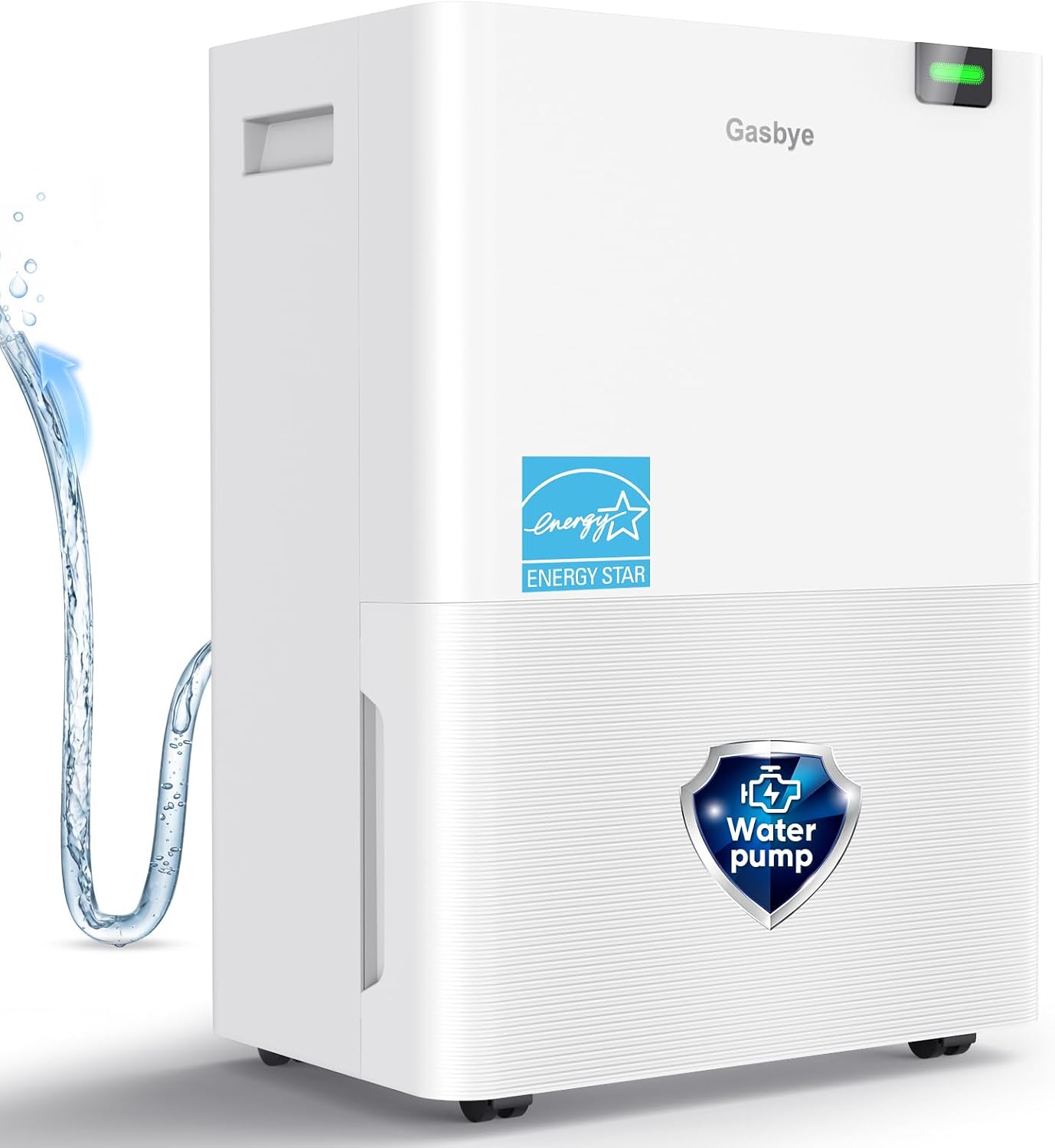
Best for the Deepest Damp: 2026upgraded 80 Pint for Basement
The name says 2026 upgraded, 80 pints, Energy Star, and basement, and that combination is exactly what I look for in a basement machine. The upgrade wording is a warning as much as a selling point. This category gets refreshed every year, and the listing is the only reliable spec sheet. Read the current listing before you buy, because the model someone reviewed last spring may not be the model shipping now.
For a basement that has actually taken on water, or a crawlspace with a history of standing water, this is the class of machine you want. An 80 pint per day claim, derated for reality, is still a serious amount of water pulled out of the air. Combine it with a hose drain and a hygrometer you trust, and set the humidistat to 50 percent rather than 35. Chasing 35 percent in a Louisiana basement is how you buy a second unit.
Best Value for a Big Basement: KNKA 5500 Sq.Ft
The KNKA claims 5,500 square feet and a max of 80 pints per day with an Energy Star rating. It sits in the same class as the AEOCKY and the 2026 upgraded unit, and the differences between the three come down to the details on the listing and the price of the day. That is why I keep saying check the current listing instead of trusting a number from a review written two summers ago.
Same rules apply. Hose drain, humidistat at 50 percent, and 12 to 18 inches of clearance on the intake side so the unit is not breathing its own exhaust. Put it near the damp corner, not near the stairs where it looks tidy.
How I evaluate a dehumidifier
Every unit I look at goes through the same routine, and none of it involves reading the box.
Bucket test. I weigh the water a unit pulls over a day, in real humidity, in a real room. A kitchen scale and a bucket tell you more about a dehumidifier than any spec sheet, because they measure the water that actually came out of your air, not the water the lab says could come out.
Meter week. A watt meter goes on the plug for a week, then I do the math to a monthly bill. A unit that draws less and runs longer can beat a unit that draws more and cycles hard, and you cannot tell which is which from the marketing copy.
Hygrometer check. I set my own hygrometer next to the unit and compare it to the built in humidistat. I have seen humidistats off by 15 percent from a calibrated hygrometer, and that error is the difference between a dry room and a mold farm. Trust your own meter.
Drain and restart. I check the drain port for a real hose connection, and I check what the unit does after a power outage. A machine that comes back in fan only mode after a storm has failed the test that matters most in this state.
None of the coverage or capacity numbers in this guide are mine. They are manufacturer claims, and I have labeled them that way. Where a claim is missing, I say so instead of filling in the blank.
The dehumidifier comparison table
This is the table I keep for the units in this guide. The coverage and capacity columns are the manufacturers' claims, not my measurements. The price column is not a price, because prices move weekly and any number printed in a review is stale by the time you read it. Click through and check the current Amazon price yourself before you commit.
| Unit | Claimed coverage | Claimed capacity | Price |
|---|---|---|---|
 Visit on Amazon → Visit on Amazon →TABYIK 35 OZ Dehumidifier for Bedroom RV |
Bedroom, RV, small closed rooms | 35 ounce tank, auto shut off | $45.99 |
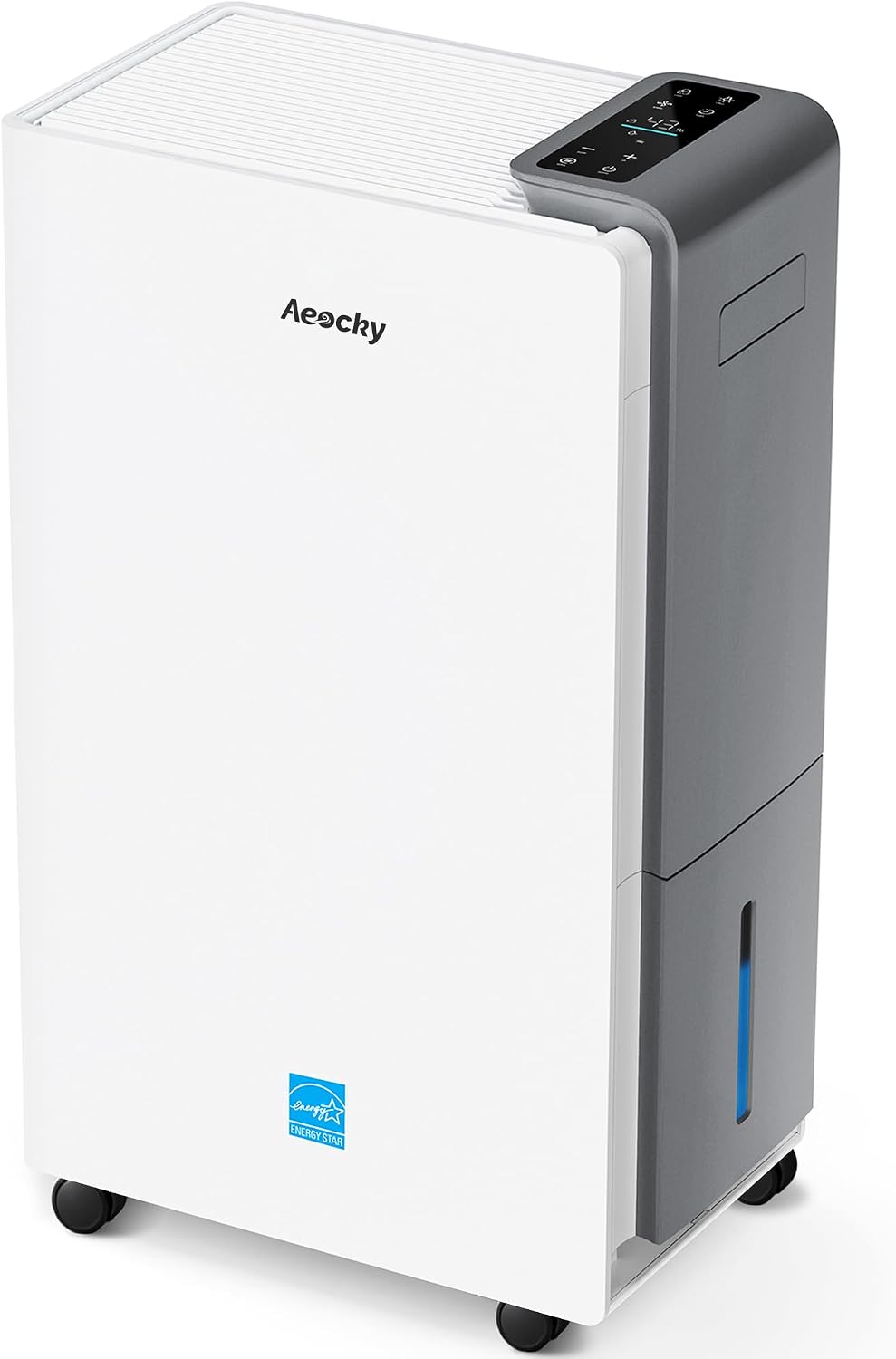 Visit on Amazon → Visit on Amazon →AEOCKY 5500 Sq.Ft Energy Star Most Efficient 2025 |
5,500 sq ft | Max 80 pints per day | $224.97 |
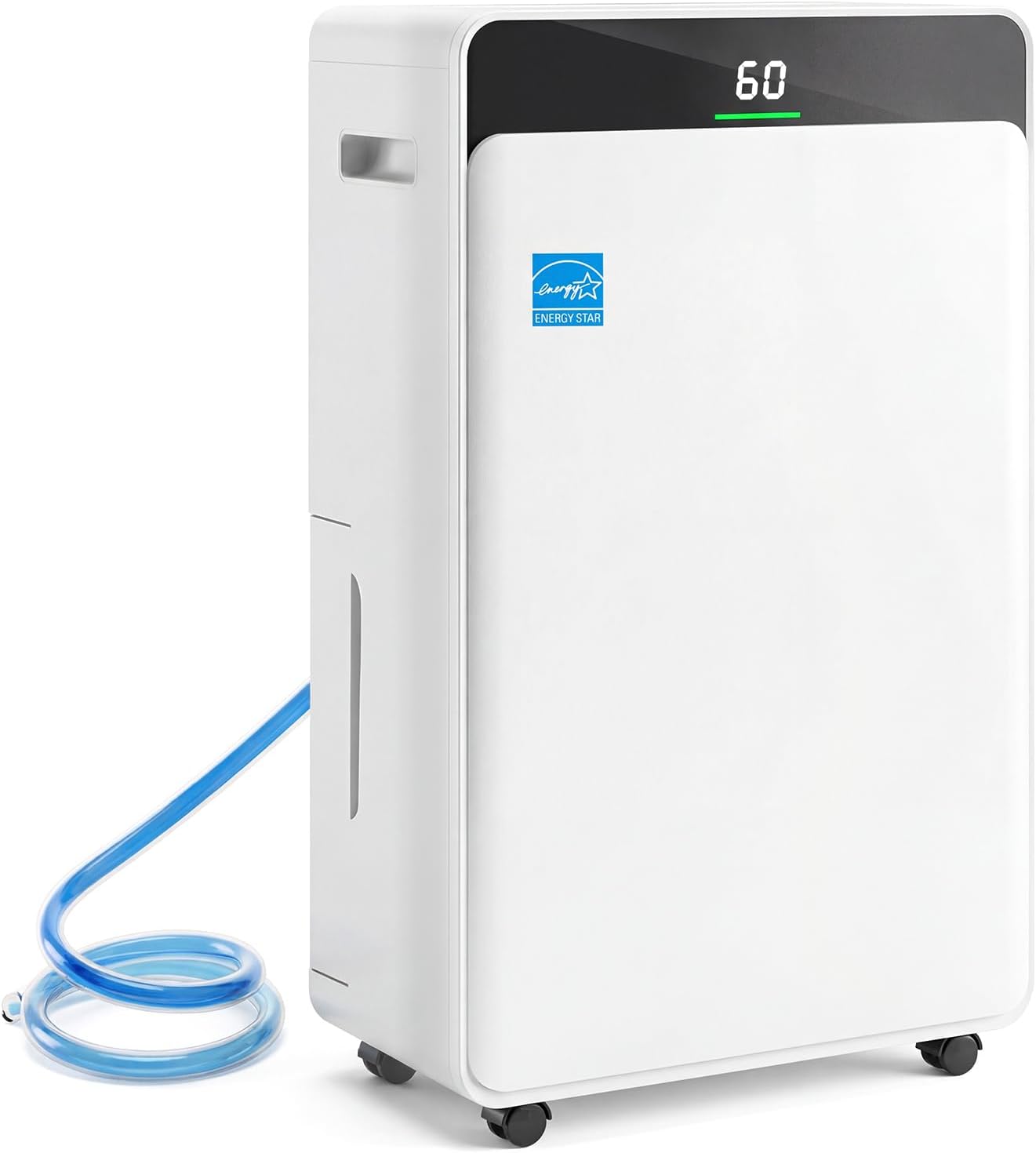 Visit on Amazon → Visit on Amazon →2026upgraded 80 pint energy star dehumidifier |
Basement | 80 pints per day | $134.99 |
 Visit on Amazon → Visit on Amazon →KNKA Energy Star 5500 Sq.Ft Dehumidifier |
5,500 sq ft | Max 80 pints per day | $179.99 |
The key line in that table is the tank line on the small unit. Everything else is a coverage claim that has to survive your floor plan. Read the table with your own square footage in mind, not the number on the box.
What about desiccant units?
Compressor machines, which is what all four units here are, work by moving heat. That means they lose capacity as the room gets colder. In a warm Gulf Coast basement in July they are at their best. In a cold northern basement in February they struggle, and that is where desiccant units earn their place, because desiccant drying does not care about the temperature the same way.
Most buyers never need to think about this. If your damp space stays above roughly 65 degrees, buy a compressor unit and put the money into capacity instead. If you are drying a cold cellar, look at the desiccant side of the market before you buy anything in this guide.
Should you buy the AEOCKY 5500 Sq.Ft?
For a large open basement, yes. The Energy Star Most Efficient 2025 label and the largest coverage claim in this group make it the machine I would put first on a short list. Read the listing, confirm the current specs, and plan the hose drain before it arrives.
Should you buy the 2026upgraded 80 pint?
Yes, for a basement with a real water history. An 80 pint per day class machine with an Energy Star rating is the right tool for a wet crawlspace or a finished basement that smells like one. Check the listing carefully, because the upgraded naming means the spec sheet changes from year to year.
Should you buy the KNKA 5500 Sq.Ft?
Yes, if the price is right on the day you buy. It belongs in the same conversation as the other two full size units, with the same 5,500 square foot and 80 pint per day claims and the same Energy Star rating. Between three units that close on paper, let the current listing and the current price break the tie.
Should you buy the TABYIK 35 OZ?
Yes, for a bedroom, an RV, a closet, or a bathroom, and no for anything larger. It is quiet, it shuts off automatically, and it is honest about what it is. A small unit used in a small room works. A small unit used in a basement is a tank you will empty twice a day while the mold keeps growing.
Buy for the room you actually have, set the humidistat to 50 percent, and put a hose on anything doing basement duty. That is the whole decision, and it has nothing to do with the number on the box.