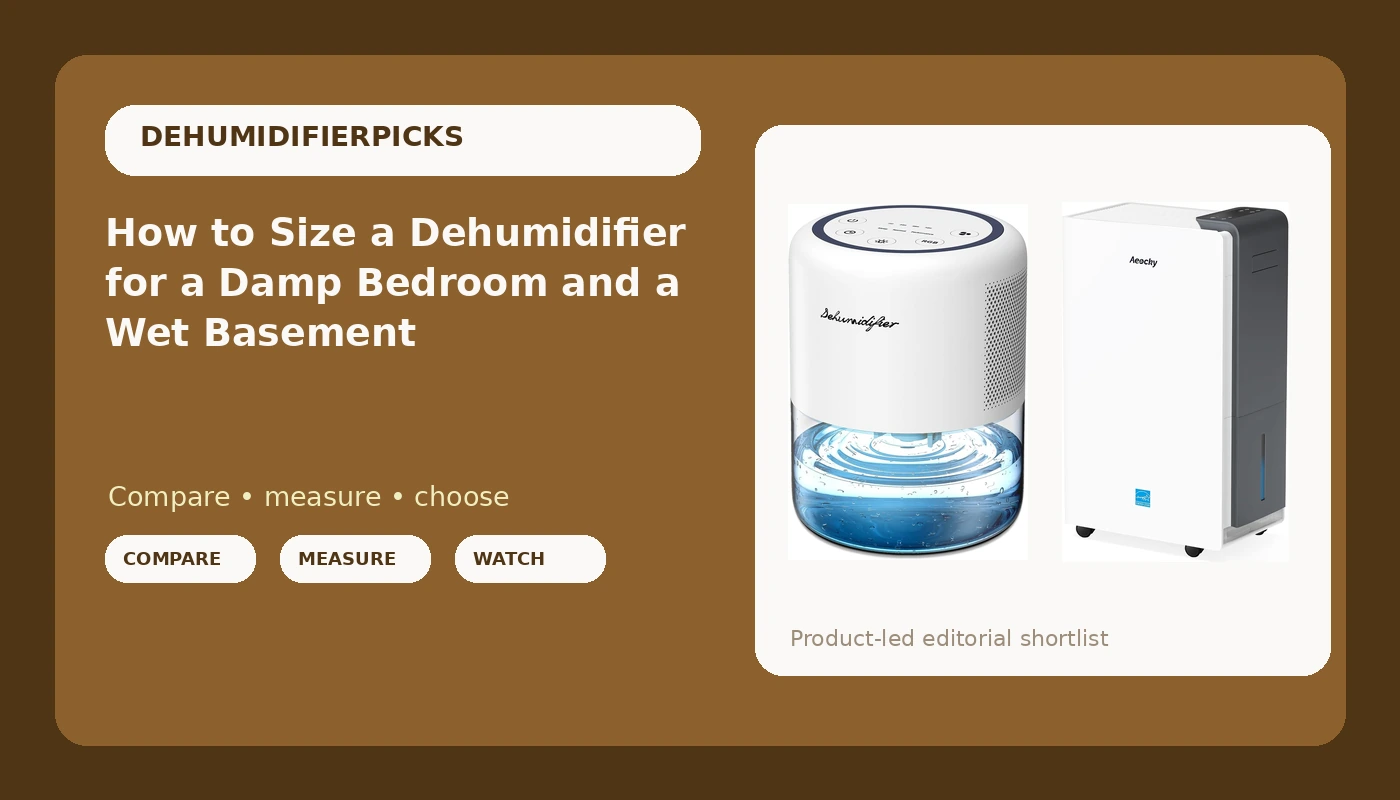
Most people buy a dehumidifier the way they buy a box fan. They feel damp, they order the one with the most stars, they plug it in, and three weeks later the tank is full at 2 a.m., the room still smells like a wet crawlspace, and the unit is in the garage next to the treadmill.
Learning how to size a dehumidifier is one afternoon of work with a hygrometer and a tape measure, and it keeps you from buying the wrong machine twice.
I have been an HVAC technician in New Orleans for 18 years. I have cut moldy drywall out of houses in Lakeview and Gentilly, and I have serviced dehumidifiers in rentals where nobody had emptied the tank since the previous tenant left. My own 1920s shotgun house has no central air in the back rooms, so I live with the same Gulf Coast humidity I get paid to fix. I keep a hygrometer log, a watt meter, and a bucket routine where I weigh the water every unit pulls, because the pint rating on the box is a lab number and your hallway is not a lab.
Why you should trust me
Eighteen years of installs and service calls, most of them within ten miles of the Mississippi River, where the outdoor air sits above 70 percent relative humidity for months at a time. I have run more than ten portable units through real summers in my own house, no climate chamber, no 80 degree test room with the door taped shut. I log the hygrometer readings, I run each unit on a watt meter for a week, and I weigh what it pulls out of the air instead of trusting the marketing copy. When a machine does not work, I say so, even when I am the one who sold it.
How I decide what fits a room
The box tells you two numbers and both of them need adjusting.
Square footage. That number assumes an 8 foot ceiling, a closed door, and a room that is only moderately damp. A 215 square foot bedroom with a shut door is a genuinely small job. A 6,000 square foot open commercial floor is a different category of machine entirely, and if you put a bedroom unit in that space you will empty the tank four times a day and still not get ahead of it.
Pints per day. This is the number I trust least. It gets measured in a lab at a temperature and humidity level your house will not hold. In real humidity, with real door gaps and a real bathroom door opening twice a night, cut the rating by 30 to 40 percent. If you need 30 pints a day of actual removal, do not buy a 30 pint machine.
Temperature. Compressor units win in warm rooms. Desiccant units win in cold basements, because a compressor coil quits pulling water when the air around it drops into the 50s. Most reviews never mention this, and it is the single most common reason a machine "stops working" in a Michigan basement in February.
The tank. The tank is the product. A unit that shuts off when the tank is full is a unit that stops working at 3 a.m. in the worst month of the year. Tank is fine for a bedroom. A hose drain is non-negotiable for a basement or a whole floor, and I install hose kits as often as I install the units themselves.
The humidistat. Check it against your own hygrometer. I have seen built-in humidistats off by 15 percent, which means the machine is either running when it should be off or sitting idle while the room climbs past 65 percent.
Picks for the two rooms I get called about most
These are the two ends of the sizing range: the small closed room where a tank unit is genuinely enough, and the large open space where nothing portable in the toy aisle will keep up. Both links below go to the live Amazon listing so you can check the current price yourself.
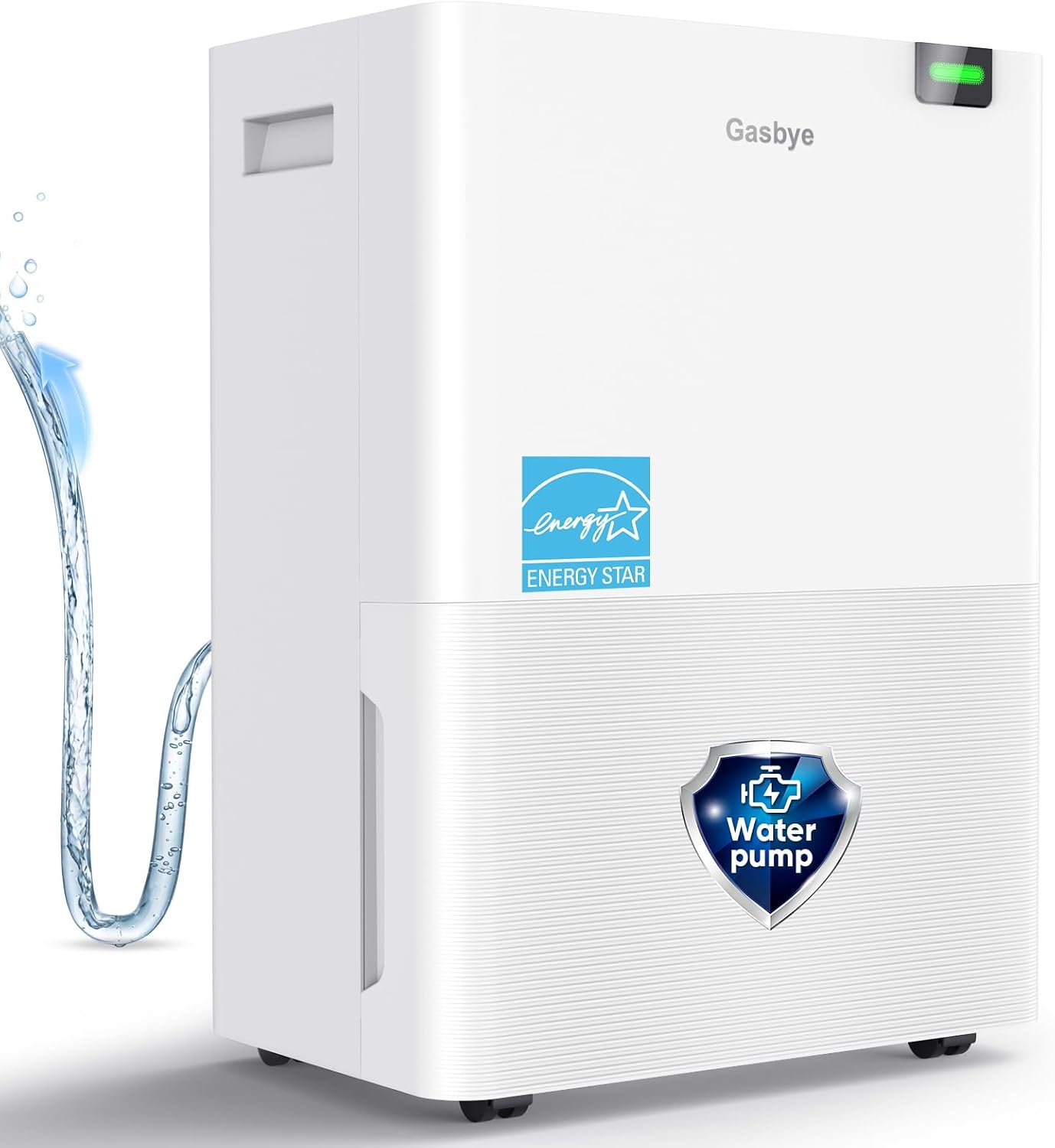
Bedroom and closet pick: 44oz(1.3L) Small Dehumidifier for Home Auto-Off Quiet Portable Dehumidifier with 3 Modes 10 Color Lights 4 Timer Settings for Bedroom Bathroom Closet (215 sq.ft)
 Visit on Amazon →
This is the machine I point people toward when the problem is one closed bedroom, one bathroom, or a closet that smells like a wet towel. The rated coverage is 215 square feet, which lines up with the small-room job if you keep the door shut and give the unit some air to work with. It runs three modes, it has four timer settings, and it shuts off automatically when the tank fills, which is the feature that matters most in a bedroom because that is where it will run overnight.
The tank is 44 ounces, or about 1.3 liters. That is roughly a third of a gallon, and I want you to hear that clearly: in a genuinely damp Gulf Coast bedroom in August, you will be emptying that tank daily. If daily emptying sounds like a chore you will skip, this is not the right machine for a basement. It is the right machine for a bedroom or a bathroom where you want the air dried out and the fan noise low enough to sleep through. The ten color light settings are decorative. They do not dry air. Some people like them as a night light, and that is the honest case for them.
Flaws but not dealbreakers: The tank is small, and the 215 square foot rating assumes a closed door. Put it in an open hallway and it will chase the whole house and lose.
Anyone with a damp bedroom, a bathroom with no exhaust fan, or a musty closet who wants quiet and simple and does not want to run a drain hose should start here.
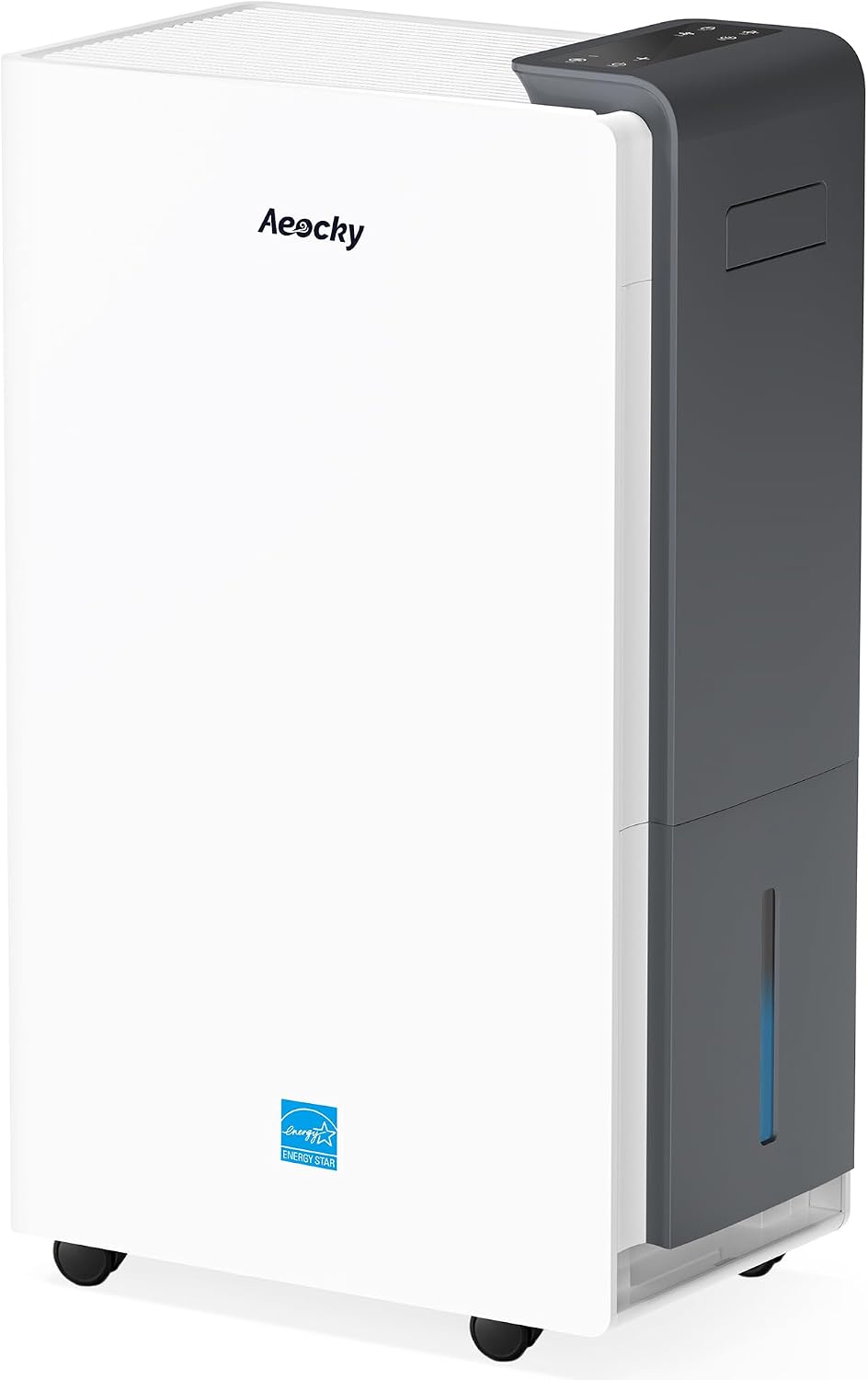
Whole-floor pick: AEOCKY 6000Sq.Ft Commercial Dehumidifier, Energy Star Most Efficient 2024
 Visit on Amazon →
This is the other end of the scale, and it is the one I would look at for a full basement, a garage, a shop, or an open first floor that stays wet no matter what you do. It carries the Energy Star Most Efficient 2024 designation, and that is not decoration to me. I run a watt meter on every unit for a week because energy use is a monthly bill, not a spec sheet line, and a machine that runs 24 hours a day in a Louisiana summer will make that difference visible on your utility statement.
A 6,000 square foot rating is a big envelope. Read it as capacity headroom, not as a promise that one unit dries a warehouse with the loading door open. The machine still has to pull the water out of air it can reach, and air has to move to it. In a basement, place it near the wettest corner and give it room to breathe, not jammed against a wall.
Flaws but not dealbreakers: This is a commercial-class unit. It moves a lot of air, and moving a lot of air makes noise, so it does not belong in a bedroom you are trying to sleep in. It is also overkill for a 150 square foot closet, where the small unit above does the same job for a fraction of the footprint. Plan on a hose drain, because no tank on earth is worth emptying daily on a machine built to run this hard.
Anyone treating a basement, a crawlspace-adjacent utility room, a garage, or an open floor plan that never dries out should size up to this class instead of buying three small units and hoping.
The actual sizing and setup workflow
This is the part that decides whether either machine above works. Do these in order.
Step one: log the room before you buy anything. Get a hygrometer, the cheap digital kind is fine, and write down the reading in the morning and again in the evening for a week. Above 60 percent relative humidity is where I stop arguing about whether a space needs a dehumidifier. Below 50 percent, you may be solving a problem you do not have. The log also tells you whether the dampness is constant or shows up only after rain, which changes the machine you need.
Step two: measure the room, then measure it honestly. Length times width, then look at the ceiling height and the door situation. A 215 square foot bedroom with a closed door is a small job. The same 215 square feet inside an open floor plan that shares air with the rest of the house is not, because the machine is now fighting the whole volume.
Step three: adjust the rating down. Take the pints per day figure you think you need and add 30 to 40 percent. A lab measures that number at conditions your house will not hold. Door gaps, a bathroom door opening twice a night, and a house that never gets below 70 percent in July all eat into it. Oversizing slightly costs less than undersizing and running the unit flat out forever.
Step four: check the temperature of the space. Warm room, compressor unit. Cold basement that sits in the 50s, desiccant unit. If you buy a compressor machine for a cold space and it stops pulling water, it is not broken, it is out of its operating range.
Step five: decide tank or hose before you order. Bedroom, tank is fine. Basement or whole floor, run the hose. Route it to a floor drain, a condensate pump, or a sump, and make sure the hose runs downhill the entire way. A hose that sags and holds water will back up and shut the unit down, and you will blame the machine.
Step six: place it where the air moves. Middle of the problem, a foot off the wall, doors and windows shut while it runs. A dehumidifier in the corner behind a couch is a dehumidifier working on the back of a couch.
Step seven: set the humidistat and verify it. Set it to your target, usually somewhere in the 45 to 50 percent range, then put your own hygrometer next to the machine for a day. If the two readings disagree by more than a few points, trust the hygrometer and set the unit by hand. This is one of the most common complaints I get, and it is almost always the built-in sensor, not the compressor.
Step eight: test a power blip. Unplug the unit and plug it back in. Some machines come back in fan only mode, blowing air and pulling no water, and you will not notice for a week. Check it once when you set it up so you know what yours does.
What I would not buy for this job
I am not going to send you toward a machine I have not put my hands on, so here is the honest version of what to skip.
Skip the toy compressor in the sub-$100 aisle if you are treating a basement. It will run constantly, pull a cup a day, and die in a year. The small unit above is for a closed bedroom, not for a wet slab.
Skip the desiccant-versus-compressor debate until you know your room temperature. Buying the wrong type for the space is the most expensive mistake in this category, and it has nothing to do with brand.
Skip whole-house humidity problems. That is HVAC sizing and duct work, an install, not a portable machine, and it is outside what I will guess at from a product listing.
Skip the app. The app is a support call generator. I have reset more Wi-Fi modules than compressors, and every one of those calls started with someone wanting to change a setting from the driveway.
And consider the cheap option first: if the damp room already has a window air conditioner, run it in dry mode for a week and log the hygrometer. Sometimes that is enough, and I would rather tell you that than sell you a machine you do not need.
What it costs to run, and what to ignore
I am not printing prices here because they move, and both product blocks above link to the live listing where you can check the current number. What I will tell you is how to do the running cost math yourself, because that is the number nobody puts on a box.
Plug the unit into a watt meter for a week and write down the kilowatt hours. Multiply by your utility rate. In a Gulf Coast summer, a machine that runs continuously will show up on your bill in a way a machine that cycles on a humidistat will not, and that gap is where the inverter compressor argument gets settled. I let the meter decide, not the brochure.
Then add the parts nobody budgets for. Filters cost real money and need replacing on a schedule, so look up the filter price for whatever you buy before you buy it, and check whether it is washable. A washable filter is the difference between a machine you maintain and a machine you abandon.
Finally, price your own time. A unit with a small tank in a wet room means a daily chore. That chore is the reason people stop using dehumidifiers. If you know you will not empty a tank every morning, buy for the hose, not for the tank.
The short version
Measure the room with a hygrometer, cut the pint rating by a third, match the machine type to the room temperature, and decide tank or hose before you order. A closed bedroom gets the small unit. A basement or an open floor gets the commercial class machine and a drain line. Set the humidistat against your own meter, test the restart after a power blip, and keep the filter clean.
That is the whole job. Do it once and the room stays dry, and you never think about the machine again until the filter needs a rinse.