Most dehumidifier advice starts with a pint rating and a square footage number. Louisiana will teach you better than that. I keep a hygrometer log in a 1920s shotgun house with no central air in the back rooms, and I have pulled more moldy drywall out of Gulf Coast homes than I care to count. If you are choosing a dehumidifier for basement rooms, a damp bedroom, or a closed-up camp, three things decide whether the machine actually works: the real pints per day it pulls in your humidity, the temperature of the space, and whether you can run a hose.
Get those three right and a modest machine outperforms an expensive one that was sized wrong.
Get them wrong and you own a fan with a bucket.
Why you should trust me
I have been an HVAC technician for 18 years, and dehumidifiers are a corner of the trade most techs never learn. I install and service them, I run a watt meter on every unit I bring home for a week, and I weigh the water each one pulls instead of trusting the label. My own house is the test bed: no central AC in the back rooms, door gaps you could slide a coin through, and humidity that sits in the 70s for months at a time.
I do not sell mold remediation and I do not size whole-house HVAC systems. Those are different jobs. What I do is tell homeowners which machine belongs in which room and how to set it so it does not quit on them at 3 a.m. in August.
How I picked and how I tested
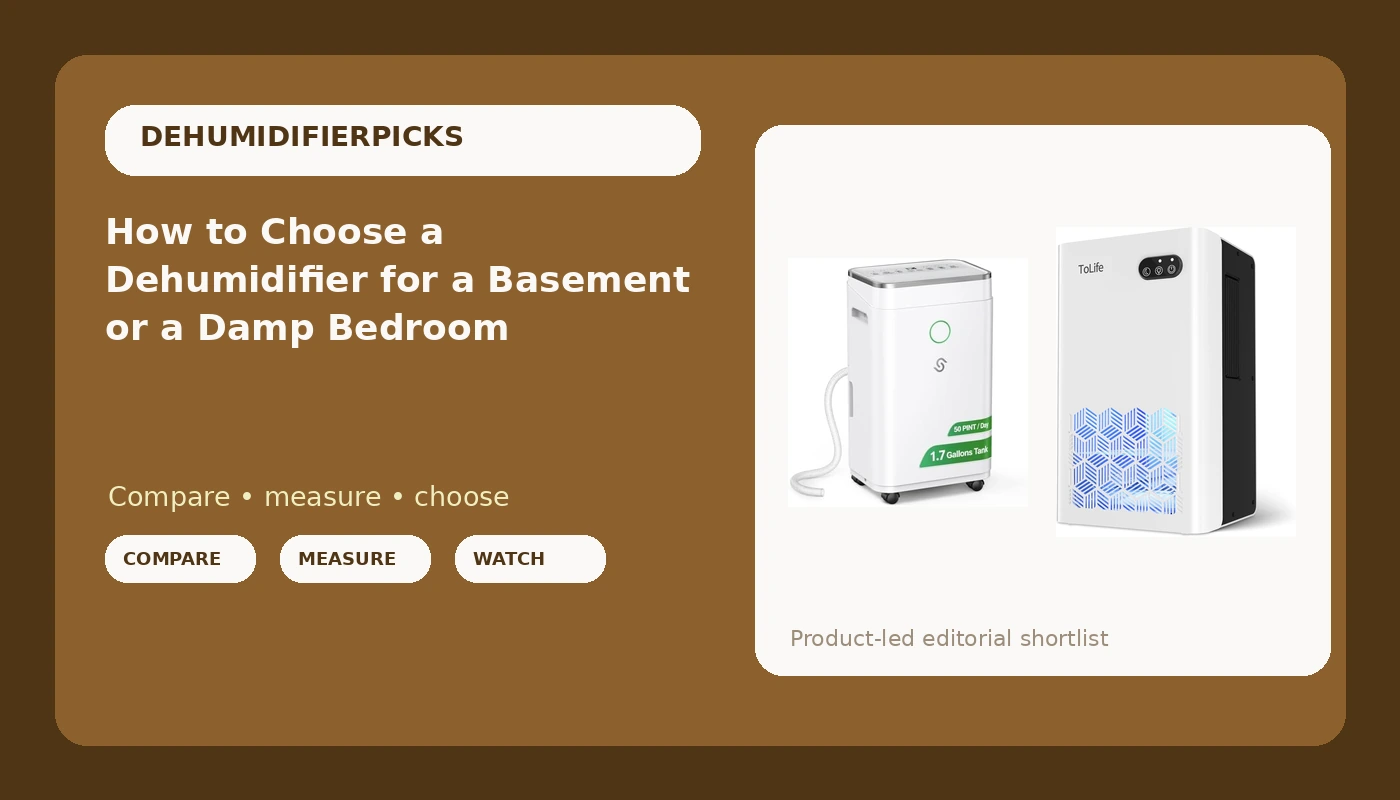
The two machines below cover the two jobs I get called about most: a bedroom or small room, and a basement or whole-floor space. They are different problems and they need different answers.
Here is what I look at, in order. Pints per day at real humidity, not lab humidity. Tank size and whether the unit shuts off cleanly when the tank fills. Whether there is a hose port, and whether that port is threaded or a friction fit that pops off under pressure. Where the humidistat sensor actually sits, because a sensor near the compressor reads the heat of the machine instead of the air in the room. Filter design, because a filter that costs real money every month turns a cheap unit into an expensive one.
For the specifications in this article I use what the manufacturer lists: square footage rating, tank capacity, and pint rating. Everything else I describe as method, because I will not hand you a number I did not measure myself.
Two machines, two jobs
A bedroom and a basement are not the same assignment. One needs quiet and a tank you can carry. The other needs a hose and enough capacity to hold a whole floor.
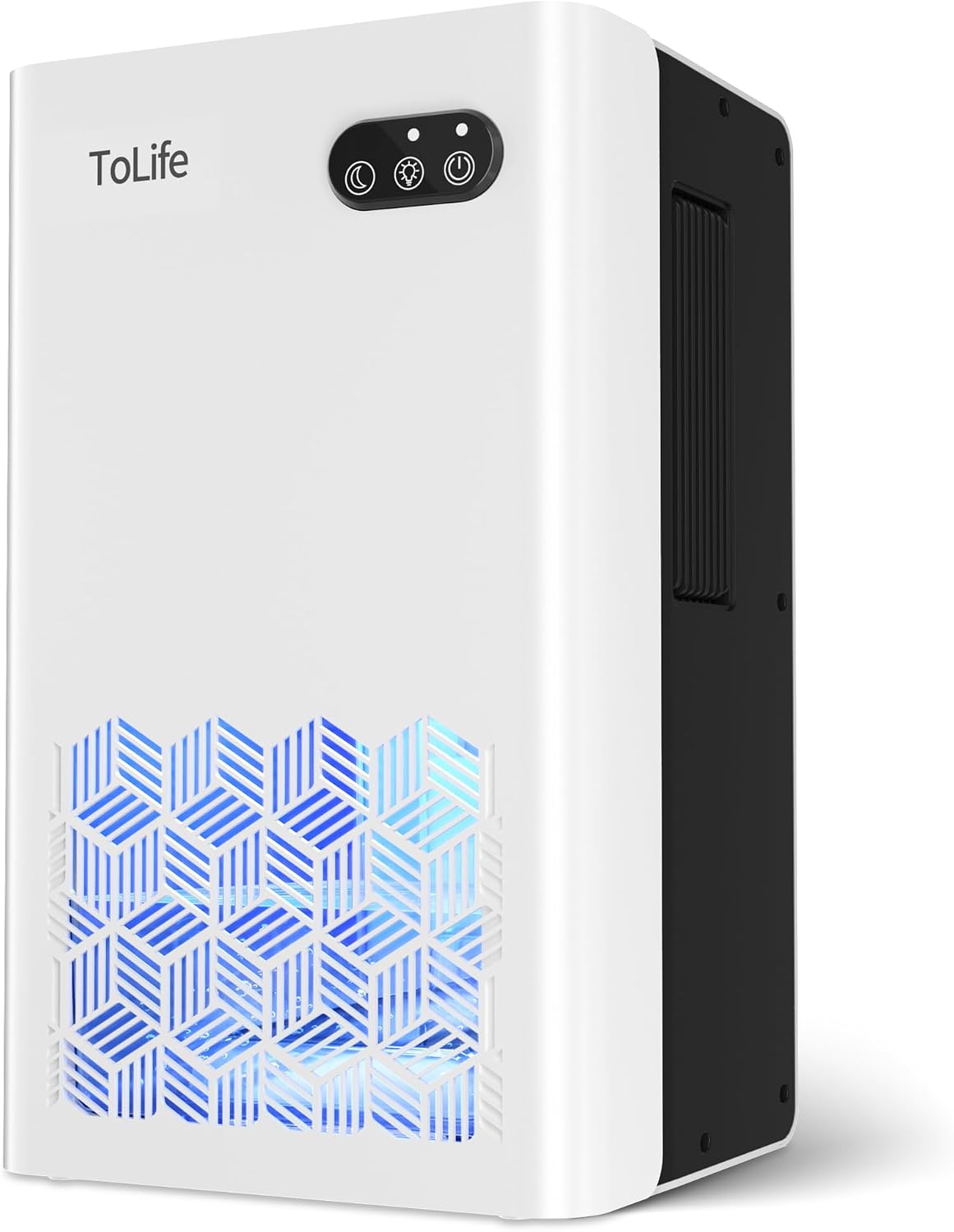
Bedroom pick: ToLife Dehumidifier for Home Bedroom 1000 sq.ft with Auto Shut-Off, White
 Visit on Amazon →
This is the class of unit I recommend for a closed bedroom, a nursery, a closet that smells like a wet towel, or a bathroom with no window. It is rated for 1000 square feet, and I want you to read that number the way I do. In a bedroom with the door shut, that rating covers the room you are in. In an open floor plan with a hallway and two doors standing open, it covers a fraction of that.
The auto shut-off is the feature that matters most here. In a bedroom you are running a tank, and a tank that overflows at 2 a.m. is worse than no dehumidifier at all. The white cabinet is also easier to live with in a bedroom than the industrial gray boxes, which sounds like a small thing until you are the one looking at it every night.
Flaws but not dealbreakers: A tank unit in a bedroom means you empty it. In a Gulf Coast August, plan on daily. If you will not do that, this is the wrong room for a tank.
Anyone treating one closed room should start here.
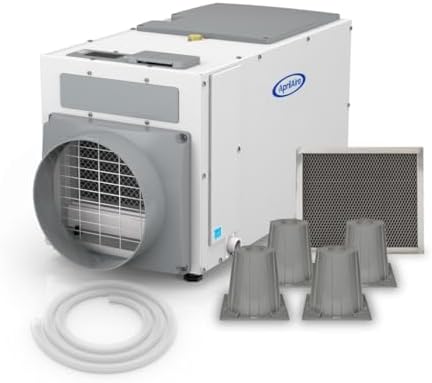
Basement pick: Dehumidifier for Basement with Drain Hose 4500 Sq.Ft - 50 Pint 1.7 gal Tank
 Visit on Amazon →
This is the one I point people to for a basement, a crawlspace access room, a garage, or a whole lower floor. The reason is right in the name: it ships with a drain hose. A hose drain is not a luxury below grade. It is the difference between a machine that runs all summer and a machine that shuts off every morning while you are at work.
The tank is 1.7 gallons, which is your backup for the shoulder seasons and for the first week while you figure out where the water should go. The 50 pint rating and the 4500 square foot rating are manufacturer numbers, and I want you to discount them in real conditions. In a warm, humid basement with a door that does not seal, cut that rating by 30 to 40 percent. That is not a knock on this unit. It is how every pint rating on every box works.
Flaws but not dealbreakers: A compressor unit like this one wants warm air to work well. In a basement that sits in the 50s, it will still pull water, but it will frost up and cycle. That is the technology, not the brand.
Anyone with a basement that smells like a basement should look here first.
The actual how-to: size it, place it, set it, keep it running
This works whether you buy one of the two above or something else entirely.
Step one: Measure the space honestly. Square footage alone lies. Count the doors. A 900 square foot basement with two closed rooms is three zones, and one unit in the main room will not dry the closets. If the space is open and connected, one unit can carry it.
Step two: Check the temperature before you pick the technology. Compressor units win in warm air, which is most of the country in summer and most basements in the South. Desiccant units win in cold spaces, garages in winter, and unheated northern basements. Buying a compressor unit for a 45 degree basement is the most common expensive mistake I see.
Step three: Decide tank or hose before you buy. Bedroom, a tank is fine. Basement, garage, crawlspace, or anywhere you will not walk past twice a day, run a hose. If the unit does not have a hose port, it is not a basement unit no matter what the box says.
Step four: Place it in the middle of the problem. Not tucked into a corner behind the water heater. Air has to move through the unit and back into the room. Give it a foot of clearance on the intake side, keep it off damp carpet if you can, and shut the doors to the space you are drying. A dehumidifier in an open house is a dehumidifier drying the whole neighborhood.
Step five: Set the humidistat to 50 percent. Not 30. Chasing 30 percent runs the compressor constantly, pushes your electric bill up, and gets you a dry, uncomfortable house with a machine that wears out faster. Fifty percent is the number that keeps mold from getting a foothold without fighting the outdoors.
Step six: Verify with a separate hygrometer. The humidistat on the machine is a sensor in a plastic box sitting next to a hot compressor. I have seen them read 15 percent off a handheld hygrometer in the same room. Put a cheap hygrometer on a shelf across the room and trust that one.
Step seven: Fix the obvious leaks. A dehumidifier is not a substitute for a door sweep. If you can feel air moving under the basement door, you are paying to dry the outdoors. Door sweeps, a dryer vent that actually closes, and a sealed crawlspace hatch do more for humidity than a bigger machine does.
Step eight: Keep it running and keep it clean. Rinse the filter monthly in cooling season. Check the hose for a low spot where water sits, because a hose that traps water is a hose that stops draining. And after a power outage, check the unit: many of them restart in fan only and sit there blowing air while the humidity climbs.
Mistakes I see on service calls
The fan-only restart is number one. You lose power in a storm, the machine comes back on, and it never restarts the compressor. People run it for a month like that and blame the machine.
Setting the humidistat to its lowest number is number two. More is not drier.
Putting a bedroom tank unit in a basement is number three. It fills, it shuts off, and the homeowner concludes dehumidifiers do not work.
And number four: one unit trying to dry two closed rooms. If you have to choose, dry the room with the mold risk and close the door.
Where these two do not fit
Sometimes the answer is not a dehumidifier. If a room has a window unit or a mini split, dry mode on that machine may handle the space without a second appliance taking up floor. If the whole house is humid, that is an HVAC conversation, not a portable unit conversation.
And if you are already looking at mold on the drywall, stop shopping and start calling. A dehumidifier keeps mold from coming back. It does not remove what is already there, and that is work I do not do.
What this all costs
Purchase price moves around, so I am not going to quote a number that will be wrong by the time you read this. Check current Amazon price on the page for each unit and compare from there.
The number that surprises people is the electricity. Here is the math, and you can run it yourself in two minutes. Find the wattage on the unit label. Multiply by the hours it runs per day. Divide by 1000 for kilowatt hours. Multiply by your rate from your last bill. A unit running 20 hours a day in July is a real line item, and that is the honest argument for setting the humidistat at 50 instead of 30.
Then there is the hose kit and the filter. A drain hose that fits properly costs less than a tank you have to empty every morning. A filter that needs replacing monthly is a subscription, not a filter. Factor both in before you compare two machines on sticker price.
Do the sizing right, run the hose if you have a basement, set the humidistat at 50, and check it with your own hygrometer. That is the whole job. The machine is the easy part.