
A damp basement in August and a fogged bedroom window in January are two different problems, and the best dehumidifiers for basements rarely look like the ones that make sense in a bedroom or an RV. One machine has to run for weeks at a time, pull a serious volume of water, and have somewhere for that water to go. The other can be small, quiet, and emptied once a day without becoming a chore. Buying the wrong one usually shows up as a unit that runs nonstop, a tank you drain twice a day, or a basement that still smells musty three weeks after you plugged the thing in.
This guide compares six portable dehumidifiers that cover that whole range, from a compact 35 ounce bedroom and RV unit up to a 100 pint per day machine for large open basements. It walks through the ratings that actually decide whether a unit works, how to match capacity and drain method to the room, and which of these six fits which job. Every product link below points to the matching Amazon listing so you can confirm current price, availability, and the full spec sheet.
Related: How to Size a Dehumidifier for a Damp Basement
Quick answer
The avylo Dehumidifier for Basement with Pump and Hose, Max 90 Pints/D, White is the strongest fit for a full basement because it pairs a 90 pint per day rating with a built-in pump and hose, so condensate can be pushed to a sink, floor drain, or window instead of collecting in a tank you have to babysit. Choose the AEOCKY 5500 Sq.Ft Energy Star Most Efficient 2025 Dehumidifier Max 80Pint/D instead when running cost is the priority and you have a gravity drain close enough for a standard hose.
Dehumidifiers worth comparing
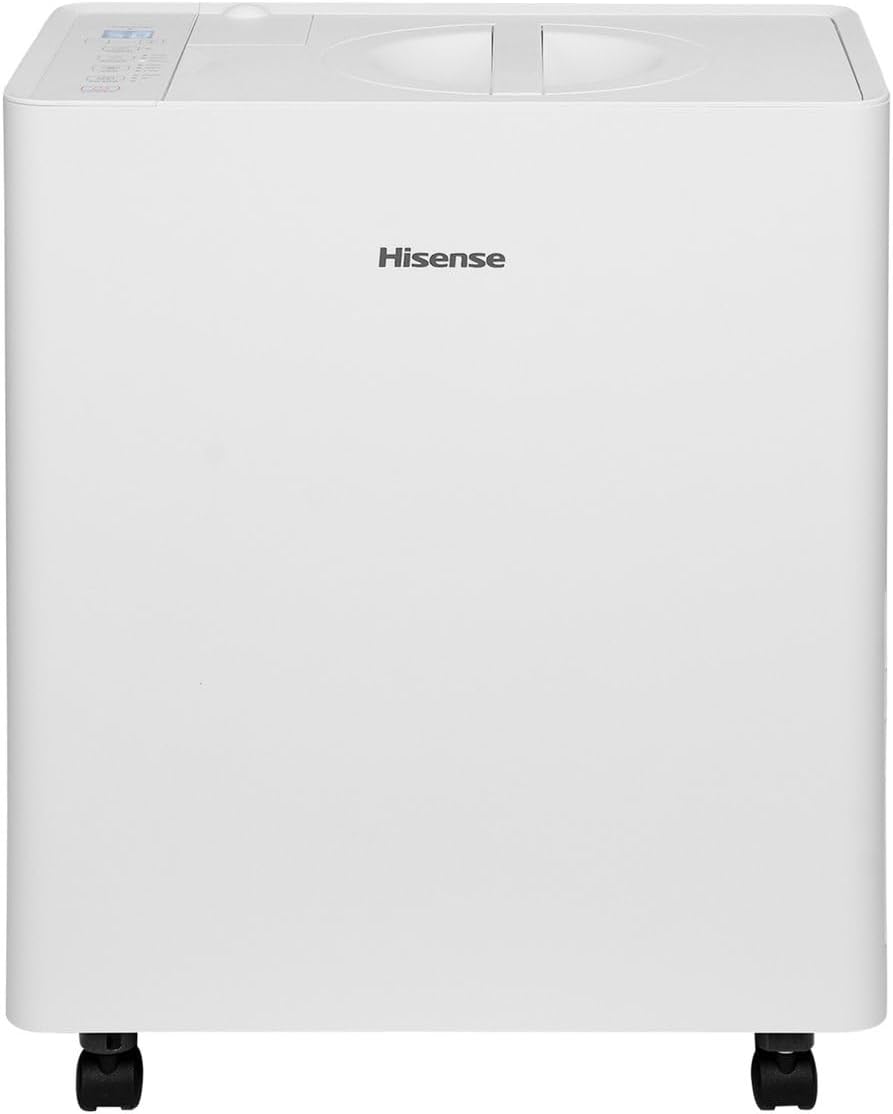
avylo Dehumidifier for Basement with Pump and Hose, Max 90 Pints/D, White
A basement unit rated up to 90 pints per day with a built-in pump and hose, so condensate can be lifted to a sink, floor drain, or window instead of sitting in the tank.
Visit on Amazon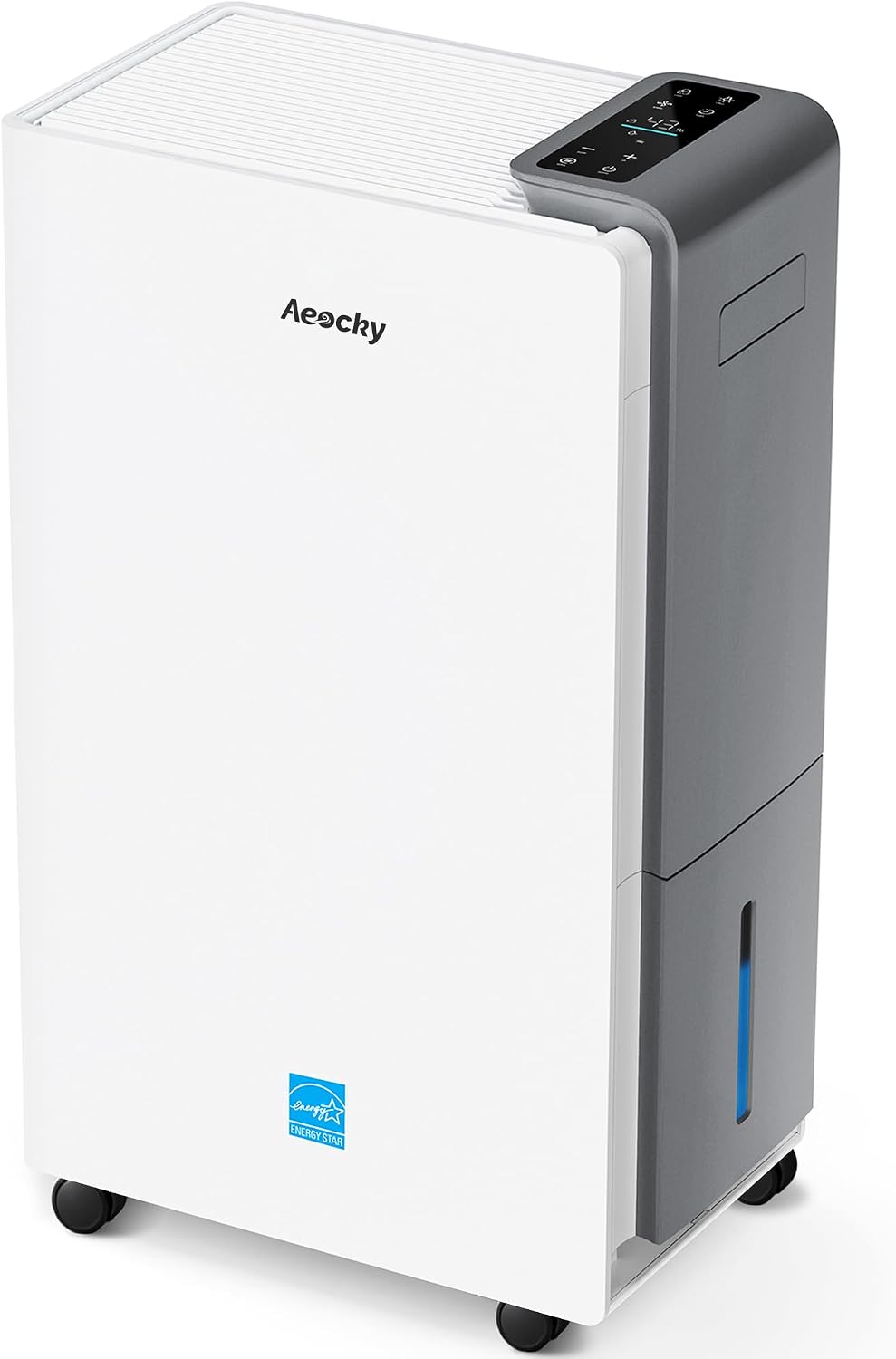
AEOCKY 5500 Sq.Ft Energy Star Most Efficient 2025 Dehumidifier Max 80Pint/D
Rated for spaces up to 5,500 square feet at a maximum of 80 pints per day, and carries an Energy Star Most Efficient 2025 designation for buyers watching the electric bill.
Visit on Amazon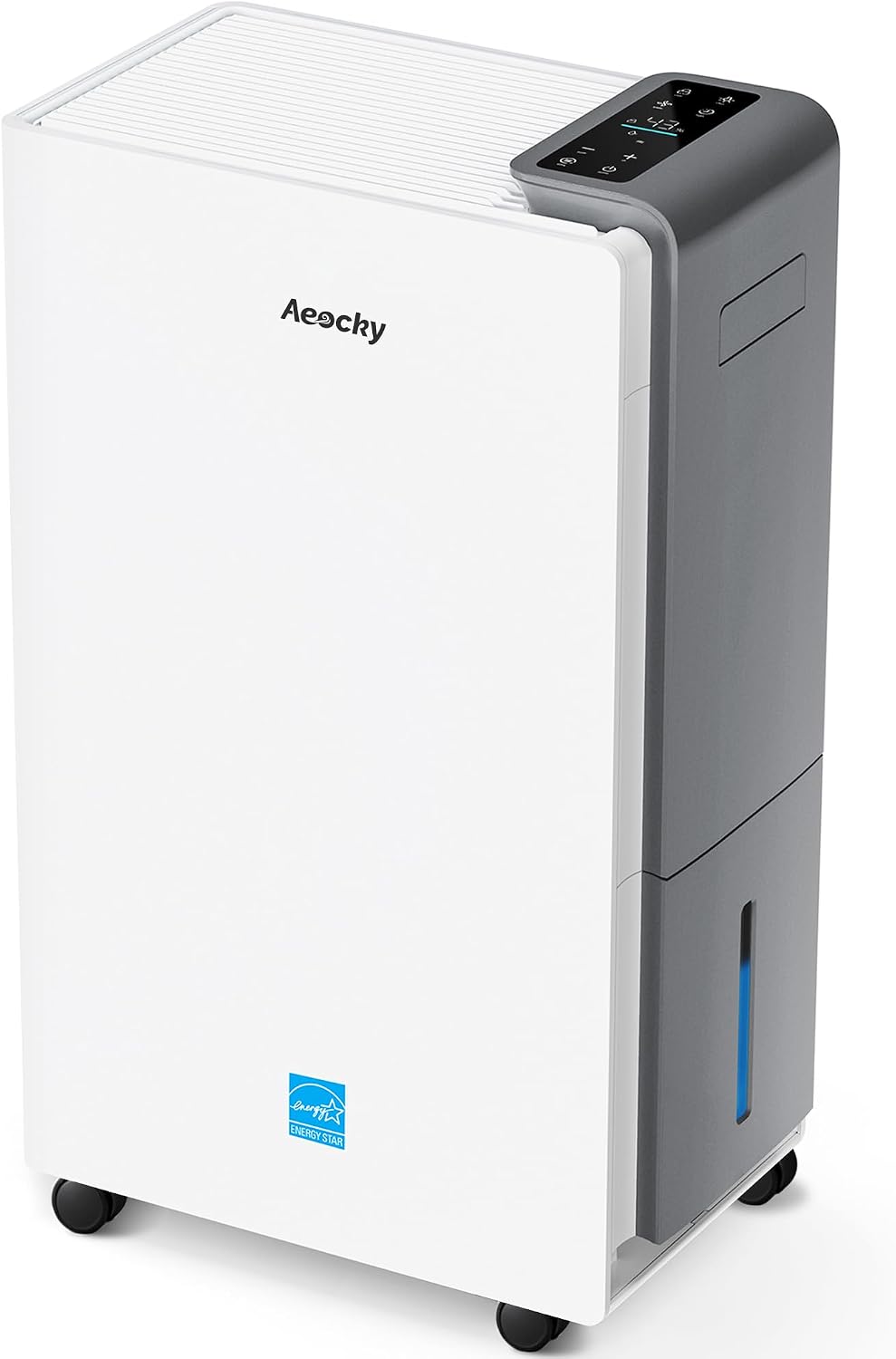
5000 Sq.Ft Dehumidifier, 100 Pint Smart Humidity Control, Drain Hose
The largest capacity in this group at 100 pints per day for spaces up to 5,000 square feet, with smart humidity control and a drain hose included.
Visit on Amazon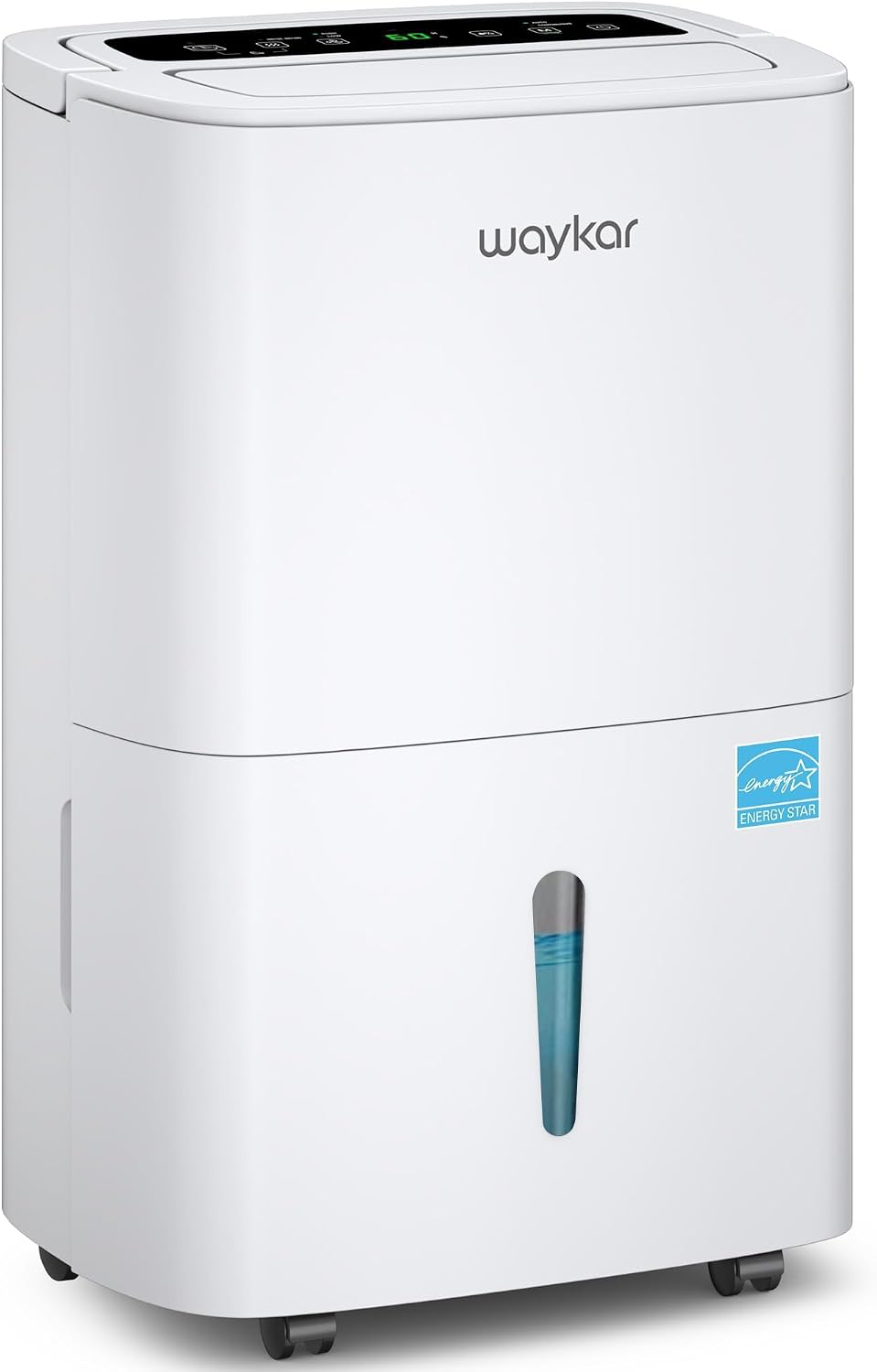
4500 Sq. Ft Dehumidifier for Basement Quilt Compressor Dehumidifiers for Home with Drain Hose, Energy Efficient, Intelligent Humidity Control, Dehumidifier for Bathroom, Bedroom, Office
A compressor dehumidifier rated for up to 4,500 square feet with a drain hose and intelligent humidity control, positioned for basements as well as bathrooms, bedrooms, and offices.
Visit on Amazon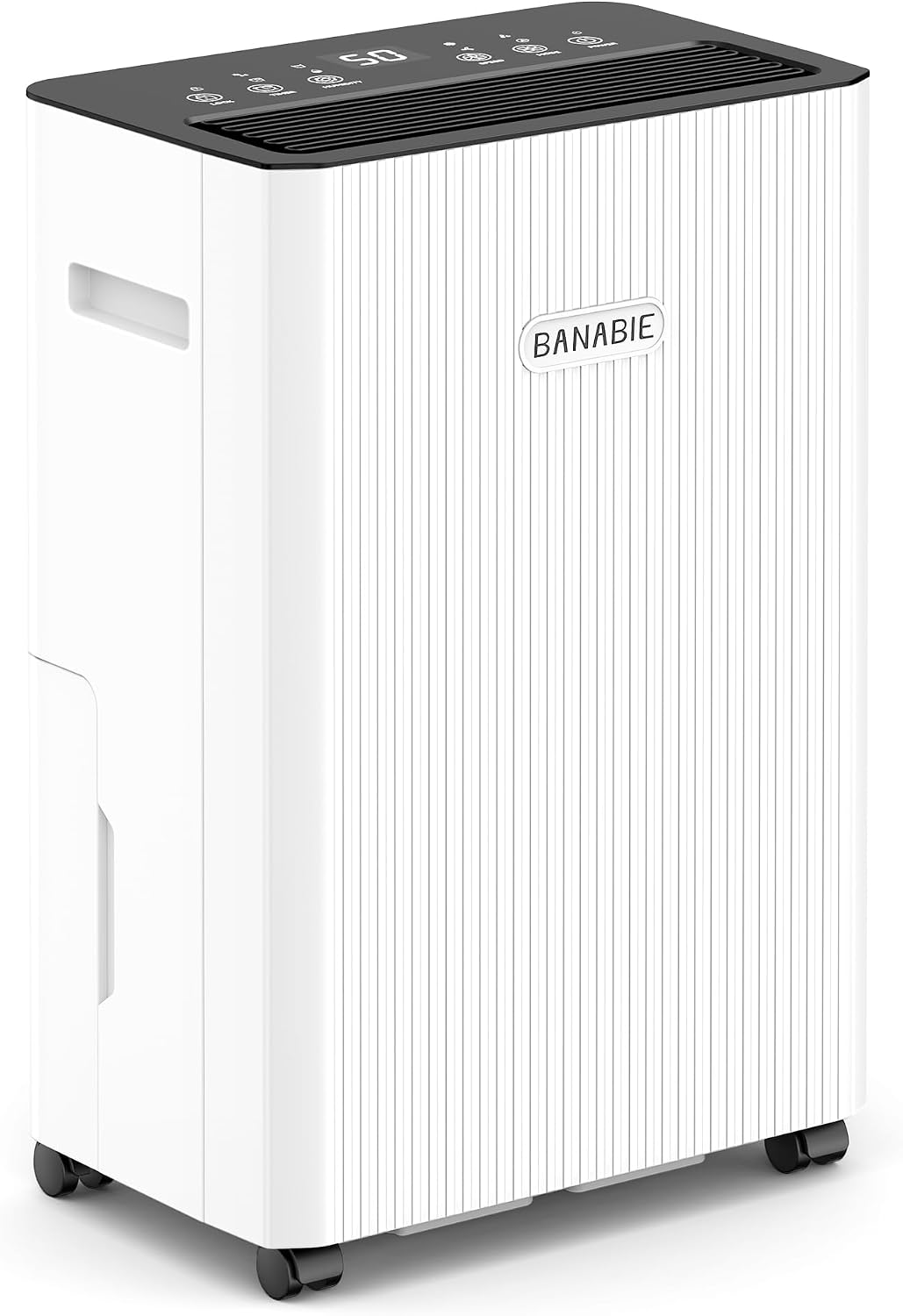
2500 Sq.Ft Dehumidifier for Basement, Max 32 Pints/Day
A smaller basement unit rated at a maximum of 32 pints per day for spaces up to 2,500 square feet, which puts it in reach for finished rooms and crawl-adjacent areas.
Visit on Amazon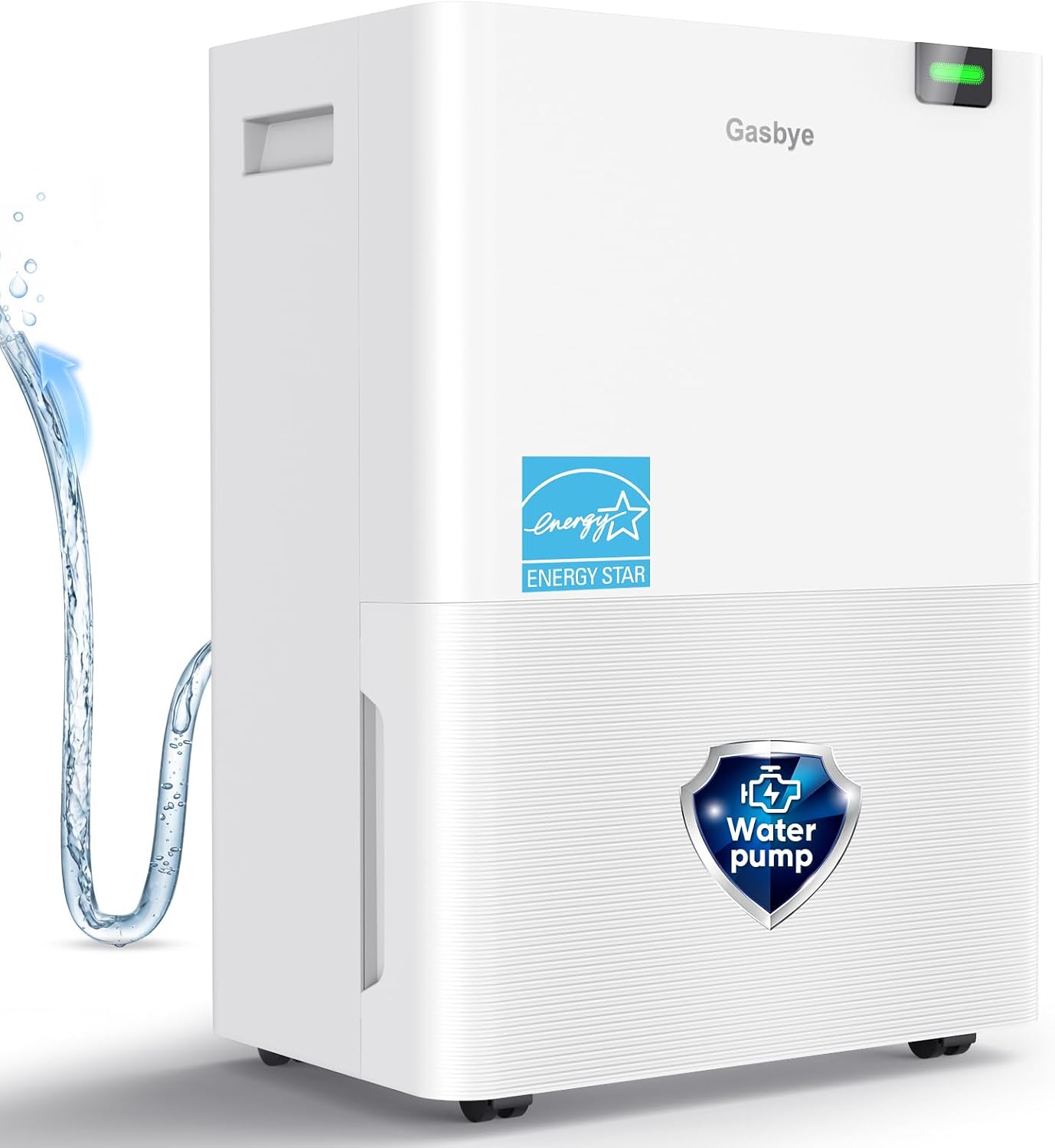
TABYIK 35 OZ Dehumidifier for Bedroom RV, Quiet with Auto Shut Off, White
A compact 35 ounce tank unit built for bedrooms and RVs, with quiet operation and auto shut off when the reservoir fills.
Visit on AmazonPrices and availability may change. Check the retailer for current details.
How these products were compared
This guide compares rated pints per day, stated square footage coverage, drain method (tank, hose, or built-in pump), humidity control, and physical form factor. Product names, images, and retailer links are matched by ASIN so that every card points to the product shown.
The capacity figures here are the manufacturer's published ratings, not bench results. A pint rating is measured under controlled conditions, and a real basement with a leaky bulkhead, a sweating concrete floor, and a furnace pulling in outside air will usually see less than the number on the box. Use those numbers to rank units against each other, then size up if you are stuck between two. Confirm current price and availability through the retailer link, since both move around.
How to choose the right dehumidifier
Start with temperature, because it splits the market in two. Compressor units, which is every full-size machine in this roundup, pull the most water per watt when the air is warm. They are the right call for a basement that stays above roughly 65 degrees through the summer. In a cold crawlspace or an unheated garage that sits in the 50s, a compressor will frost its coils and cycle in and out of defrost, and a desiccant unit is the better tool even though it costs more to run. Most buying advice skips this and then wonders why a unit underperforms in November.
Then think about where the water goes. A tank is fine in a bedroom, where you are standing next to the machine anyway. In a basement, a tank is a daily chore that turns into a flooded floor the first time you forget, which is why a hose drain matters so much on the larger units here. A gravity hose works if you have a floor drain or a sump pit below the outlet. If you do not, a built-in pump is what lets you push condensate uphill to a utility sink or out a window, and that is the feature that separates the top pick from the rest of the field. Coverage claims deserve the same skepticism as pint ratings: a 5,000 square foot number assumes an open, unobstructed floor, and closed interior doors cut that down fast. For a deeper look at matching a rating to a real room, see how to size a dehumidifier for a damp basement.
Two more things worth checking before you buy. First, the humidistat: set a target around 50 percent and confirm with a separate hygrometer, because onboard sensors drift and a unit that thinks the room is drier than it is will shut off early. Second, the restart behavior after a power outage. A machine that comes back in fan only mode has effectively stopped dehumidifying without telling you, which matters in a house that empties for a week at a time.
avylo Dehumidifier for Basement with Pump and Hose, Max 90 Pints/D, White
This is the one I would put in a full basement first. The rated 90 pints per day puts it near the top of this group, and the built-in pump is the feature that makes it practical rather than just powerful. Instead of a tank you empty, the pump pushes condensate through the included hose to a utility sink, a laundry standpipe, or out a basement window. That is the difference between a machine that runs all summer and a machine that shuts off at 3 a.m. on the wettest night of the year because the reservoir filled.
The trade-off is real. A pump adds a mechanical part that can clog or fail, it adds noise, and it usually adds cost over an equivalent gravity-drain unit. You also need a route for the hose that stays below the pump head and does not kink behind the unit. And at 90 pints per day, this is oversized for a single bedroom or a small finished office, where a smaller unit will do the same job for less. Buy it for a basement, a crawlspace opening, or a whole-floor problem, and plan the drain path before it arrives.
Alternatives to consider
The AEOCKY 5500 Sq.Ft Energy Star Most Efficient 2025 Dehumidifier Max 80Pint/D is better suited to a large open space where the electric bill matters, since the Energy Star Most Efficient 2025 designation speaks to efficiency rather than raw capacity. The 5000 Sq.Ft Dehumidifier, 100 Pint Smart Humidity Control, Drain Hose is a stronger fit when you want the highest rated capacity in the group and prefer to set humidity targets from an app instead of walking downstairs.
The 4500 Sq. Ft Dehumidifier for Basement Quilt Compressor Dehumidifiers for Home with Drain Hose, Energy Efficient, Intelligent Humidity Control, Dehumidifier for Bathroom, Bedroom, Office, the 2500 Sq.Ft Dehumidifier for Basement, Max 32 Pints/Day, and the TABYIK 35 OZ Dehumidifier for Bedroom RV, Quiet with Auto Shut Off, White cover the rest of the range. The 4,500 square foot unit is the middle option with a hose and intelligent humidity control. The 32 pint unit is the sensible pick for a finished room or a smaller basement where a 90 pint machine would be overkill. The TABYIK is the only true small-space unit here, with a 35 ounce tank, quiet operation, and auto shut off, which makes it a bedroom, closet, or RV machine rather than a basement one.
Day-to-day use and maintenance
Plan on cleaning the filter every two to four weeks in a dusty basement, more often if you are running it during construction or after a water event. A clogged filter is the most common reason a working unit stops pulling water, and it is also the easiest thing to forget. Wash reusable filters according to the manual and let them dry fully before they go back in. While the filter is out, look at the coils: a coil packed with dust and lint loses capacity quietly.
On a hose-drain setup, check the hose run once a month for kinks, low spots where water can pool, and any uphill section a gravity drain cannot handle. On a pump unit, keep the discharge path clear and listen for the pump cycling normally. If you are using the tank, empty and rinse it rather than letting standing water sit, since a dirty reservoir is its own odor source. Run a separate hygrometer in the room and compare it against the unit's reading. If they disagree by more than a few points, trust the hygrometer and adjust the setpoint.
One safety note: these are portable appliances, not whole-house HVAC equipment, and they should sit on a level surface with clearance around the vents, plugged into a circuit that can carry the load, and never run on an extension cord that runs warm. Compressor units are not designed for cold rooms, and running one below its rated temperature range invites coil frosting and shortened life.
Buying checklist
- Measure the room and note whether interior doors stay closed, since closed doors shrink effective coverage.
- Choose the pint rating based on normal summer conditions rather than a once-a-year flood event.
- Confirm whether the exact model includes a hose, and whether you need a pump to reach your drain.
- Check the temperature range for compressor operation against your basement's coldest month.
- Read the cleaning and maintenance instructions, including filter type and replacement cost.
- Verify the current retailer price, availability, and return terms before you commit.
Final recommendation
Choose the avylo Dehumidifier for Basement with Pump and Hose, Max 90 Pints/D, White when you are dealing with a real basement, want the water gone automatically, and have a sink, drain, or window to send it to. Choose the AEOCKY 5500 Sq.Ft Energy Star Most Efficient 2025 Dehumidifier Max 80Pint/D when efficiency is the deciding factor and a gravity drain is within reach. For a bedroom, closet, or RV, the small TABYIK unit is the honest answer, and for a modest finished space the 32 pint machine covers it without the bulk. Match the drain method to your building first, then the capacity to the room, and the rest of the spec sheet tends to sort itself out.