The musty smell in a back bedroom is not a cleaning problem. It is a moisture problem, and wiping the walls with vinegar does not fix anything while the room sits at 65 percent relative humidity. A dehumidifier for damp rooms is the least expensive way to break that cycle before it reaches drywall, window trim, and the back of a closet.
The category is confusing on purpose. Small units advertise tank size in ounces. Larger units advertise pints per day. Coverage shows up in square feet or cubic feet, and almost nothing on the box is measured under the same conditions. This guide covers six units that span the real practical range, from a 35 ounce unit for a bedroom or an RV up to a 4,500 square foot machine rated at 32 pints per day.
One detail worth noticing up front: the largest unit here carries two different capacity numbers in its own name, a 32 pint rating and a maximum of 80 pints at 95°F and 90 percent relative humidity. That gap between the everyday number and the marketing number is the single most useful thing to understand before you buy anything in this category. Prices are not printed in this guide because they move; every card links to the current listing so you can check today's number yourself.
Related: How to Size a Dehumidifier for a Basement
Quick answer
The hOmeLabs Dehumidifier 4,500 Sq Ft 32 Pint (MAX 80 Pint at 95°F, 90% RH) is the strongest fit for a full floor or a finished basement because it is the only unit in this group rated for thousands of square feet with a pint-per-day capacity rather than a small ounce tank. Choose the Uhome 30 Pint Dehumidifier instead when you want a smaller pint-rated machine that already includes a drain hose, an activated carbon filter, and a humidity sensor, and choose one of the 95 ounce models when the room is a single bedroom and you would rather not run a hose across the floor.
Dehumidifier features worth comparing
Tank capacity in ounces and capacity in pints are two different measurements, and mixing them up is the most common buying mistake in this category. Ounce tanks describe how much water a small unit holds before it shuts off. Pints per day describes how much water a larger machine can remove in a day of running. A 95 ounce tank is roughly three quarts, which is enough for a bedroom overnight and nowhere near enough for a basement in July.
Drain options matter more than tank size once you get past one room. A machine with a drain hose runs continuously and never asks you to do anything. A machine without one stops working the moment the tank fills, which is usually in the middle of the night during the wettest week of the year. If you are treating a basement, a crawl-adjacent room, or any space where you cannot empty a tank every day, a hose port should be a requirement rather than a bonus.
Coverage claims need to be read with suspicion. The 1,000 square foot and 1,500 square foot figures printed on the boxes assume a sealed room with no door gaps, no open windows, and no carpet holding moisture. Real houses leak. Treat a coverage rating as the ceiling of what the unit can handle in ideal conditions, not the floor.
The temperature split is the piece most buying guides skip. Pint ratings are stated at warm, humid conditions, which is why the maximum figure on the largest unit here appears at 95°F and 90 percent relative humidity. Machines that use a compressor lose capacity as the room gets colder, which is exactly the situation in an unheated basement in winter. If your problem space stays below about 60°F for months at a time, that is a different conversation than a humid Gulf Coast bedroom in August.
Controls and comfort features are the last tier. Auto shut off protects the unit when the tank fills. A humidistat lets you set a target instead of running the machine blindly. Sleep mode and quiet claims matter if the unit sits in a bedroom. A seven color ambient light is a preference, not a performance feature, and it is the clearest example of two units in this group covering the same square footage with completely different personalities.
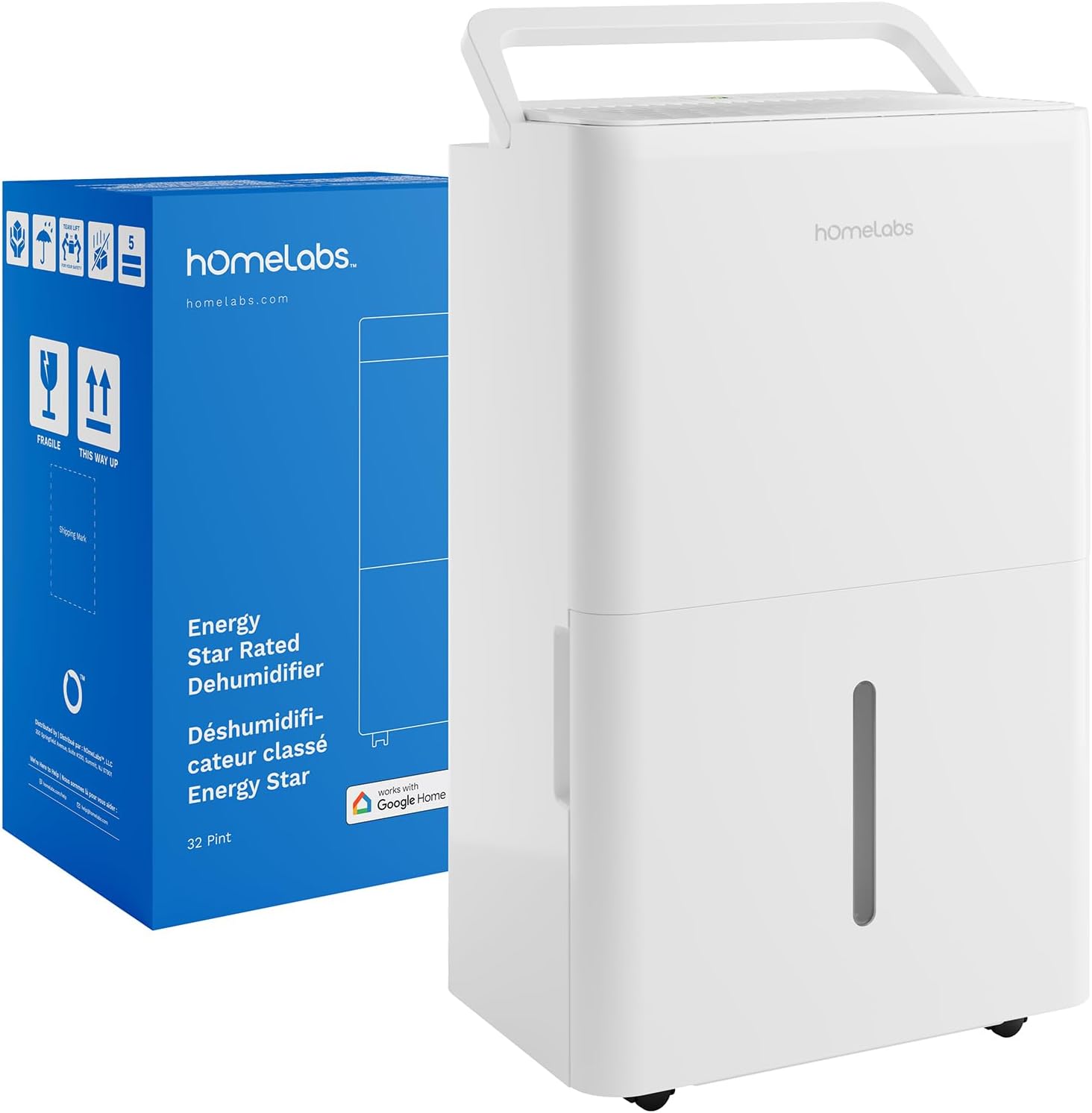
hOmeLabs Dehumidifier 4,500 Sq Ft 32 Pint (MAX 80 Pint at 95°F, 90% RH)
The largest unit in this group. The listing rates it for 4,500 square feet with a 32 pint capacity and a maximum of 80 pints at 95°F and 90 percent relative humidity, which puts it in whole-floor and finished-basement territory rather than a single bedroom.
Visit on Amazon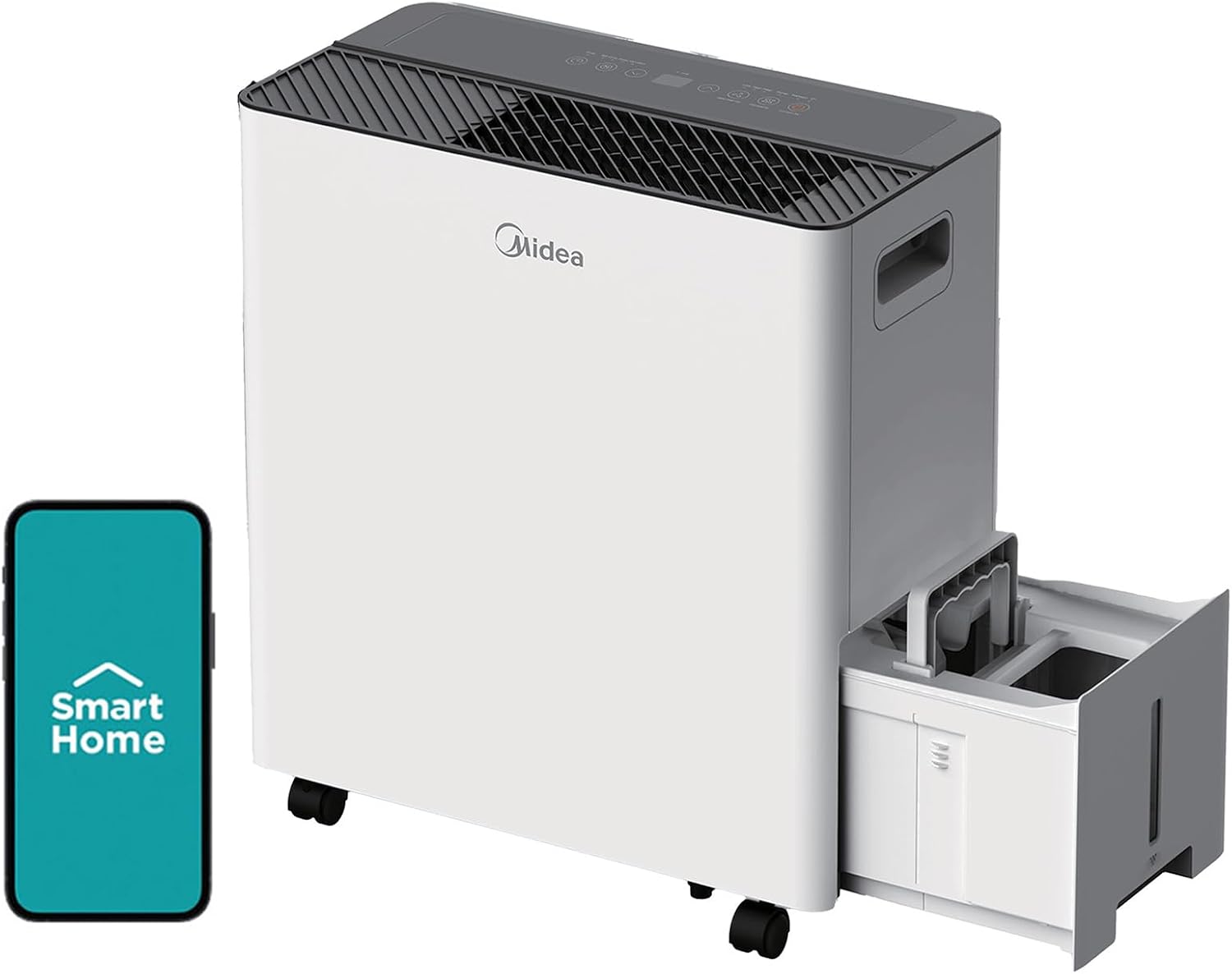
Uhome 30 Pint Dehumidifier, for Basement with Activated Carbon Filter, Up to 1,500 Sq. Ft. dehumidifier with drain hose, Ultra Quiet, Humidity Sensor, Auto Shut Off
A 30 pint machine rated for up to 1,500 square feet, with a drain hose included, an activated carbon filter, a humidity sensor, and auto shut off. The combination of a hose and filtration is what separates it from the small tank units here.
Visit on Amazon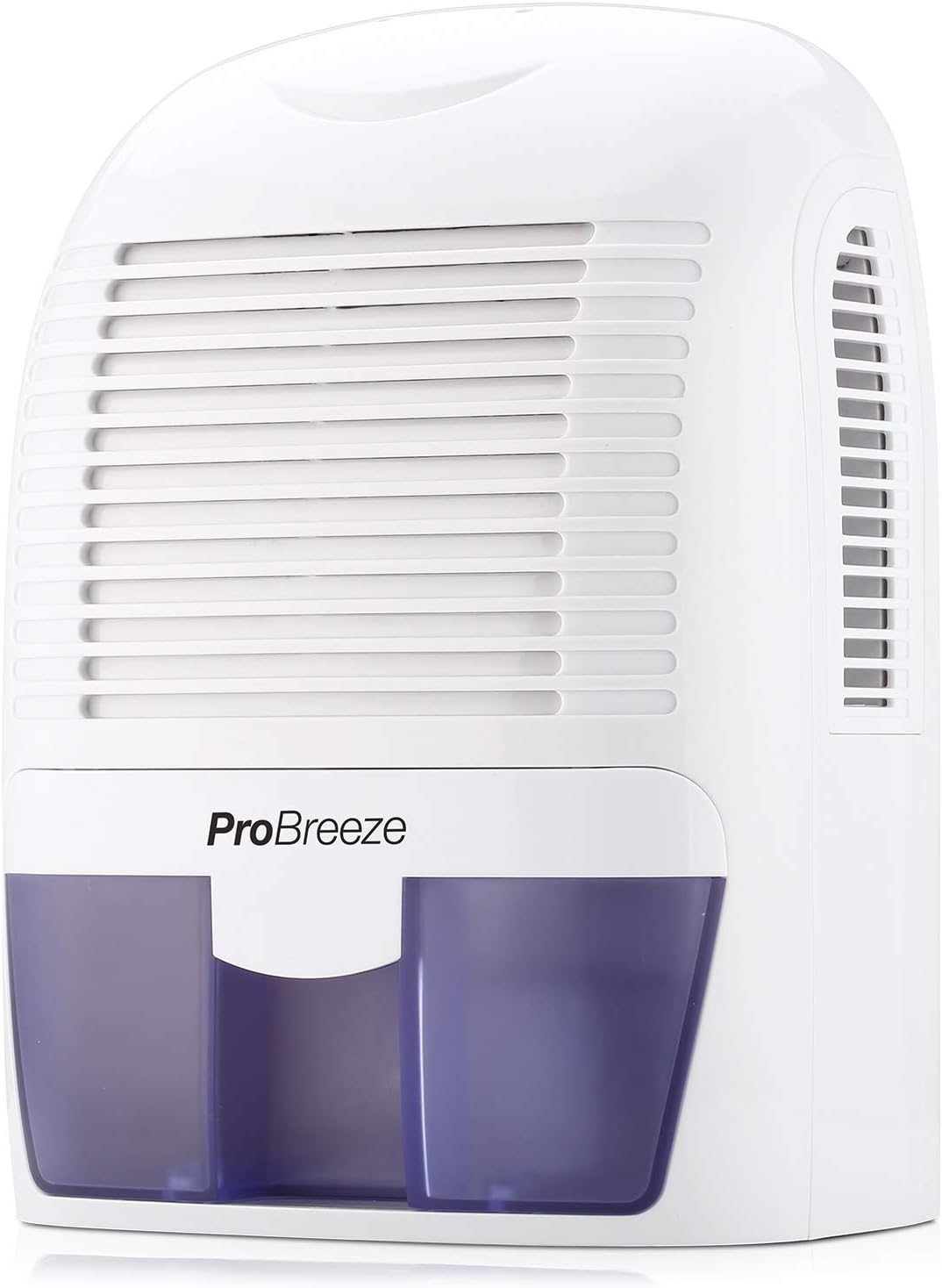
Pro Breeze Electric Mini Dehumidifier, 2200 Cubic Feet (250 sq ft), Compact and Portable for High Humidity in Home, Kitchen, Bedroom, Basement, Caravan, Office, Garage
A compact electric mini rated for 2,200 cubic feet, about 250 square feet. The listing positions it for high humidity in a kitchen, bedroom, basement, office, garage, or caravan, and portability is the main reason to pick it over a larger machine.
Visit on Amazon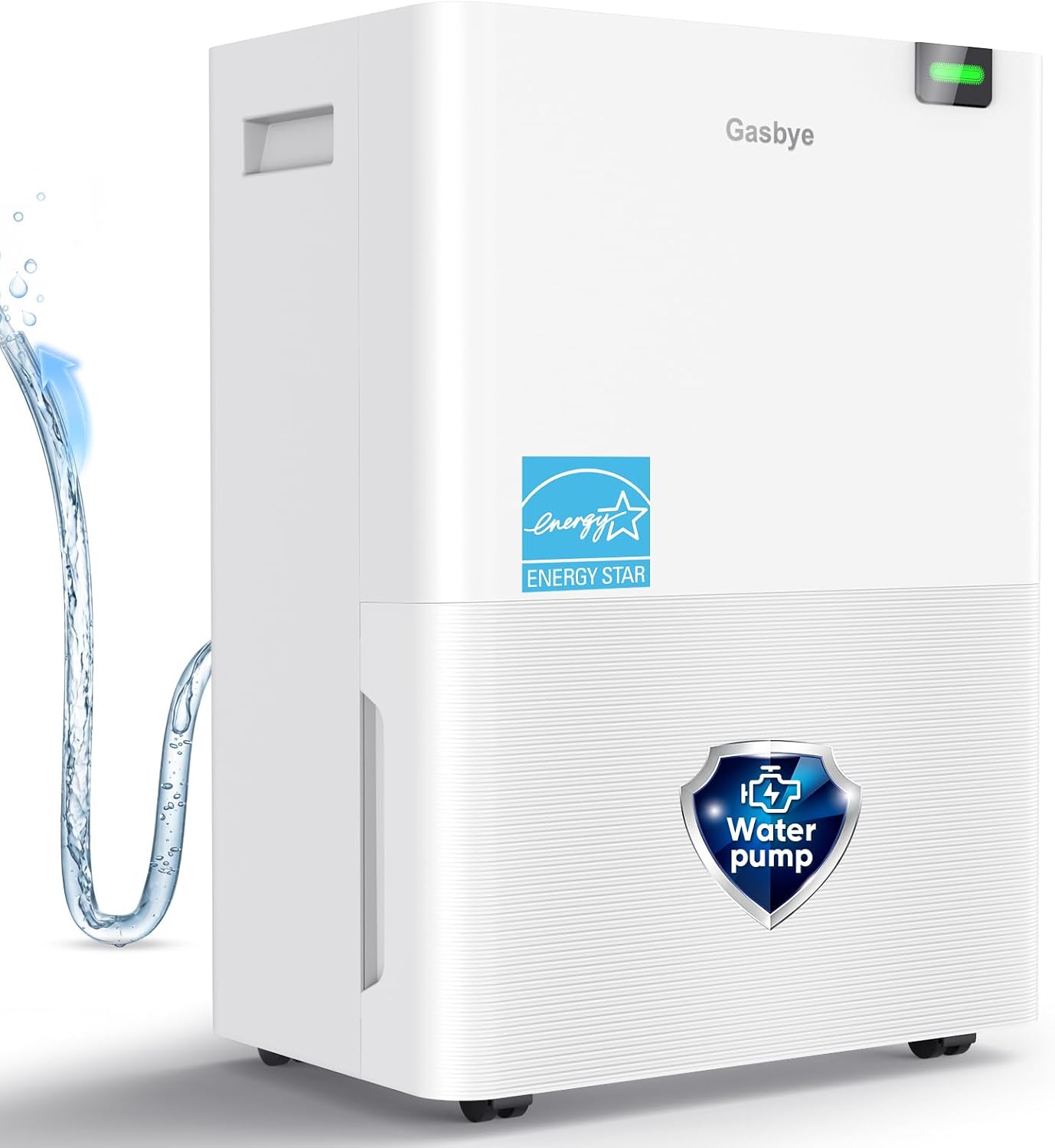
TABYIK 35 OZ Dehumidifier for Bedroom RV, Quiet with Auto Shut Off, White
A 35 ounce tank unit built for a bedroom or an RV, with quiet operation and auto shut off. The small footprint and white housing suit a nightstand or a shelf, and the tank size is the limit on how long it can run unattended.
Visit on Amazon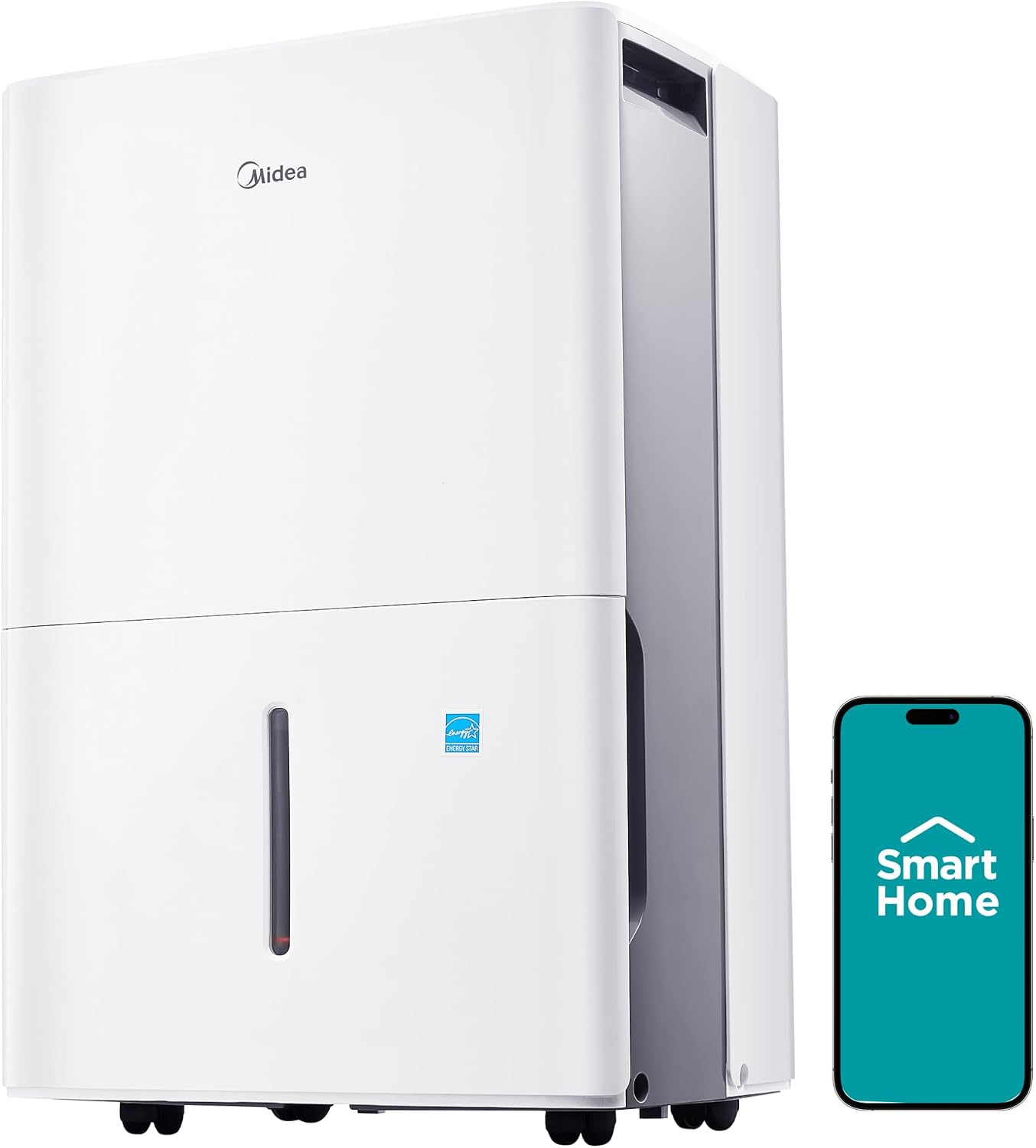
ToLife Dehumidifier, 1000 Sq Ft 95 oz Tank with Sleep Mode, Auto Shutoff
A 95 ounce tank unit rated for 1,000 square feet with a sleep mode and auto shutoff. The larger tank means fewer trips to the sink than the 35 ounce model, and sleep mode is aimed squarely at bedrooms.
Visit on Amazon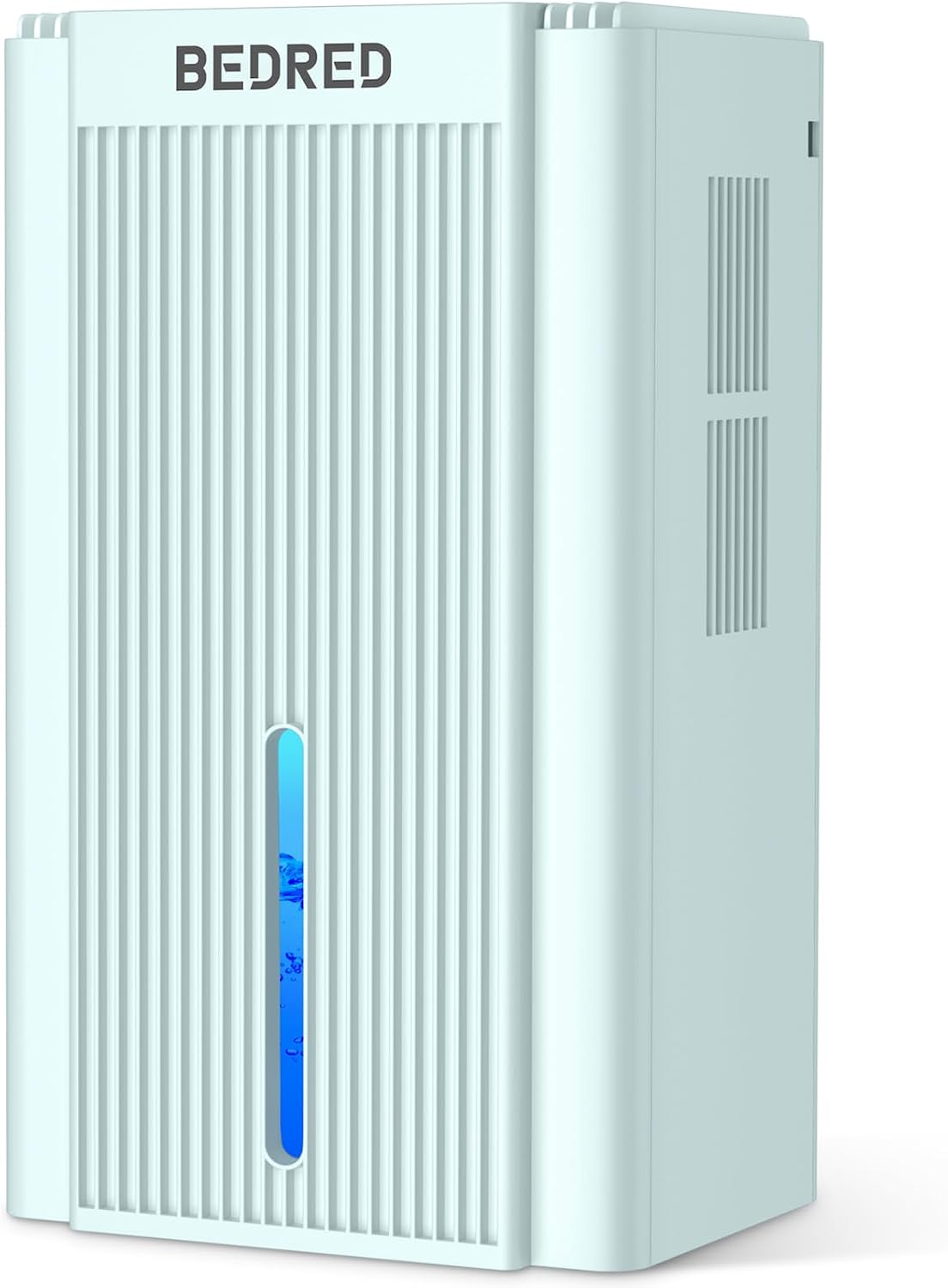
Dehumidifier, 95OZ Dehumidifier for Home 1000 Sq.Ft - Quiet with Auto Shut Off & Relaxing 7 Color Ambient Light,Ideal for Livingroom, Bedroom, Basement(Pale Turquoise)
A 95 ounce unit rated for 1,000 square feet with auto shut off, a quiet claim, and a seven color ambient light. The listing places it in living rooms, bedrooms, and basements, and the light is the feature that separates it from the ToLife.
Visit on AmazonPrices and availability may change. Check the retailer for current details.
How these products were compared
This guide compares tank capacity and drain options, stated coverage, control features such as humidistats, auto shut off, and sleep modes, filtration, and form factor and portability. Product names, images, and retailer links are matched to the same listing so that every card points to the product shown.
The comparisons here are drawn from each product's stated specifications and published listing details. They are not lab measurements, and nothing in this guide should be read as a tested capacity figure. That is also why no current price appears in the text: pricing changes constantly, so use the retailer link to confirm price and availability before you decide.
How to choose the right dehumidifier
Start with the size of the problem, not the size of the unit. A single damp bedroom with a closed door is a small-tank job. A finished basement with a dehumidifier running from May through September is a hose-drain job with a pint rating attached. The two units in this group with 95 ounce tanks are rated for 1,000 square feet each, which is a reasonable ceiling for a large bedroom, an open living area, or a small basement apartment.
Then decide how you want to deal with water. Every ounce of water a unit pulls has to go somewhere, either into a tank you carry to a sink or down a hose to a floor drain, a condensate pump, or a utility sink. Tank emptying is a daily chore in a real humidity problem, and it is the reason so many dehumidifiers end up unplugged in a corner by August. If the space has a drain, buy for the hose.
Finally, match the feature set to where the unit will actually sit. A bedroom unit benefits from a sleep mode or a quiet claim and a modest footprint. A basement unit benefits from a humidity sensor and a carbon filter. A living room unit that is visible all day may as well have a light you like looking at. For a deeper look at matching capacity to room size, see the sizing walkthrough linked above.
hOmeLabs Dehumidifier 4,500 Sq Ft 32 Pint (MAX 80 Pint at 95°F, 90% RH)
The hOmeLabs is the only unit here that is rated in pints and covers a whole floor, at 4,500 square feet. The two numbers in its own name tell you a lot about how the category works: 32 pints is the everyday capacity, and 80 pints is the maximum at 95°F and 90 percent relative humidity. In other words, the impressive figure is the one measured at conditions close to a Louisiana attic in August, and the realistic figure is the smaller one. Even at 32 pints, that is more water per day than every ounce-tank unit in this guide combined is designed to hold.
The trade-off is that this is a large machine built to sit in one place. It is not a unit you carry between a bedroom and a garage, and it is more capacity than a single 150 square foot room needs. If your problem is one damp bedroom, this is the wrong tool, and the smaller units below will do the job with less noise and less floor space.
Alternatives to consider
The Uhome 30 Pint Dehumidifier is better suited to a basement or a large lower level, since it pairs a 30 pint rating and up to 1,500 square feet of coverage with a drain hose, an activated carbon filter, and a humidity sensor. It is the middle path between a small tank unit and the full-size hOmeLabs. The ToLife Dehumidifier is a stronger fit when the room is a bedroom or living space around 1,000 square feet, because the 95 ounce tank and sleep mode are aimed at overnight use rather than continuous unattended draining.
The Pro Breeze Electric Mini Dehumidifier, the TABYIK 35 OZ Dehumidifier, and the pale turquoise 95 ounce model cover the small-space end of the range. The Pro Breeze mini is rated for 2,200 cubic feet and built for portability and tight spots such as a caravan, office, or garage. The TABYIK is the smallest tank here at 35 ounces, which makes it a bedroom or RV unit rather than a whole-room solution. The turquoise unit matches the ToLife on 95 ounces and 1,000 square feet and separates itself with a seven color ambient light.
Day-to-day use and maintenance
Plan on emptying the tank before you go to bed if there is no hose attached. That single habit prevents the most common frustration in this category, which is a unit that fills at 3 a.m. and stops, leaving the room to climb back to its previous humidity while the house sleeps. If the unit sits in a basement and you have a floor drain within hose distance, use it and forget the tank exists.
Clean the tank with warm water and a mild soap rather than a harsh cleaner, and dry it before it goes back in so it does not start growing its own biofilm. Check the filter on the Uhome unit regularly, and if you replace a carbon filter, write the date on it, because filters are easy to forget until airflow drops. On units without a filter, a quick pass over the intake grille with a vacuum keeps dust from packing into the coils.
Give the unit clearance. Dehumidifiers pull air through the back or sides and push it out the top or front, and a machine pushed flush against a wall will run longer and work harder for the same result. Leave a few inches on all sides and keep it off carpet if you can.
On the safety side, always unplug a unit before you move it or empty the tank, and never run one on an extension cord that is undersized for the load. If the unit is going to run unattended for weeks on a hose, check the hose connection once a week for kinks or a slow drip that is quietly soaking the floor.
Buying checklist
- Measure the room's square footage and ceiling height, and note whether the door stays open to the rest of the house.
- Decide whether the unit will run on a hose or a tank, then choose capacity based on that answer, not the other way around.
- Confirm the exact model includes the feature you need, whether that is a drain hose, a humidity sensor, a sleep mode, or a filter.
- Read the cleaning and maintenance instructions so you know how often the tank and filter need attention.
- Check the return window and warranty terms before the box goes out with the recycling.
- Verify the current retailer price, availability, and shipping details, since pricing in this category moves often.
Final recommendation
Choose the hOmeLabs Dehumidifier 4,500 Sq Ft 32 Pint when the space is a full floor or a finished basement and you want a pint-rated machine with the coverage to match. Choose the Uhome 30 Pint Dehumidifier when you need a smaller pint-rated unit with a hose and a carbon filter for a basement that is damp but not enormous. Choose the ToLife Dehumidifier or the pale turquoise 95 ounce model when the problem room is a bedroom around 1,000 square feet and a quiet overnight unit matters more than raw capacity, and choose the TABYIK 35 OZ or the Pro Breeze Electric Mini when the space is genuinely small, such as an RV, a closet-adjacent bedroom, or a garage bay.