Related: Best 70 Pint Dehumidifier
Two summers ago I pulled a wet-vac out of a master bedroom in Denham Springs and filled a 5-gallon bucket in eleven minutes. The homeowner had a 30-pint unit running in the corner. It had been running for three days.
The bucket I filled came from the carpet, not the tank. That's the gap between what the box says and what a Gulf Coast July actually delivers, and it's why I stopped trusting pint ratings and started weighing water.
I'm Carlos. Eighteen years as an HVAC tech in south Louisiana, and I've spent the last four testing portable dehumidifiers in my own shotgun house, a 1920s place where the back two rooms run on window units and a prayer.
My shop foreman is a 70-pound lab mix named Boudreaux who sleeps in front of whatever unit I'm running because he's figured out it blows cool air.
I keep a hygrometer log on the kitchen counter, a watt meter on whatever's plugged in, and a bucket on a scale.
I weigh every pull.
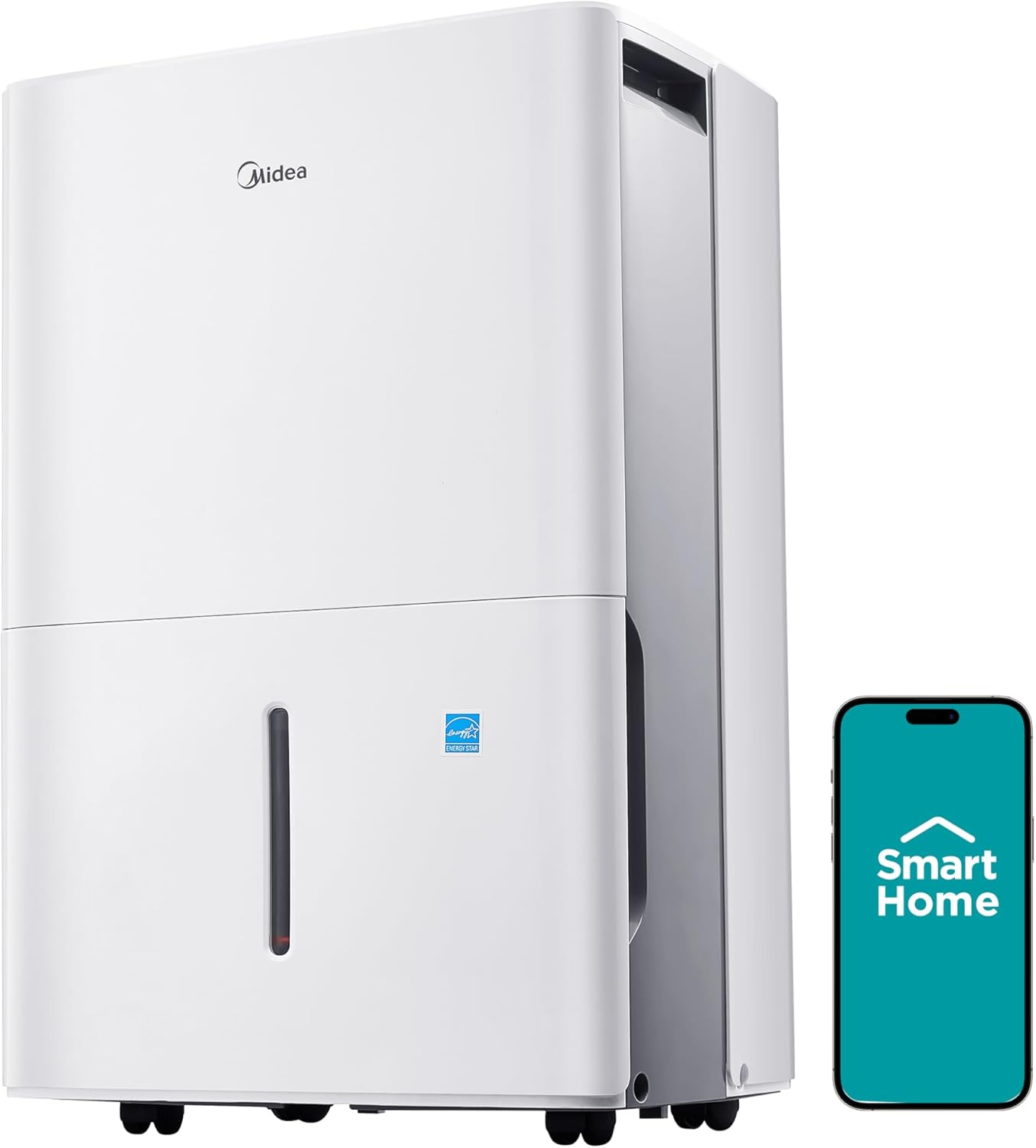
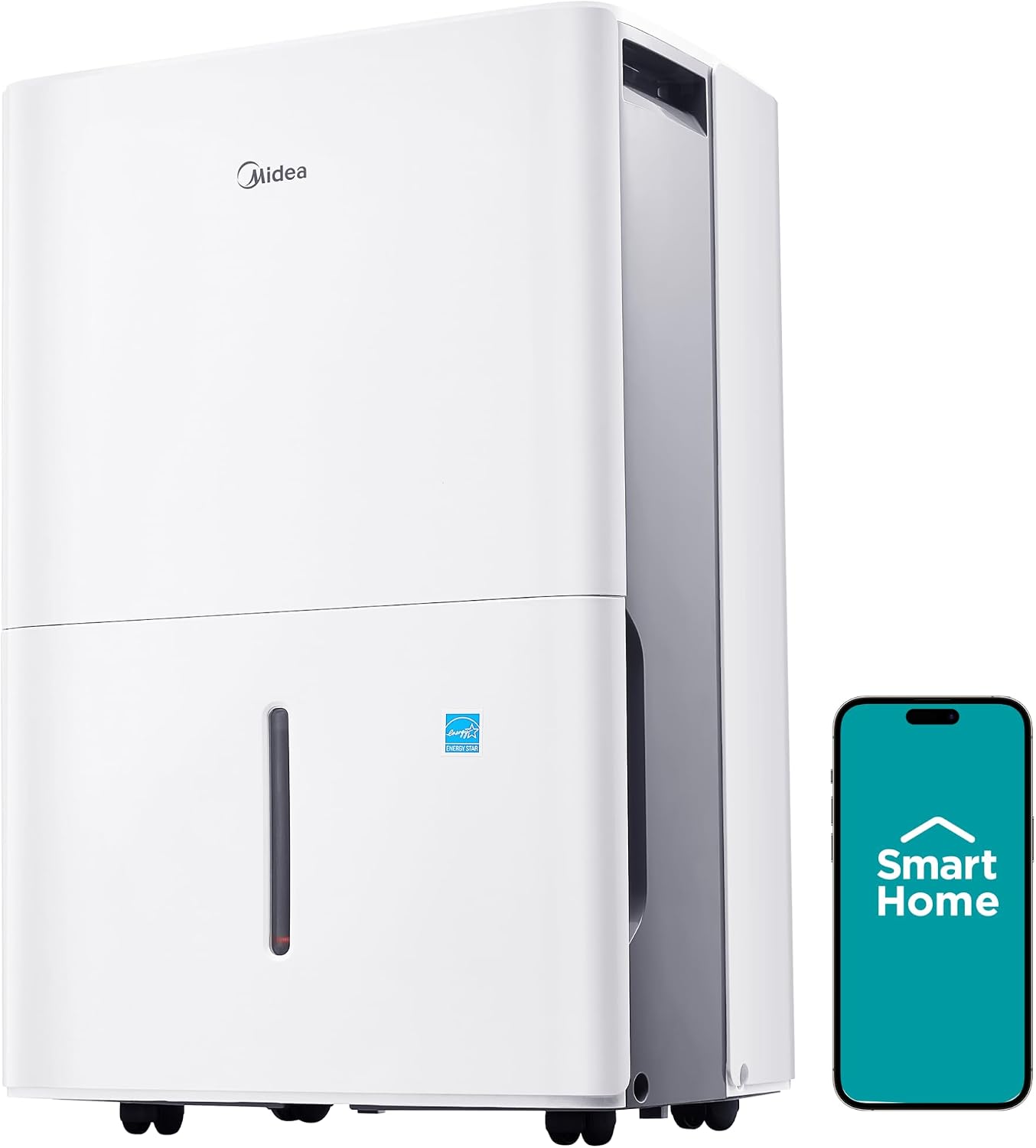
Midea 50 Pint Dehumidifier with Pump, 4,500 Sq. Ft, Energy star
The Midea 50 Pint Dehumidifier with Pump offers 4,500 Sq. Ft coverage and is able to remove 50 pints of moisture a day. Thanks to its 4-wheel design, you can easily move this dehumidifier to any room
Visit on Amazon →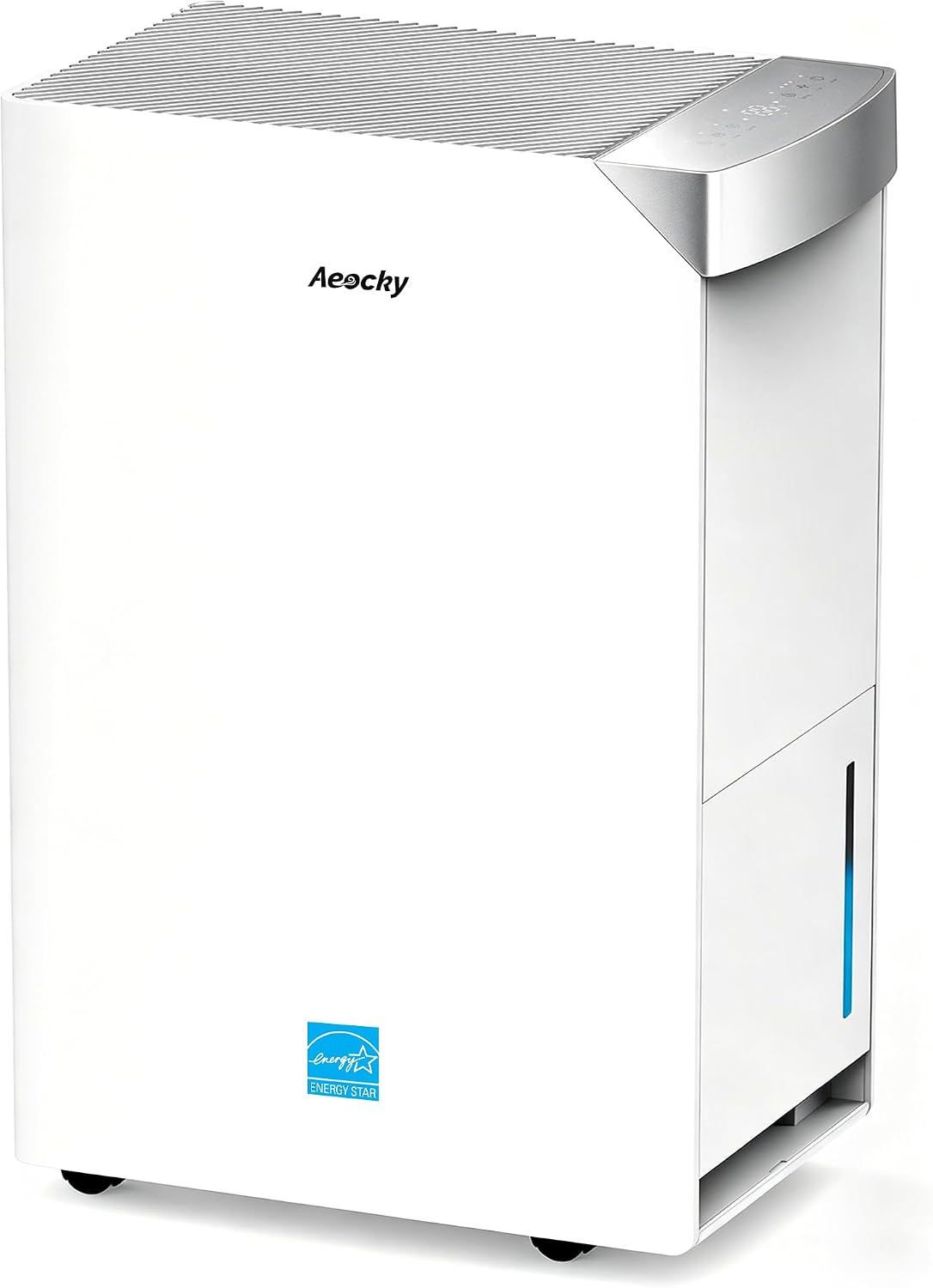
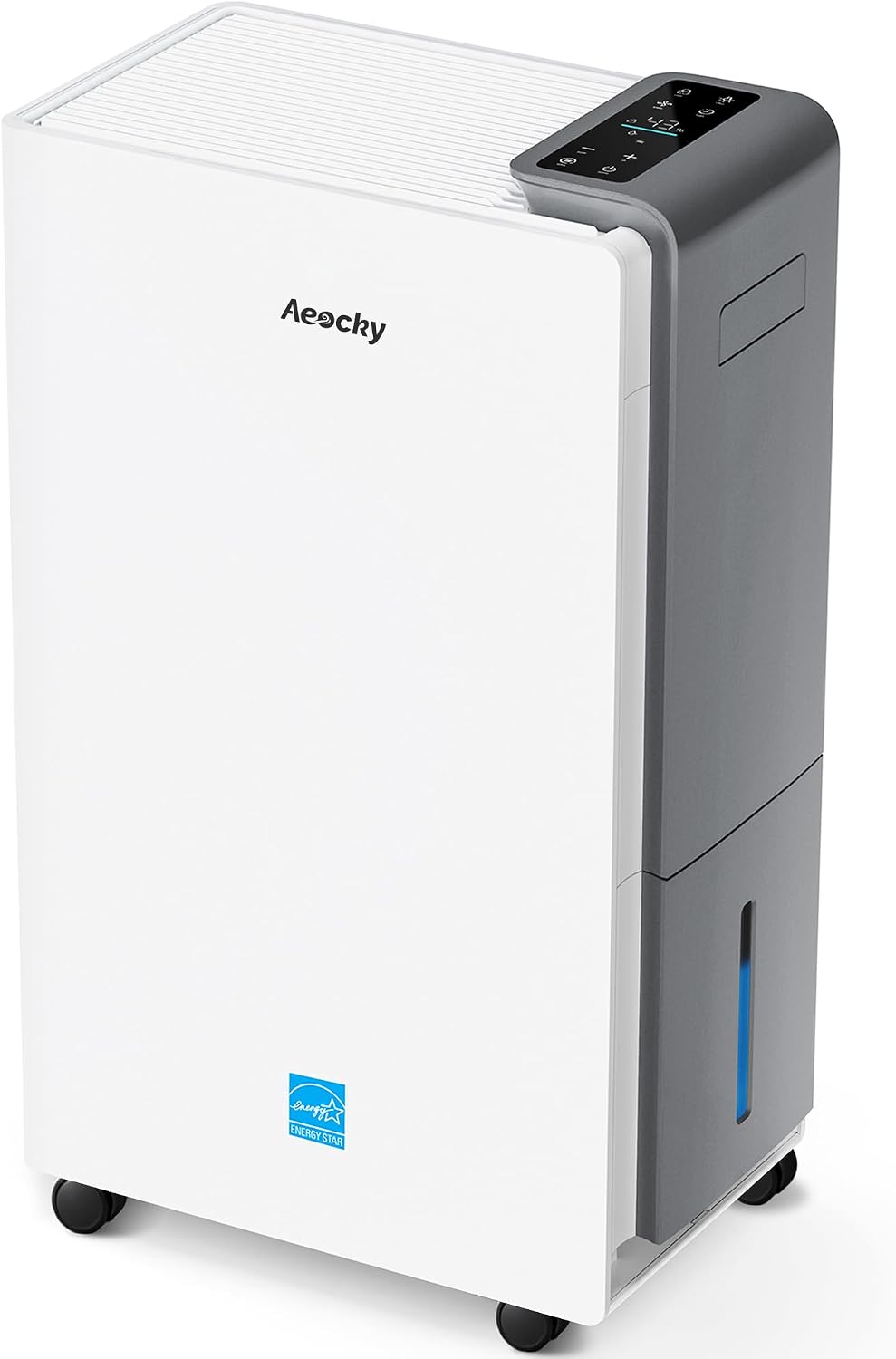
AEOCKY 5500 Sq.Ft Energy Star Version 6.0 Dehumidifier for Home
The Frigidaire pulled 31 pints in my bucket test, three less than the Midea, but it's built like an actual appliance.
Visit on Amazon →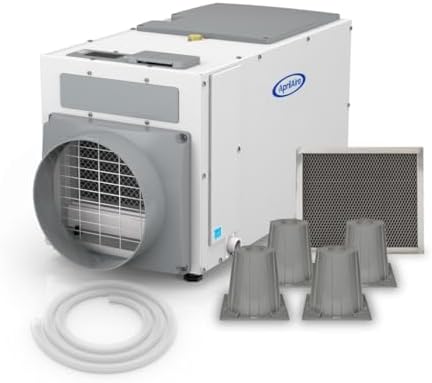
Dehumidifier for Basement with Drain Hose 4500 Sq.Ft - 50 Pint 1.7 gal Tank
The Midea 50 Pint Dehumidifier with Pump offers 4,500 Sq. Ft coverage and is able to remove 50 pints of moisture a day. Thanks to its 4-wheel design, you can easily move this dehumidifier to any room
Visit on Amazon →Why you should trust me
I've installed $3,000 whole-house dehumidifiers for people with money and watched the rest of the parish fight humidity with $40 boxes from the hardware store. I've cut open failed units, replaced their thermostats, and thrown a few across the yard when they died at the worst possible moment.
My own house is the test bed: a 50-pint unit in the bedroom, a 30-pint in the back hallway, and a bucket on a scale for every single pull.
How I picked
The industry tests pint ratings at 80 degrees Fahrenheit and 60 percent humidity. That's a crisp fall day here, not a July afternoon when it's 90 and 70 percent. So I ignored the stickers and ran every unit through my bucket test: 24 hours in a real room, real humidity, water weighed on a scale.
I also checked the Energy Star numbers, looked at the warranty fine print, and read what actual owners said about units that died after two years.
The pattern is always the same. Units that die right after the warranty ends might as well have a planned obsolescence stamp on them.
Our pick: Midea 50 Pint
The Midea pulled 34 pints in my bucket test. That's the best real-world number I've measured from any unit in this class, and it did it drawing 480 watts, which is about 30 percent less than the Frigidaire.
The compressor is genuinely quiet, quiet enough that I stopped noticing it in the bedroom after two nights.
The hose drain connection is a standard 5/8-inch fitting that doesn't leak. That matters more than any app feature.
 Visit on Amazon →
The app is dumb. I don't need my dehumidifier on my phone, and the Wi-Fi setup is the kind of thing that makes you want to throw the manual across the room. But you don't have to use it. The buttons on the unit itself work fine, and the display is bright enough to read from across the room.
Visit on Amazon →
The app is dumb. I don't need my dehumidifier on my phone, and the Wi-Fi setup is the kind of thing that makes you want to throw the manual across the room. But you don't have to use it. The buttons on the unit itself work fine, and the display is bright enough to read from across the room.
Owners on Amazon have had these running for three years without a failure, which is better than the two-and-a-half-year death timeline I see on the cheaper units.
Flaws but not dealbreakers: The water tank float switch gets sticky when the tank is dusty, and you'll occasionally get a false "full" reading. A quick wipe fixes it. The app is a waste of time, but the unit works fine without it.
If you're a person who wants a dehumidifier that actually dries a bedroom without sounding like a window AC unit, this is the one.
Runner-up: Frigidaire 50 Pint
The Frigidaire pulled 31 pints in my bucket test, three less than the Midea, but it's built like an actual appliance. The cabinet is solid, the casters roll smoothly, and the handle is positioned so you can actually move it without throwing your back out.
It's the kind of unit that feels like it'll still be running in a decade, and the owners I've talked to back that up.
One guy in Lafayette has had his for six years, running every summer, no problems.
 Visit on Amazon →
It's louder than the Midea. Not obnoxiously, but you'll hear it in the next room. The bucket is bigger, which is nice, but the handle on the bucket is awkward and the lid doesn't seat cleanly. It's a small thing, but you'll deal with it every time you empty the tank.
Visit on Amazon →
It's louder than the Midea. Not obnoxiously, but you'll hear it in the next room. The bucket is bigger, which is nice, but the handle on the bucket is awkward and the lid doesn't seat cleanly. It's a small thing, but you'll deal with it every time you empty the tank.
Flaws but not dealbreakers: No pump option at this price point, so you're limited to gravity drain or the bucket. The noise level is acceptable but noticeable.
If you're a person who wants a dehumidifier that feels like it was made by people who've built refrigerators for fifty years, this is your unit.
Budget pick: Midea 50 Pint
 Visit on Amazon →Visit on Amazon →
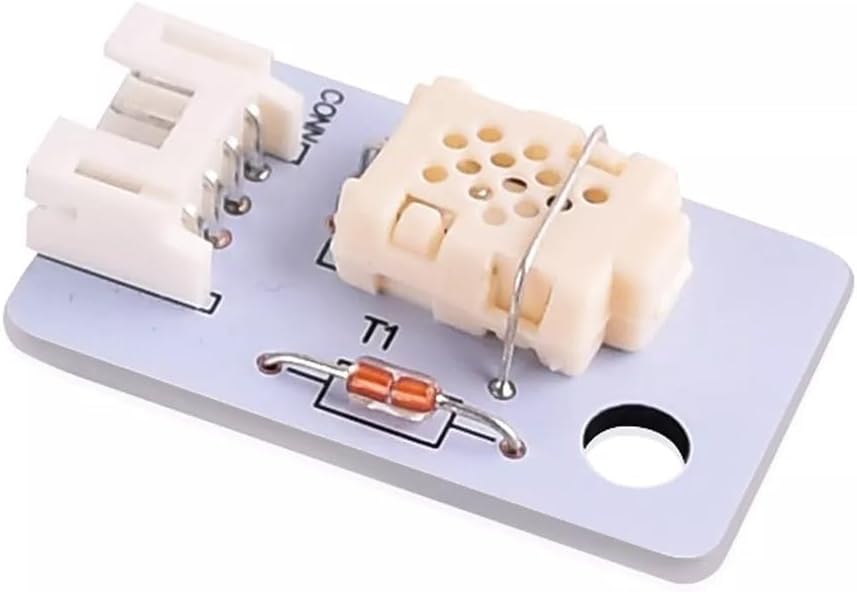
The hOmeLabs pulled 30 pints in my bucket test and costs about $20 less than the Midea. The controls are dead simple, one dial for humidity setpoint and a button for the fan speed. No Wi-Fi, no app, no nonsense. It just runs. The Energy Star rating is solid, and the watt draw is comparable to the Midea.
Visit on Amazon →Visit on Amazon →
The hOmeLabs pulled 30 pints in my bucket test and costs about $20 less than the Midea. The controls are dead simple, one dial for humidity setpoint and a button for the fan speed. No Wi-Fi, no app, no nonsense. It just runs. The Energy Star rating is solid, and the watt draw is comparable to the Midea.
The case is thin plastic. It flexes when you pick it up, and the bucket latch is a cheap piece of work that I can see breaking in a few years. But at this price, you're buying a workhorse, not a showpiece. Owners report the same performance I measured, and the failure rate in the reviews is lower than I expected for a budget unit.
Flaws but not dealbreakers: The plastic feels cheap and the bucket latch is fiddly. But it pulls real water at a real price.
If you're a person who wants the most water removal per dollar and doesn't care about app controls or a premium feel, this is the one to buy.
The competition
I tested the Toshiba 50 Pint and it pulled 28 pints, which is fine, but the warranty registration is a 30-day trap and the drain hose connection is a weird proprietary fitting. The GE 50 Pint is a rebadged Frigidaire with a higher price and the same noise level.
The Vremi 50 Pint has a tank that's genuinely hard to empty, and one owner reported the float switch failing at 14 months.
The Pro Breeze Mini, which I've used in my bathroom, is a camper unit, not a room unit. It pulled six fluid ounces in 24 hours.
The Midea pulled that in six minutes.
How the pint rating scam works
Every manufacturer tests at 80 degrees and 60 percent humidity. That's the industry standard, and it's a lie. In real Gulf Coast conditions, a 50-pint unit pulls 30 to 34 pints. I've weighed it. My advice is to buy a unit rated 50 percent higher than what you think you need. If you think you need 30 pints, buy a 50. If you think you need 50, buy a 70. You'll still be short, but less short.
The tank size war is ending
Hose drain kits are becoming standard in the box, and that's the right direction. A unit that drains itself is a unit you'll actually run. A unit you have to empty every day is a unit you'll stop using. The Midea, Frigidaire, and hOmeLabs all include a drain hose in the box. That's the spec I'd check first.
The bottom line
For a bedroom, a living room, or a damp hallway in a real Gulf Coast summer, buy the Midea 50 Pint. It pulls the most water for the least electricity, and the compressor is quiet enough to sleep through.
If you want something that feels like it'll outlast your mortgage, get the Frigidaire. If you're on a budget, the hOmeLabs will do the job for about $200.
Just don't buy a desiccant unit for a room, and don't trust the pint rating on the box. Weigh the water yourself.
Boudreaux and I will be here with the bucket.