Most damp basements do not need a bigger machine. They need a hose and a plan.
I have pulled moldy drywall out of houses from Kenner to Slidell, and the pattern never changes. A homeowner buys a dehumidifier, runs it for two weeks, gets tired of dumping the tank twice a day, and parks the unit in a corner with a full bucket. The water keeps coming. The machine has stopped removing it. A dehumidifier with drain hose plumbing that runs itself fixes most of that problem, and the rest is sizing, placement, and knowing when to stop feeding the room water in the first place.
This is the setup sequence I run on service calls, in order, plus the two pieces of gear I keep for the two jobs I get asked about most: a wet basement or an open first floor, and a closed closet, safe, or cabin that just needs to stay dry.
Why you should trust me
I am an HVAC technician in New Orleans. Eighteen years in, most of my work is residential service, and a large share of it is moisture: diagnosing why a house feels clammy, why the paint is peeling behind a bed, why the baseboards have gone soft. I install and service dehumidifiers professionally, and I have run more than ten portable units through real Gulf Coast summers in my own 1920s shotgun house, where the back rooms have no central air.
I keep three tools in the truck that most people do not. A hygrometer log tells me what the room is actually doing, hour by hour. A watt meter tells me what the machine costs to run. A scale tells me what the machine actually pulled, because the number printed on the box is a lab number and the number in your basement is not.
That last part is the whole reason this guide exists. Pints per day sells machines. Placement and drainage make them work.
How I picked and how I tested
This is a setup guide, not a shootout, so I am not going to pretend I ran a laboratory on the two products below. What I did do is apply the same short checklist I use when a client asks me to spec a machine, and these two are what came out for the two roles I actually get called about.
The checklist:
- Can it take a hose? A threaded drain outlet, or a hose in the box, is the difference between an appliance and a chore.
- Does the drain path work in your space? Gravity is free. A condensate pump is not, and you need to know which one you have before you order.
- Is the technology right for the temperature? Compressor and desiccant units split hard at the cold line, and most buying advice ignores it.
- Is the filter serviceable without tools? If I need a screwdriver to rinse a filter, that filter never gets rinsed.
- Does the humidistat hold a setting after a power blink? Cheap boards forget, and a unit that restarts in fan only has quietly quit on you.
- Does the machine restart in dehumidify mode after an outage? This is a pet peeve of mine. A unit that comes back in fan only after a summer storm is a unit that stops working in the worst month of the year.
Everything below is written from that checklist, and from years of standing in wet basements watching homeowners fight their own equipment.
Step 1: Measure the air before you shop
Buy a cheap hygrometer first, before you buy anything with a compressor in it. Put it in the middle of the room at knee height, not on a shelf against the wall, and log the reading morning and evening for a week.
You are looking for two numbers: the daytime peak and the overnight floor. A basement that sits at 62 percent in the afternoon and 58 percent overnight is a different job than one that swings from 70 percent down to 55. The first needs steady removal. The second may only need air movement and a sealed door.
The target for a living space is 50 percent or below. Above 60 percent and you are in the range where mold, dust mites, and that musty smell get comfortable. A basement in July and the same basement in January are two entirely different jobs, and the machine that wins in one can be the wrong machine in the other.
Step 2: Match the technology to the temperature
Compressor units win in warm, humid air. That is the Louisiana case almost every time. Above roughly 65 degrees, a compressor pulls more water per watt than anything else you can buy, and the technology is mature because the same parts live in your refrigerator.
Below about 60 degrees, the math changes. The evaporator coil runs cold, the moisture on it frosts instead of dripping, and the machine spends part of its cycle in defrost, which means it is using electricity to melt ice instead of drying your air. A cold basement in a northern state is desiccant territory, or at least a compressor with a proper defrost cycle and a low-temperature rating.
There is a middle ground worth knowing: if your basement only drops below 60 in the dead of winter, and the humidity drops with it, you may not need to run the machine at all from December through February. Pull the hose, clean it, and let the room be cold and dry.
Step 3: Do the pint math with the haircut
Pints per day is a lab number, measured at a set temperature and a set relative humidity that your basement will never hold. In a real room, with door gaps, a bare concrete floor, a dryer vent leaking, and people moving in and out, cut the rating by 30 to 40 percent.
A machine rated at 50 pints is doing the work of 30 to 35 pints in a real basement. An 80-pint class machine is doing the work of something closer to 50. That is why two houses with the same square footage can need different machines: one is sealed and one has a gap under the basement door you could slide a magazine through.
The other half of the haircut is temperature. A cold room pulls the number down twice, once for the humidity difference and once for the compressor's efficiency at that temperature. Size for the worst week of the year, not the average.
Step 4: Plan the drain before you buy the unit
A tank is fine for a bedroom. For a basement or a whole-floor setup, a hose is mandatory. I have never met a homeowner who enjoyed emptying a tank every day, and I have met plenty who stopped.
Two drain options:
- Gravity drain. The hose runs from the unit's outlet to a floor drain, a sump, or outside, with a continuous fall the entire way. No low spots. A dip in the hose traps water, backs up into the unit, and trips a full-tank error even though the tank is empty. If the hose has to cross a doorway, run it along the base of the wall and tape it, do not let it loop.
- Condensate pump. If you have no drain and no fall, a small pump lifts the water up and over to a sink or a utility drain. It is one more part to fail, but it beats a bucket.
Never run a drain hose uphill without a pump. It will not work, and you will blame the machine.
Step 5: Place it like an appliance, not a floor lamp
Middle of the room if you can manage it. A few inches off the wall for airflow on all sides. Away from supply registers, because blowing conditioned air at the unit makes the humidistat lie. Doors to the rest of the house closed, because you are drying one space, not the whole state.
Do not box it into a corner behind a curtain, and do not set a compressor unit directly on a cold slab in a cold room if you can put it on a low platform. Level the machine so the drain hose falls correctly and the tank sensor reads true.
The two machines I keep for these calls
These cover the two jobs, not one job in two sizes.
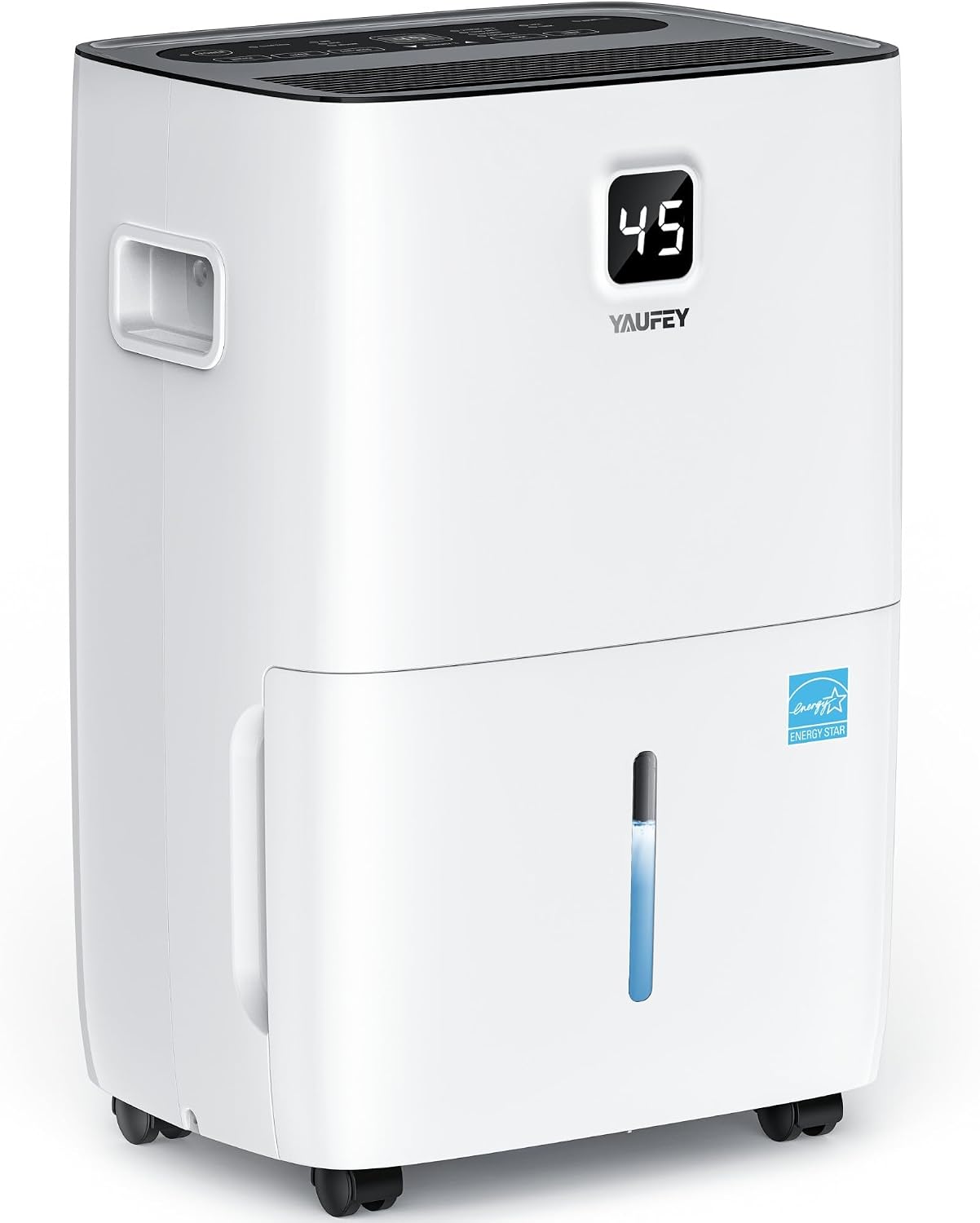
Our pick for a wet basement: 80 Pint Dehumidifier for Basement 5500 Sq. Ft. with Drain Hose, ENERGY STAR
 Visit on Amazon →
This is the machine for a wet basement or an open first floor. The listing puts it in the 80-pint class with coverage up to 5,500 square feet, and it ships with a drain hose, which matters more to me than any app feature on the market. The hose in the box means you can plan the gravity drain the day it arrives instead of ordering parts and running the unit on the tank for two weeks while you wait. Check current Amazon price.
The ENERGY STAR listing is the part I actually trust, because it means the energy number was measured under a standard test rather than chosen by a marketing department. Energy use is a monthly bill, not a spec sheet line, and a machine in this class is going to be one of the larger loads in a basement.
Flaws but not dealbreakers: This is an 80-pint class compressor, so it is heavy and it wants warm air to work efficiently. In a cold basement, read Step 2 again before you commit. It also needs clearance, a level surface, and a drain path, which means if you have no floor drain you should budget for a condensate pump. Larger cabinets are louder than a small bedroom unit, and I would not put this one in a bedroom.
Anyone with a damp basement, a crawlspace-adjacent utility room, or a whole first floor that never quite dries out is the right buyer. If your problem is one closet, keep reading.
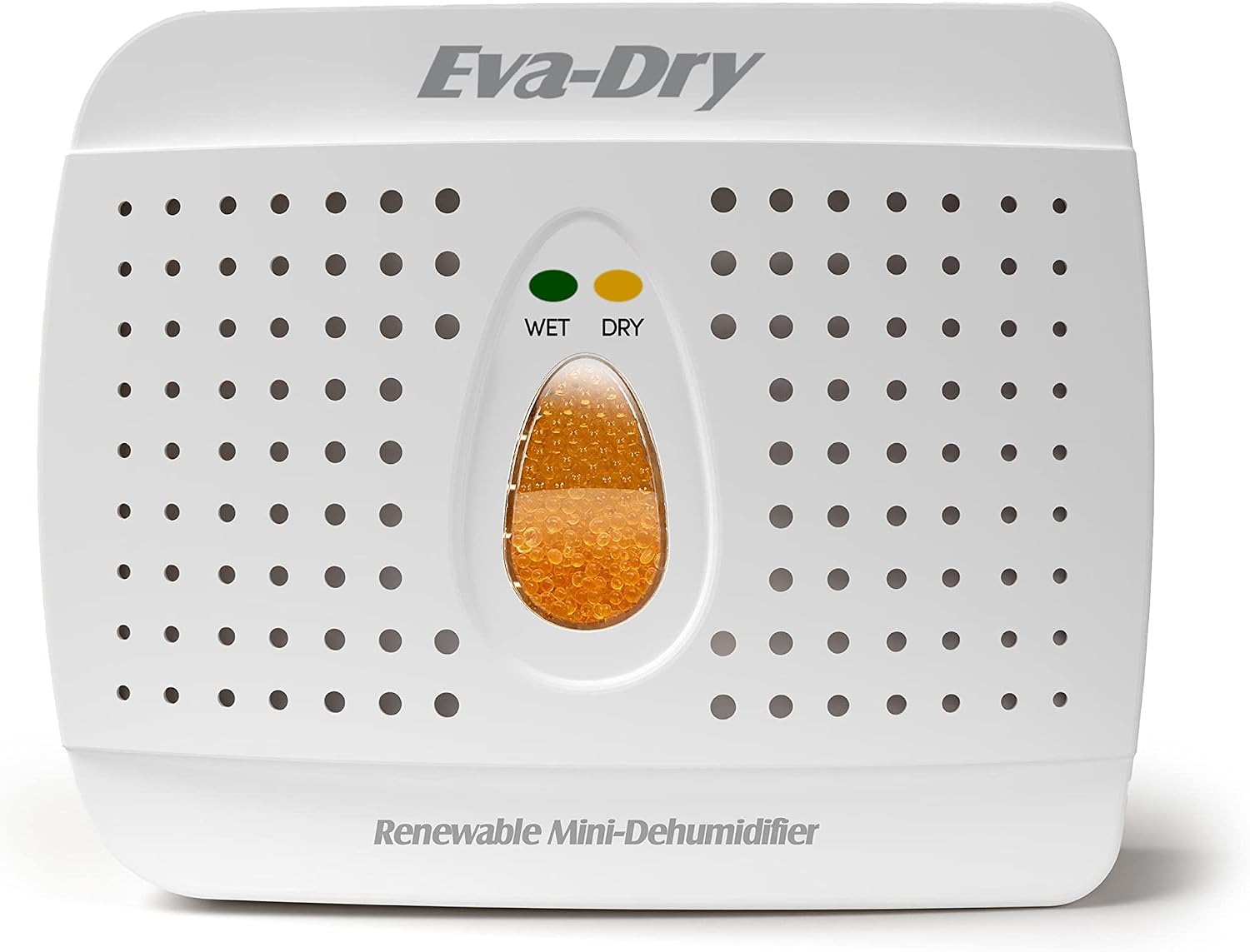
Small-space fix: Vacplus Moisture Absorber, 9.8 OZ Hanging, Strong Absorption, Unscented
 Visit on Amazon →
Not every damp problem deserves a compressor. A closet with no air movement, a gun safe, a boat cabin, a camper that sits closed for a month, a rental unit between tenants: these are sealed boxes, and a hanging absorber handles them without a cord, a drain, or a compressor.
This one is a 9.8-ounce hanging unit with strong absorption, and it is unscented, which matters more than people think. A perfumed absorber in a closet full of clothes just trades one smell for another. Hang it high, because moisture rises and the air at the top of a closet is the air that feeds the mildew on your jacket shoulders. Check current Amazon price.
Flaws but not dealbreakers: It is a consumable, not an appliance. It fills, it stops, and you replace it, so the long-run cost per closet is higher than running a dehumidifier for the same space. It also does not move air, so it cannot fix a closet with a wet exterior wall or a leaking roof. It manages a sealed box, nothing more.
Anyone with a closet, safe, cabin, or camper that stays closed should keep one hanging. Anyone with a wet basement should not expect it to be the answer.
Step 6: Set the humidistat, then verify it with a hygrometer
Set the machine to 50 percent and leave it for a day. Then put your separate hygrometer next to it and compare. Most built-in humidistats are off by several points, and some are off by a lot. If your meter says 58 and the machine says 50, you are not drying the room, you are just reading the machine's opinion.
If the unit short-cycles, running for two minutes and resting for five, the humidistat is probably reading its own exhaust. Move it, or move the sensor if the design allows. Do not chase 30 percent in an open basement. You will run the compressor into the ground for a number that the room cannot hold anyway.
Step 7: Stop feeding the room water
A dehumidifier is a pump, not a seal. It removes what gets in, and if water gets in faster than the pump removes it, you lose. Before you blame the machine, walk the space and look for the feed:
- A gap under the basement door wide enough to feel air moving.
- Foundation vents standing open in a humid climate.
- A dryer vent that terminates into the basement or leaks at the joint.
- Bare crawlspace soil with no vapor barrier.
- Wet firewood, damp laundry hung inside, or a floor drain that never gets a trap primer.
Fix two of those and a smaller machine will outperform a bigger one in a leaky room.
Step 8: Maintenance that keeps it alive
Rinse the filter every two to four weeks during the wet season. A clogged filter is the number one reason a working unit stops pulling water, and it is a five-minute job. Clean the coil once a season with a soft brush. Check the drain hose for low spots and for the slimy film that grows in standing condensate, and flush it with warm water.
If the unit loses power in a storm, check that it restarted in dehumidify mode and not fan only. Then check the hose again, because a hose that has been sitting all winter is exactly where a clog forms.
Step 9: Run a bucket test and a meter week
This is how you find out if the machine is actually keeping up. Put the drain hose into a bucket for 24 hours and weigh the water, or measure it if you have a marked container. Then put a watt meter on the unit for a week and do the math: watts times hours divided by a thousand, times your utility rate, gives you the monthly bill.
If the bucket test says the unit is pulling far less than its class suggests, the room is either cold, leaky, or already dry. Each of those has a different fix, and none of them is "buy a bigger one."
When a dehumidifier is the wrong answer
Sometimes the honest answer is a window air conditioner with a dry mode, especially in a bedroom, because it cools and dehumidifies in one box for less money than two. Sometimes it is a bath fan on a timer, because the moisture is coming from showers and never leaving the house.
Whole-house humidity control is an HVAC sizing job, not a portable machine purchase, and I stay out of that here. Mold remediation is a separate trade as well: if you already have mold growing on the joists, a dehumidifier manages the condition after the mold is dealt with, not before.
What this all costs
Prices on both of these move with the season, and I am not going to quote you a number that expires before you read it. Check current Amazon price on the basement unit and the hanging absorber when you are ready to buy, and budget for the extras: a condensate pump if you have no floor drain, a longer hose if the run is more than a few feet, and replacement filters once a year.
The real cost comparison is not machine against machine. It is a machine that runs itself against a machine that quit in July because nobody wanted to carry a bucket. Do the setup once, in this order, and the unit disappears into the background of your house where it belongs. That is the goal: you should forget it is running.