Learning how to size a dehumidifier for a basement or a damp back bedroom is mostly a tape measure and a hygrometer problem. It has almost nothing to do with the biggest number printed on the box, and everything to do with two questions: how much water is actually in that air, and who is going to empty the bucket at 3 a.m.
I have spent 18 years as an HVAC technician in New Orleans. I have pulled more moldy drywall out of Louisiana houses than I can count, and I have run portable units through real Gulf Coast summers in my own 1920s shotgun house, where the back rooms have no central air at all. I keep a hygrometer log, a watt meter, and a bucket routine where I weigh the water every unit pulls.
So here is the order I run when a homeowner asks me what to buy. Room first, drain second, pint rating a distant third.
Why you should trust me
I install and service dehumidifiers for a living, which means I see the failures, not just the spec sheets. I see the units that quit restarting after a thunderstorm knocks the power out. I see the tanks that slosh down a hallway and soak a rug. I see the humidistats that read 15 percent off from the hygrometer sitting three feet away, so the machine runs all night against a room that is already dry.
I do not sell whole-house HVAC sizing and I do not do mold remediation. That is a different trade and a different guide. What I do is tell people which machine belongs in which room, and then tell them the truth about how much work that machine is going to be.
How I judge a dehumidifier before I recommend it
Three tests, every time.
The bucket test. I run the unit in the actual room for a week and weigh the water it pulls. That gives me real pints per day, not a lab number. In real humidity, with real door gaps and real carpet, cut the rating on the box by 30 to 40 percent. A unit rated for 50 pints that is pulling 30 in a Louisiana August is doing exactly what I expect.
The meter week. I plug the unit into a watt meter and let it run for seven days, then do the monthly bill math with the local utility rate. Energy use is a monthly bill, not a spec sheet bullet.
The restart check. I kill the power at the breaker and restore it. If the machine comes back up in fan only and never re-engages the compressor, that is a support call in the middle of the worst month of the year, and I want to know about it before I recommend the thing.
The room decides the machine, not the pint rating
Two rooms, two different machines, and this is where most buyers go wrong.
A damp bedroom, a closet, a wardrobe, a bathroom, or an RV is a small-space problem. You want a quiet unit with a modest tank that sits on a shelf or the floor and does not sound like a refrigerator compressor running next to your pillow. You will empty the tank. That is fine, because a bedroom tank fills slowly.
A basement, a crawl space, or a whole floor is a different animal. That is a hose-drain job, full stop. Below 60 percent humidity conditions, a hose drain is non-negotiable in my book. I have never met a homeowner who enjoyed emptying a tank every single day for four months, and I have met plenty who quietly stopped doing it and let the mold come back.
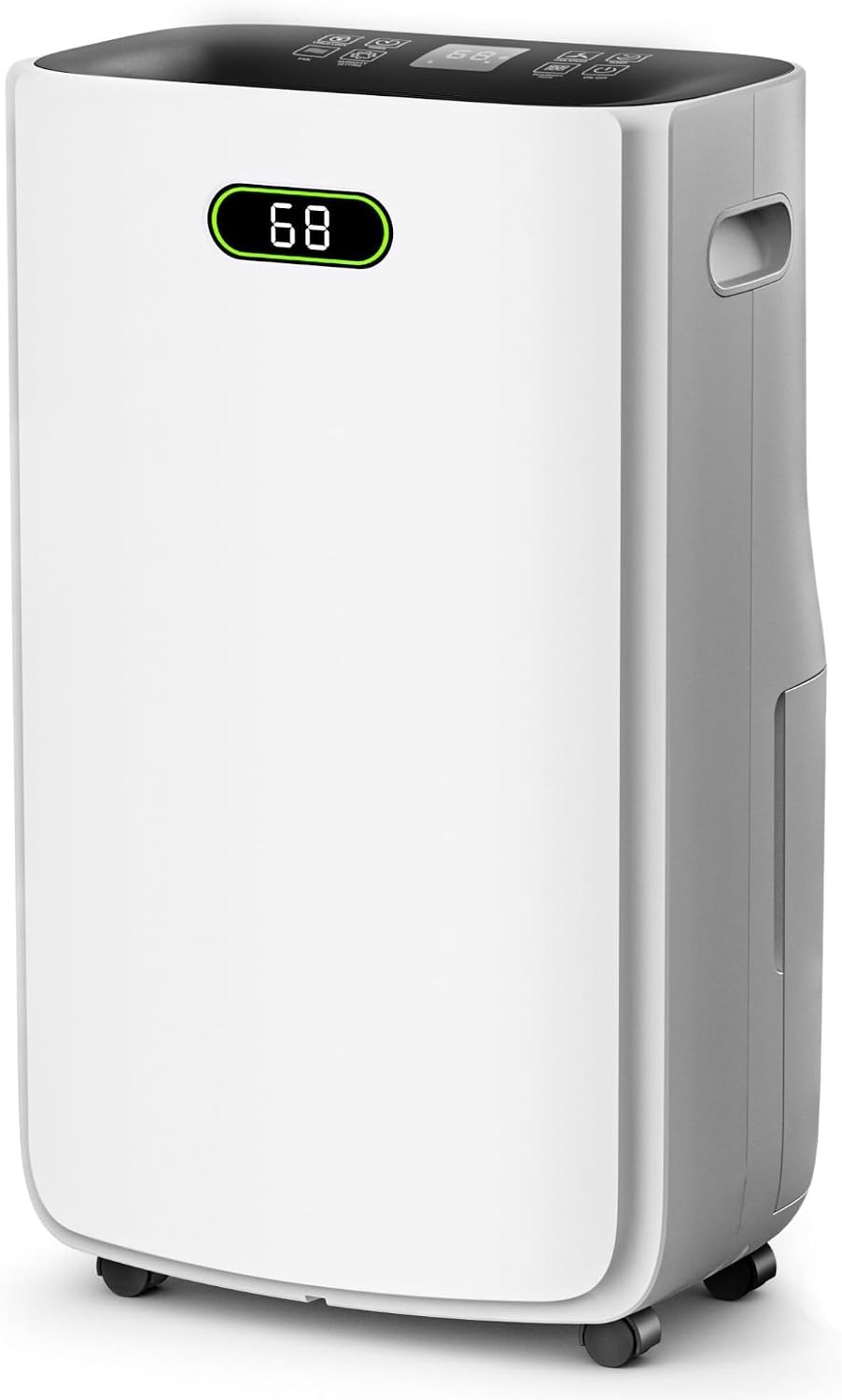
Hose-drain pick: 80 Pint Dehumidifier for Basement with Drain Hose
 Visit on Amazon →
This is the class of machine I put in basements and on whole-floor duty, and the drain hose in the box is the reason. The tank-versus-hose debate ends for me the moment you are dealing with a below-grade space. Set it up, run the hose to a floor drain, a sump, or a condensate pump, and the machine works unattended for the whole season instead of stopping when a float switch trips.
The 80 pint class is built for larger, wetter spaces, the kind where you can smell the room from the stairs. Pair a unit like this with a cheap hygrometer across the room and you will see whether it is actually holding the space down. If the hygrometer sits at 55 percent and steady, you sized it right. If it climbs every afternoon, you either have a water problem you have not found yet or you need a second machine.
Check current Amazon price at the link above before you commit, because this category moves around a lot.
Flaws but not dealbreakers: Gravity drain only works if the hose runs downhill the entire way. If your floor drain is uphill or on the other side of a doorway, budget for a small condensate pump, because a hose that has to climb will back up and flood the floor. Also measure the hose run before you place the unit. A kinked hose is the number one reason I get called to a "broken" dehumidifier that is running perfectly.
Homeowners with a real basement, a crawl space, or a wet first floor should start here.
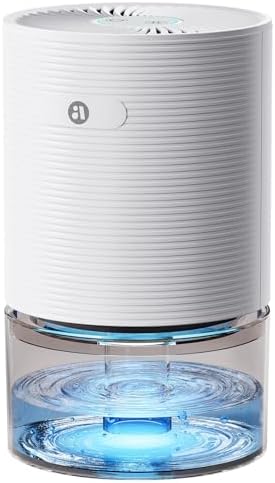
Tank pick: SANVINDER Dehumidifiers for Home, 25oz Dehumidifier for Bedroom with Auto-off, Ultra Quiet Energy Saving for Bathroom Closet Wardrobe Office RV (285sq.ft)
 Visit on Amazon →
This is the other end of the job: a small-space unit for a bedroom, a closet, a wardrobe, a bathroom, an office, or an RV, with a 25 ounce tank and a coverage claim around 285 square feet. It is the kind of machine I would put in a wardrobe that smells like a wet towel, or on a shelf in a small bathroom with no exhaust fan, or in the back of a camper that sits closed up between trips.
The auto-off matters here, and it is worth understanding what it really means. When the tank fills, the unit stops. That is a safety feature, not a convenience feature. In a closet you will be checking it every few days in a wet season, so put it somewhere you actually walk past. Ultra quiet is the other thing that matters in this size class, because a bedroom unit that hums is a bedroom unit that gets unplugged at midnight and never plugged back in.
Coverage claims in this size class are optimistic. Treat 285 square feet as the best case with the door closed and the air already reasonably dry. For a genuinely damp 285 square foot room, you want the hose-drain class above, not this one.
Check current Amazon price before you buy, and check the tank size against how often you are willing to empty it.
Flaws but not dealbreakers: A 25 ounce tank is a small tank. In heavy humidity you will empty it daily, and the handle situation on small units is never great, so carry it level. This is also not a basement machine. It will not hold a below-grade space, and asking it to is how people end up disappointed and back on the review pages.
Anyone fighting a damp closet, a stuffy bathroom, a wardrobe, or a small bedroom should look here.
The setup steps that actually matter
Step one: measure the moisture, not the room. Buy a $15 hygrometer before you buy anything else. Put it in the room for 48 hours. Above 60 percent relative humidity for days at a time is mold territory. Between 50 and 60 is a problem worth fixing. Below 50 and you may be shopping for a machine you do not need yet. If a window AC with a dry mode gets the room under 55 percent, that may be the whole answer, and I will tell you that before I sell you anything.
Step two: find the water source. A dehumidifier is not a repair. If a downspout dumps against the foundation, if the crawl space has no vapor barrier, or if a bathroom fan vents into the attic, you will be running that machine forever. Fix the water first. Then dry the air.
Step three: pick the drain. Basement, crawl space, whole floor: hose. Bedroom, closet, wardrobe, RV: tank, and accept the emptying schedule.
Step four: set the humidistat and then verify it. Set it for 45 to 50 percent, then check it against your hygrometer after two days. Humidistats are frequently off by 10 to 15 percent. If yours reads 45 while the room sits at 58, set the machine lower and trust the hygrometer, not the display.
Step five: close the envelope. A dehumidifier fighting an open window is a dehumidifier doing nothing. Door gaps, pet doors, and unsealed attic hatches are why people think their unit is undersized when it is actually just losing the fight on purpose.
Step six: maintain it. Rinse the filter monthly. If your filter costs $30 and needs replacing every month, you bought the wrong machine, and that is worth checking before you order. Clean the coil once a season. A dust-loaded coil is a machine running longer for less water.
Step seven: test a power outage. Trip the breaker, restore it, and watch what the unit does. It should come back on and resume dehumidifying. If it restarts in fan only, you now know, and you can decide whether that matters in a house that loses power during every summer storm.
Direct answers to the questions I get most
Do I really need a hose? If the space is below grade or the unit has to run daily, yes. Tank emptying is the chore that kills the habit, and a machine that stops at 3 a.m. in the worst month of the year is a machine that stopped working.
Compressor or desiccant? Compressor units win in warm rooms. Desiccant units win in cold basements, because compressor coils ice up when the air is cold. Most reviews ignore that temperature split entirely, which is why people in cold climates buy the wrong machine every fall.
How many units do I need? Often two. Nobody wants to hear it, but a basement and a bedroom are two different problems with two different answers, and one machine moved back and forth between them solves neither.
Should I pay for the app and the smart features? I have reset more Wi-Fi modules than compressors. The app is a support call generator in my experience. Buy capacity, a drain, and a humidistat you can verify, and skip the rest.
What it costs to run
You do not need my numbers, you need the method. Plug the unit into a watt meter for a week, average the draw, multiply by your hours of use, and multiply by your utility rate. A machine that runs constantly in a wet basement will show up on the bill, and that is the honest cost of a dry house. Do that math once, on the unit you actually own, in the room where it actually lives. The box does not know your house.
The bottom line
Match the machine to the room, not to the pint number on the box. A basement or a whole floor gets the hose-drain class, set it and forget it, with a hygrometer across the room to prove it is working. A bedroom, closet, wardrobe, bathroom, or RV gets a quiet small-tank unit like the SANVINDER, and you accept that you are the drain system.
Then derate the rating by 30 to 40 percent, close the door gaps, and give it two days before you decide it failed. Most of the units I get called about are sized wrong or draining wrong, not broken. Get those two things right and the machine will do its job for years.