Related: Dehumidifier Hose Drain Setup: The Kit I Install Most
I keep a hygrometer log for my own house, a 1920s shotgun in New Orleans with no central air in the back rooms, and I keep notes on every unit I install or service. That log is the reason I stopped trusting the number printed on the box. Dehumidifier sizing by room is the part almost nobody explains, and it is the difference between a bedroom that sits at 50 percent and a machine that runs all night and never gets there.
Here is the short version of what 18 years of HVAC work and a lot of Gulf Coast summers taught me. Pints per day is a lab number, measured at a temperature and humidity most homes never see. Add door gaps, a leaky window, and a bathroom down the hall, and you cut that rating by 30 to 40 percent. Coverage in square feet is marketing copy. Tank size and drain options are the product. And the temperature split, compressor versus desiccant, decides whether the thing works at all in a cold basement.
So this is a sizing guide first and a product guide second. I will walk through how I figure out what a room actually needs, then the four machines I would put in a house right now: a whole-floor unit with a pump, a quiet basement unit, a mid-size unit for a damp living space, and a small bedroom and RV unit. Different jobs, different answers. Buying the biggest one for a closet is as wrong as buying the smallest one for a basement.
Best Overall: Midea Cube 50 Pint with Pump
This is the one I would buy for a whole floor, and the reason is one word: pump. The Midea Cube 50 Pint has a built-in pump, which means you can push condensate uphill to a sink, a slop sink, or out a window instead of carrying a tank down a staircase twice a day. I install hose kits as often as I install units, and a pump is the difference between a dehumidifier that runs unattended through August and one that shuts off at 3 a.m. because nobody emptied it.
The rated numbers are 50 pints per day and 4,500 square feet of coverage. Treat the first as a lab figure and the second as an open-floor figure. In a real Louisiana August, with a door open to a hallway, I would plan on something in the low 30s of actual pints. That is still more water than any other unit on this page moves, and it is why this one goes in the basement or the main floor, not the bedroom.
The cube shape is smarter than it looks. It stacks down into a smaller footprint for storage and expands when it is working, which matters in a house where the dehumidifier lives in a closet for nine months. Smart control is on board, and I will say the same thing about it I say about every app: the humidistat and the machine matter more than the Wi-Fi module. Buy it for the pump and the capacity, not the phone.
Best for a Quiet Finished Basement: VEAGASO 32 Pints
The VEAGASO is rated 32 pints per day and 2,500 square feet, and it is listed at 38 dB. That noise number is the part I care about, because a finished basement is a room people actually use. A unit that hums at 38 dB disappears under a television. A unit that rattles at 50 dB turns a rec room into a room nobody wants.
The 2,500 square foot figure is honest for an open basement with no doors in the way. Break that basement into a bedroom, a bathroom, and a storage room, and you have three zones. One machine in the middle will not dry a closed room at the far end. This is where my sizing advice gets unpopular: sometimes the right answer is one 32 pint unit and a second small unit, not one giant machine.
Plan your drain before you buy. If there is no pump, you are relying on a gravity path to a floor drain or a sump, and gravity needs a downhill run and a hose that never gets kinked behind the unit. If your basement has no floor drain and no downhill path, budget for a unit with a pump instead. That is a plumbing question, not a product question, and it decides more purchases than capacity does.
Best Mid-Size Pick: Trazico 21 Pint/Day
The Trazico is rated 21 pints per day for up to 1,500 square feet, which puts it in the middle of this group and in the middle of most real jobs. A damp living room, a small apartment, a laundry room that never dries out, a garage that smells like a garage. This is the size I would reach for when the Midea is more machine than the space needs.
Twenty-one pints sounds small next to a 50 pint rating, and it is not small at all. The 50 pint unit is for a whole floor. A 21 pint unit is for one room plus the hallway it opens onto. The mistake I see most often is a homeowner buying a 50 pint machine for a 200 square foot bedroom, then complaining that it short cycles and the room still feels clammy. Oversizing is real. A machine that satisfies the humidistat in four minutes does not run long enough to pull water out of the carpet and the drywall.
If you are choosing between this and the VEAGASO, it comes down to noise and coverage. The VEAGASO is the quieter, larger unit for a basement. The Trazico is the smaller footprint for a room you actually live in. Neither is better. They are sized for different rooms.
Best for a Bedroom or RV: TABYIK 35 OZ
The TABYIK is a different animal. It is rated by tank capacity, 35 ounces, rather than by pints per day, and that tells you the job it is built for: a bedroom, a closet, an RV, a bathroom, a small space where the air is sticky and the square footage is small. It is quiet and it shuts off automatically when the tank fills, which is exactly the behavior you want in a room where you sleep.
Thirty-five ounces is about a quart. In a genuinely humid bedroom in July, a quart can fill in a night or two, so this is a unit you check and empty regularly. That is not a flaw, it is the trade you make for a machine this size and this quiet. If you want to stop emptying tanks, you want the Midea and its pump, and you want it in the basement, not the bedroom.
For an RV, this is close to ideal. Shore power, a small cabin, and a door that gets opened all day. The auto shut off protects the unit when the tank fills while you are out, and the small tank means it does not slosh down the road. This is the one on the list I would hand to someone who has never owned a dehumidifier.
How I size a room before I buy anything
I do three things before I recommend a capacity, and none of them require a machine.
First, I measure the space and count the doors. Open floor plan, one number. Closed bedrooms off a hallway, three zones, and one machine will not serve all three. Second, I check the drain situation. Floor drain, sump, sink nearby, window the hose can reach, or nothing at all. That single answer decides whether you are shopping for a pump or a tank. Third, I check the temperature. A basement that sits at 60 degrees and 70 percent humidity in the summer is a compressor job. A cold crawl space in January is where a desiccant unit earns its money, because a compressor coil ices up and the machine stops pulling water.
Then I apply the reality discount. Take the rated pints, cut it by 30 to 40 percent, and see whether the result still covers what you need. If the discounted number is close to your requirement, size up. A dehumidifier that runs continuously at 100 percent capacity has no reserve for the week in August when the rain does not stop.
I run a watt meter on every unit I live with for a week, because energy use is a monthly bill, not a spec sheet line. A 50 pint compressor that pulls hard all day can cost more per month than a smaller unit running longer cycles. That math is different in every house, which is why I keep the meter on the machine and not on the spreadsheet.
Analysis: what the specs leave out
The pint rating is measured at a standard test condition, and your house is not that condition. That is not a knock on any of these four units. It is how the category works, and once you know it you can shop properly instead of shopping by the biggest number on the page.
Tank size is the spec that decides whether a machine is useful to you. A full tank means the unit stops, and a stopped unit is not dehumidifying. Below about 60 percent relative humidity, in a basement or a whole-floor setup, a hose drain stops being optional. That is why I put the pump unit first in this guide and the tank unit last, and why the tank unit is the one I recommend for the smallest space, where emptying a quart is a 20 second job.
Humidistats drift. Every one I have checked with a hygrometer has been off, sometimes by a meaningful margin. So do not set it to 50 and assume the room is at 50. Buy a cheap hygrometer, put it across the room from the unit, and set the humidistat to whatever number actually holds the room where you want it. It is the cheapest upgrade in this entire hobby.
And check what the machine does after a power outage. I have dealt with units that come back in fan only mode and quietly run all night without pulling a drop of water. A unit that returns to its last setting is worth more than a unit with a nicer app.
The sizing and coverage reference table
This is how I line these four up when someone asks me what to buy. Ratings are the manufacturer's, coverage is the manufacturer's, and the notes are mine. Always check the current price and the current listing before you buy, because stock and pricing on this category move constantly.
| Model | Rated pints per day | Rated coverage | Notes | Price |
|---|---|---|---|---|
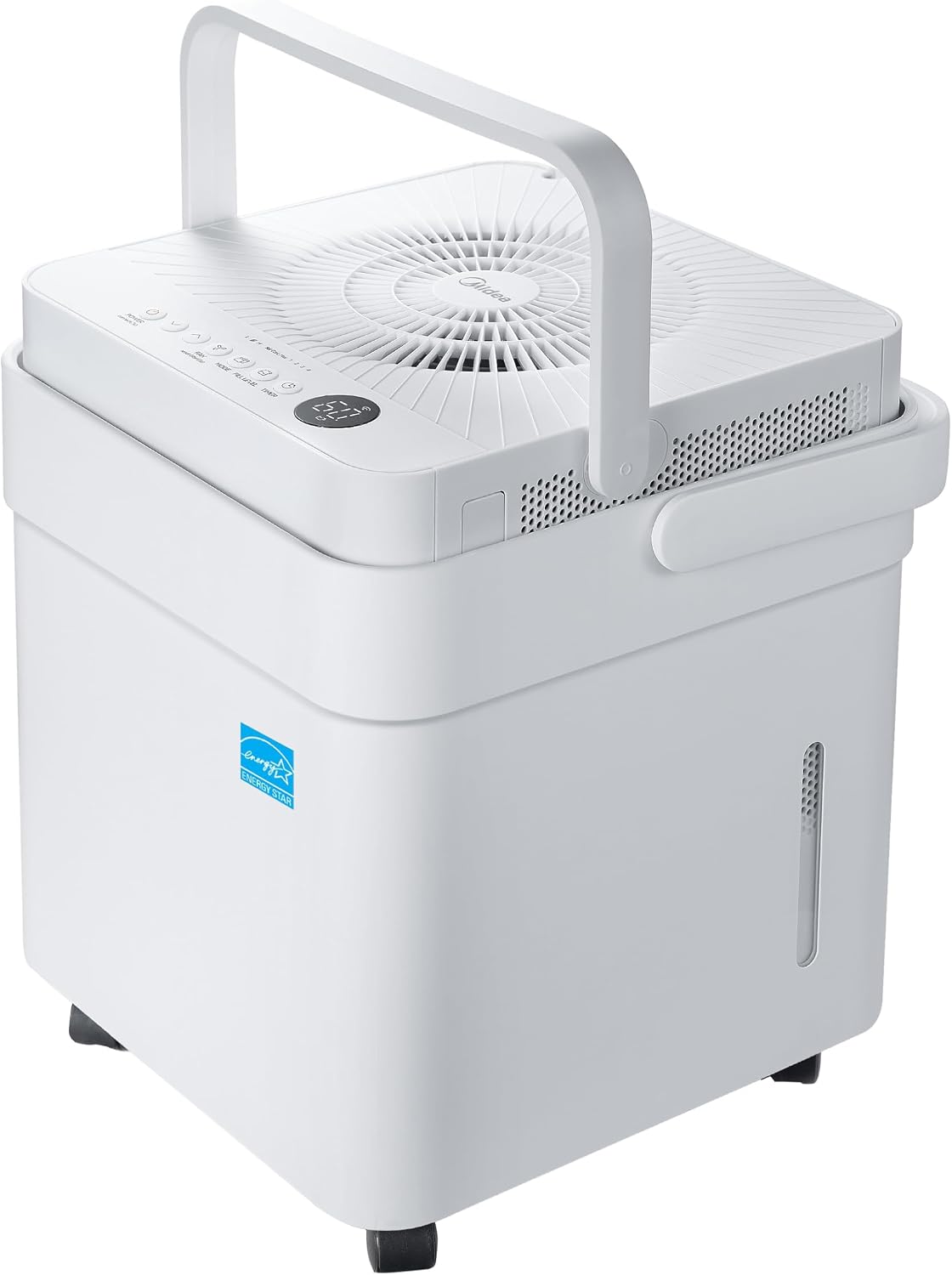 Visit on Amazon → Visit on Amazon →Midea Cube 50 Pint with Pump |
50 | 4,500 sq ft | Built-in pump, smart control, stackable cube body | $249.99 |
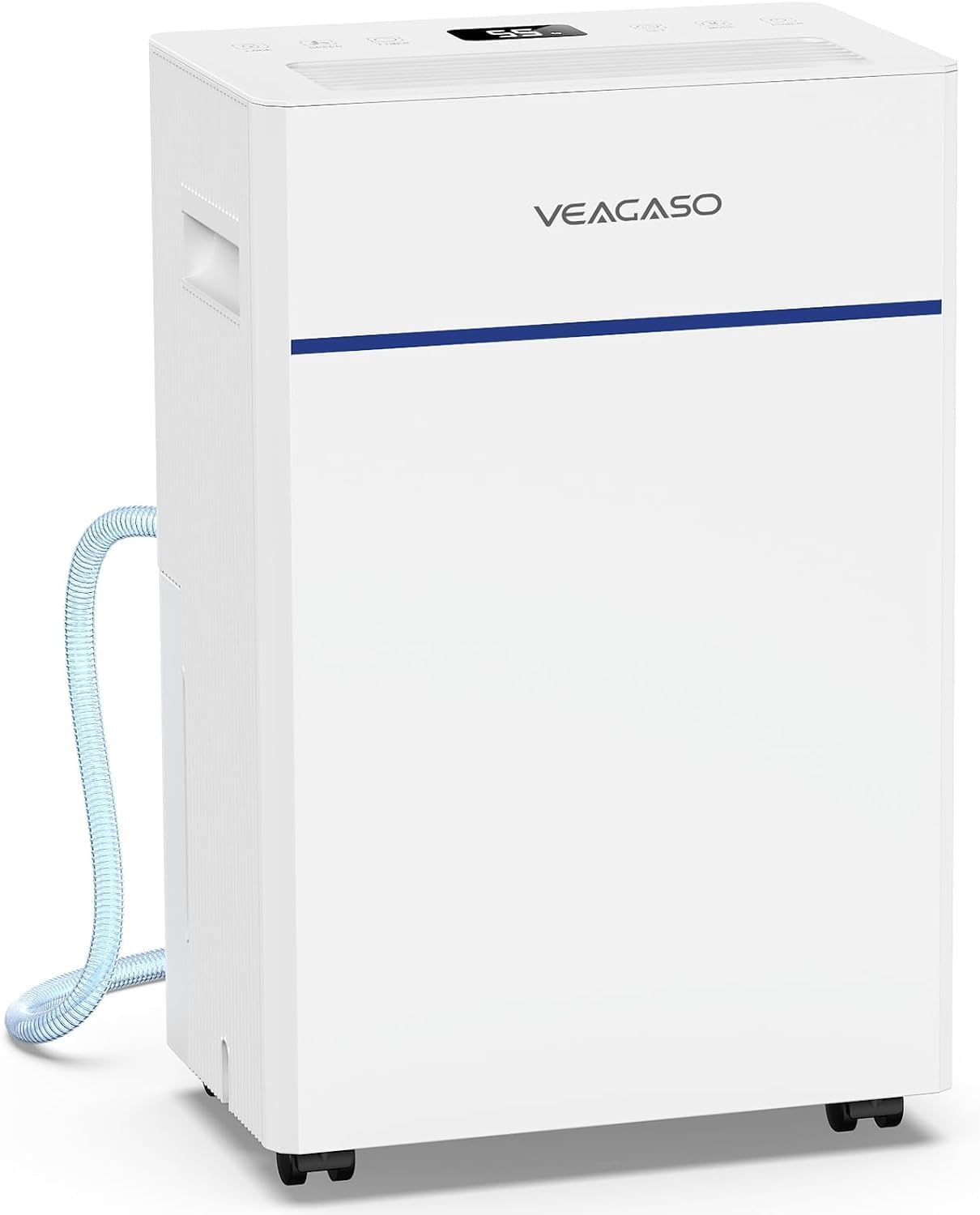 Visit on Amazon → Visit on Amazon →VEAGASO 32 Pints |
32 | 2,500 sq ft | Listed at 38 dB, basement sizing, quiet enough for a finished room | Check current Amazon price |
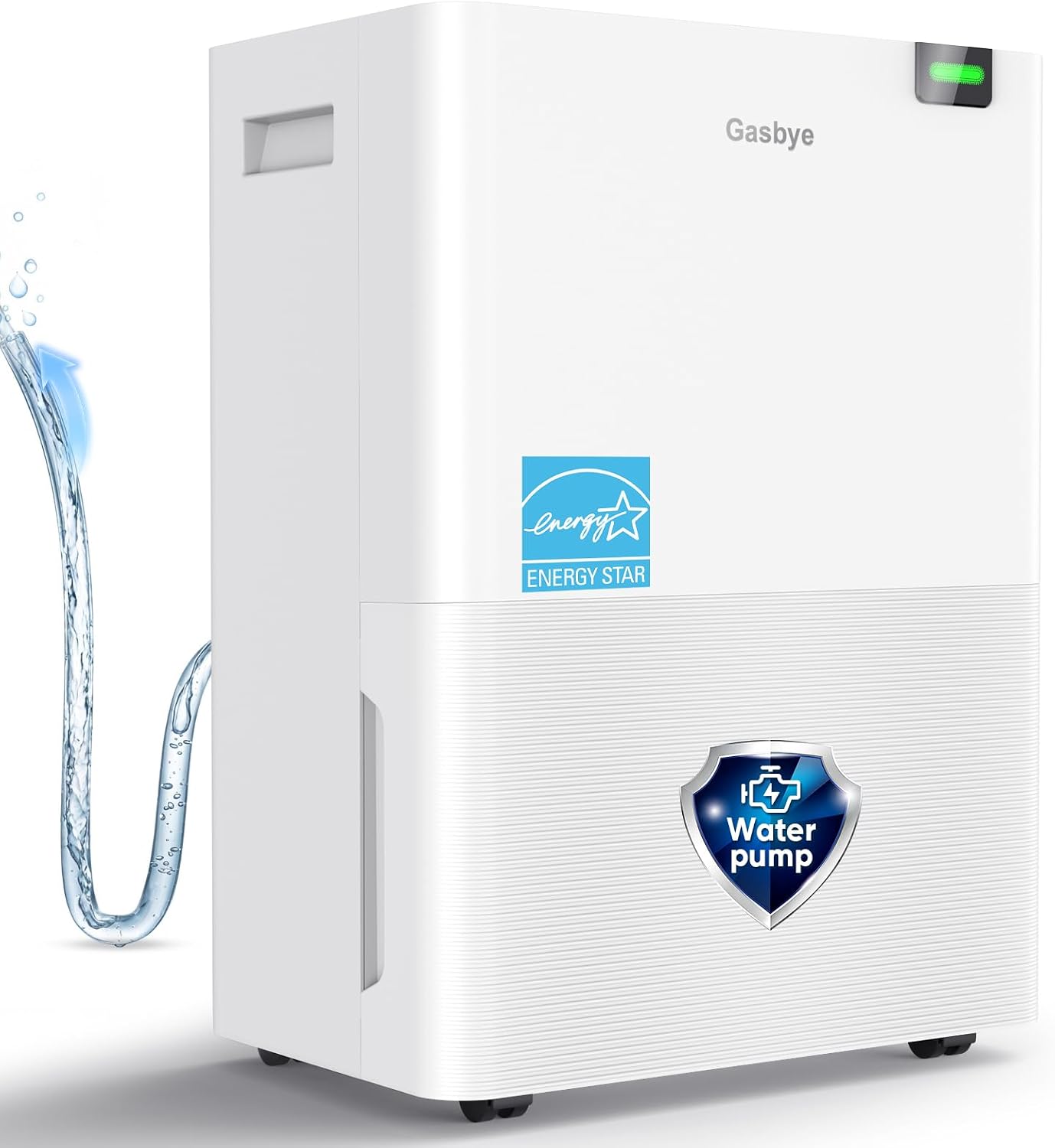 Visit on Amazon → Visit on Amazon →Trazico 21 Pint/Day |
21 | 1,500 sq ft | Mid-size pick for a damp living room or apartment | Check current Amazon price |
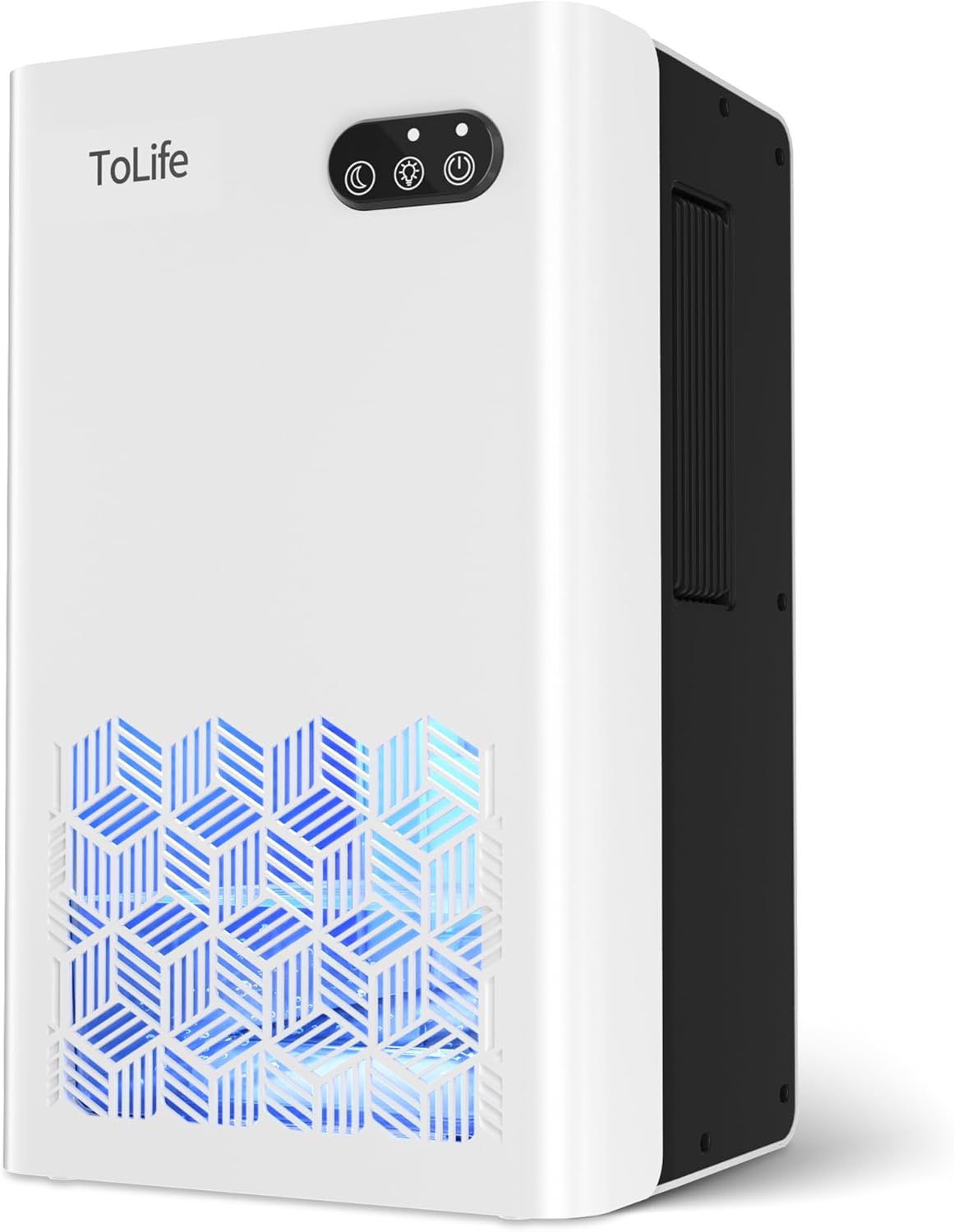 Visit on Amazon → Visit on Amazon →TABYIK 35 OZ |
Not rated in pints | Small space, bedroom and RV | 35 oz tank, auto shut off, quiet operation | $42.99 |
Should you buy the Midea Cube 50 Pint with Pump?
If you are drying a whole floor or a basement, yes. The built-in pump is the feature that makes it a machine you can forget about, and 50 pints is the highest rating in this group. The cube design stores small and the smart control is there if you want it, though I would not pay extra for the app alone. Size it for the floor, not the closet, and set the humidistat with a hygrometer in the room rather than trusting the display.
Should you buy the VEAGASO 32 Pints?
For a finished basement or a large open room where noise matters, yes. The 38 dB listing is the reason to pick it over a bigger, louder unit in a space where people watch television, and 32 pints covers a lot of real rooms once you apply the reality discount. Just confirm your drain plan first. If there is no floor drain and no downhill path, a gravity setup will fight you, and you should be shopping for a pump instead.
Should you buy the Trazico 21 Pint/Day or the TABYIK 35 OZ?
Buy the Trazico for one damp room that opens onto a hallway, up to about 1,500 square feet of real coverage, and accept that it is a single-zone machine. Buy the TABYIK for a bedroom, an RV, a closet, or a bathroom, where the job is a small volume of air and the priority is quiet operation and auto shut off. Neither one replaces a basement unit, and neither one should be asked to. Match the machine to the room and you will never think about it again, which is the whole point.