Related: Best Dehumidifier for a Damp Bedroom: What I Would Put in Mine
I have been an HVAC tech in New Orleans for 18 years, and I have pulled more moldy drywall out of Louisiana homes than I can count. When somebody calls me about a musty back room, the fix is almost always a basement dehumidifier, and about half the time they already bought one that is not keeping up.
Here is the part nobody explains at the register. Pints per day is a lab number. It gets measured in a controlled chamber at a temperature and humidity level your house will never see. In real humidity, with real door gaps and a real HVAC system moving air around, cut that rating by 30 to 40 percent. A unit rated for 50 pints is a 30 pint machine in a Gulf Coast August.
Then there is the tank. The tank is the product. A unit that shuts off when the tank fills is a unit that stops working at 3 a.m. in the worst month of the year. Below 60 percent humidity conditions, a hose drain is non-negotiable, and I install hose kits about as often as I install units.
And the compressor split matters more than any spec sheet admits. Compressor units win in warm rooms. Desiccant units win in cold basements. Most reviews ignore the temperature split entirely, which is how people in Michigan and people in Louisiana end up with the same bad advice.
All four machines here are compressor units with drain hoses, which is the right starting point. Here is how they differ.
Best Overall: Uthfy 5000 Sq.Ft Dehumidifier
This is where I would start for a full basement. The Uthfy 5000Sq.Ft Dehumidifier for Basement ships with a drain hose, and that tells you the manufacturer expects it to run continuously instead of on a tank. That is the correct design for a basement, and it is the first thing I check on any listing.
The 5000 square foot coverage claim is a ceiling, not a promise. Those numbers assume an open floor plan, a sealed house, and a warm room. In a finished basement with a stairwell, a furnace, and a door to the garage, you are realistically getting half of that. If your basement is one open 1,200 square foot space, this unit has room to spare. If it is four small rooms behind closed doors, no single unit is going to fix all four, and I would rather tell you that now than sell you a second machine later.
The reusable filter is a genuine plus. Filters that cost $30 and need replacing every month are one of my pet peeves, and a washable one solves that problem permanently.
The dual screen, intelligent humidistat, child lock, and 24 hour timer are the features I would actually use. The humidistat is the one to verify. I have yet to meet a built-in humidistat that agreed with my handheld hygrometer to the point, and a 10 percent disagreement is normal. Set the unit against your own hygrometer reading, not against its display.
Best for a Garage or Open Basement: 4500 Sq.Ft Dehumidifier
The 4500 Sq.Ft Dehumidifier for Basement is the unit I would point at a garage, a workshop, or a wide open basement floor. It has a drain hose, humidity control, and auto shut-off, which means it can run unattended once it is set. That last part matters more than people think.
Garages are a special case worth explaining. The concrete slab stays cool, warm humid air rolls in every time the door opens, and condensation lands on every cold surface in the room. A compressor unit is the right tool for warm, humid air, and this is a compressor machine, so it fits that job.
Auto shut-off earns its keep in two different situations. If you are running on the tank, it protects you from an overflow. If you are running on the hose, it protects the machine itself when something goes wrong with the drain path. Check that drain path once a month. A kinked hose is the most common reason a working dehumidifier looks broken.
The honest caveat is coverage. This is a large-room machine, and if your damp space is a single bedroom, you are paying for capacity you will never use. Match the machine to the room, not to the biggest number on the box.
Best for a Single Damp Room: 1600 Sq.Ft Compressor Dehumidifier
Max 21 pint per day. That is a small machine, and I want to be straight with you about it. Twenty-one pints is a bedroom, a laundry room, a single damp room with a door you can close. It is not a whole basement, no matter what the 1600 square foot number suggests.
Square footage claims and pint ratings are two different measurements, and the pint rating is the one that decides whether a room actually dries out. Apply the 30 to 40 percent discount here and you are looking at a machine pulling maybe 13 to 15 pints a day in a real Louisiana summer. For one closed room, that is enough to make a difference. For a basement that already smells like wet drywall, it is not.
Compressor is the right choice in a warm room, and this is a compressor unit. If your damp space is a cold basement that sits below 65 degrees for most of the year, you are in desiccant territory and none of these four are the answer for you. That is not a knock on the machines. It is just physics.
One more thing to check on a small unit: after a power outage, does it come back on in dehumidify mode, or does it restart in fan only? A unit that quietly blows air for three days without pulling water is a unit that wasted three days.
Best Budget Pick: Rotary Dehumidifier with a 2.5L Tank
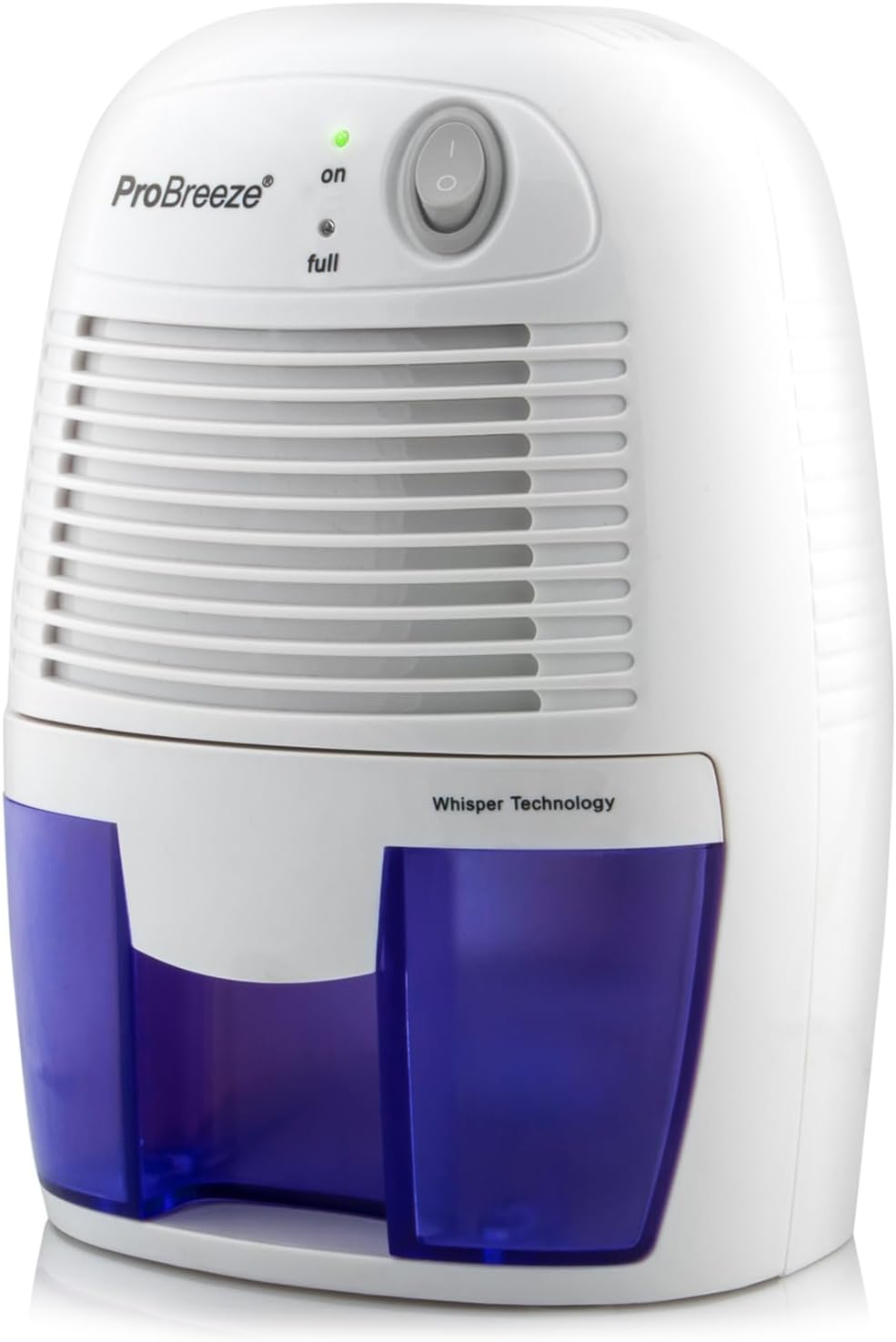
The Rotary Dehumidifier with the 2.5L water tank and a drain hose is the smallest and least expensive machine in this group, and it is aimed at a bedroom, a bathroom, or an RV rather than a basement floor.
The 2.5 liter tank holds a bit over 5 pints. In a genuinely damp room, that is a tank you empty every day, sometimes twice. The drain hose is the fix, and it is included, so use it if you can route the hose to a floor drain or out a window. Tank emptying is the chore that makes people stop using a dehumidifier, and a sloshing tank you have to carry across a room is the reason.
The 2000 square foot claim should be read the same way as the others: an optimistic ceiling for an empty, sealed room.
Sleep mode and the 7 color ambient light tell you exactly who this unit is for. It is a bedroom machine, and quiet operation matters at night. A compressor cycling on and off next to your bed is the thing to listen for in the first week.
Auto shut-off protects you if the tank fills while you sleep. But if the tank fills while you sleep, the room stops drying while you sleep. That is the entire argument for the hose.
How I tested
Every portable unit that comes through my shop goes through three routines.
The bucket test: I weigh the water a unit pulls, in real humidity, in a real house, and compare it to the pint rating on the box. The meter week: a watt meter on the plug for seven days, then I do the monthly cost math. And the buyer's chair: I sit in the room the unit is supposed to fix and ask whether it actually feels different.
I do not have all four of these on my bench right now. What I do have is 18 years of pattern recognition and a specific list of things that fail. So rather than invent numbers for machines I have not weighed, here is the checklist I would hand you if you called me, and the same one you can run yourself after delivery.
Analysis: what the numbers really mean
Pint ratings are measured in a controlled chamber at one temperature and one humidity level. Your house is not that chamber. That is the single most useful thing to understand before you spend money.
Compressor versus desiccant is the temperature split. Compressor units move heat and work well above roughly 65 degrees. Below that they frost up, cycle into defrost, and lose output. Desiccant units use a rotating wheel and hold up in cold basements, but they cost more to run. Warm basement, warm garage, warm bedroom: compressor. Cold Michigan basement in February: desiccant.
Hose versus tank is the humidity split. Below 60 percent humidity conditions, run a hose. A tank is fine for a bedroom where you are home and awake. It is not fine for a basement in July.
Energy use is a monthly bill, not a spec. Rated watts are a snapshot at one condition, and the only honest answer comes off a watt meter over a week.
Square footage claims should be read as "if this were an empty, sealed room." Count the doorways, count the stairwell, count the furnace, and cut the number.
The basement dehumidifier comparison table
| Unit | Best for | Drain setup | What to check |
|---|---|---|---|
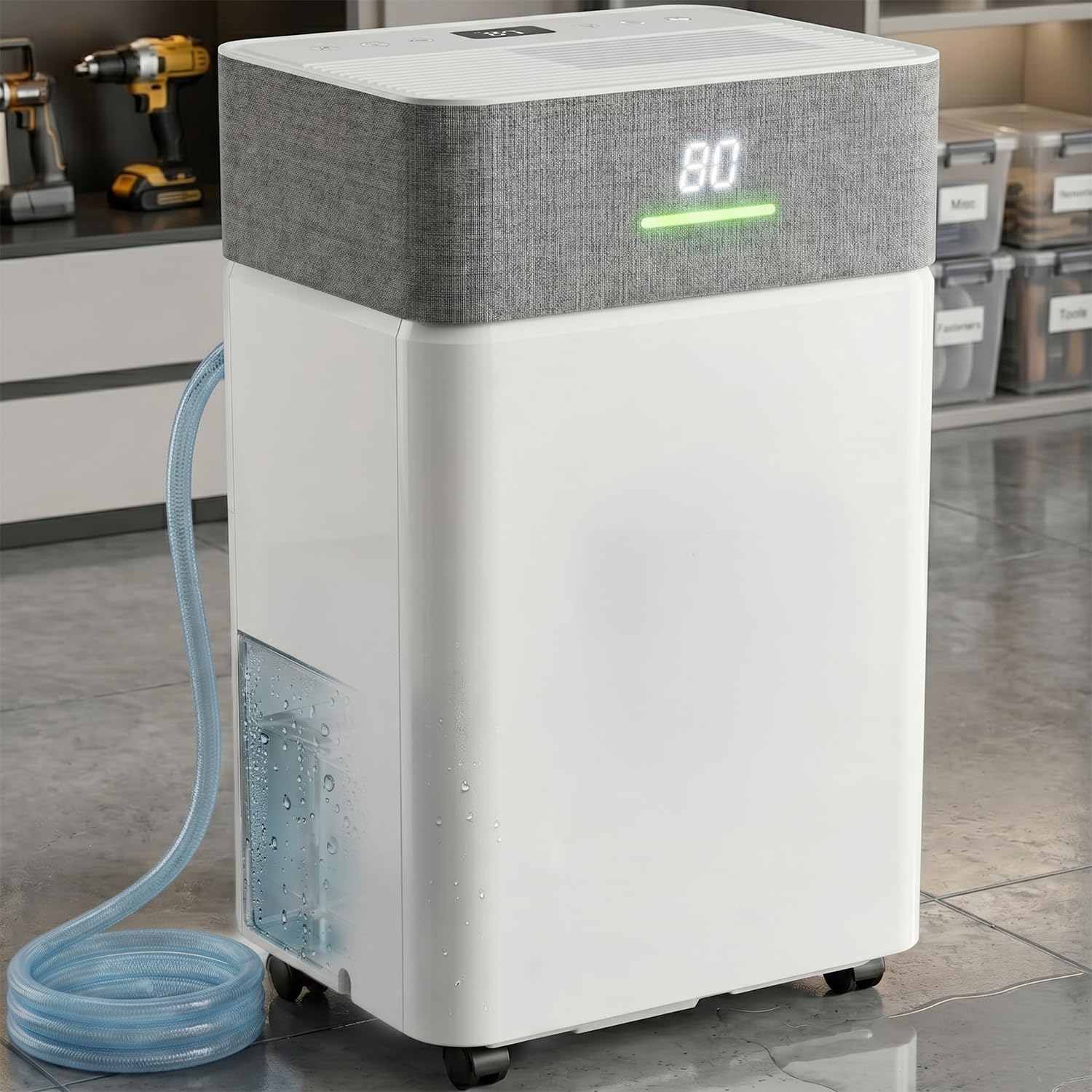 Visit on Amazon → Visit on Amazon →Uthfy 5000Sq.Ft Dehumidifier |
Full basements up to the rated coverage | Drain hose included, tank as backup | Humidistat accuracy against your own hygrometer |
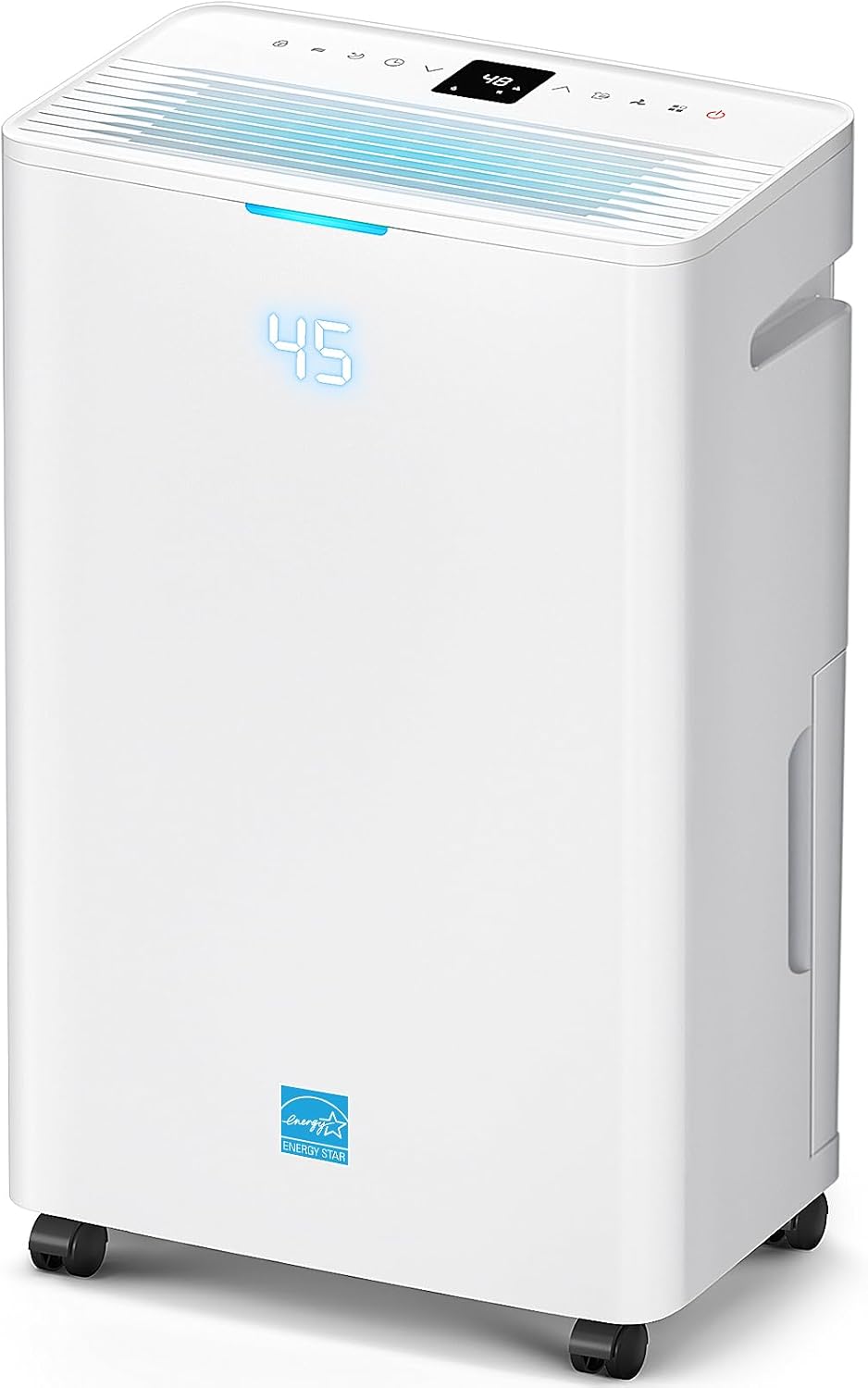 Visit on Amazon → Visit on Amazon →4500 Sq.Ft Dehumidifier for Basement |
Garages, workshops, open basement floors | Drain hose, humidity control, auto shut-off | Keep the hose run kink free |
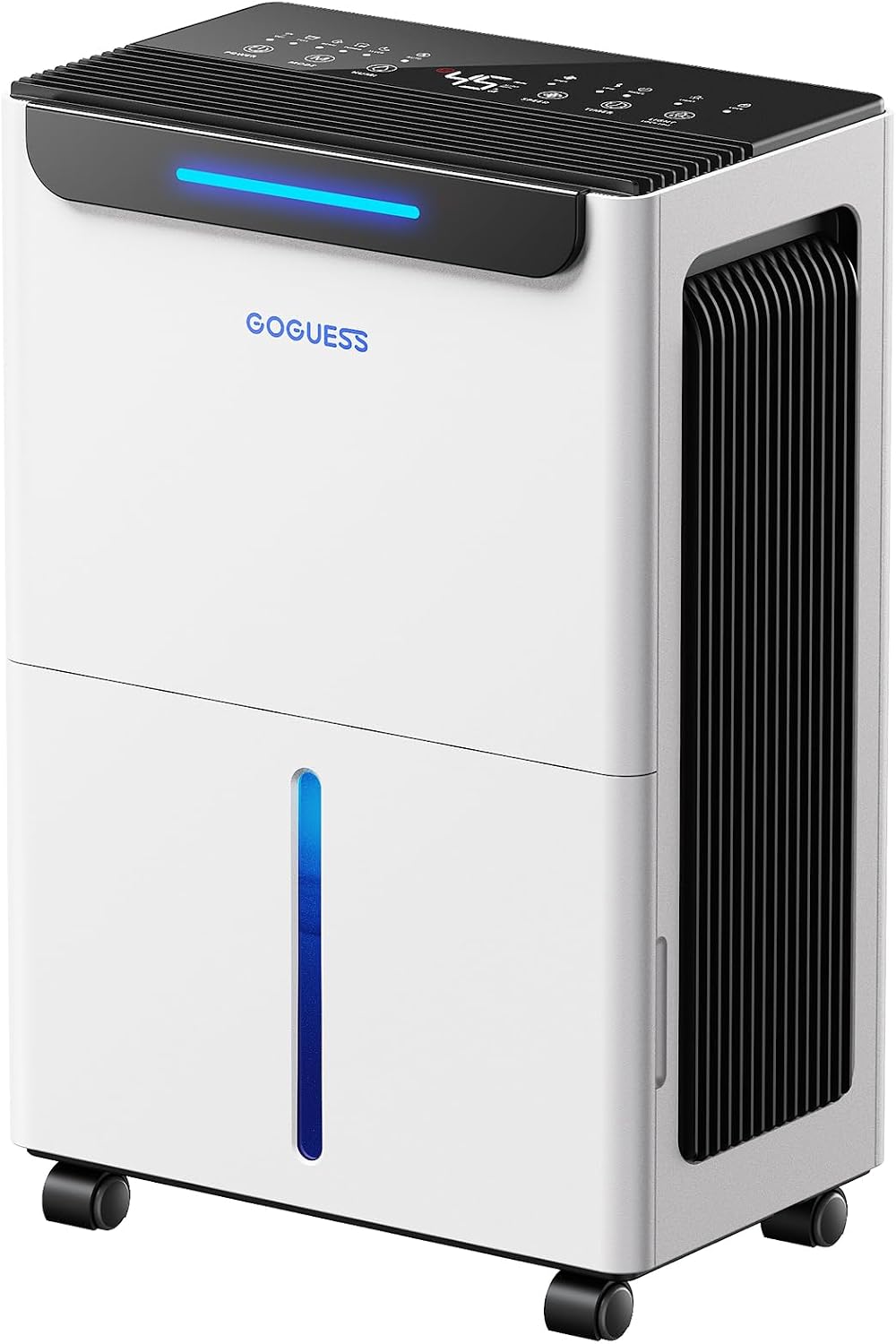 Visit on Amazon → Visit on Amazon →1600 Sq.Ft Compressor Dehumidifier |
One damp room with a closeable door | Compressor, small footprint | Does it restart in dehumidify mode after an outage |
 Visit on Amazon → Visit on Amazon →Rotary Dehumidifier with 2.5L Tank |
Bedrooms, bathrooms, RVs | 2.5L tank plus drain hose | Tank is a bit over 5 pints, so empty daily or use the hose |
What to do in the first week
Put a cheap hygrometer in the room and write down the reading morning and night for seven days. Set the humidistat against that number, not against the display. Check the hose run for kinks and for a rise it cannot push past. Listen for the compressor short cycling. If the room has not moved at all after a week, the machine is undersized for the space, and that is a sizing problem, not a broken unit.
Should you buy the Uthfy 5000Sq.Ft Dehumidifier?
Yes, if you have a real basement. The drain hose and the reusable filter are the two features that matter most over a five year ownership, and the humidistat gives you something to set and forget once you have verified it against your own hygrometer. Just do the honest math on your square footage first.
Should you buy the 4500 Sq.Ft Dehumidifier?
Yes for a garage or a wide open basement floor. The auto shut-off and humidity control make it a unit you can leave running, which is what you want in a space you do not sit in. Skip it if your problem is one bedroom. You would be buying capacity you cannot use.
Should you buy the 1600 Sq.Ft Compressor Dehumidifier?
Yes for a single damp room, and only for a single damp room. A 21 pint per day machine is honest about what it is. If you need it for a bedroom or a laundry room, it will do the job. If you are hoping it will dry out a whole basement, you will be disappointed, and no amount of repositioning will fix that.
Should you buy the Rotary Dehumidifier with the 2.5L Tank?
Yes for a bedroom, bathroom, or RV, and yes on a budget. It is the quietest role of the four and the sleep mode and ambient light are aimed at a room you sleep in. Use the included hose and the 2.5 liter tank stops being a daily chore. Leave it on the tank and you will be carrying it to the sink every morning.