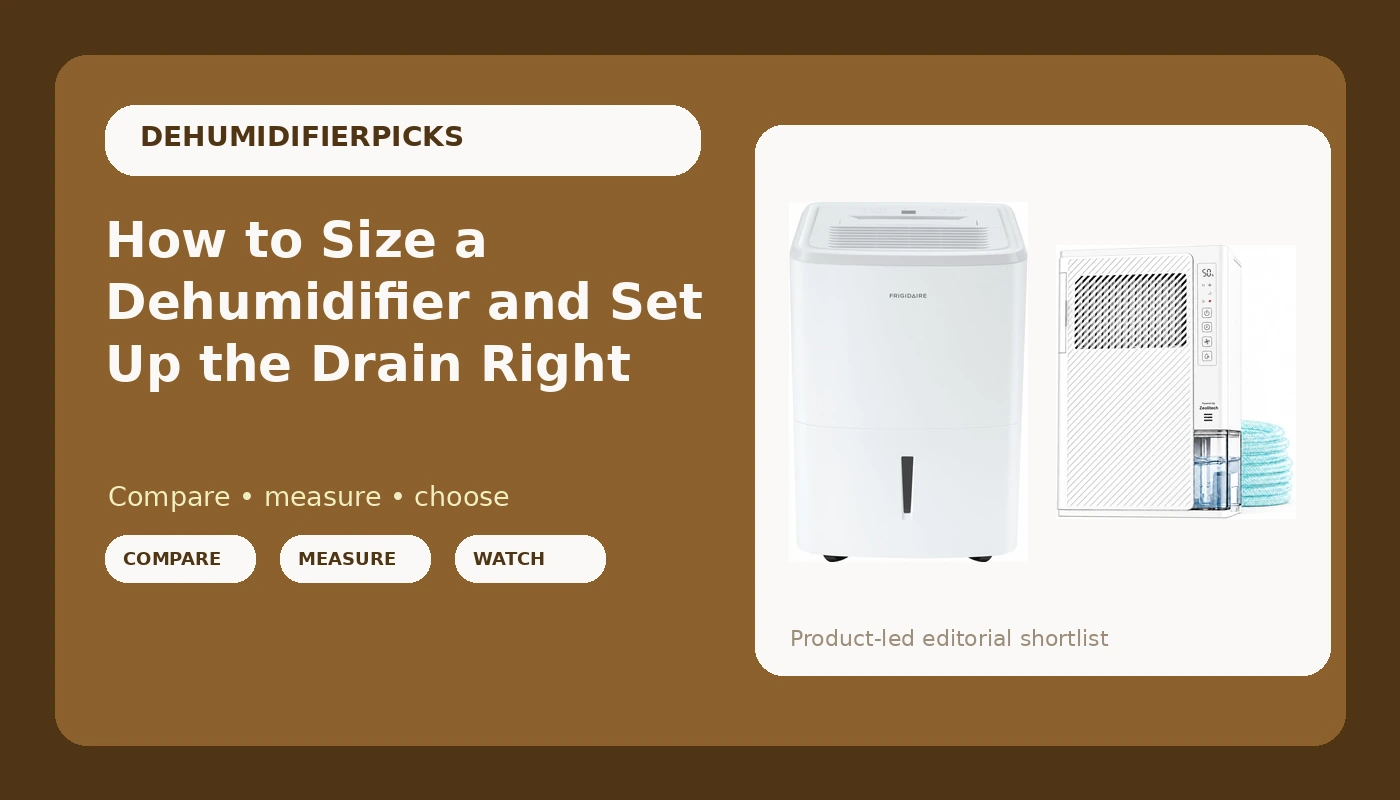
Most people buy a dehumidifier the way they buy a box fan: they match the number on the listing to the square footage of the room and hope. That is how you end up with a machine that runs all night, fills its tank by morning, and leaves the bedroom still smelling like a wet towel. Learning how to size a dehumidifier takes about ten minutes of arithmetic and one honest look at the temperature of the room you are trying to dry.
I have been an HVAC tech in New Orleans for 18 years. I have pulled moldy drywall out of shotgun doubles in Mid-City, and I have run portable dehumidifiers through Gulf Coast summers in my own 1920s house, where the back rooms have no central air and the door gaps are wide enough to read a newspaper through. I keep a hygrometer log, a watt meter, and a bucket routine: I weigh the water every unit pulls, because pints per day on a spec sheet and pints per day in a Louisiana August are two different numbers.
The short version: derate the pint rating 30 to 40 percent, pick compressor or desiccant based on room temperature, and run a hose drain if the room is a basement or an entire floor. Everything else is details, and the details are below.
Why you should trust me
Eighteen years of service calls across Orleans and Jefferson Parish means I have seen what happens to a house when a dehumidifier is undersized and what happens when it is oversized and short cycling. I install hose drain kits as often as I install units, because the drain is where most of these setups fail. At home I log humidity with a handheld hygrometer and run a watt meter on every machine for a week, then do the monthly cost math before I form an opinion about it.
What I will not do is pretend I ran these two specific machines through a full summer on my bench. I have not. What I have is the service history of the category, the numbers from my own house and from client installs, and a clear set of rules for matching a machine to a room. Where a claim below is a general pattern rather than a measured number, I say so.
How I judge a dehumidifier
Four things decide whether a unit actually works in a real house, and none of them is the brand name.
The pint rating, derated. The number on the box comes from a warm, humid test chamber with the machine running flat out. Your spare bedroom with a door gap, a sweating window, and a bathroom on the other side of the wall is not that chamber. Cut the rating by 30 to 40 percent and you get close to what the machine will pull in a Gulf Coast summer. A 50 pint unit is a 30 to 35 pint unit in a real house.
Compressor or desiccant. A compressor unit is a small air conditioner that dumps its heat back into the room. It wins in warm rooms, roughly above 65 degrees, where it pulls the most water per watt. A desiccant unit uses a rotating wheel and heat to grab moisture, and it keeps working when a compressor coil would frost over. Cold basement, cold garage, unheated cabin: desiccant. Bedroom in July: compressor.
The tank and the drain port. The tank is the product. A unit that shuts off when the tank is full is a unit that stops working at 3 a.m. in the worst week of the year. A tank is fine for a bedroom where you are home every day. For a basement, a crawl space, or a whole floor, you want a hose drain, and you want to confirm the port is threaded and the hose can run downhill.
The controls, especially the humidistat. I have put handheld hygrometers next to a dozen built-in humidistats and watched them disagree by 10 to 15 percent. That matters, because a humidistat set to 50 that reads 15 percent low will run the machine until the room sits at 35 percent, which is dry enough to make your sinuses miserable and your meter spin. Set the humidistat, then verify with a separate hygrometer. Also check what the unit does after a power outage. Some of them come back in fan only and never tell you.
Then there is the meter. Energy use is a monthly bill, not a spec, so I run a watt meter for a week on anything I plan to recommend and multiply by the local rate. A unit that looks cheap on the receipt can cost more in a single summer than the machine itself.
Match the machine to the room
Two machines cover most of the houses I walk into: a compressor unit for the warm rooms and a desiccant unit for the cold ones. Here is how each one fits, and where each one stops being the right answer.
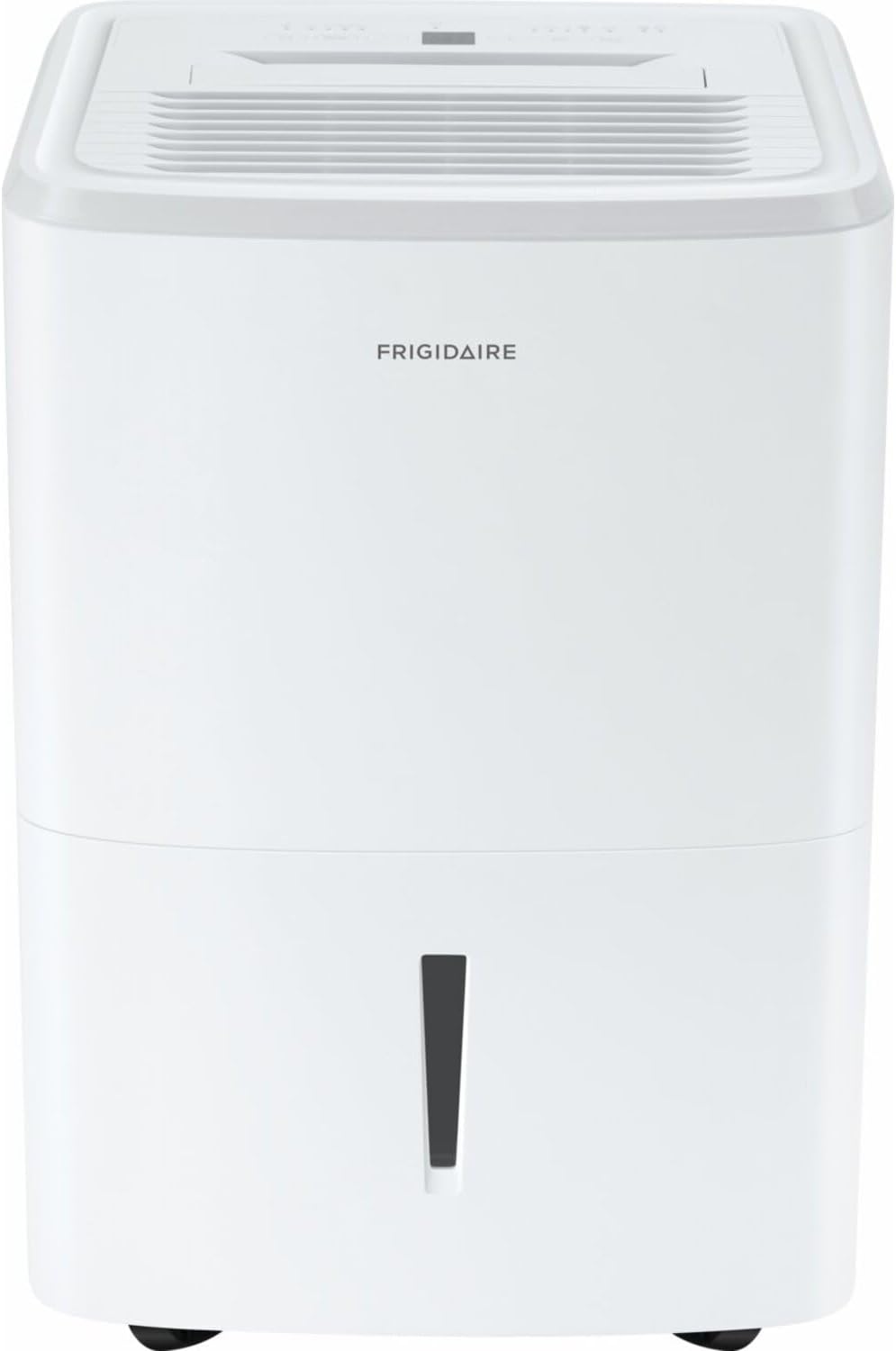
Compressor pick for warm rooms: Frigidaire 50 Pint Dehumidifier w/Wifi
 Visit on Amazon →
This is the class of machine I put in a damp bedroom, a living room, or a finished basement that stays warm year round. The 50 pint rating is the compressor category doing what it does best, and by my rule you should expect it to pull somewhere in the low 30s on a bad August day. That is enough for a large bedroom or a small open floor plan, and not enough for an entire 1,800 square foot house sitting over a wet crawl space. Nobody wants to hear that they need two units. It is still true.
The Wi-Fi is the part I have the least patience for. The app is a support call generator, and I have reset more Wi-Fi modules than compressors in my career. That said, being able to check tank status from the couch has real value in a rental or a second home you do not visit every week. Set the connection up once, put the machine on a hose drain if the room allows it, and treat the app as a status light rather than a control system. If the module drops off your network, the machine still runs on its own humidistat, which is the part that matters.
Flaws but not dealbreakers: A compressor loses capacity as the room cools, and it will frost up in a cold garage. Keep it in a heated space and it is fine. If the room drops into the 50s in winter, this is the wrong technology, not a broken unit.
Anyone with a warm, humid bedroom, living room, or finished basement should look here first.
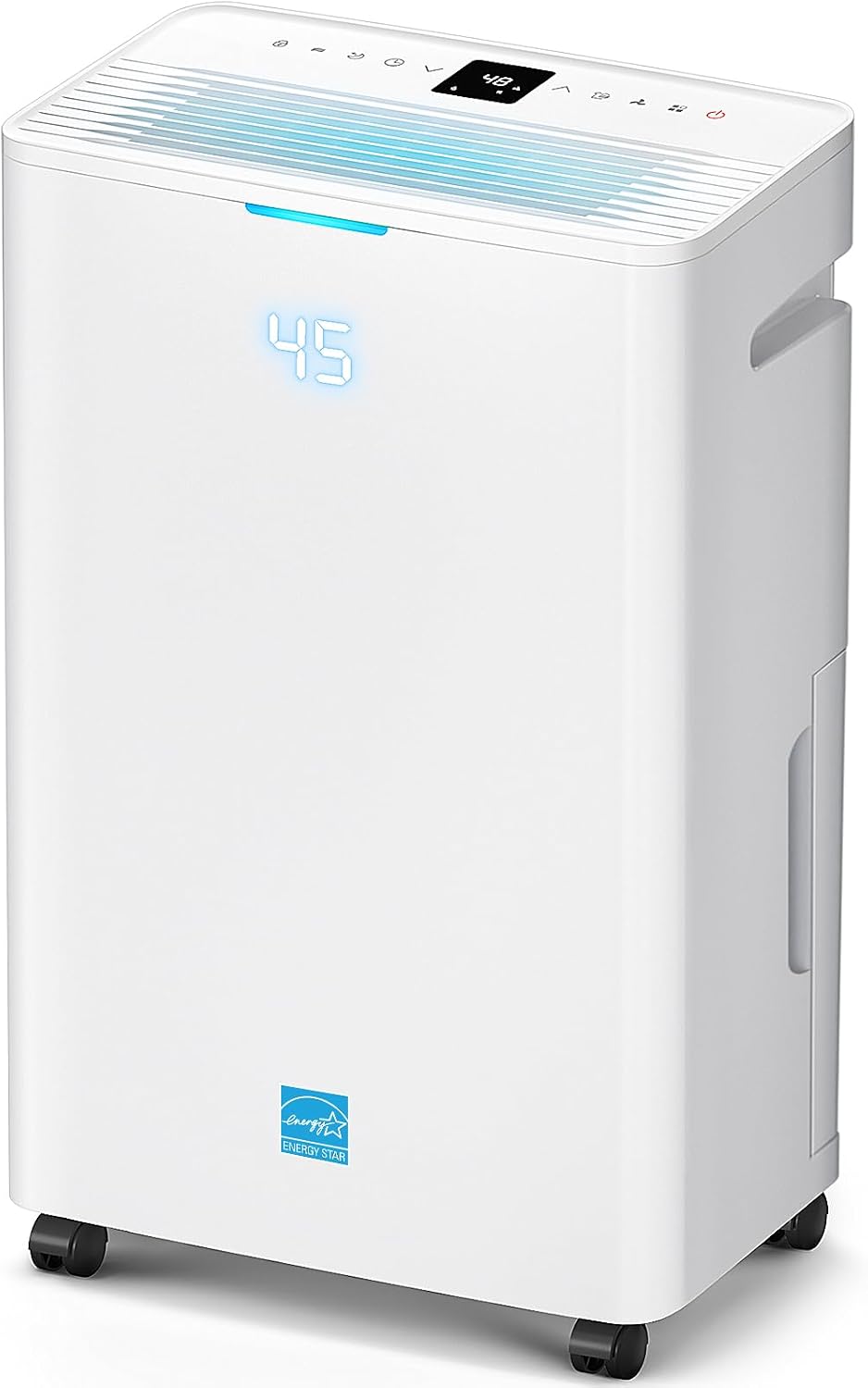
Desiccant pick for cold rooms: AEOCKY 2000 Sq.Ft Rotary Desiccant Dehumidifier, Humidistat, Never Frost
 Visit on Amazon →
A rotary desiccant wheel is the answer for every cold room I get called about. "Never Frost" in the name is the whole point: no defrost cycle, no sitting idle while the coil thaws at 45 degrees, and no lost hours in an unheated basement in January. That is the temperature split most reviews ignore entirely, and it is the reason I keep recommending desiccant for cold-climate basements even though the category is smaller and less familiar.
The onboard humidistat is the feature I care about most here, because a cold room is exactly where you want the machine to shut itself off instead of running until you remember it exists. Set it, verify it with a hygrometer a few feet away, and adjust the setpoint to whatever the hygrometer says rather than what the display says. The 2000 square foot coverage claim is a ceiling, not a promise. Coverage numbers assume open space and a warm, humid room, and a partitioned basement with two closed doors is neither.
Flaws but not dealbreakers: Desiccant units put out warmer air than compressor units and generally use more watts per pint. In a cold basement that warmth is a feature, since dry warm air helps the room dry out. In an August bedroom it is the wrong tool. Plan on the meter showing more draw than a compressor of similar capacity, and let the cold-room capability be what you are paying for.
Anyone drying a cold basement, garage, cabin, or boat should start here.
The sizing and setup workflow
Now the part you came for. Work through these in order and you will not buy twice.
Step one: Measure the space and the moisture, not just the square footage. A 1,200 square foot house with one damp bedroom does not need a machine sized for 1,200 square feet. It needs a machine sized for the bedroom. Walk the space and look for the signs: musty smell, condensation on the window glass, doors that stick in summer, a hygrometer reading above 60 percent. Log a week of readings in the room you actually want to fix. That log is your real specification.
Step two: Derate the rating. Whatever pint number you are looking at, cut it by 30 to 40 percent before you compare it to your moisture load. Write the derated number down next to the listing. That is the capacity you are actually buying, and it is the number that decides whether the machine keeps up or runs forever without catching up.
Step three: Pick the technology by temperature. Above roughly 65 degrees in the room, buy a compressor. Below that, or in a space that swings cold at night, buy a desiccant. This single decision matters more than brand, tank size, or app features, and it is the one most buyers never make on purpose.
Step four: Decide tank or hose before you buy. If the machine will sit in a basement or serve a whole floor, buy the drain hose at the same time you buy the unit. If it lives in a bedroom and you are home daily, a tank is fine, but check the tank size and how it carries. Tanks that slosh when you carry them get emptied less often, and an unemptied tank means a machine that is off.
Step five: Set the humidistat and verify it. Start at 50 percent. Wait a few hours, then read a separate hygrometer placed across the room. If the hygrometer says 42 when the display says 50, set the unit to 58 and let the room land where you want it. Repeat the check once a month, because these sensors drift.
Step six: Place the machine correctly. Six to twelve inches of clearance on every side, doors closed, and never inside a closet. Airflow is the whole mechanism. In a basement, put it near the wettest corner but not pressed against the wall, and remember that cold air sinks, so a machine on the floor is working where the moisture collects.
Step seven: Run the drain hose downhill. Every inch of the run should fall away from the unit. No loops, no traps, no low spots where water can sit. If the hose has to go up before it goes down, you need a condensate pump, not a longer hose. I have seen more water damage from a kinked drain line than from a full tank.
Step eight: Verify with a bucket and a meter. Run the unit on high for 24 hours and measure what it pulled, then compare that against your derated target. If it comes up short, the room is bigger or wetter than you thought, and you need a second machine rather than a bigger promise. Then put a watt meter on it for a week and do the monthly math. That number is the one that matters after the receipt is in a drawer.
What else people try, and why it loses
The window AC on dry mode. This works better than people admit, but only if the window unit is in the same room and you are willing to run it in shoulder season. Sometimes a window AC with a dry mode is genuinely enough, and I tell homeowners that when it is true. It stops being enough when the room is a basement with no window.
Whole-house HVAC with a dehumidify setting. If your central system cannot hold the house at 50 percent, that is a conversation with an HVAC contractor about an install, not a product page. Sizing a whole-house system is outside what I will do in an article about portable machines.
Fans and buckets of desiccant. A fan moves moisture around the room. It does not remove it. A bucket of desiccant absorbs a pint or two and then it is done. Both are fine for a closet. Neither touches a wet basement.
Opening the windows. In New Orleans in July, opening the windows is how you import more water and give the machine more work to do. Ventilate when the outdoor dew point is low. Otherwise keep the house closed.
Buying the smallest unit and running it forever. A small machine that never catches up runs 24/7, which costs more than a correctly sized machine that runs ten hours a day, and it wears out sooner. Undersizing is not a budget move. It is a subscription.
When to stop and call someone else
If you are seeing actual mold growth on drywall or framing, that is remediation work, not a dehumidifier review, and no machine fixes a colony that is already established. If the room is wet because of a leak, a grading problem, or a failed vapor barrier, a dehumidifier only dries the symptom while the source keeps feeding it. Fix the water first, then size the machine. And if you need whole-house humidity control tied into your HVAC, that is an install. Buy the portable unit for the room that is actually damp.
What this all costs
Prices move, so check the current Amazon price on each product page rather than trusting a number from an old article, mine included. What does not move is the electricity. Take the watts from your meter week, multiply by the hours you actually run the machine, and multiply by your utility rate. In a Louisiana summer I have watched a small unit running 24/7 outrun a correctly sized unit on a humidistat by a wide margin, purely because the small one never caught up and never shut off. That is the hidden cost of buying the wrong size, and it shows up every month instead of once.
The rest of the setup is nearly free. A hose kit and a cheap hygrometer cost less than a service call, and both of them prevent the two most common failures I see: a machine that shut off on a full tank overnight, and a machine that has been running the room down to 35 percent because nobody checked the sensor. Do the sizing once, run the drain downhill, verify the humidistat, and then leave the machine alone to do its job. That is the whole method, and it works in a shotgun house with no central air just as well as it works in a new build.