Most people buy a dehumidifier the way they buy a box fan. They feel the damp, they grab whatever is on the shelf, they plug it in, and they expect the room to dry out. Two weeks later the bedroom still smells like a wet towel and they tell everyone dehumidifiers are a gimmick.
The machine was never the problem. Learning how to size a dehumidifier and where to put it is 80 percent of the job, and it is the part nobody explains at the register. A 20-pint toy in a 1,500 square foot basement is not a dehumidifier, it is a decoration with a cord. A 50-pint compressor in a 60 degree crawlspace will frost its coil and quit, then restart in fan only mode and fool you into thinking it is working.
I do this for a living on the Gulf Coast. The difference between a unit that works and a unit that gets returned comes down to three decisions: size, temperature, and drainage. Get those right and an ordinary machine in the right class will outperform an expensive one in the wrong class. Get them wrong and you will be hauling a sloshing tank up the stairs twice a day in August.
Why you should trust me
I'm Carlos. I have been an HVAC technician for 18 years, most of it in and around New Orleans, and I have pulled more moldy drywall out of Louisiana homes than I care to count. Dehumidifiers are the part of the trade most techs hand off, so I kept it. I install and service portable units, and I have run more than 10 of them through real Gulf Coast summers in my own 1920s shotgun house, which has no central air in the back rooms.
I keep a hygrometer log for every room I work in. I keep a watt meter on every unit for a week before I say a single word about energy use. And I weigh the water each unit pulls, because that is the only honest way to know what a machine does in a house with door gaps, a bathroom door that opens twenty times a day, and a window that does not quite latch.
How I picked and how I tested
This is not a list of everything on the market. It is two machines for the two jobs I get called about: a small damp room that needs quiet and constant draining, and a basement or open floor that needs volume.
Every unit I evaluate gets the same treatment. It runs in a real room at real humidity with a hygrometer sitting across the room from it, not next to the intake where the reading is always flattering. I weigh the bucket, I log actual pints per day against the number on the box, and I run the watt meter for a week. Then I test the drain path, because a hose that kinks behind a couch turns a working machine into a machine that shut off at 3 a.m.
Two numbers matter more than the rest. The first is the pint rating, and I treat it as a lab number. In real humidity, with door gaps and foot traffic, cut the rating by 30 to 40 percent. That is not marketing bashing, that is how a room behaves. The second is temperature. Compressor units win in warm rooms. Desiccant units win in cold basements and crawlspaces, because there is no cold coil to frost over. Most reviews ignore that split entirely, and it is the reason people in cold climates hate perfectly good machines.
The two machines worth starting with
Buy for the room you actually have, not the room you wish you had. One of these is a cold-room machine and one is a warm-room machine, and swapping them is the most common mistake I see.
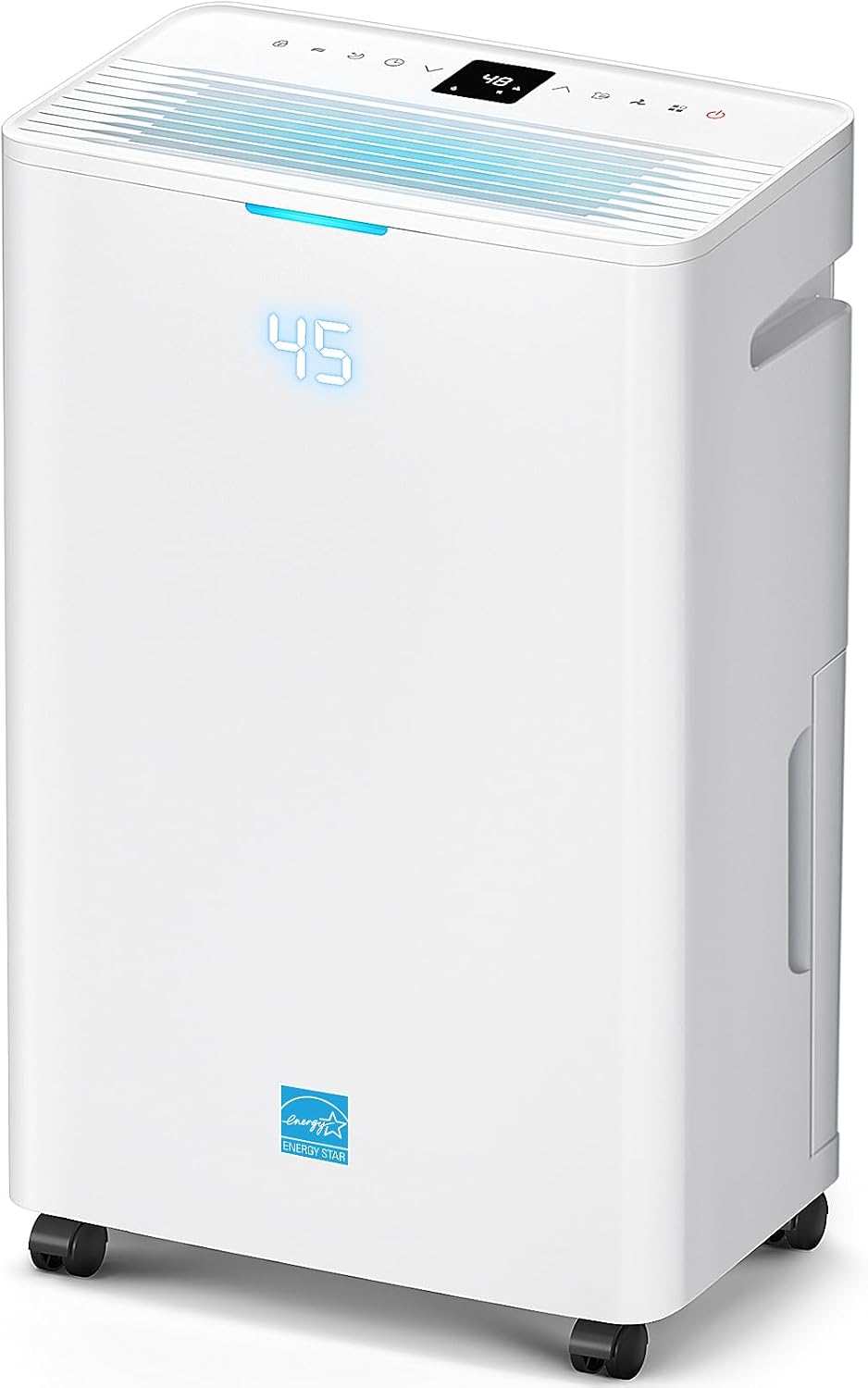
For a small damp room: Ivation 13-Pint Small-Area Desiccant Dehumidifier Compact and Quiet - With Continuous Drain Hose for Smaller Spaces, Bathroom, Attic, Crawlspace and Closets - For Spaces Up To 270 Sq Ft, White
 Visit on Amazon →
This is the one I reach for in a bathroom, a closet, an attic, or a crawlspace, and the reason is in the first word: desiccant. There is no compressor and no cold coil, so it keeps pulling moisture when the room is cool. That is the exact condition where a compressor unit frosts up and stops doing anything useful. If your damp room is under 65 degrees for most of the year, this is the class of machine you want, full stop.
The 270 square foot rating covers a bathroom, a laundry room, a walk-in closet, or a bedroom that stays closed up. The continuous drain hose is the feature I care about most. A hose drain is non-negotiable in a room that stays above 60 percent humidity, and this unit ships set up for it rather than making you buy a kit.
Flaws but not dealbreakers: Desiccant units cost more per pint and use more watts per pint than a compressor in warm air. If your problem room is 80 degrees and 1,200 square feet, this is the wrong tool and you will be disappointed. It is also a small-area machine by design. It dries a room, not a floor.
Anyone with a cold bathroom, a closet that grows mildew on the ceiling, or a crawlspace that stays damp year round should start here.
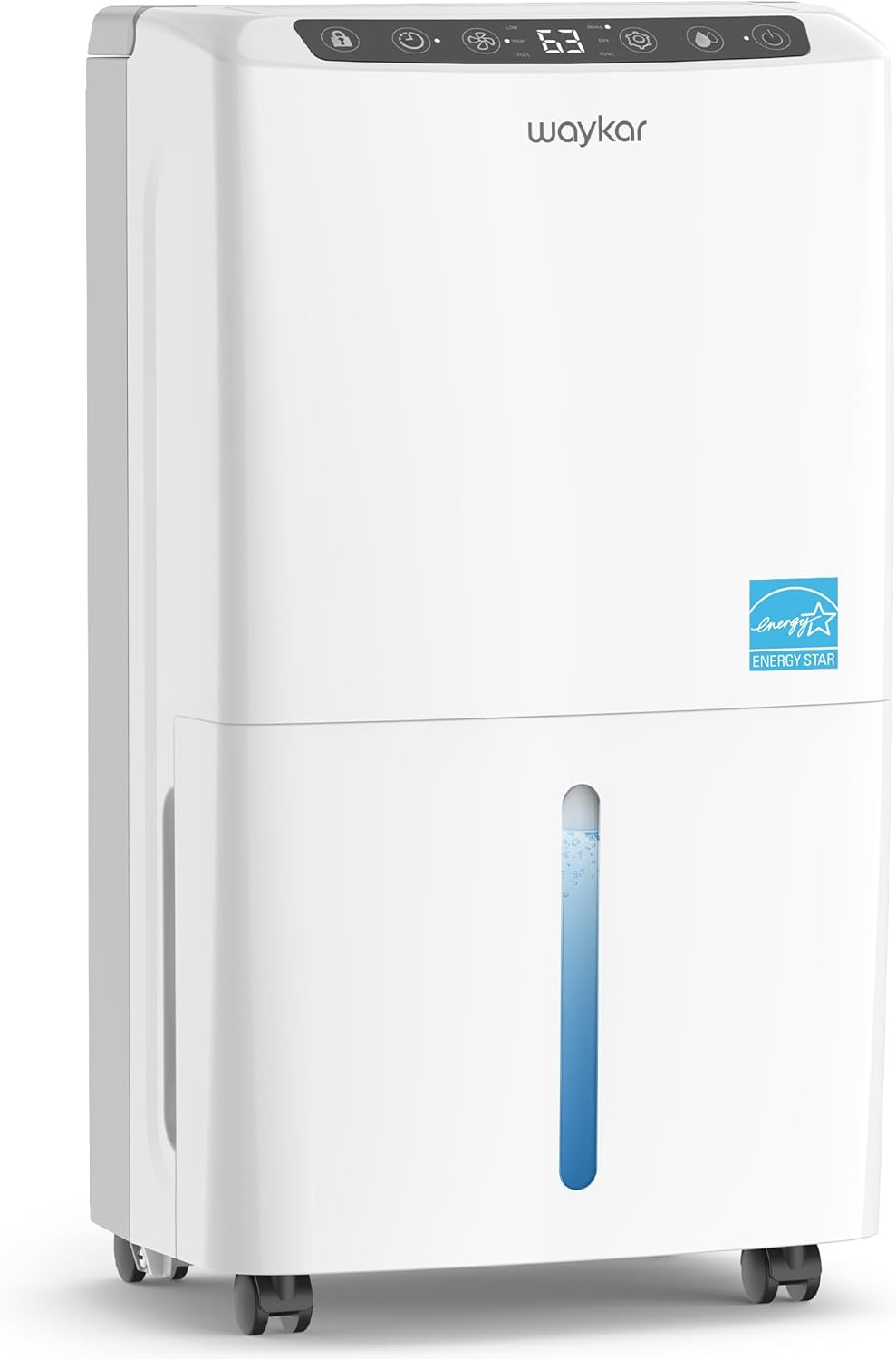
For a basement or an open floor: Waykar 34 Pints 2025 Most Efficient Energy Star Dehumidifier for Home & Basement, Ideal for Spaces up to 2,000 Sq. Ft. with Auto or Manual Drainage, 0.62-Gallon Water Tank
 Visit on Amazon →
This is a compressor machine, and compressor machines are the right answer in warm, humid air. It carries an Energy Star rating, which matters because energy use is a monthly bill, not a spec sheet line. It has a 0.62-gallon tank and it can drain automatically or manually, and the 2,000 square foot figure is a box rating that you should haircut the same way you haircut every other pint claim.
That tank number is the part to think about. 0.62 gallons is fine for a bedroom. In a basement in the worst month of the year, it is a chore you will resent by day three. Set it up on a hose drain and let it run. That is why I install hose kits as often as I install units.
Flaws but not dealbreakers: Compressor units are louder than desiccant units, and they lose efficiency as the room gets cold. If your basement sits in the low 60s, expect this class of machine to work harder for less. And if you rely on the tank instead of the hose, you have signed up for daily emptying.
Anyone drying a basement, a finished lower level, or an open main floor in a warm climate should be looking in this class.
The setup workflow
Now the part you came for. This works whether you bought one of the two machines above or something else entirely.
Step one: Pick one room and close it. A dehumidifier cannot dry the whole house through open doors. Shut the door, close the windows, and stop treating the unit like a whole-home system. If two rooms are damp, that is two units or one unit moved on a schedule.
Step two: Measure with a hygrometer. Not with your nose. A cheap hygrometer sitting across the room tells you the real starting number, and it tells you when to stop. Anything above 60 percent is mold territory. Below 50 percent is comfortable. Write the numbers down, because your humidistat will drift and you will want a reference.
Step three: Decide tank or hose before you place it. A tank is fine for a bedroom you can check daily. A hose is mandatory for a basement or any room you do not walk through every day. If the unit has an auto drain option, use it, and check the whole run for kinks and for a low spot where water will sit.
Step four: Place it correctly. Middle of the room if you can, off the wall by a foot or so, away from curtains and furniture, and away from the supply vent if you have central air. Do not shove it into a corner and complain about the result. Air has to move through it.
Step five: Set the humidistat and leave it alone. Aim for 50 to 55 percent in a living space, and lower in a basement if you are fighting musty smells. The unit should cycle on and off, not run flat out forever. If it never shuts off, the room is too big for the machine, which means you sized wrong, not that the machine is broken.
Step six: Run the drain test. Fill a cup, dump it in the drain pan, and watch where the water goes. Ten minutes now saves you a wet floor later.
Step seven: Deal with the filter. Rinse it when it looks gray. If the replacement filters for your model cost real money every month, that is a running cost you should have factored in before you bought. It is one of my least favorite things about this category.
Step eight: Test a power blip. Unplug the unit, plug it back in, and see what mode it comes back in. Units that restart in fan only after an outage are the single most common support call I get, and you want to know that about your machine before a thunderstorm does it for you.
How to read a pint rating without getting fooled
The pint number on the box is measured under conditions your house will never see. Treat it as a ceiling, not a promise. A 34 pint machine in a warm, leaky basement with a door that opens all day is realistically doing a fraction of that, which is exactly why the sizing conversation is about the room, not the number.
Temperature decides which type you buy. Above roughly 65 degrees, a compressor is the efficient choice. Below that, a desiccant unit is the one that keeps working. This single split explains most of the one-star reviews on both types: somebody bought a compressor for a cold crawlspace, or a desiccant for a big warm rec room, and blamed the machine.
The competition and why it lost
A few other options come up in every conversation, and they are not bad, they are just for different jobs.
A window air conditioner on dry mode will pull some moisture out of a single room, and in a warm climate that is sometimes enough. If your problem is one bedroom and you already own a window unit, try dry mode before you spend money. It will not hold a basement at 50 percent, and it will not run in a cold crawlspace at all.
The sub-$150 compressor units at the big box stores are toys for this purpose. They are fine for a closet in a dry climate. They cannot keep up with a real damp room, and the tank is usually the first thing to annoy you.
Whole-house and commercial dehumidifiers are a different category and a different install. That is a job, not a purchase.
As for brands, the dedicated appliance makers have the compressor supply chains, and the HVAC names mostly sell rebadged units with a markup. The app and Wi-Fi features are the first thing to fail and the last thing you will use. I have reset more wireless modules than compressors by a wide margin. Buy the machine for its coil, its tank, and its drain port, not its phone app.
What this all costs
The two machines above sit in different price classes, so check the current Amazon price on each before you decide: Ivation desiccant unit and Waykar compressor unit. The Ivation is the cold-room specialist and the Waykar is the warm-room volume machine.
Running cost is the number people forget. Do not take my word or the box's word for it. Put a watt meter on the unit for a week, note how many hours a day it actually runs, and multiply by the rate on your own electric bill. That math takes ten minutes and it will tell you more than any efficiency badge.
Then count the hidden costs. A drain hose and a clamp. A replacement filter if your model needs one. The time you spend emptying a tank if you ignored the hose advice. Those are the expenses that turn a cheap unit into an expensive one.
The short version
Size the machine to one room, not the whole house. Match the type to the temperature, compressor for warm rooms and desiccant for cold ones. Cut the box rating by 30 to 40 percent before you trust it. Put the unit on a hose if the room is a basement or anything you do not walk through daily. Set the humidistat to 50 to 55 percent and let the machine cycle.
That is the whole job. Do it once, and the damp smell in your back bedroom stops being a mystery you live with and becomes a number on a hygrometer that stays where you put it.