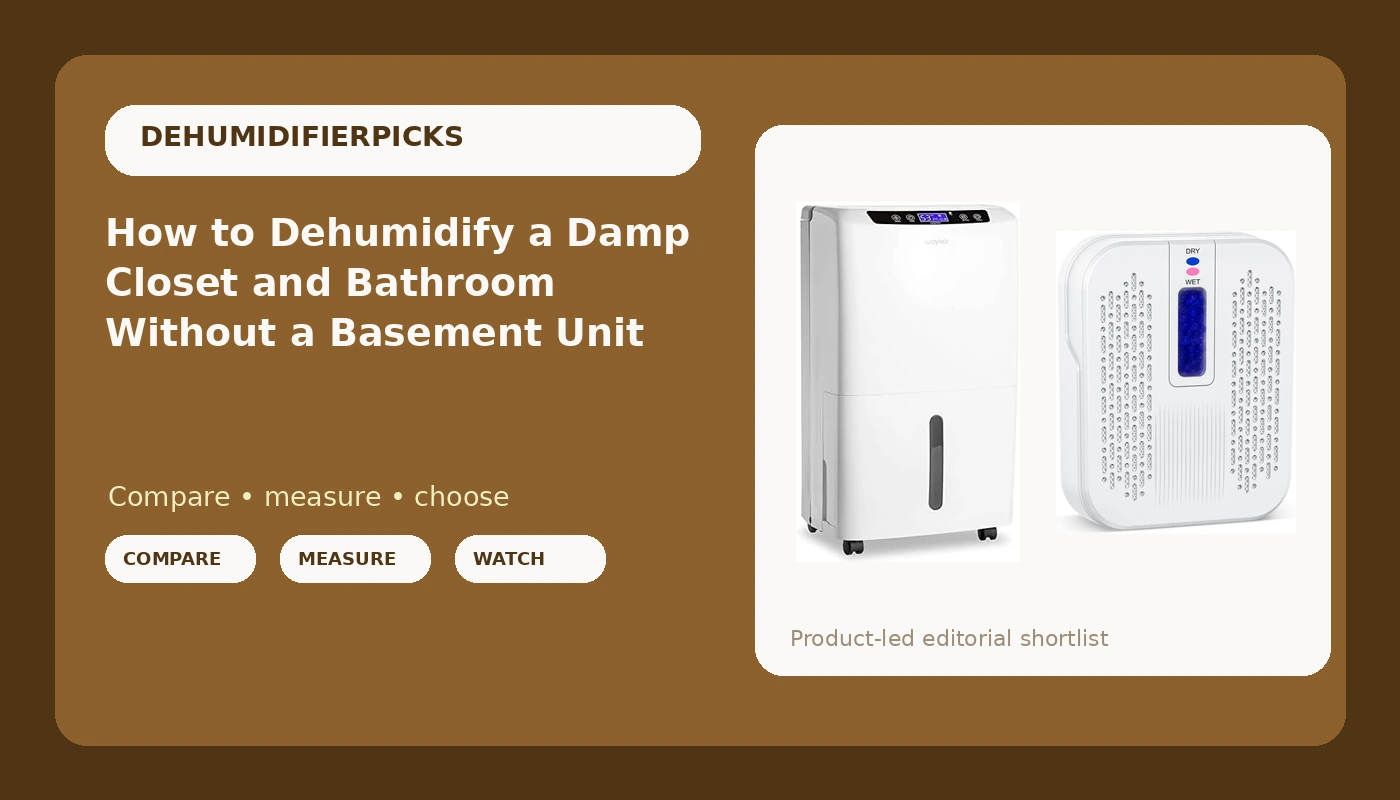
Most of the moisture calls I run in New Orleans are not whole-house problems. They are a closet that smells like a wet dog, a bathroom where the paint above the shower is bubbling, a gun safe with a fine orange film on the barrel of a rifle. You do not need a 50-pint compressor machine for any of that. You need a closet and bathroom dehumidifier plan sized to the cubic feet you are actually drying, plus a drain strategy you will still keep up with in February when nobody wants to think about humidity.
I have been an HVAC tech for 18 years, and I have pulled more moldy drywall out of Louisiana homes than I can count. I also run 10+ portable units through real Gulf Coast summers in my own 1920s shotgun house, which has no central air in the back rooms. I keep a hygrometer log, a watt meter, and a bucket routine. I weigh the water every unit pulls, because that number does not lie the way a spec sheet does.
Here is the honest version of how to dry out a small damp space, and where the two machines in this article fit.
Why you should trust me
Eighteen years in the trade, most of it in a climate that treats a dehumidifier like a refrigerator. It runs every day of the year and it is expected to keep working. I install and service these machines professionally, which means I see them again two years later, and I see which ones came back with a locked compressor and which ones just needed a filter rinse.
My bias is simple. Pints per day is a lab number. In real humidity, with real door gaps and a real wet towel on the floor, cut the rating by 30 to 40%. The tank is the product, because a unit that shuts off when the tank fills is a unit that stops working at 3 a.m. in the worst month of the year. Energy use is a monthly bill, not a spec, so I run a watt meter on every unit for a week and do the math.
I do not sell mold removal. That is a different trade and I stay out of it. I review machines.
How I picked and how I tested
Two different jobs are covered here. One is spot drying: a closet, a bathroom, a gun safe, a cabinet under a sink. The other is a room that genuinely reads high on a hygrometer and stays high. Those are not the same purchase, and treating them as one is how people end up with a 50-pint machine in a 30-square-foot closet or a pocket absorber trying to dry a flooded basement.
When I evaluate any unit, I run the same routine. I log the space with a hygrometer before I start, at floor level and at chest height, because moisture stratifies. I log it again at 24 hours and at 72 hours. I weigh the water the unit pulls, in a bucket on a kitchen scale, so I know the real pints per day instead of the box number. I put a watt meter on the cord for a week and multiply by my local rate. And I check tank geometry: how it carries, whether it sloshes, and whether the hose port is a real threaded fitting or a friction stub that pops off at 2 a.m.
The numbers I trust are boring. A hygrometer reading under 50% in a closet means the problem is solved. A reading that climbs back within a day means the space is leaking air, and no machine fixes that.
Size the space before you buy anything
Measure the space in cubic feet, not square feet. A closet is roughly 100 to 200 cubic feet. A bathroom is 400 to 700. A whole damp bedroom is 1,500 to 2,500. That matters because the small rechargeable absorbers are built for the first number and the compressor machines are built for the third.
Then decide what you are fighting. If the closet smells musty but the walls are dry, you have an air exchange problem and a small absorber will hold the line. If the sheetrock is cool to the touch and the baseboard paint is peeling, water is coming in and you fix that first. A dehumidifier is a maintenance tool, not a repair.
The two machines that cover most small-space jobs
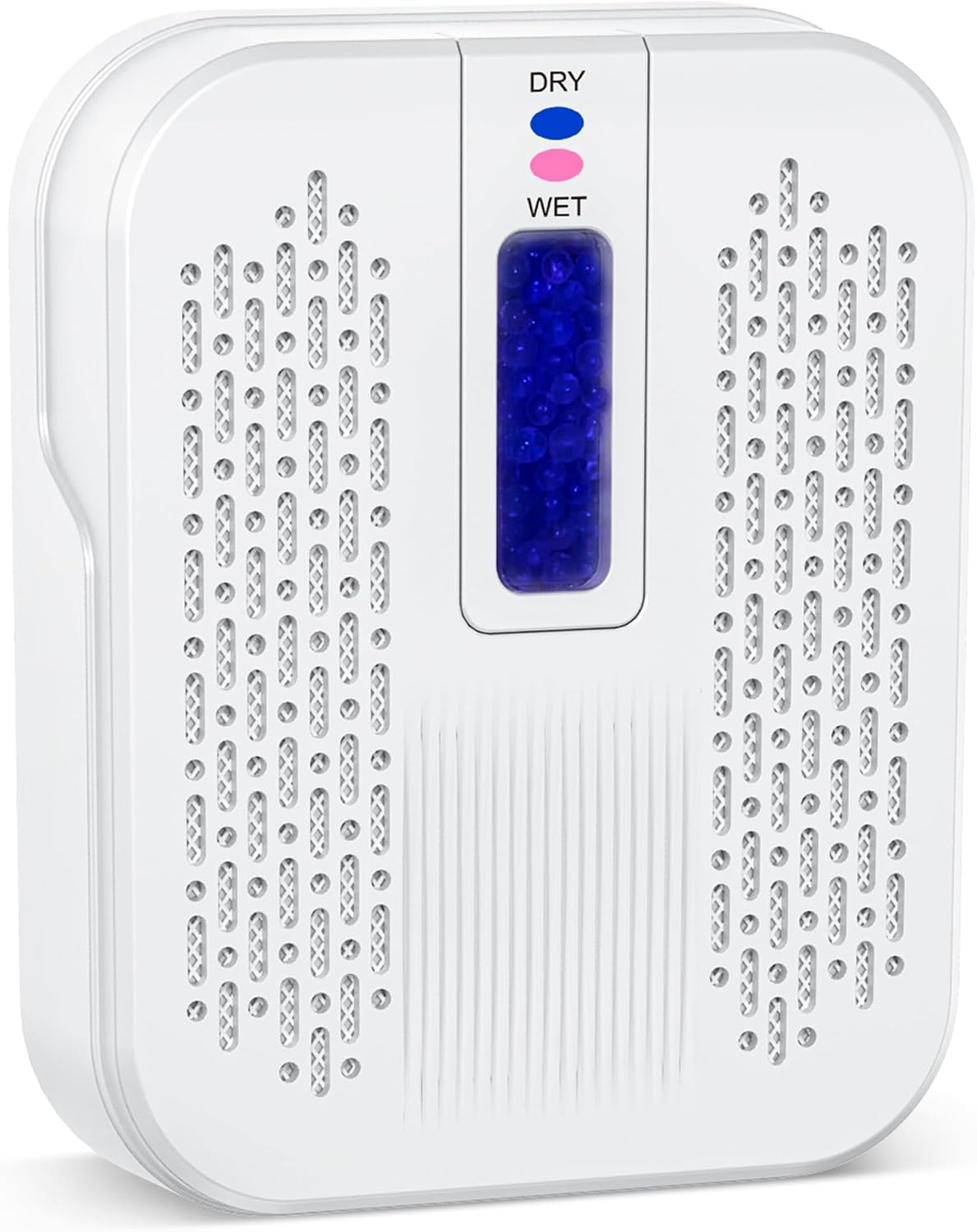
For closets, safes, and tight bathrooms: Rechargeable Small Dehumidifier for Bathroom, Detachable Hanging Dehumidifier for Bedroom, Gun Safe, Closet, Portable Moisture Absorbers with Dual-Sided Suction
 Visit on Amazon →
This is the spot-duty tool, and it is the one most people should buy first. It is rechargeable, it hangs, and the detachable body means you can pull the working half off and set it on a shelf inside a gun safe or a linen closet where nothing else fits. The dual-sided suction design pulls from two faces instead of one, which matters in a closet where you are hanging it on a rod with clothes pressed against it.
Where it belongs: a bedroom closet that smells closed-in, a bathroom with no window and no exhaust fan, a gun safe, a tool chest, a cabinet under a bathroom sink. It is a maintenance machine that keeps a small sealed volume from going stale between airings, and it does that job without a cord, a tank to empty, or a hose to route.
Where it does not belong: a basement, a crawl space, a whole room with a damp floor. Do not ask it to do that and then judge it when it fails.
Flaws but not dealbreakers: Rechargeable means it has a duty cycle. You charge it, it works, you charge it again. That is the trade for having no cord and no drain, and it is a fair trade in a closet.
For renters, apartment closets, and anyone who wants to stop a musty smell without running an extension cord, start here.
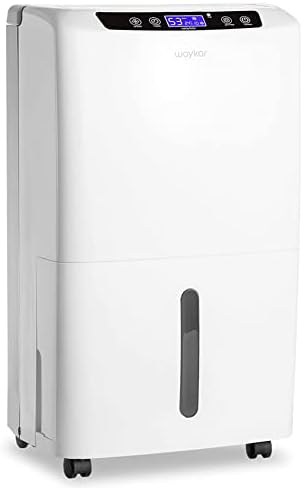
For a genuinely damp room: Waykar 34 Pints 2000 Sq. Ft. 2025 Energy Star Dehumidifier for Home
 Visit on Amazon →
This is the other half of the job. Thirty-four pints is a compressor machine sized for a real room: a damp bedroom, a finished basement corner, a laundry room, a rental where the tenant calls about the smell. The Energy Star rating matters more here than it does on a spot absorber, because this is the unit that runs for six hours a day in July, and that is the line item on your bill.
The hose drain is why I recommend this class of machine at all. My rule has never changed: a tank is fine for a bedroom you pass every morning, and a hose is mandatory for a basement or anything you want running while you are at work. If the unit does not have a threaded hose port, you will be improvising with tape, and tape fails.
The rest is standard compressor behavior. It works best in warm air, which is exactly the condition where you have a humidity problem in the first place. Set the humidistat, walk away, check the bucket once a day for the first week, then decide whether you are switching to a hose.
Flaws but not dealbreakers: A compressor machine is heavier and louder than an absorber, and it will not do anything useful in a cold garage in January. That is physics, not a defect. Cold spaces want a desiccant unit, and that is a different article.
Anyone with a hygrometer reading above 60% in a room they actually use should be looking at this class, not a spot absorber.
The actual workflow
Step one: measure first. Put a hygrometer in the space and leave it for 24 hours. Floor level and shelf level. Write both numbers down. If the closet reads 55% and the room reads 48%, the closet is the problem. If both read 65%, you have a room problem and a spot absorber is a bandage.
Step two: find the source. Look for the obvious things before you spend money. A dripping shutoff valve under the sink. A dryer vent that dumps into the closet. A bathroom fan that vents into the attic instead of outside. A crawl space with no vapor barrier. A dehumidifier running against an open water source is a machine that runs forever.
Step three: close the space. Dehumidifiers work on air they can reach. A closet with a two-inch gap under the door and a hole in the ceiling for a pull chain exchanges all its air every hour. Weatherstrip the door, patch the ceiling penetration, and the same machine will suddenly look twice as strong.
Step four: pick the machine by volume. Under 200 cubic feet: the rechargeable spot absorber. Over 1,000 cubic feet with a reading above 60%: the compressor machine. In between, let the hygrometer decide. If a spot unit holds the number down, keep it. If the number climbs back in a day, size up.
Step five: decide tank or hose before you plug anything in. Tank if you walk past it daily and the space is small. Hose if the machine will run while you are asleep or at work. Run the hose to a floor drain, a condensate pump, or a sink, and check the slope with a cup of water before you trust it.
Step six: set the humidistat, then verify it. Set it to 50% and let the machine run. Then put your hygrometer next to the machine's sensor. I have seen humidistats off by 15%, which means your "50%" is really 65% and you are paying to run a machine that is not doing the job you think it is. Adjust the setpoint until the hygrometer agrees.
Step seven: check the water. After 24 hours, weigh or measure what came out. If a machine rated for a room pulls almost nothing, either the room is not as wet as you thought, the machine is wrong for the space, or the air is not reaching it. This is the single most useful diagnostic I have.
Step eight: maintain it. Rinse the filter every two weeks in a damp climate, rinse the tank with a splash of vinegar monthly, and check the coil for dust. Filters are where people get fleeced, so price the replacement before you buy a machine that takes a proprietary one.
Step nine: give it a week before you judge. Humidity is a system. One day of running tells you almost nothing, and one week tells you almost everything.
Caveats the spec sheet will not tell you
Pint ratings are measured at temperatures and humidity levels you will never see in a Louisiana closet in August. The real number is 30 to 40% lower. Plan for that and you will be happy with the machine you bought.
Watch the restart behavior after a power outage. A machine that comes back on in fan only, with the compressor off, quietly did nothing while you were at work. Test it by unplugging the unit and plugging it back in.
Tank handles are a design decision, not an afterthought. A full tank that sloshes down your hallway is a tank you will stop emptying, and a tank you stop emptying is a machine that shuts off.
And the big one: two small machines often beat one big one. A closet and a bathroom are separate air volumes. If you try to solve both with one compressor unit parked in the hallway, you are buying a machine that will run constantly and fix neither. Nobody wants to hear that. It is still true.
The competition and why it lost
A whole-house dehumidifier tied into your HVAC is the right answer for some homes, and it is also an install, not a purchase. Different conversation, different budget, and I do not size those in an article.
A window AC with a dry mode is the honest answer for a single damp bedroom in a hot climate. If you are already running one, try the dry mode for a week before you buy anything. I tell clients this more often than they expect from a guy who services dehumidifiers for a living.
Desiccant units are the right answer for cold basements and garages, where a compressor stops being effective. They cost more to run, so they are a seasonal tool, not a year-round one.
What loses is buying by tank size and marketing. A bigger tank does not dry a room faster. A smart app does not dry a room faster, and in my experience the Wi-Fi module fails before the compressor does.
What this all costs
The spot absorber and the compressor machine sit at opposite ends of the cost range, and that is the point. One is a maintenance tool you charge and hang. The other is an appliance you set and drain.
The real math is the energy bill. A compressor unit running six hours a day is the line item that matters, which is why the Energy Star rating on the room machine is worth more than any feature list. Put a watt meter on it for a week and multiply by your rate. That is your monthly number, and it is the number that decides whether the machine stays plugged in.
The other cost is maintenance: filters, tank rinses, and the occasional hose kit. Budget for those and the machine lasts. Ignore them and you will be replacing a compressor at year three.
Start with a hygrometer. It costs less than almost anything else in this article and it will tell you which machine you actually need, or whether you need one at all. That reading is the whole decision. Everything after it is just plumbing.