
Most people buy a dehumidifier the way they buy a space heater: grab the biggest box, carry it home, hope. Then the wet season arrives, the tank fills by dinner, and the machine sits dead all night while the walls sweat. Dehumidifier sizing and setup is not guesswork. It comes down to three numbers and about 40 minutes of work, and I have watched it turn a soggy back bedroom into a room you can sleep in.
I have been an HVAC tech for 18 years, most of it in south Louisiana, and I have pulled more moldy drywall out of homes than I care to count. Every service call ends with the same question: which one do I buy, and how do I run it so I am not emptying a bucket twice a day? This is the answer I give in the driveway.
Why you should trust me
I install and service dehumidifiers for a living, and I have run more than 10 portable units through real Gulf Coast summers in my own 1920s shotgun house, including the back rooms that have no central air. I keep a hygrometer log on every room, I put each unit on a watt meter for a week, and I weigh the water it pulls instead of trusting the bucket line molded into the plastic.
That routine taught me the thing the box never says: pints per day is a lab number. Take the rating and cut it by 30 to 40 percent for real humidity, real door gaps, and a real house. A "50 pint" machine in an August basement is doing 30 pints of work on a good day, and it will still fill a tank before you get home.
How I picked and how I tested
I am not going to pretend a spec sheet tells you how a machine behaves at 3 a.m. in July. What I can tell you is what I check before I recommend anything to a homeowner.
First, the compressor. Portable dehumidifiers in this class are compressor machines, which means they work best when the air is warm. A cold basement below about 60 degrees Fahrenheit will frost the coil, and the unit will spend half its life in a defrost cycle that pulls nothing. If your space runs cold, that is a desiccant conversation, and it is a different article.
Second, the tank and the drain port. The tank is the product. A unit that shuts off when the tank is full is a unit that stops working in the worst month of the year. I want a threaded hose port that takes a standard garden hose adapter, because a hose drain is non-negotiable below 60 percent humidity conditions.
Third, the controls. A humidistat that reads 15 percent off from my hygrometer is worse than no humidistat, because it either runs forever or shuts off too early. I check every unit I bring home against the same handheld hygrometer.
Fourth, the coverage claim. Square footage on the box assumes an 8-foot ceiling, closed doors, and a normal house. It is a starting point, not a promise.
Sizing: the three numbers you need before you spend a dollar
Number one: cubic feet, not square feet. Measure length times width times ceiling height. A 1,200 square foot basement with 8-foot ceilings is 9,600 cubic feet. Now check for the leaks: a crawl space hatch, an unsealed rim joist, a dryer vent that dumps indoors. Every one of those adds load, and load is what the machine actually fights.
Number two: the hygrometer reading. Buy a cheap hygrometer before you buy the dehumidifier. If the room reads 55 percent, you have a maintenance problem and a small machine solves it. If it reads 70 percent or higher, you are in mold territory and you need real capacity, not a toy.
Number three: temperature. Above 65 degrees, a compressor unit is the right tool. Between 60 and 65, it still works but expect longer run times. Below 60, look at desiccant units or you are paying for a defrost cycle.
Once you have those three numbers, the sizing is simple. A damp bedroom or a small finished basement in the 500 to 1,500 square foot range is a 50 to 80 pint machine. A whole basement, an open first floor, or anything over 2,000 square feet is a 100 pint machine, or two smaller ones. Nobody wants to hear that they need two units. Sometimes they do, and I would rather say it than sell them a machine that never catches up.
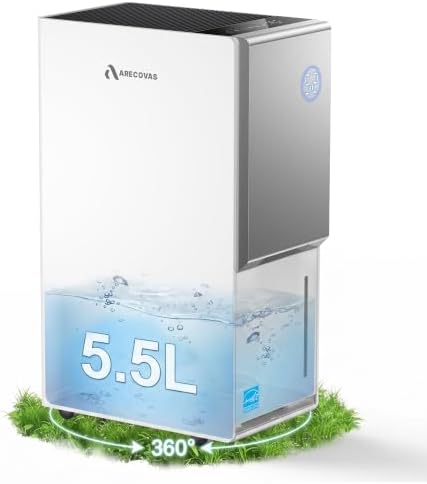
Our pick: Arecovas 80 Pint Dehumidifier Energy Star 2025 Most Efficient, 5000 Sq.Ft
 Visit on Amazon →
This is the machine I would put in a finished basement or a damp first floor, and it is the one I would hand most homeowners first. An 80 pint rating with a 5,000 square foot coverage claim puts it squarely in the range where real work happens, and the Energy Star 2025 listing means it was tested against the current efficiency bar rather than the one from five years ago. Check current Amazon price.
Where it fits my rules: the capacity is honest for a space that reads 65 to 75 percent on a hygrometer, and the efficiency rating matters because this is a machine that runs for months, not days. If you are the person emptying a bucket twice a day right now, this class of unit is the upgrade that stops that.
Flaws but not dealbreakers: An 80 pint machine still fills a tank, and tanks always fill at the worst time. Plan the hose drain on day one, not after the first flood.
Anyone with a damp 1,000 to 2,000 square foot level and a humidity reading above 65 percent should start here.
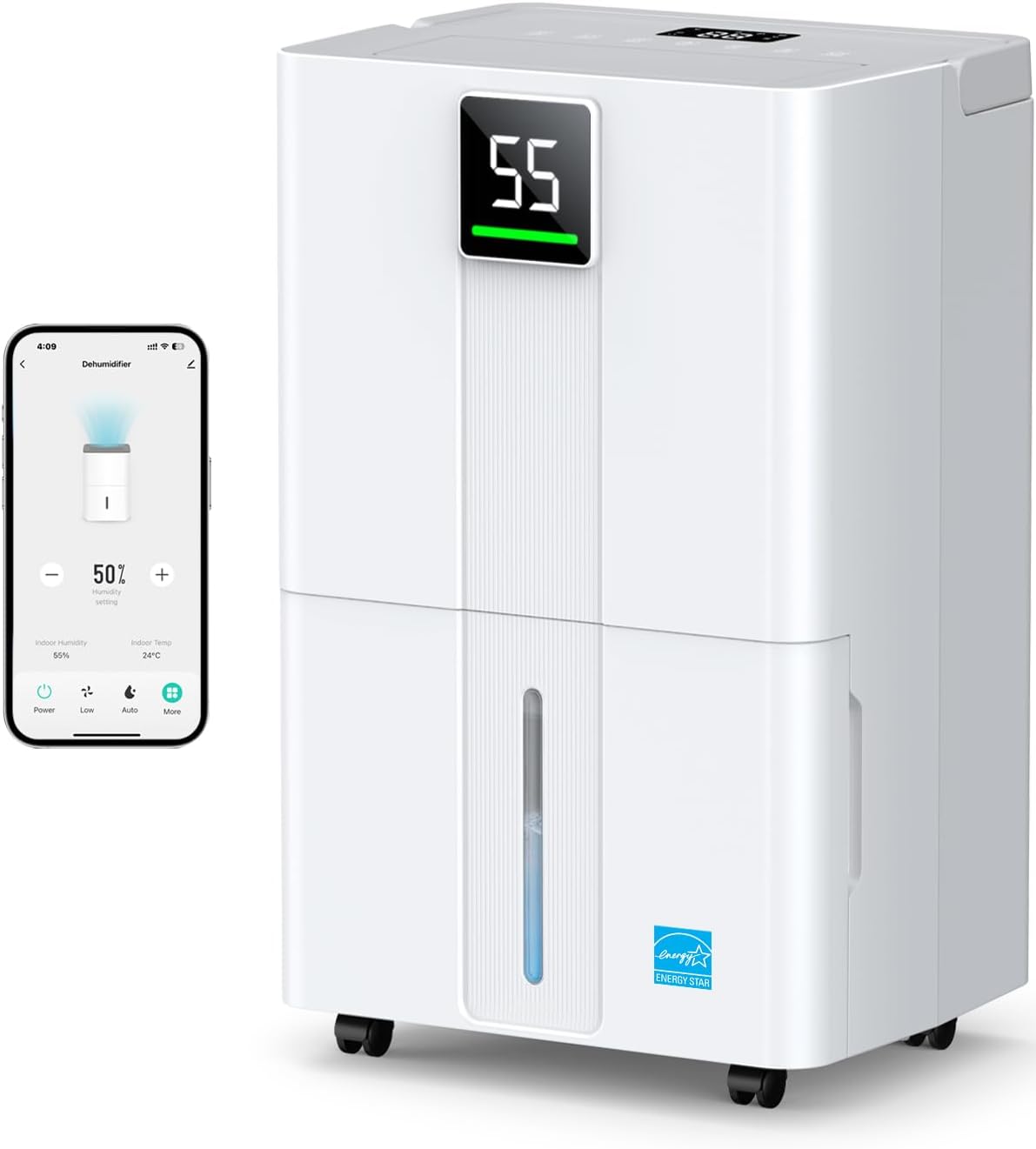
Upgrade pick: 6000 Sq.Ft Energy Star 2025 Dehumidifier for Basement 100 Pints/D
 Visit on Amazon →
When the space is genuinely wet, this is the one. A 100 pint per day rating with a 6,000 square foot coverage claim is basement capacity, and it is the class I install when a homeowner has standing moisture, a crawl space hatch that never seals, or an open floor plan that lets humid air wander. Check current Amazon price.
The Energy Star 2025 rating matters more at this size, not less. A bigger compressor running longer hours is a bigger line on your utility bill, and the efficiency difference between a 2025 rated unit and an old rebadged one is the difference between a machine you run all summer and a machine you ration. Larger capacity also means shorter run times to hit the same humidity target, which is how you actually save money.
Flaws but not dealbreakers: More capacity is not automatically better. Put this in a 400 square foot bedroom and it will short cycle: pull the room down fast, shut off, and let humidity climb back before it restarts. Size it to the space.
Anyone with a full basement, a wet crawl space, or more than 2,500 square feet of open space should look here.
The setup workflow
The machine is half the job. Where it sits and how it drains is the other half, and it is where most installs go wrong.
Step one: place it in the middle of the problem, not the corner. Air has to move through the unit and back out. A corner with a couch in front of it is a dead zone. Keep a foot of clearance on all sides and pull the unit away from exterior walls, which are the coldest, wettest surfaces in the room.
Step two: close the room. Dehumidifying an open basement door with a humid house above it is like running the AC with the windows open. Shut the door to the rest of the house while the unit works, and seal the obvious gaps: the hatch, the rim joist, the dryer vent.
Step three: run the hose. Set the unit on a small block or shelf so gravity does the work, thread a garden hose adapter into the drain port, and run the hose to a floor drain, a sump pit, or a condensate pump. Check the slope by pouring a cup of water through the line before you trust it. A hose with a low spot will grow a biofilm you can smell in a week.
Step four: set the humidistat, then verify it. Set it to 50 percent to start. Wait a day, then compare the unit's reading against your hygrometer from across the room. If they disagree by more than 10 percent, trust the hygrometer and adjust the setpoint to compensate. This is the single most common reason people think their dehumidifier does not work.
Step five: give it a week before you judge it. A damp basement has moisture stored in concrete, wood, and drywall. The first week pulls that out of the structure, not the air. Run it continuously for seven days, then look at the hygrometer trend, not the bucket.
Step six: check the temperature split. If you are running a compressor unit in a space that drops below 60 degrees, watch for frost on the coil and long pauses. That is the defrost cycle, and it means you bought the wrong technology for the room, not a broken machine.
Step seven: set the fan to run. Continuous fan keeps air moving across the coil and gives you a more even reading. It costs a little power and it is worth it in a room with furniture and stored boxes, where the air near the floor is wetter than the air at the hygrometer.
What this all costs
I do not quote a monthly number for a machine, because the number depends on your utility rate, your setpoint, and how leaky your space is. I do the math the honest way: put the unit on a watt meter for a week, write down the kilowatt hours, and multiply by your rate. That is a five minute job and it turns an argument into a fact.
What I can tell you is the shape of the cost. A compressor unit running continuously in a wet basement is one of the larger line items on a summer bill, and it is still cheaper than the dehumidifier you replace in 18 months because you undersized it and ran it to death. Efficiency ratings are not marketing at this size. They are the difference between a machine that pays you back over a Louisiana summer and one that just survives it.
The other cost nobody counts is the tank. Emptying a bucket twice a day for four months is a couple hundred trips up and down the stairs. Buy the hose adapter on day one.
Maintenance that keeps a unit alive
Clean the filter every two weeks in season. A clogged filter is the number one cause of a dehumidifier freezing up or running hot. Rinse it, let it dry, put it back.
Flush the hose monthly. A cup of water through the line keeps biofilm from forming at the low spots.
Check the humidistat against your hygrometer every month. They drift, and a drifted humidistat is how a basement ends up at 70 percent while the machine reads 50.
Give it a rest in the off season. Unplug it, drain the tank, and leave the hose disconnected so the coil can dry. A machine stored wet comes back smelling like the basement it was supposed to fix.
Watch the restart behavior after a power outage. Some units come back on in fan only and never restart the compressor. If yours does, you will find out during the storm, which is exactly when you need it most.
The short version
Measure the cubic feet, buy a hygrometer, check the temperature, then size the machine to the number you get. Hose drain it, put it in the middle of the room, set the humidistat to 50, verify that setting against your own meter, and give it a week before you decide anything. If your space reads above 65 percent and stays there, the Arecovas 80 pint handles a finished level and the 100 pint machine handles a real basement. That is the whole job. The machine does the rest.