Related: Best Dehumidifier for a Damp Bedroom
Every August my phone starts ringing with the same call. A homeowner in Gentilly or Metairie has a damp back room, a musty closet, and a dehumidifier that has been running for a month without making a dent. Basement dehumidifier sizing is where most of those purchases go wrong, and it goes wrong before the unit is ever plugged in.
I have been an HVAC tech in New Orleans for 18 years, and I have pulled more moldy drywall out of Gulf Coast homes than I care to count. I keep a hygrometer log for my own 1920s shotgun house, which has no central air in the back rooms, and I run a watt meter until I know what a machine costs to run for a month. This guide covers four units that fit most of the basement and crawl space jobs I see, plus the sizing math that decides which one you actually need.
One rule before anything else: pints per day is a lab number. It is measured at 80 degrees and 60 percent relative humidity. Real basements are cooler, doors leak, and air does not move. Cut any published pint rating by 30 to 40 percent before you compare it to your problem.
How to Size a Dehumidifier Without Getting Fooled
The first mistake is comparing the box number to your actual problem. Cooler air holds less moisture, so a compressor has less to grab in a 65 degree basement than it does in a lab. Door gaps, a leaky rim joist, and a bathroom venting into the basement all add load the lab never saw.
The second mistake is trusting the coverage claim. Six thousand square feet is a statement about open space with air moving through it. A finished basement broken into rooms with closed doors is not one open box. If your space has three or four closed rooms, two smaller units placed at opposite ends will outperform one big unit parked in a corner, and I say that knowing nobody wants to hear they need two machines.
Temperature decides the type of machine. Compressor units win in warm, humid rooms, which is most of the Gulf Coast. In a basement that sits below 60 degrees, a compressor coil ices up and the unit spends its life in a defrost cycle. That is desiccant territory.
Then there is the drain. A tank is fine for a bedroom. For a basement, a crawl space, or anything you want running while you are at work, you need a hose, and preferably a pump. Emptying a tank every day in July is how people end up switching the machine off and pretending the smell is temporary.
Energy matters too. An Energy Star listing counts when a unit runs around the clock for four months. The label is a starting point, not a bill. The bill comes from how hard the compressor works in your air.
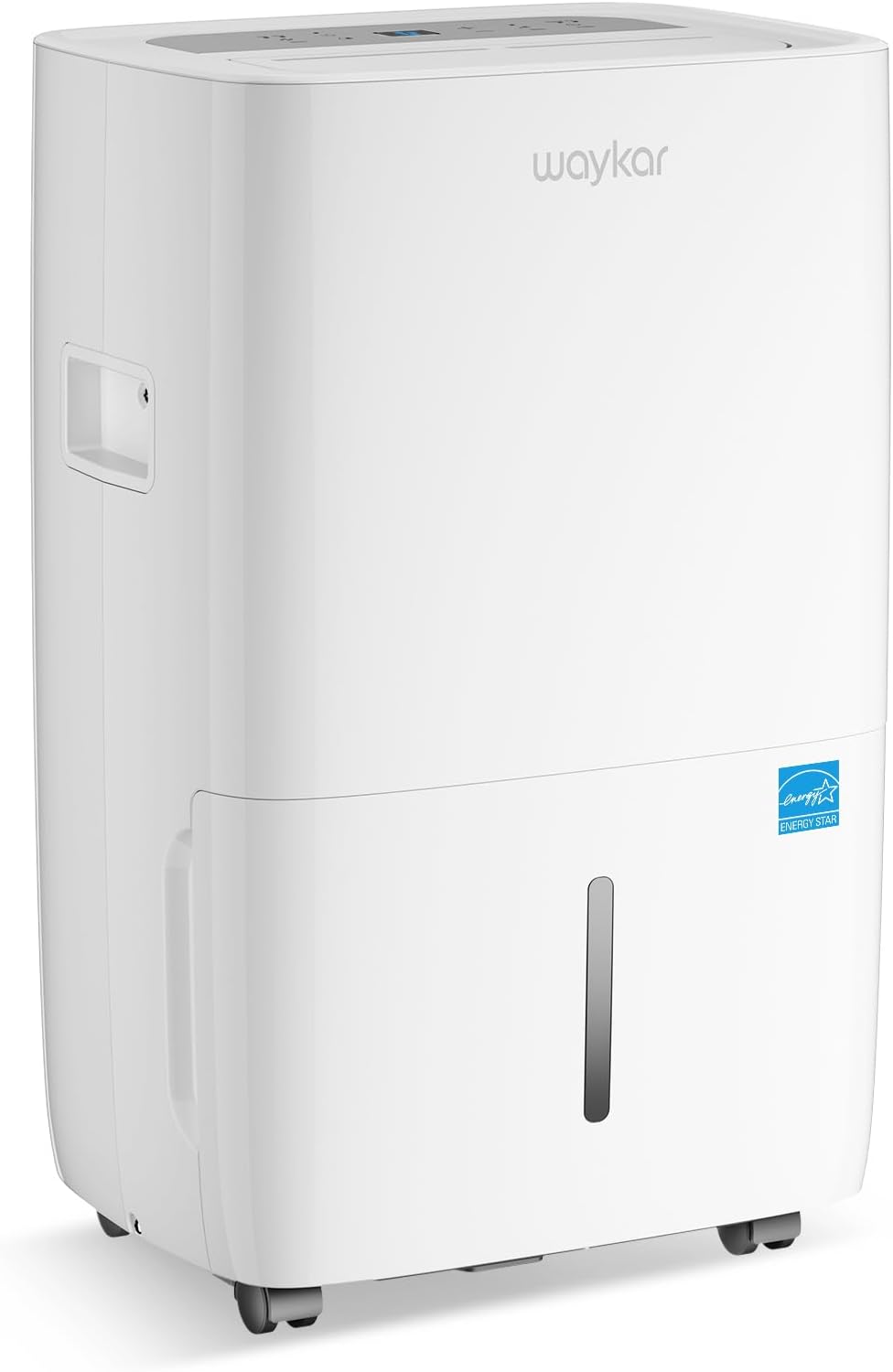
Best Overall for a Finished Basement: Waykar 120 Pints 6000 Sq. Ft
This is the unit I would start with for a large finished basement or an open lower floor. The name carries the two numbers that matter: 120 pints and 6,000 square feet, plus a 2025 Energy Star listing, which tells you the compressor and fan were built to a newer efficiency standard than a lot of what sits beside it on the shelf.
Apply the derate. In a real basement with normal door gaps and a Louisiana summer, treat that 120 pint rating like 75 to 85 pints of honest work. That still puts it ahead of most of what homeowners drag home from a big box store, and it is enough for a basement that is damp rather than standing in water.
Plan the drain. A machine this size pulls enough water that a tank becomes a chore, and chores get skipped. If you have a floor drain or a utility sink, run a hose to it. If you do not, add a condensate pump and send the water up and out. A hose kit costs less than one service call, and it is the difference between a dehumidifier that works all summer and one that fills up on a Tuesday while you are at work.
For a homeowner with a finished basement, a hygrometer on the wall, and a place to send the water, this is the sensible center of the market.
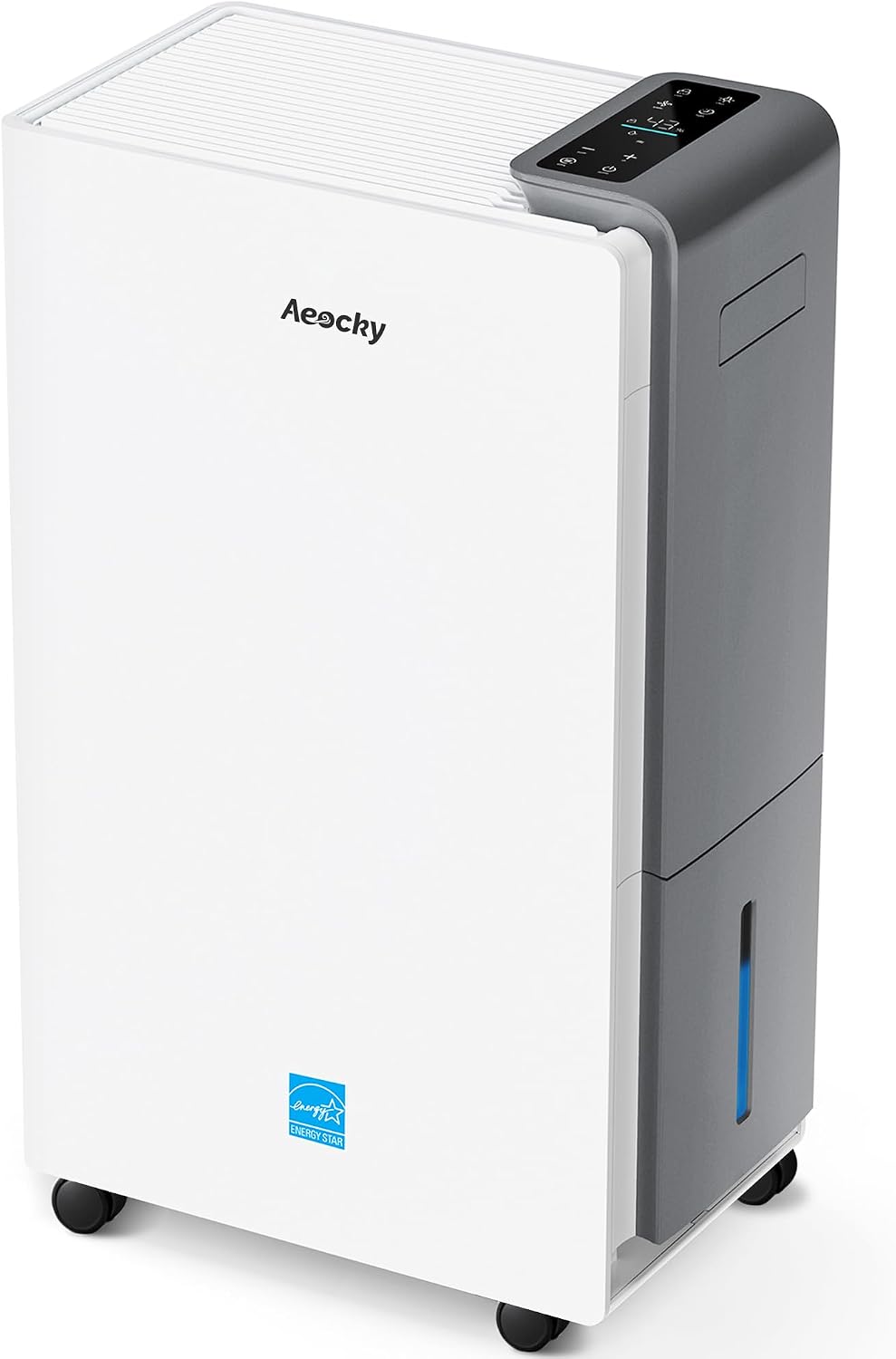
Best Value: AEOCKY 5000 Sq. Ft Energy Star Version 6.0
The AEOCKY covers 5,000 square feet and carries an Energy Star Version 6.0 rating. It is the value pick in this group, and value here means the same class of machine with a smaller coverage claim and a lighter efficiency spec.
If your basement is one open room in the 1,200 to 2,000 square foot range, this is sized for you with room to spare once you apply the derate. If your basement is a maze of finished rooms with closed doors, no single unit in this price class will fix it, and you should be looking at placement and airflow instead of a bigger number on the box.
Two things to check before you commit. First, the drain plan, same as above. A 5,000 square foot rating means a lot of water in a bad week, so have a hose in place before the first wet spell. Second, put a hygrometer in the room. The humidistat on the machine reads the air at the machine. Your problem is at the far wall.
For a homeowner who wants one machine, one hose, and a basement that smells like a basement instead of a wet towel, this is the buy.
Best for Crawl Spaces: CADPXS 80 Pints with Pump and Drain Hose
Crawl spaces are their own problem and they need a different machine. This one is rated at 80 pints, built for crawl space and commercial duty, and it ships with a pump and a drain hose, which is the feature that matters most under a house.
Nobody is going to crawl in twice a week to empty a tank. The pump sends condensate out through the hose to a drain, a sump, or the yard, and the unit keeps working. That single detail is worth more than any smart feature on the market.
Eighty pints is honest for a crawl space with a vapor barrier and decent ventilation. If the ground under the house is bare dirt and the crawl space is open to the outside, fix the barrier first. A dehumidifier under an unsealed house is a machine fighting the entire Gulf of Mexico, and it will lose.
This is also the unit I would point at a small commercial job: a storage room, a workshop, a garage that floods. The commercial label is not fluff when the machine is built to run continuously.
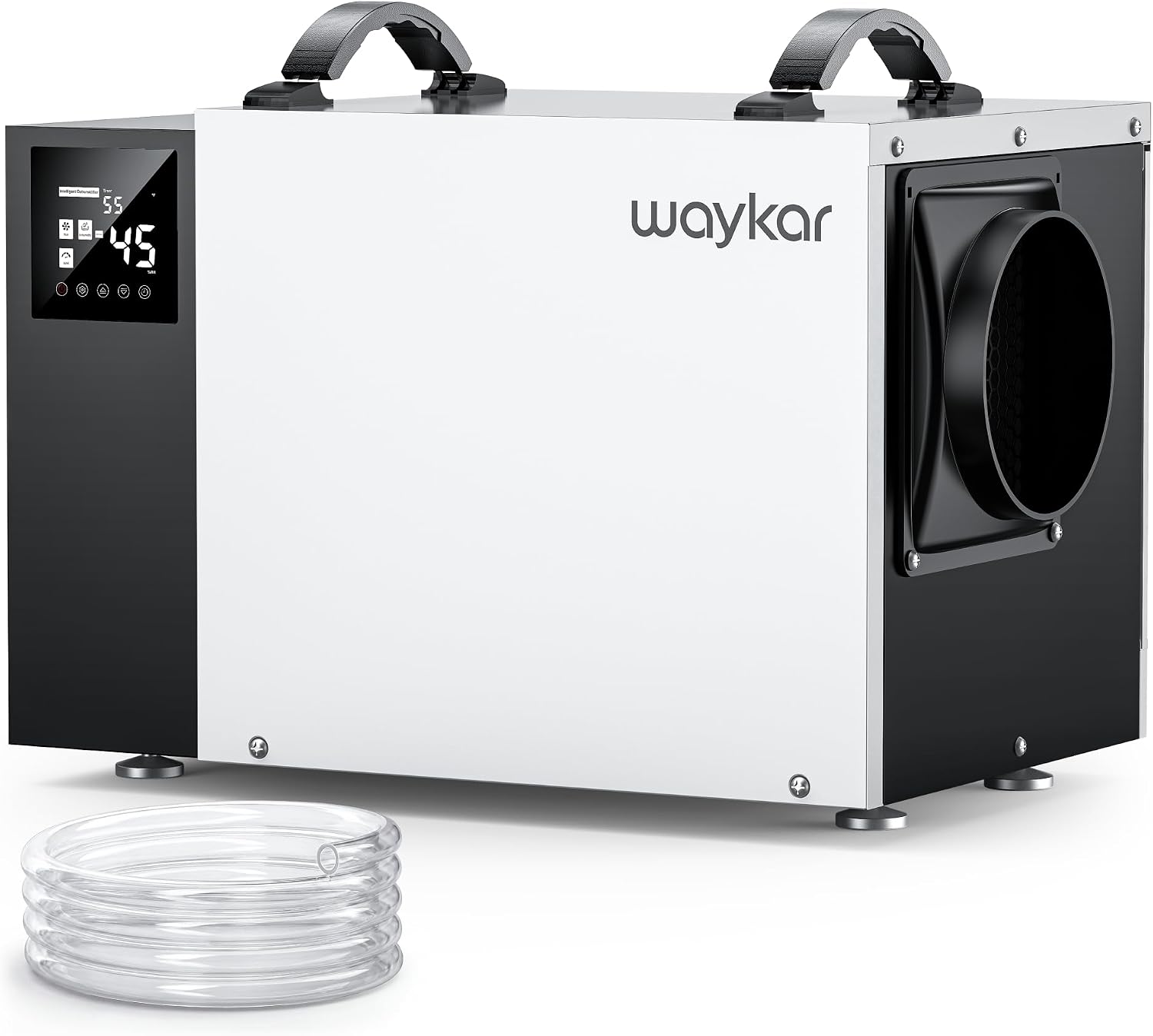
Best for Big Wet Spaces: Waykar 125 Pint Crawl Space Dehumidifier
The Waykar 125 pint unit is the biggest machine here. The name claims up to 6,500 square feet, crawl space and commercial duty, a pump and drain hose, a compact body, and 5 years of quality coverage. On a water damage job or a large basement, that combination is what I want on the truck.
Pump and hose included means unattended operation from day one, which is the whole point in a space wet enough to need 125 pints of capacity. Compact matters more than people think, because the difference between a unit that fits between the joists and one that does not is the difference between a job you finish and a job you rig.
Five years of coverage is worth reading closely. Terms vary, and the compressor is the part that fails. Know what is covered and who pays shipping before you need it.
Sizing note: 6,500 square feet is open-space math. A closed, wet basement of 1,500 square feet with soaked drywall and a unit rated for 6,500 is not overkill, it is recovery capacity. When the walls are wet and the fans are running, you want the machine pulling hard.
What I Check Before I Recommend Any Unit
Weigh the water. A pint is about a pound and a quarter. Put the tank on a kitchen scale after a day and you know what the machine actually pulled in your air, at your temperature, in your house. The box number is a claim. The scale is data.
Run it on a watt meter for a week. Multiply the average draw by your electric rate and by the hours in a month, and you have a bill instead of a spec sheet. That is the number that decides whether an Energy Star listing is worth paying for.
Check the humidistat against a hygrometer. I have seen them off by 15 percent. A machine that thinks your basement is at 45 percent when it is at 60 will never run long enough to do anything.
Listen for the restart. After a power outage, a unit should come back on and dehumidify. If it restarts in fan only, you have a machine that quits silently, and you find out three weeks later when the ceiling stains.
Look at the filter and the tank handle. A filter that costs too much and needs replacing every month turns into a machine that runs with a clogged filter. A tank that sloshes when you carry it ends up dumped at a bad angle into the utility sink.
None of that is exciting. All of it is what separates a machine that works for five summers from one that ends up on the curb.
Dehumidifier Sizing and Drain Reference Table
This is the comparison I keep on my clipboard, with the numbers taken straight from each unit's name and the drain setup spelled out.
| Unit | Best for | Rated capacity | Drain setup | Price |
|---|---|---|---|---|
 Visit on Amazon → Waykar 120 Pints 6000 Sq. Ft |
Large finished basements and open lower floors | 120 pints, 6,000 sq ft, 2025 Energy Star | Hose or condensate pump needed for unattended draining | $289.99 |
 Visit on Amazon → AEOCKY 5000 Sq. Ft |
Whole-floor basements on a budget | 5,000 sq ft, Energy Star Version 6.0 | Hose or condensate pump needed for unattended draining | $199.47 |
 Visit on Amazon → CADPXS 80 Pints |
Crawl spaces and jobs with no floor drain | 80 pints, crawl space and commercial duty | Pump and drain hose included | $375.71 |
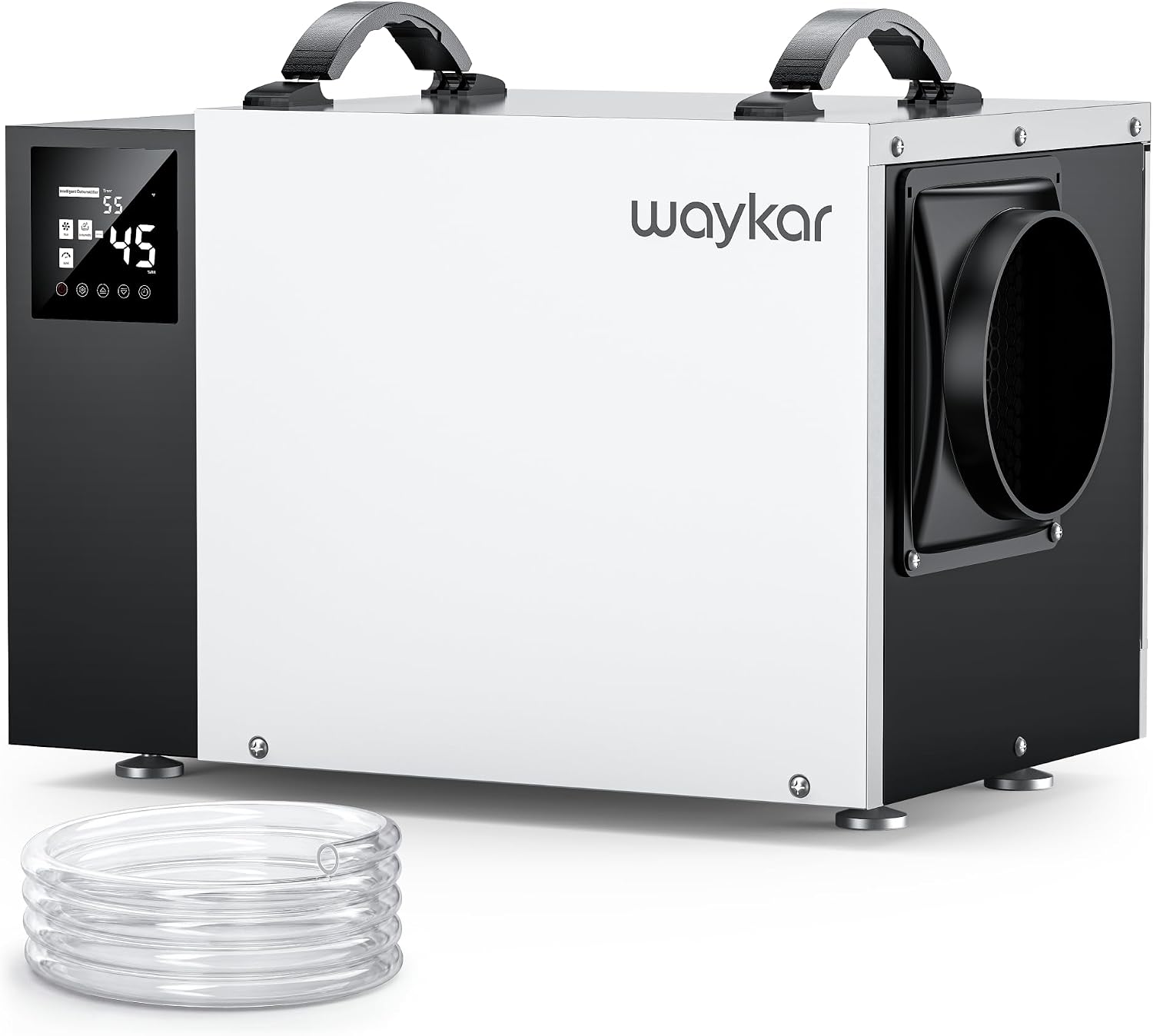 Visit on Amazon → Waykar 125 Pint |
Water damage, large basements, commercial | 125 pints, up to 6,500 sq ft, 5-year coverage | Pump and drain hose included | $449.99 |
Read the pint column as a ceiling, not a promise, and read the drain column as the deciding factor. If you cannot get water out of the machine automatically, the pint rating is academic.
Should you buy the Waykar 120 Pints?
Yes, for a large finished basement or an open lower floor, provided you have a drain plan. It carries the biggest pint rating of the two portable units here, plus a 2025 Energy Star listing. Pair it with a hose and a condensate pump if you have no floor drain, and put a hygrometer across the room so you can watch it work.
Should you buy the AEOCKY 5000 Sq. Ft?
Yes, if you want one machine for a whole-floor basement and you are watching the budget. Five thousand square feet of coverage and an Energy Star Version 6.0 rating is a sensible package for a typical finished basement. Skip it if your basement is chopped into closed rooms. Buy two smaller units or fix the airflow instead.
Should you buy the CADPXS 80 Pints?
Yes, if you are going under the house. The pump and drain hose are the reason. Eighty pints is the right size for a crawl space with a vapor barrier, and it is also a reasonable machine for a workshop or a garage that takes on water. Fix the ground first if the crawl space is open dirt.
Should you buy the Waykar 125 Pint?
Yes, if the space is big, wet, or both. A pump, a drain hose, a compact body, and a 5-year coverage claim make it the machine I would reach for on water damage and large basements. Read the coverage terms, keep the filter clean, and let it run. Recovery takes days, not hours.