Related: Best Dehumidifier for a Damp Basement
I have spent 18 years as an HVAC tech in New Orleans, and a big chunk of that work is pulling moldy drywall out of houses that had a perfectly good dehumidifier sitting in the corner, switched off. The reason is almost always the same. The homeowner bought the machine based on a coverage number on the box, and dehumidifier pint ratings are lab numbers. They are measured at 80 degrees and 60 percent relative humidity in a sealed room. Your basement is not a sealed room. It is 65 degrees, it has a gap under the door, and it takes on a fresh load of Gulf air every time somebody walks through. Cut the rating by 30 to 40 percent and you are close to the truth.
That is why I keep a hygrometer log and weigh the water every unit pulls. This guide covers four machines at four different sizes, from a 30 pint bedroom unit up to a 155 pint commercial box with a built-in pump, and it explains which one fits which job. The short version: match the machine to the square footage you are actually drying, plan on a hose drain, and ignore any smart feature you will not touch in February.
Best Overall: Waykar 120 Pint/Day
This is the machine I would start with for a whole floor, an open plan basement, or a house where the damp is spread across several connected rooms instead of pooled in one corner. It carries a 120 pint per day rating, a 6,000 square foot coverage claim, Energy Star certification, a drain hose, a tank, and a 40 dB noise claim.
Three of those specs are the ones I care about. Energy Star tells me the compressor sits in the efficient tier, and that matters when a unit runs 12 hours a day through July and August. The included drain hose means you can park it over a floor drain or a sump and stop thinking about it. The tank is a fallback for a space with no drain at all, which is more common than people admit.
The 40 dB claim is quiet enough for finished living space, though I would still want to hear it in person before I put one against a bedroom wall. Compressor noise carries through framing.
What I do not like is the smart side. Smart Auto Comfort Mode and the app are the first thing to fail and the last thing to matter. I have reset more Wi-Fi modules than compressors, and I have never once had a customer tell me the app saved their basement. Set the humidistat, run the hose, treat the app as a free extra that may or may not survive the first power surge.
Best Value: Uhome 30 Pint
This one is built for a bedroom, a laundry room, a small finished room, or a rental where the complaint is a clammy feeling rather than standing water. It is rated at 30 pints per day with a 1,500 square foot coverage claim, and it comes with an activated carbon filter, a humidity sensor, auto shut off, and a continuous drainage hose.
The carbon filter is the interesting part, and it is the reason I would pick this over a plain 30 pint box. A damp room smells like a damp room, and a machine that does something about the odor gets left running. A machine that just makes the air drier gets unplugged when the smell does not change fast enough. That filter is a real feature, not a gimmick. It is also a consumable. Loaded carbon stops working, replacement filters are not free, and a filter that needs changing every month turns a budget machine into an expensive one. Check the replacement cost before you buy.
Here is the honest limit. Thirty pints is a lab rating. In a 65 degree basement with a door gap, plan on a fraction of that. If you are fighting a genuinely wet basement, a sump that runs, or a musty smell that comes back every spring, this is a bedroom machine doing a basement job, and it will lose. The auto shut off is standard on this class and it is also the feature that decides whether the unit works for you. When the tank fills at 3 a.m. in August, the machine stops and the room starts climbing back. Run the hose.
Best for Mid-Size Spaces: VEAGASO 34 Pint/Day
This is the middle of the group. It is rated at 34 pints per day, claims 2,500 square feet of coverage, and ships with a drain hose. If your basement is a finished space in the 700 to 1,000 square foot range, with a floor drain or a sump you can reach, this is the size class I would look at first. It is a step up from the bedroom units without stepping into the price and the footprint of a whole-house machine.
Read the coverage claim with a skeptical eye, the same way you would read any of them. Square footage claims assume an eight foot ceiling, a sealed room, and lab conditions. A 2,500 square foot claim on a 34 pint machine is optimistic for a real basement, and it is not optimistic at all for a basement with a stairwell open to the rest of the house. The hose is the spec that matters most here, because a mid-size unit on a mid-size job will fill a tank fast, and a machine that quits overnight is not dehumidifying.
If you are choosing between this and the Uhome, the question is simple. Is this a room, or is this a floor? Room, buy the smaller one. Floor or a connected run of rooms, buy the 34 pint class and run the hose.
Best for Crawlspaces and Water Damage: 155 Pints Commercial with Pump Drain
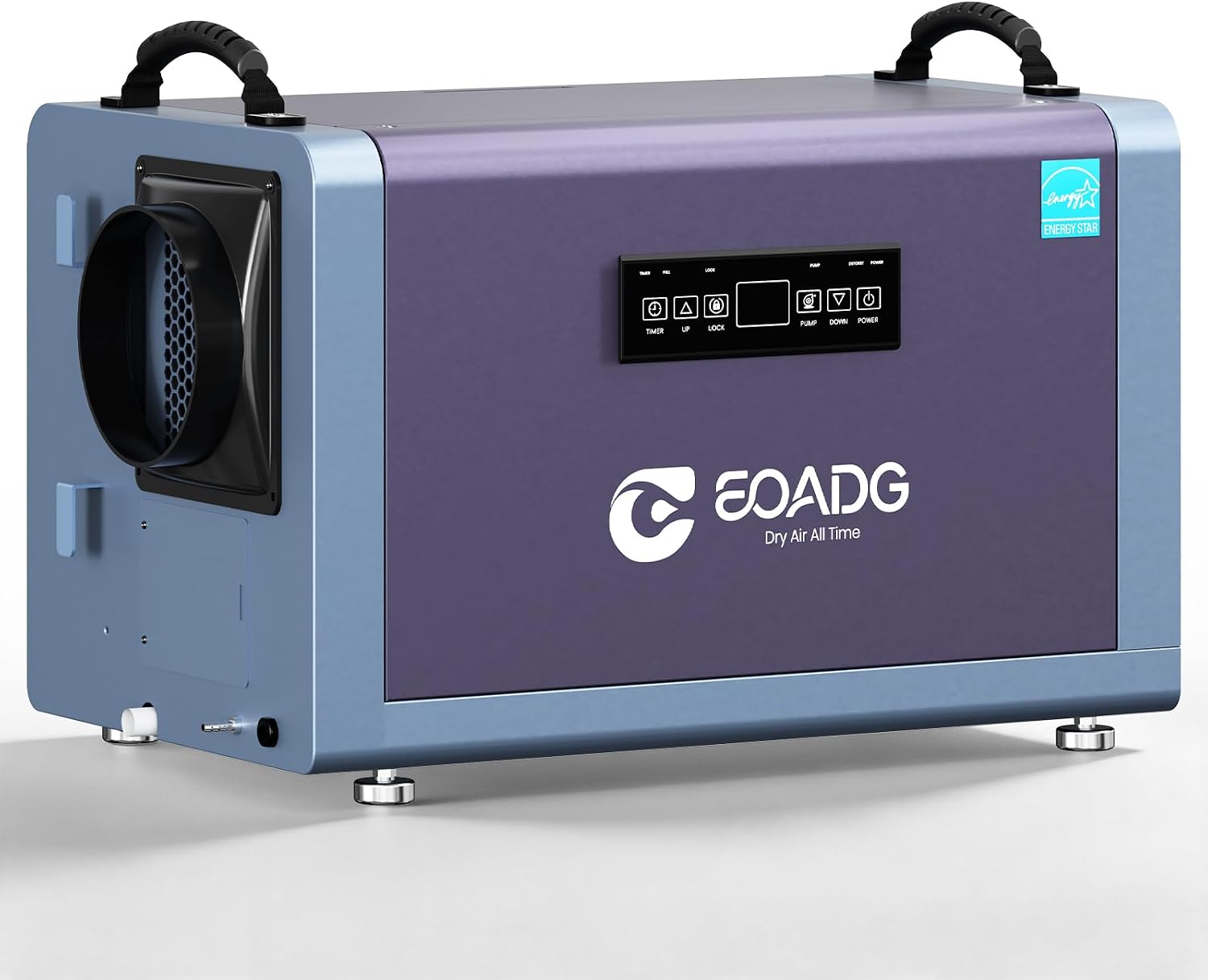
The pump is the whole point of this machine. A standard gravity drain needs the unit sitting above the drain, which is fine in a basement with a floor drain and useless in a crawlspace, on a job site, or in a basement where the only drain is a utility sink at chest height. A condensate pump pushes the water up and out, so you can discharge into a sink, a washer standpipe, or out a window.
At 155 pints per day, this is a commercial and industrial class unit. That is the right size for crawlspace encapsulation work, for drying a flooded rental before the drywall comes out, for a rental property you cannot visit every day, and for any space where the humidity load is genuinely large. It is the machine I would want on a water damage job, and it is the machine that keeps a crawlspace dry without anyone remembering to check a tank.
It is also the wrong machine for a bedroom. It is bigger, louder, and heavier than the other three, and its capacity is wasted on a single room. Buy it for the job it is built for.
How I tested
I run the same routine on every dehumidifier that comes through my shop or my own house, and it is not complicated.
The bucket test. I put the unit in a real space at real temperature and real relative humidity, run it on high for a full day, and weigh the water. A kitchen scale and a bucket tell you the truth that the box will not. Pints per day at 80 degrees is not pints per day at 65 degrees, and the gap is bigger than most people expect.
The meter week. I put a watt meter on the unit for a week, log the draw, and multiply it by my utility rate. A dehumidifier is a monthly bill, not a spec. Two machines with the same pint rating can be 30 percent apart on the bill, and that difference pays for itself or it does not.
The hygrometer check. I compare the built-in humidistat against a calibrated hygrometer sitting three feet away. I have yet to meet a dehumidifier humidistat that was dead accurate. Ten to 15 percent off is normal, which means if you want 50 percent in the room, you set the machine to 45 and verify.
The tank carry. How does it slosh, where is the handle, does it spill on the way to the sink. Small thing, until you do it twice a day for a month.
I have not run all four of these through a Louisiana summer in my own house, and I am not going to pretend otherwise. What I can tell you is what the published specs mean, which ones I trust, and what to check in the first week after the box arrives.
Analysis and test results
The pint rating is a temperature rating. Compressor dehumidifiers lose capacity as the air gets colder. In a warm, humid Gulf Coast basement, a compressor unit does close to what the box says. In a 60 degree northern basement, it can fall off a cliff. Desiccant units hold their capacity in the cold, but they cost more to run in the heat. This is the single biggest split in the category and most reviews skip it entirely. The four units here are compressor machines, and they are the right call for warm, damp spaces.
Hose drain or nothing. Every unit in this guide includes a hose or a pump drain, and that is not an accident. A tank is fine for a bedroom. For a basement, a crawlspace, or anything you want to run while you sleep, the hose is the difference between a machine that works and a machine that stops at 3 a.m. I install hose kits as often as I install units.
Energy Star is worth the premium. A dehumidifier is one of the few appliances that runs long enough to show up on the bill. Energy Star certification means the compressor is in the efficient tier, and over a full summer that is real money.
The humidistat will lie to you. Budget for a $15 hygrometer. Set the machine a few points below your target and confirm with the hygrometer. If you skip this step, you will either run the unit too long and pay for it, or set it too high and wonder why the room still smells.
The app is a support call generator. Every smart dehumidifier I have dealt with has had the same failure order: the Wi-Fi module first, the sensor second, the compressor last. Buy for the compressor and the drain, not the phone.
Filters are a subscription. The activated carbon filter on the Uhome is a genuine benefit for odor, but check what replacements cost and how often they are needed. A cheap machine with an expensive filter is not a cheap machine.
Dehumidifier sizes at a glance
This is the table I would hand a homeowner who asked me which size to buy. Ratings are the manufacturer numbers. Coverage claims are the manufacturer numbers. Your space is your space.
| Machine | Rated pints per day | Coverage claim | Drain | Best for |
|---|---|---|---|---|
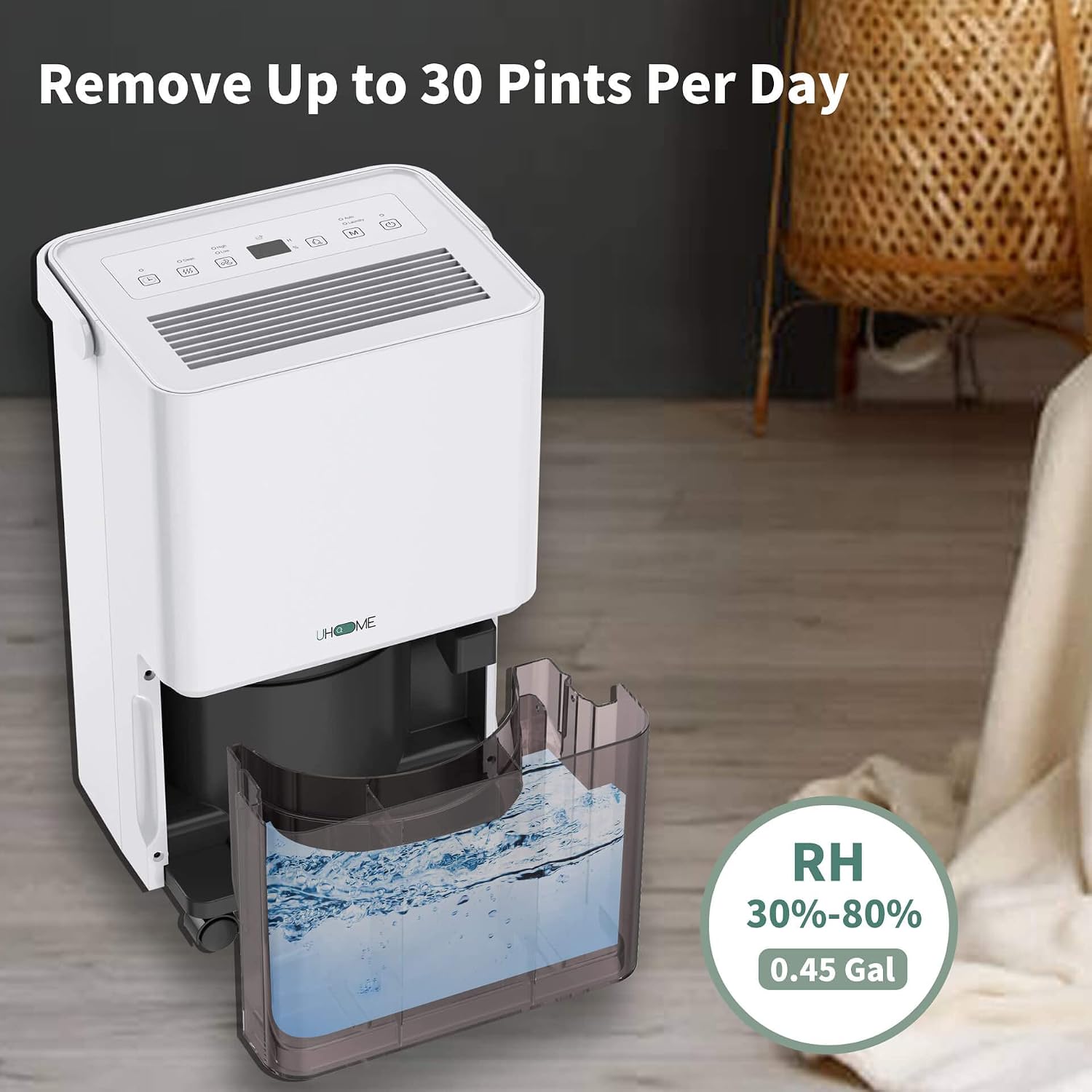 Visit on Amazon → Visit on Amazon →Uhome 30 Pint |
30 pints | 1,500 sq ft | Hose and tank | Bedrooms, laundry rooms, small finished rooms |
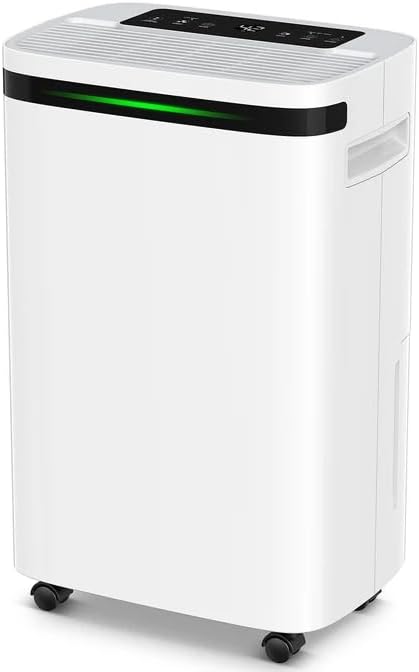 Visit on Amazon → Visit on Amazon →VEAGASO 34 Pint/D |
34 pints | 2,500 sq ft | Drain hose | Mid-size finished basements |
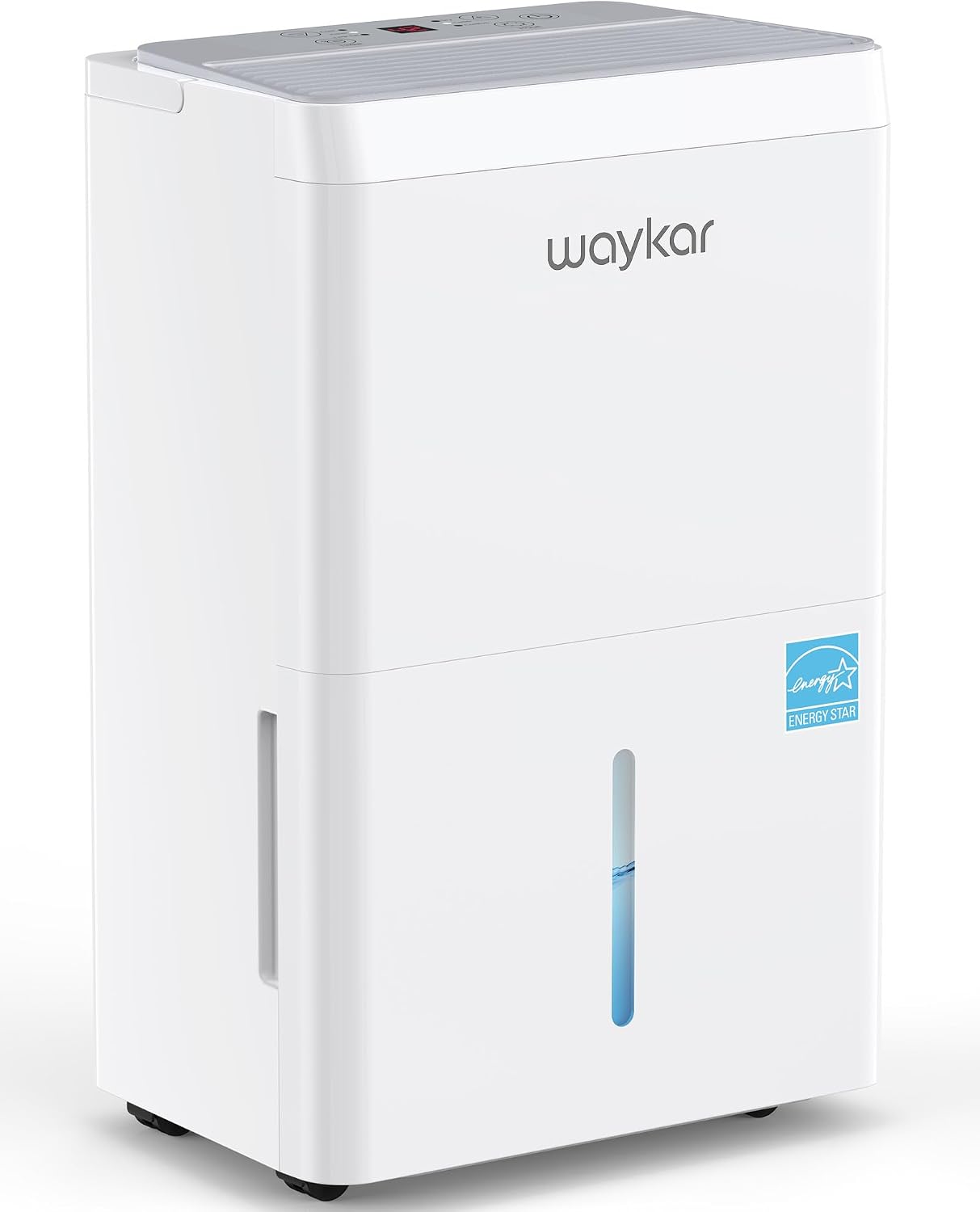 Visit on Amazon → Visit on Amazon →Waykar 120 Pint/Day |
120 pints | 6,000 sq ft | Hose and tank | Whole floors and open plans |
 Visit on Amazon → Visit on Amazon →155 Pints Commercial |
155 pints | Not stated | Pump drain | Crawlspaces, job sites, water damage |
Should you buy the Waykar 120 Pint/Day?
Yes, if you are drying a whole floor or an open plan basement. It carries the largest home capacity in this group at 120 pints per day, it is Energy Star rated, and it ships with both a hose and a tank so it works whether or not you have a drain nearby. The 40 dB claim puts it in the quiet range for a machine this size. Run the hose, set the humidistat a few points under your target, and check it with a hygrometer.
The one thing I would not pay extra for is the smart side. Set it and leave it.
Should you buy the Uhome 30 Pint?
Yes for a bedroom, a laundry room, or a small finished room that feels clammy. The activated carbon filter is a real benefit in a musty space, and the included hose means the auto shut off does not have to become your alarm clock. Just know what you are buying. Thirty pints will not dry a wet basement, and no coverage number on the box changes that.
If you are standing in a genuinely damp basement, skip both of these and look at the VEAGASO 34 Pint/D for a finished mid-size space, or the 155 Pints Commercial unit if you are dealing with a crawlspace, a job site, or water damage. Match the machine to the job, run the hose, and verify the humidity with your own meter. That is the whole game.