A damp basement is never just one problem. It is a cold floor near the slab, a musty smell at the top of the stairs, and a hygrometer that reads 65 percent at 6 a.m. and refuses to drop. I have spent eighteen years as an HVAC technician in New Orleans, and the houses I open up for mold work almost always share one missing piece: nothing in the house was actually removing the water.
This guide compares six products that attack that problem in different ways, starting with a dehumidifier with pump built for basements where gravity drainage is impossible, then an 80 pint unit for large open spaces, a 30 pint model for a single damp bedroom, and a replacement sensor board that saves a machine you already own. I have not run every unit on this list through a bench test, so I will not pretend otherwise. What follows is based on the product data for each model: capacity, coverage area, drain hardware, filtration, and energy certification. Where those numbers have limits, I point them out.
Related: How to Size a Dehumidifier for a Damp Room
Quick answer
The Midea 50 Pint Dehumidifier with Pump, 4,500 Sq. Ft, Energy star is the strongest fit for basements and whole-floor coverage because the built-in pump can push condensate up and out to a sink, a window, or a utility drain instead of depending on gravity, and its 4,500 square foot rating and ENERGY STAR listing suit medium and large spaces. Choose the Waykar 80 Pints 5000 Sq. Ft 2025 Energy Star Dehumidifier for Basement instead when the space is larger, wetter, or both, and choose the Uhome 30 Pint Dehumidifier when the problem is a single bedroom or laundry room rather than a basement.
Basement dehumidifiers worth comparing
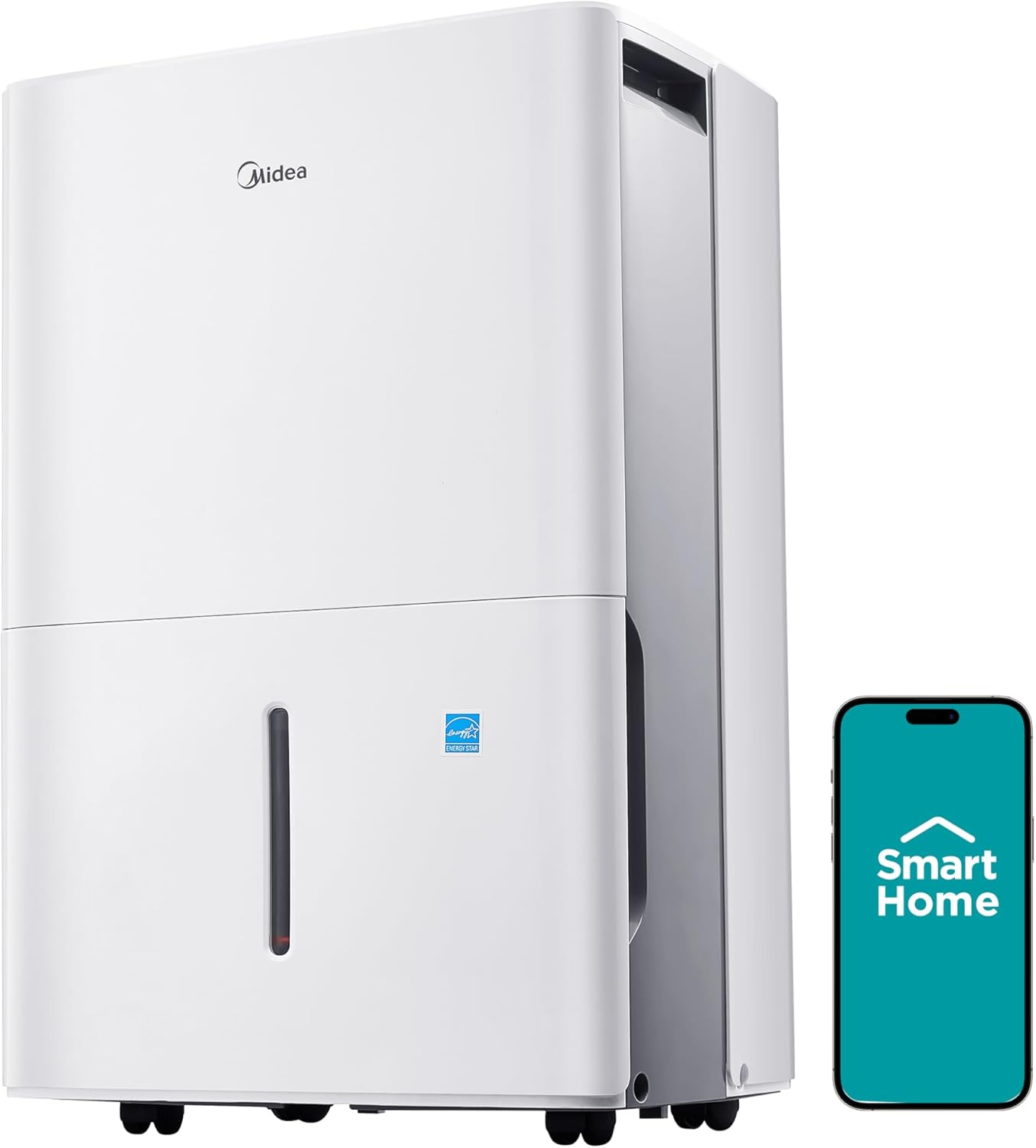
Midea 50 Pint Dehumidifier with Pump, 4,500 Sq. Ft, Energy star
A 4,500 square foot, ENERGY STAR rated unit with a built-in pump, so condensate can travel upward to a drain instead of waiting for gravity. It is the only model in this group that pairs whole-floor coverage with pump drainage.
Visit on Amazon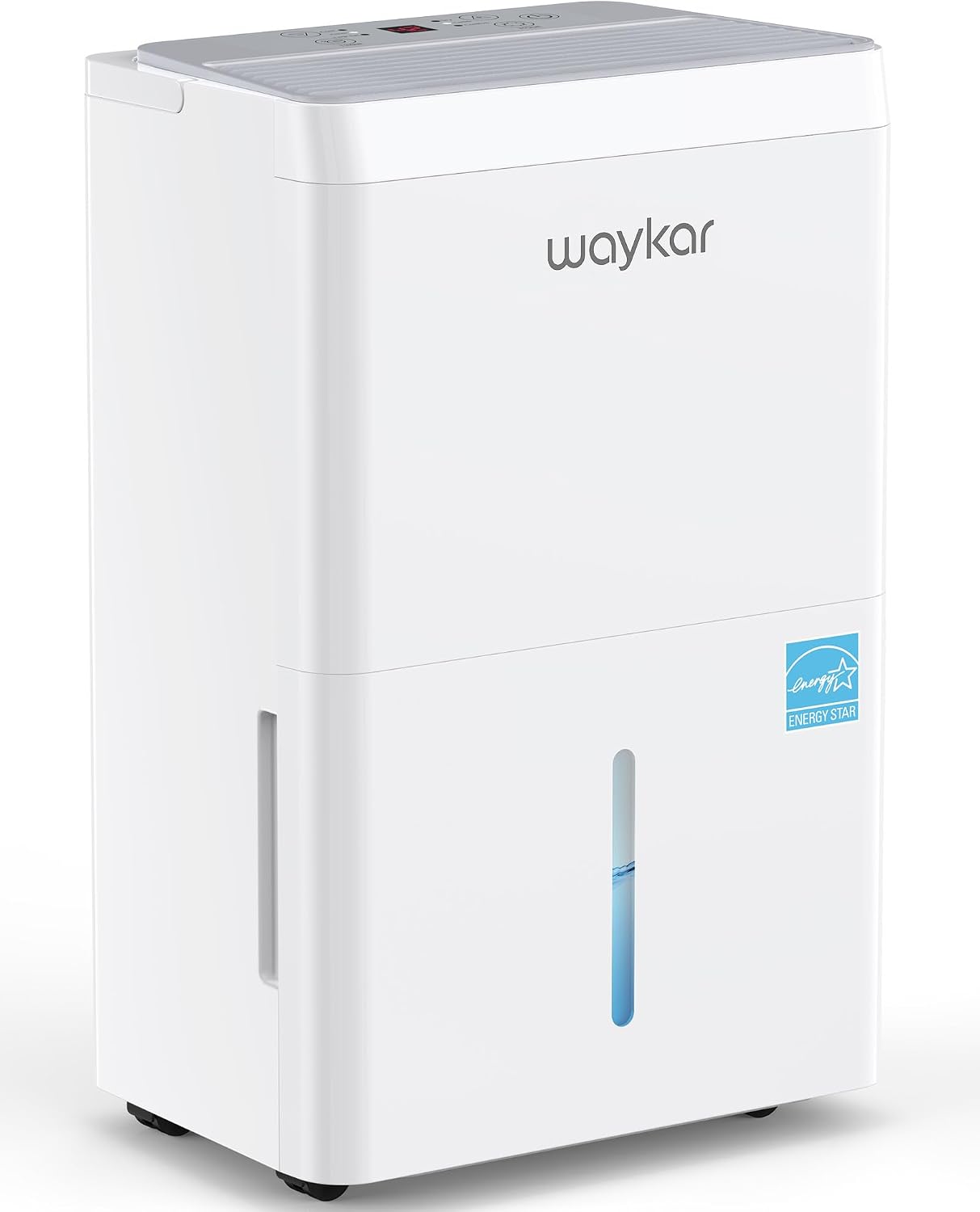
Waykar 80 Pints 5000 Sq. Ft 2025 Energy Star Dehumidifier for Basement
The largest unit here at 80 pints and 5,000 square feet, with a 2025 ENERGY STAR listing and a basement-first design. Built for open, consistently damp spaces that would overwhelm a 30 or 50 pint machine.
Visit on Amazon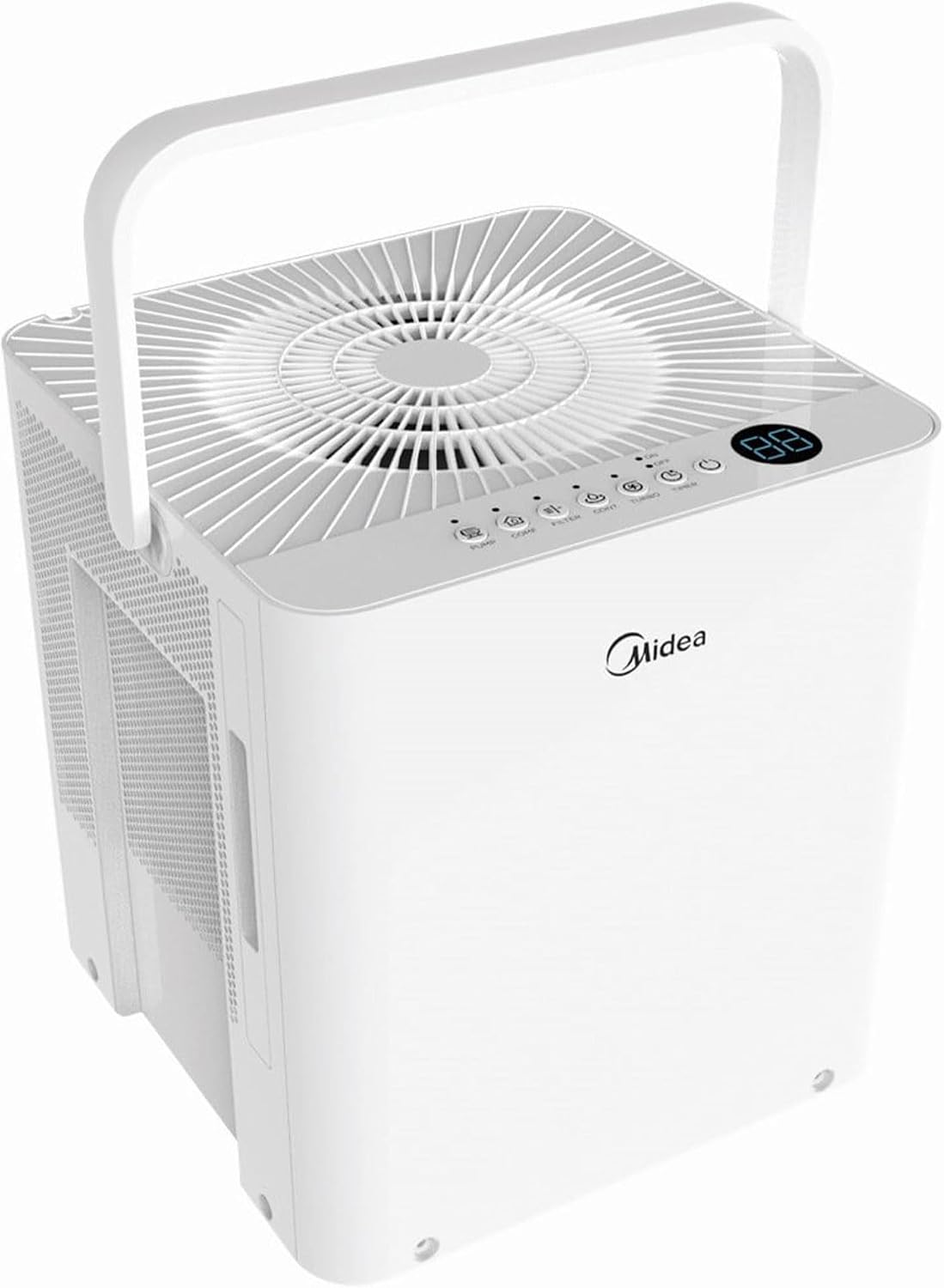
Midea Cube 50 Pint Dehumidifier, 4,500 Sq. Ft, Smart Control, ENERGY STAR
Check current Amazon price
A 50 pint, 4,500 square foot unit with smart control and an ENERGY STAR listing. The cube form factor is the practical difference from the pump model if floor space and off-season storage are your constraints.
Visit on Amazon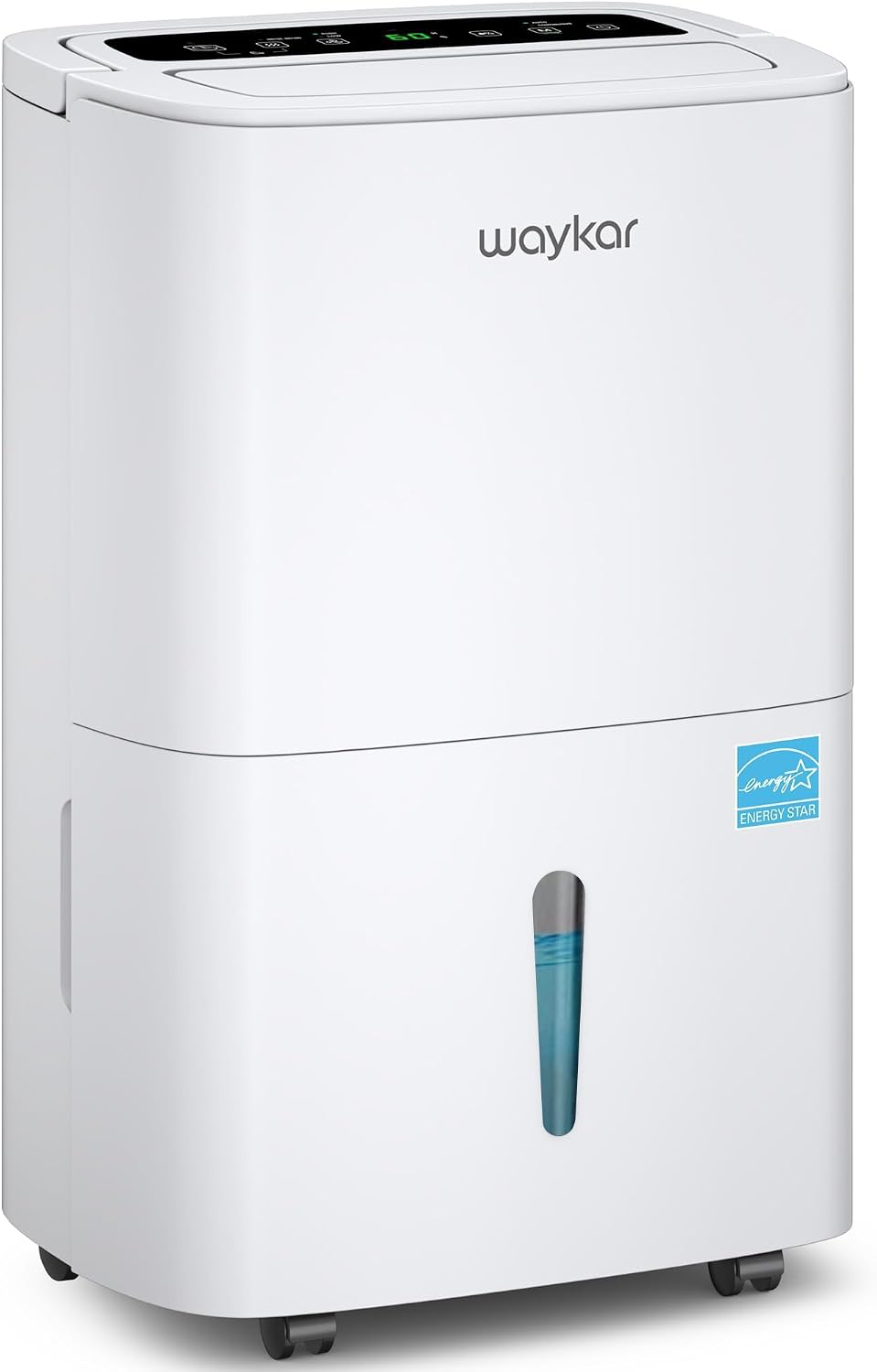
4500 Sq. Ft Dehumidifier for Basement Quilt Compressor Dehumidifiers for Home with Drain Hose, Energy Efficient, Intelligent Humidity Control, Dehumidifier for Bathroom, Bedroom, Office
A 4,500 square foot compressor unit that ships with a drain hose and intelligent humidity control, positioned for basements, bathrooms, bedrooms, and offices rather than a single room.
Visit on Amazon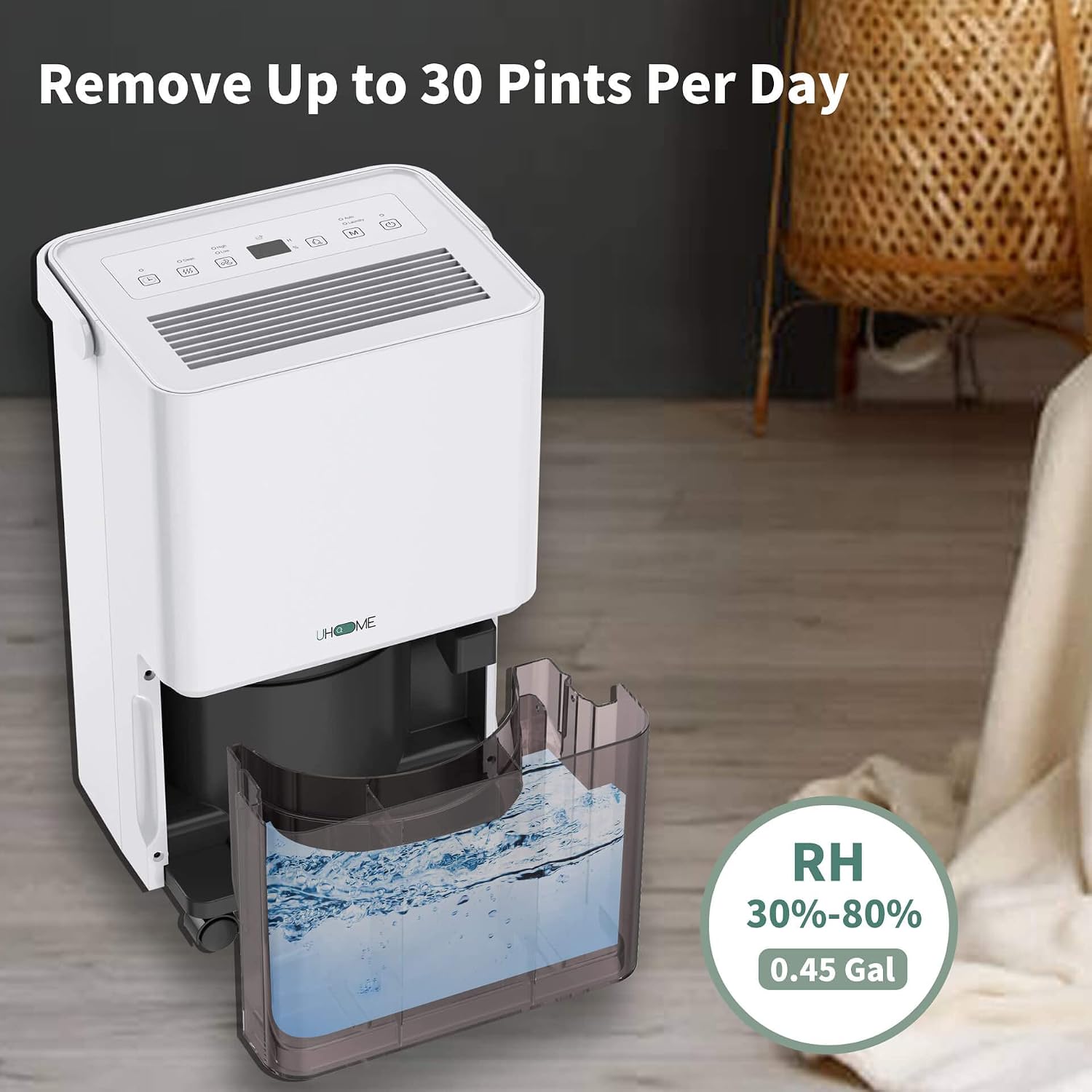
Uhome 30 Pint Dehumidifier - for Basement with Activated Carbon Filter,Ultra Quiet, Humidity Sensor, Auto Shut Off, Continuous Drainage Hose - Ideal Dehumidifiers for Home, 1500 Sq Ft Dehumidifiers
A 30 pint, 1,500 square foot unit with an activated carbon filter, a humidity sensor, auto shut off, and a continuous drainage hose. Quiet operation and odor filtration make it a better fit for bedrooms and laundry rooms than for large wet basements.
Visit on Amazon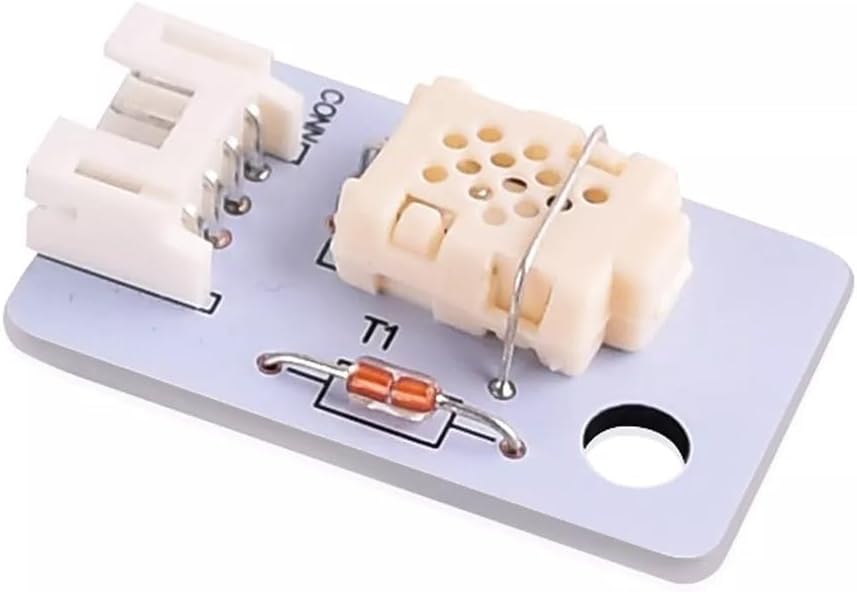
Humidity Sensor PCB For Honeywell TP30AWKN TP50WKN TP70AWKN Series Dehumidifiers And Colzer PD223A WHAD703PAW For HOmeLabs 70 Pint Soleus Air Models 810900236A
A replacement humidity sensor board for Honeywell TP30AWKN, TP50WKN, and TP70AWKN series dehumidifiers, plus Colzer PD223A and WHAD703PAW and hOmeLabs 70 pint and Soleus Air models. This is a repair path for a machine you already own, not a new dehumidifier.
Visit on AmazonPrices and availability may change. Check the retailer for current details.
How these products were compared
This guide compares coverage ratings, pint capacity, drain hardware, filtration, and energy certification. Product names, images, and retailer links are matched by product identifier so that every card points to the product shown.
None of this is a lab measurement. Where a number appears, it comes from the manufacturer's own listing for that model, which means it describes a best case: an open floor plan, average ceiling height, and a moderate moisture load. A rating is a starting point for comparison, not a promise about your house.
How to choose the right dehumidifier
Start with the space, not the spec sheet. A 4,500 square foot rating assumes an open layout and ordinary humidity. A 1,200 square foot finished basement sitting in front of a dirt crawl space, behind a leaky bulkhead door, with no vapor barrier under the slab, behaves more like a wet 2,000 square foot room than a dry 1,200 square foot one. The honest way to size is to measure the footprint, add a step for every known water source, and then read the manufacturer's coverage number as a ceiling rather than a target.
The second decision is temperature, because it determines which machine can even work in your space. Compressor units do their best work in warm air, which is why they dominate Gulf Coast basements, garages, and laundry rooms. In an unheated northern basement that sits in the 50s, a compressor coil runs cold enough to frost and a desiccant unit is the better tool. If you are not sure which side of that line your space falls on, how to size a dehumidifier for a damp room walks through the measurement and the temperature question together.
Drainage is the third decision, and most buyers get it backwards. The tank is fine for a bedroom that needs a few dry hours. For a basement, a crawl space, or anything running unattended overnight, you want a hose. Gravity hose only drains downhill, and plenty of basement floors have no downhill path to anything useful, which is exactly the gap a pump fills. Plan the drain run before you buy, not after the first full tank.
Midea 50 Pint Dehumidifier with Pump, 4,500 Sq. Ft, Energy star
The pump is the reason this unit leads the list. A gravity line has to travel down to a floor drain or a sump, and many finished basements offer neither. A built-in pump lets condensate travel upward to a utility sink, a laundry standpipe, or a window, which is what makes unattended continuous drainage realistic. The 4,500 square foot coverage rating and ENERGY STAR listing put it in the class that can carry a whole floor instead of a single room, and it is the only model here that combines that coverage with pump drainage.
The trade-off is setup, not performance. A pump needs a destination within reach of its hose, so the run has to be planned before the unit arrives, and that run needs a periodic look for kinks, standing water, or biofilm. If gravity drainage is available to you, the Midea Cube 50 Pint and the 4,500 square foot compressor unit cover the same square footage class without the extra hardware.
Alternatives to consider
The Waykar 80 Pints 5000 Sq. Ft 2025 Energy Star Dehumidifier for Basement is better suited to large, consistently damp spaces, since it carries the highest capacity and coverage rating in this group. The Midea Cube 50 Pint Dehumidifier, 4,500 Sq. Ft, Smart Control, ENERGY STAR is a stronger fit when you want that same coverage class with app-based controls and a cube form factor that is easier to tuck out of the way between seasons.
The 4500 Sq. Ft Dehumidifier for Basement Quilt Compressor brings a drain hose and intelligent humidity control to the same 4,500 square foot class, which makes it the straightforward hose-and-humidistat option if you have no interest in app features. The Uhome 30 Pint Dehumidifier covers smaller rooms at 1,500 square feet, and its activated carbon filter and quiet operation suit a bedroom or laundry area where odor and noise matter more than raw capacity. The Humidity Sensor PCB is not a dehumidifier at all: it is the replacement sensor board for specific Honeywell TP30AWKN, TP50WKN, and TP70AWKN series units, plus Colzer PD223A and WHAD703PAW and hOmeLabs 70 pint and Soleus Air models, and it only makes sense when the machine you own has a sensor fault rather than a dead compressor.
Day-to-day use and maintenance
Two habits decide whether a dehumidifier lasts five years or fifteen. The first is the filter. A clogged filter starves the coil, raises coil temperature, and makes the compressor work harder for less water, so clean or replace it on the schedule in the manual rather than when the machine starts to feel weak. The second is the hose. Gravity lines need a continuous downhill slope with no loops, pump lines need a clear run to a real drain, and either one left sitting with standing water will grow biofilm in a season.
Cross-check the humidistat once a month against a separate hygrometer. A five point gap is normal. A fifteen point gap means you are paying to run a machine toward a target it will never reach, and the sensor board above exists precisely because that part fails before the compressor does. Wash the tank with mild soap if you use it, and let it dry fully before it goes back in.
One boundary: anything inside the sealed refrigeration system, meaning the compressor and the refrigerant charge, belongs to a technician. Do not open the cabinet to chase a rattle. And if you are looking at standing water rather than humid air, a dehumidifier is the wrong tool until the water is gone.
Buying checklist
- Measure the floor area, the ceiling height, and the distance to the nearest drain, sink, or window before you shop.
- Choose capacity based on normal conditions rather than the worst week of the year.
- Confirm the exact model includes the drain option you actually need: tank, gravity hose, or built-in pump.
- Check whether the unit uses a compressor or a desiccant rotor, and match that to your basement temperature.
- Read the filter and coil cleaning instructions before the first season starts.
- Verify the current retailer price, availability, and return terms.
Final recommendation
Choose the Midea 50 Pint Dehumidifier with Pump, 4,500 Sq. Ft, Energy star when you need continuous drainage in a basement and gravity is not an option. Choose the Waykar 80 Pints 5000 Sq. Ft 2025 Energy Star Dehumidifier for Basement when the space is large and stays wet through the season. Choose the Uhome 30 Pint Dehumidifier for a bedroom, laundry room, or small finished space where quiet operation and odor filtration matter more than volume. And if a unit you already own has a humidity sensor fault rather than a mechanical failure, the replacement sensor board is the cheaper road back to a working machine.