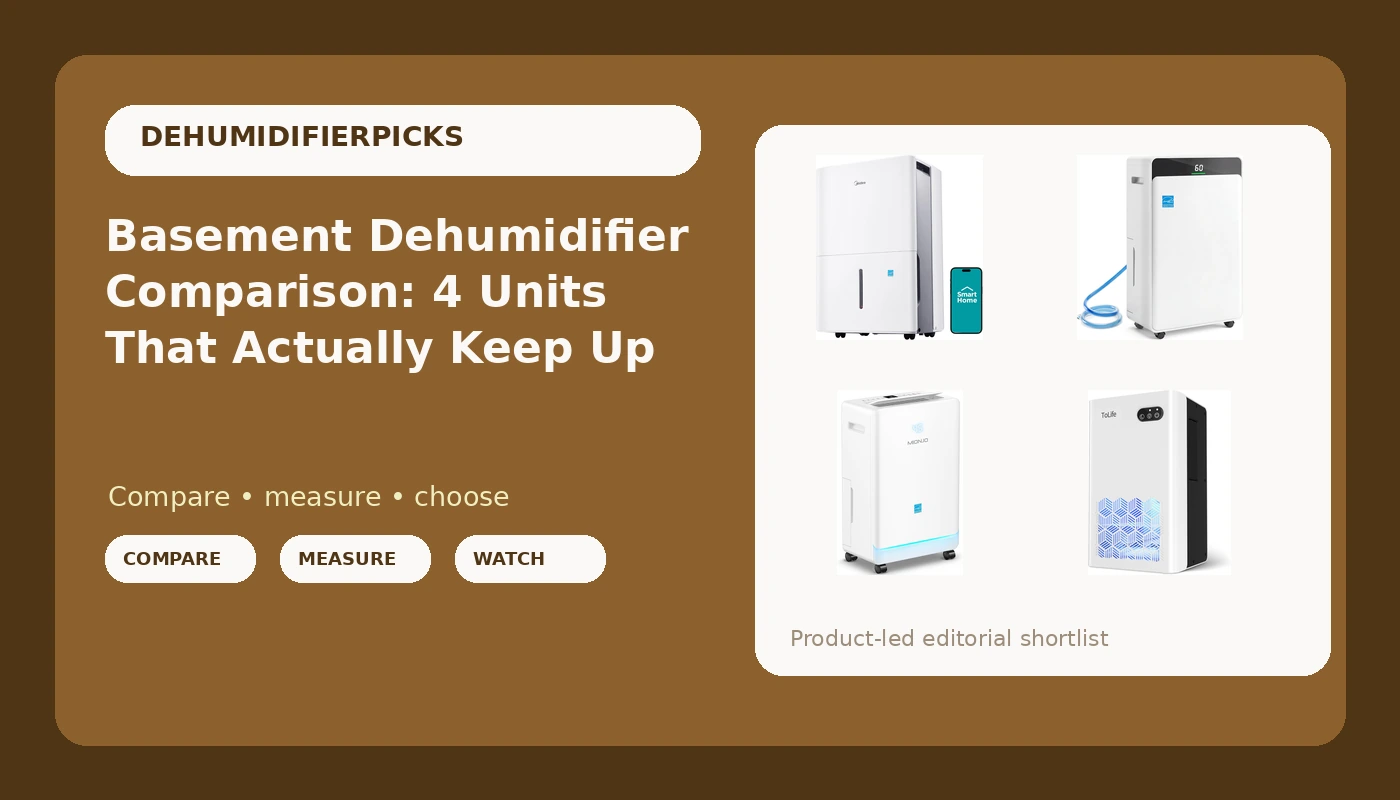
I have been an HVAC technician in New Orleans for 18 years, and most of that work happens in houses that never had central air and never had a vapor barrier. I have pulled moldy drywall out of more closets and back bedrooms than I want to remember, and in nearly every one of those houses the fix started with a machine that pulls water out of the air. This basement dehumidifier comparison is the version I would hand a homeowner before they spend a dollar: four units, what each one is actually for, and where each one falls short.
Gulf Coast humidity does not behave like humidity in a lab. It pushes through door gaps, it comes up through a slab, and it sits in a back room at 68 percent while the front of the house reads 55. I keep a hygrometer log in my own 1920s shotgun house and I carry a watt meter to every install, because the two numbers that matter are the humidity in the room and the dollars on the bill. Neither one shows up on a marketing page.
For most finished basements under 1,500 square feet, the Midea 22 pint unit is the right place to start. If your space is bigger or wetter, the 80 pint unit is the one that will hold the room. The 4,500 square foot unit is the hose-drain workhorse for a whole floor, and the small entry-level unit is a bedroom or bathroom machine, not a basement machine.
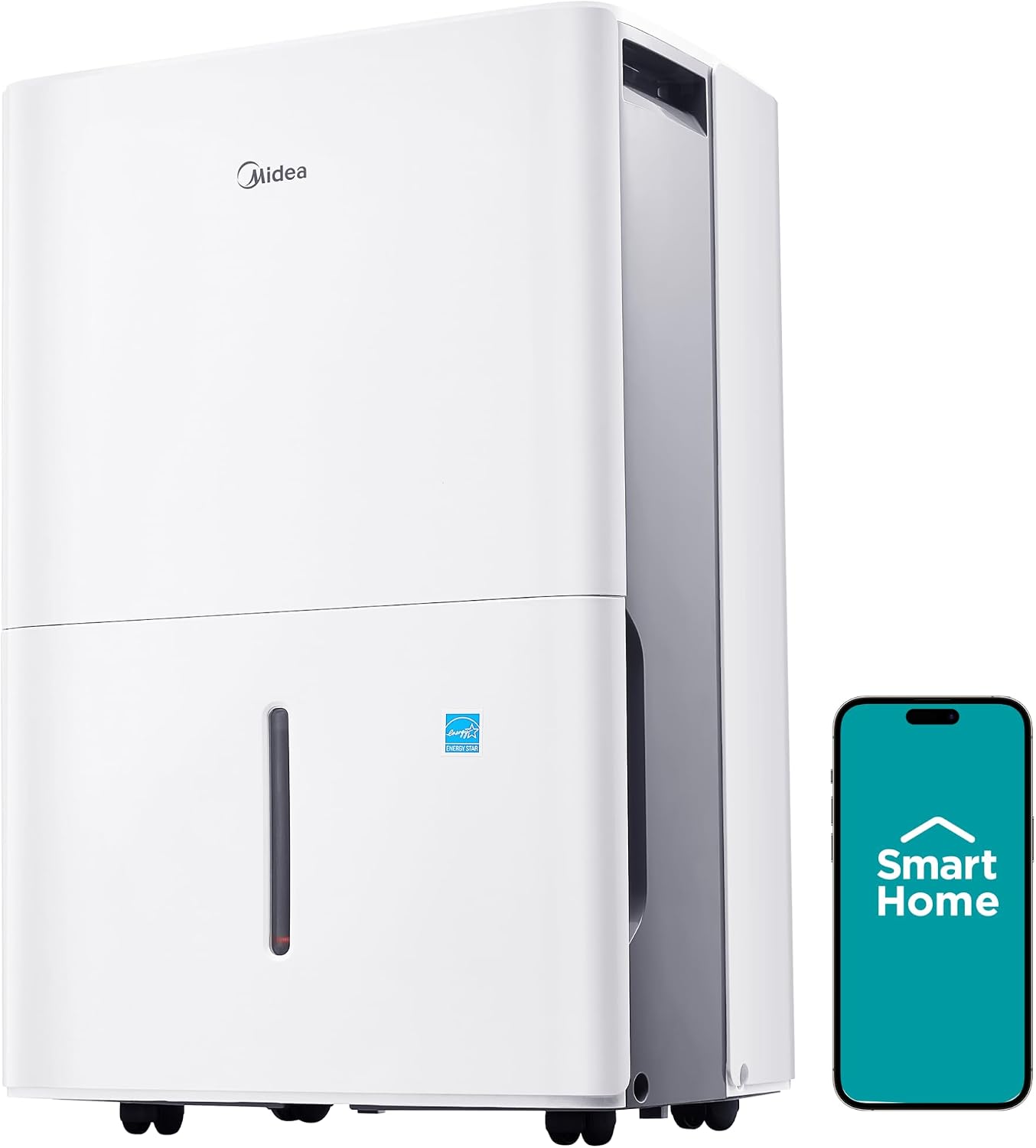
Midea 22 Pint Dehumidifier for Basement, 1,500 Sq. Ft, Energy star
A compressor brand with a real service footprint, an Energy Star rating, and a size that suits one finished room without dominating it
22 pints is a small machine in a Louisiana July, and the tank is the weak point on any unit this size
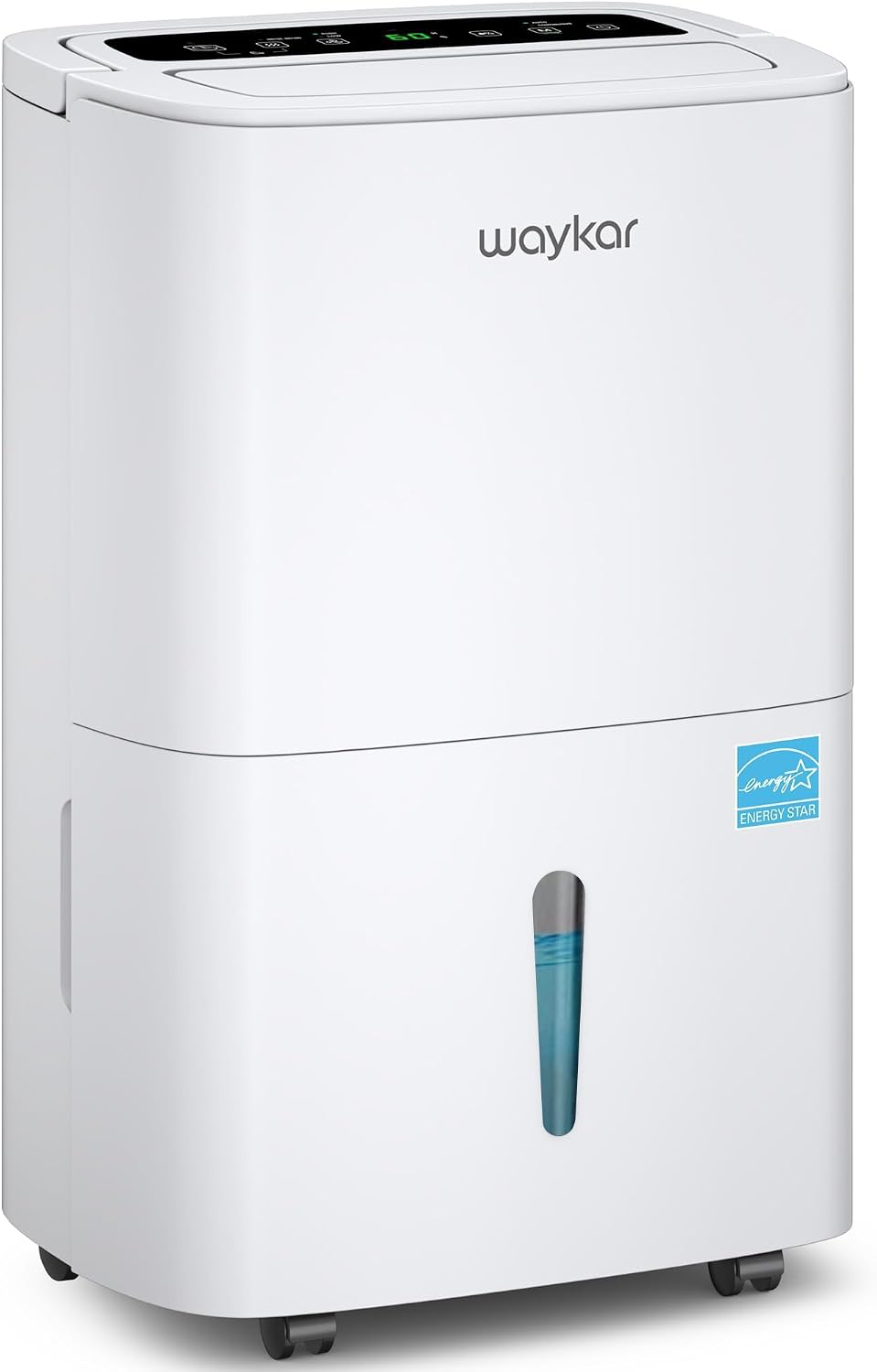
2026upgraded 80pint energy star dehumidifier for basement
The highest pint rating here, plus Energy Star, which is the combination that can hold a large wet basement instead of chasing it
Bigger cabinet, more weight, more noise, and it wants a hose drain to be worth owning
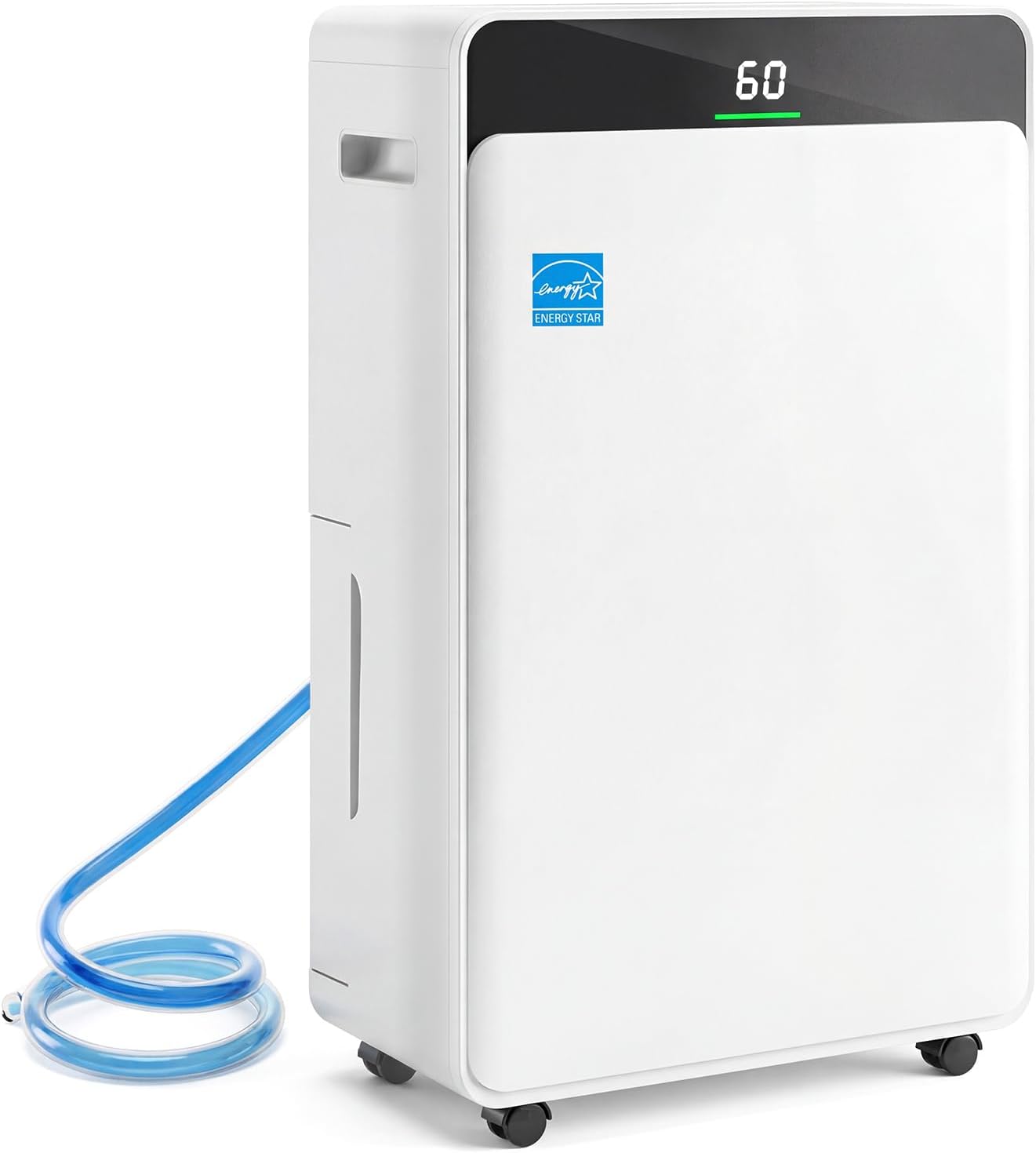
4500 Sq. Ft Dehumidifier for Basement Quilt Compressor Dehumidifiers for Home with Drain Hose, Energy Efficient, Intelligent Humidity Control, Dehumidifier for Bathroom, Bedroom, Office
A 4,500 square foot rating, a drain hose in the box, and a humidistat built for continuous duty
No track record I can speak to, and the control electronics are the part I would watch
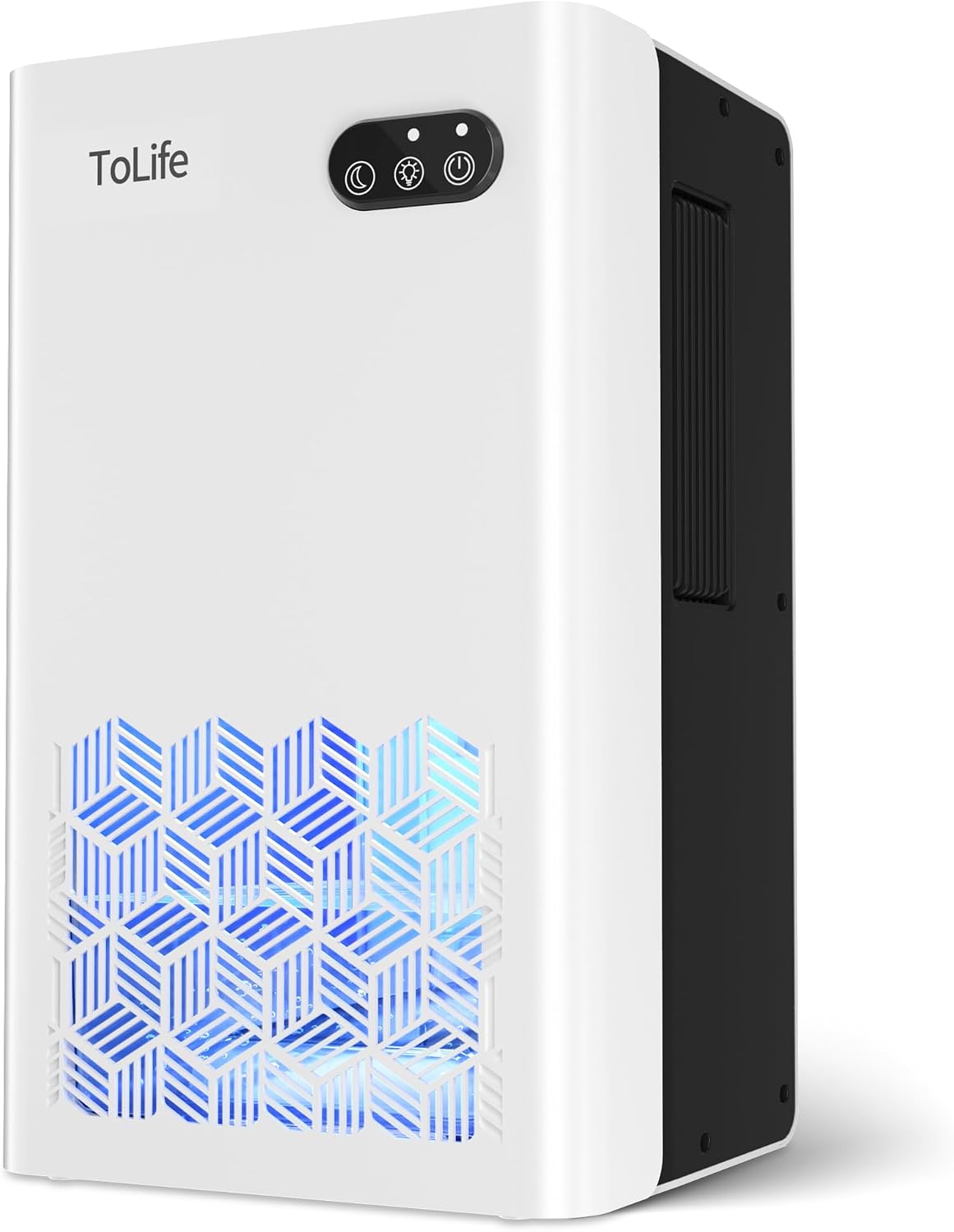
Dehumidifier
A simple entry point for one small damp room, with the smallest footprint in this group
The listing gives you nothing to size against: no pint rating, no coverage claim, no Energy Star
Prices and availability were captured from Amazon Creators API and may change.
What the pint rating actually means in a real house
The number on the box is pints per day, and it is measured under conditions that no basement I have ever stood in comes close to matching. The standard test runs a unit at a warm temperature and a moderate relative humidity, which is exactly the weather where a compressor looks its best. Your basement in February, or your slab in October, is a different job entirely.
Here is the rule I use on site: take the nameplate number and cut it by 30 to 40 percent for a real house with door gaps and no vapor barrier. That is not a knock on any manufacturer. It is what happens when the air you are drying is not the air in the test chamber. So a 22 pint machine is doing meaningful work in a closed bedroom or a small finished basement, and an 80 pint machine is the one you point at an open, unconditioned space where the walls sweat in August.
Coverage claims deserve the same skepticism. A 1,500 square foot rating assumes a ceiling height, a temperature, and a tightness of construction that your house may not have. A 4,500 square foot rating only makes sense in an open floor plan. If your basement is divided into a finished room, a laundry corner, and a storage area behind a closed door, one big unit will not dry all three evenly, and no rating fixes that.
The four units, one at a time
Midea 22 Pint Dehumidifier for Basement, 1,500 Sq. Ft, Energy star
Midea is one of the brands that actually builds compressors, and that matters more than any feature list. The 22 pint rating puts this at the small end of the group, and the 1,500 square foot coverage claim is the part I would read with a raised eyebrow during a Gulf Coast July. In a finished basement with a working vapor barrier, 22 pints is a reasonable machine for one room or one open space. In a wet crawlspace or against a sweating slab, it will run constantly and still lose ground.
What I like: Energy Star certification, a brand with a service footprint, and a cabinet that does not take over a corner. What I do not like: the tank. Twenty-two pints of water is a real bucket to carry up a staircase, and this size class is exactly where people stop emptying it and start telling everyone the machine quit working. Put it on a hose if you can.
2026upgraded 80pint energy star dehumidifier for basement
Eighty pints per day with an Energy Star rating is the combination I look for when a homeowner tells me the basement smells musty in July and they want it handled once. Apply my 30 to 40 percent derate and this is still the unit in this group that can plausibly hold a large, open, unconditioned basement under 55 percent. Holding a room at 55 is the whole game. Mold does not need a flood. It needs a wet week.
The trade-offs are honest ones. A bigger compressor means a bigger cabinet, more weight, and more noise. It also means you should plan on a hose drain from day one. Nobody is emptying an 80 pint tank twice a day in August, and a machine that shuts off on a full tank is a machine that stops working at 3 a.m. in the worst month of the year.
4500 Sq. Ft Dehumidifier for Basement with Drain Hose
This is the whole-floor option. A 4,500 square foot rating only makes sense in an open basement or a large first floor, and the fact that it ships with a drain hose and intelligent humidity control tells me the package was designed for continuous duty rather than bucket duty. The humidistat is the feature I care about most here, because a unit that cycles on the actual humidity in the room instead of a timer uses less power and keeps a steadier number on the hygrometer.
The trade-off is track record. This is not a name I have serviced, and on any brand, the control electronics are the parts that fail first. Buy it for the capacity and the hose, not for the app. If it holds a steady 50 percent through a Louisiana August, the smart features will not matter. If the humidistat drifts, they will not save it.
Dehumidifier
The name on this one is just Dehumidifier, and that is the entire spec sheet I can pass along. No pint rating, no square footage claim, no Energy Star. That does not make it a bad machine. It makes it an unknown, and unknowns belong in low-stakes rooms.
Where it fits: a bathroom that stays damp after showers, a closet that smells like a wet towel, or a bedroom where the window unit is not enough in September. It is the entry point in this group, and for one small room that is a defensible buy. What it is not is a basement solution. A basement needs a pint rating you can size against and a drain path you can trust, and this listing does not give you the first one.
Tank versus hose drain
This is the decision that separates a dehumidifier you like from a dehumidifier you resent. A tank is fine for a bedroom or a bathroom, where the unit runs a few hours a day and you walk past it anyway. A hose is mandatory for a basement or anything covering a whole floor, and I install hose kits as often as I install units.
Think about the failure mode, not the convenience. When a tank fills, the machine shuts off, and it shuts off in the middle of the night during the wettest week of the year, which is precisely when you needed it running. Every one of the four units here is better on a hose if the room allows it. The 4,500 square foot listing includes one, which is the kind of detail I wish every manufacturer copied. For the others, a hose kit costs less than a takeout dinner and takes fifteen minutes.
One more thing on tanks: a tank that sloshes when you carry it will end up on the floor eventually. If you must run on a tank, empty it before it is full, not when the machine tells you to.
Compressor versus desiccant, and the temperature split
Most reviews skip the temperature question entirely, and it is the one that decides whether you are happy in February.
Compressor units, which is what this group is built around, win in warm, humid air. That is the Gulf Coast condition, and it is why a compressor machine is the right call for a Louisiana basement, a Florida garage, or a damp Southern bedroom. They move a lot of water per watt when the room is warm.
Desiccant units win in cold basements, where a compressor's coils get too cold to work efficiently and the machine frosts up or stalls. If your basement sits in the 50s through the winter, a desiccant unit earns its higher price. If your basement sits in the 70s and the air feels like a wet blanket, you want a compressor, and everything in this comparison is aimed at that job.
What the watt meter math looks like
Energy use is a monthly bill, not a spec, and I run a watt meter on every unit I install for a week before I tell a homeowner what to expect. I do not have meter readings for these four units in front of me, so I will not invent them. What I can tell you is how the math works.
A unit that runs continuously draws far more than one that cycles. That is why the humidistat setting matters more than the Energy Star sticker. Set it at 50 to 55 percent and let the machine rest. Set it at 35 and you have bought a very expensive way to dry a room that will never get there.
As a rough rule, every 100 watts running around the clock is real money on a Louisiana utility bill by the end of the month. An oversized unit that cycles properly can cost less to run than a small unit that never shuts off. That is the counterintuitive part, and it is why I do not automatically steer people to the smallest machine.
Smart features and the support calls they generate
I have reset more Wi-Fi modules than compressors. The app is a support call generator, and the humidistat is the feature that actually does the work. Two things I check on any new unit: whether the humidistat agrees with my hygrometer, and what the machine does after a power outage. I have seen units come back in fan only, which means they are moving air and pulling no water while the homeowner thinks everything is fine.
Filters are the other quiet cost. A filter that costs real money and needs replacing every month turns a cheap machine into an expensive one. Washable is better. Whatever you buy, check the filter price before you check the app reviews.
Which one I would buy
For a finished basement up to about 1,500 square feet with a vapor barrier and a drain path, the Midea 22 pint unit is the sensible buy, and it is the one I would put in a bedroom or a small den without a second thought.
For an open, unconditioned basement that smells musty by June, the 80 pint unit is the one that will actually change the number on your hygrometer, and it is worth the extra noise and weight.
For a whole floor, a large open basement, or a space where you want the machine plumbed and forgotten, the 4,500 square foot unit with the included drain hose is built for exactly that.
For a bathroom, a closet, or one muggy bedroom, the entry-level unit is a reasonable small-room pick, as long as you are honest with yourself that it is not a basement machine.
Whichever you choose, buy the hose, set the humidistat at 50, and put a cheap hygrometer in the room. The machine only has one job, and the hygrometer is how you find out whether it is doing it.