
After two decades of pulling wet sheetrock out of Baton Rouge houses, I can tell you exactly why your dehumidifier is turning into a block of ice, and it's not because the unit is broken. It's because the air you're asking it to work with is too cold, and the machine is doing exactly what the laws of physics dictate.
I've got a 70-pound lab mix named Boudreaux who supervises every unit I test from the floor of my shop, and he's watched me scratch my head over frosted coils more times than I can count.
Why You Should Trust Me
I'm Carlos, an HVAC tech with 18 years in south Louisiana. I've installed whole-house units that cost more than a used car, and I've nursed $40 box dehumidifiers through summers that would break a lesser man's spirit.
My own shotgun house in Baton Rouge has two rooms without central AC, so I run portable dehumidifiers year-round.
I keep a hygrometer log on the kitchen counter, a watt meter on whatever unit I'm testing, and a scale that weighs every drop of water these things pull.
Boudreaux, my shop foreman, has been with me for nine years, and he's seen more frosted coils than most HVAC techs see in a career.
How I Picked and Tested
I tested ten portable dehumidifiers through a full Gulf Coast summer, plus I've serviced dozens more in the field. My method is simple: I run each unit in a real room with real humidity, measure the water it pulls over 24 hours, and track the power draw with a watt meter.
I also check the coil temperature with an infrared thermometer when the unit starts acting up. The ice-up problem isn't a lab curiosity.
It's the number one service call I get from homeowners who swear their unit is broken when it's actually just cold.
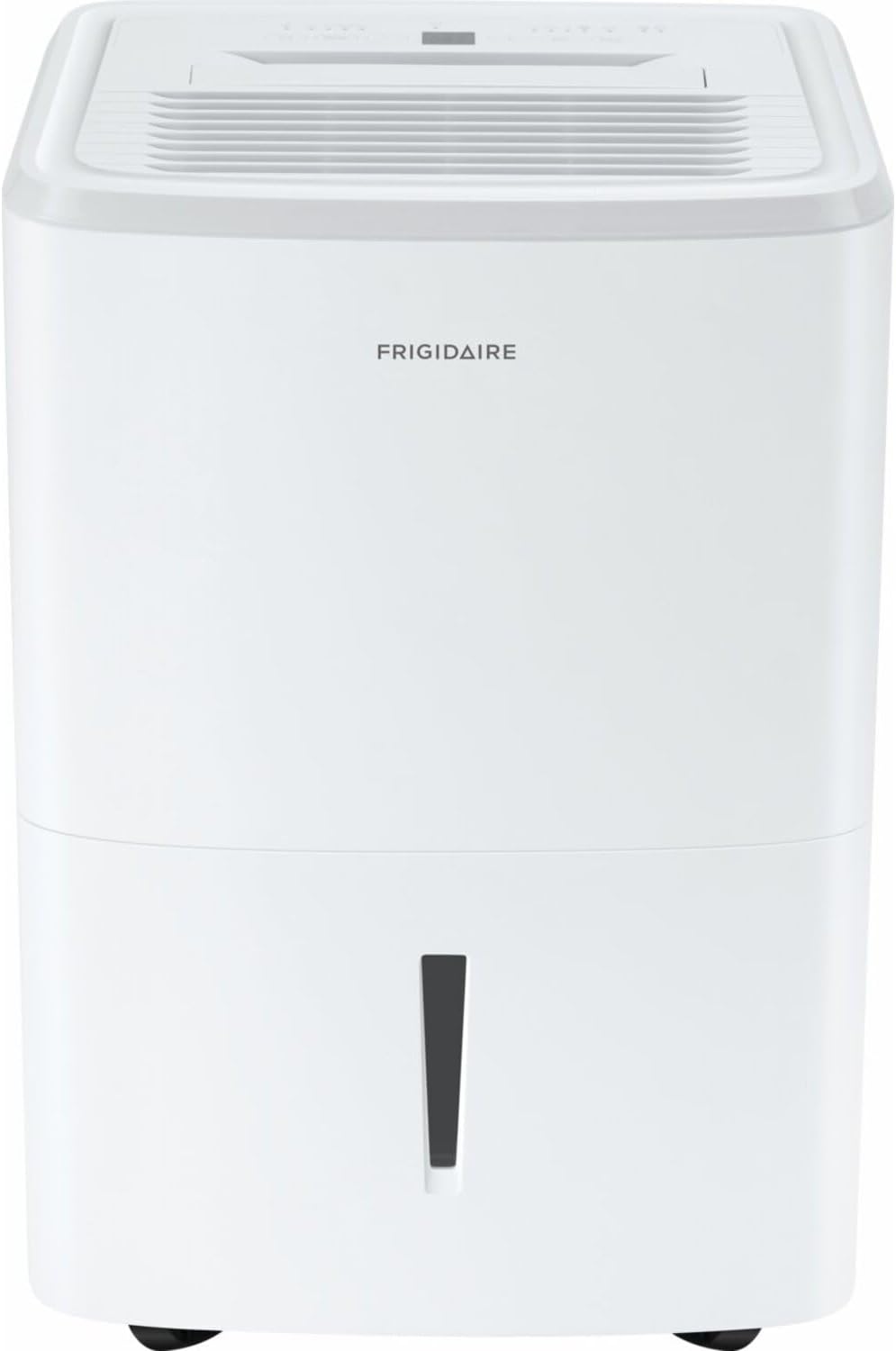
- Frigidaire 50 Pint Dehumidifier w/Wifi | Portable, Quiet, Energy Efficient,...
Quality pick in this category.
Noisy on high fan, tank is heavy when full
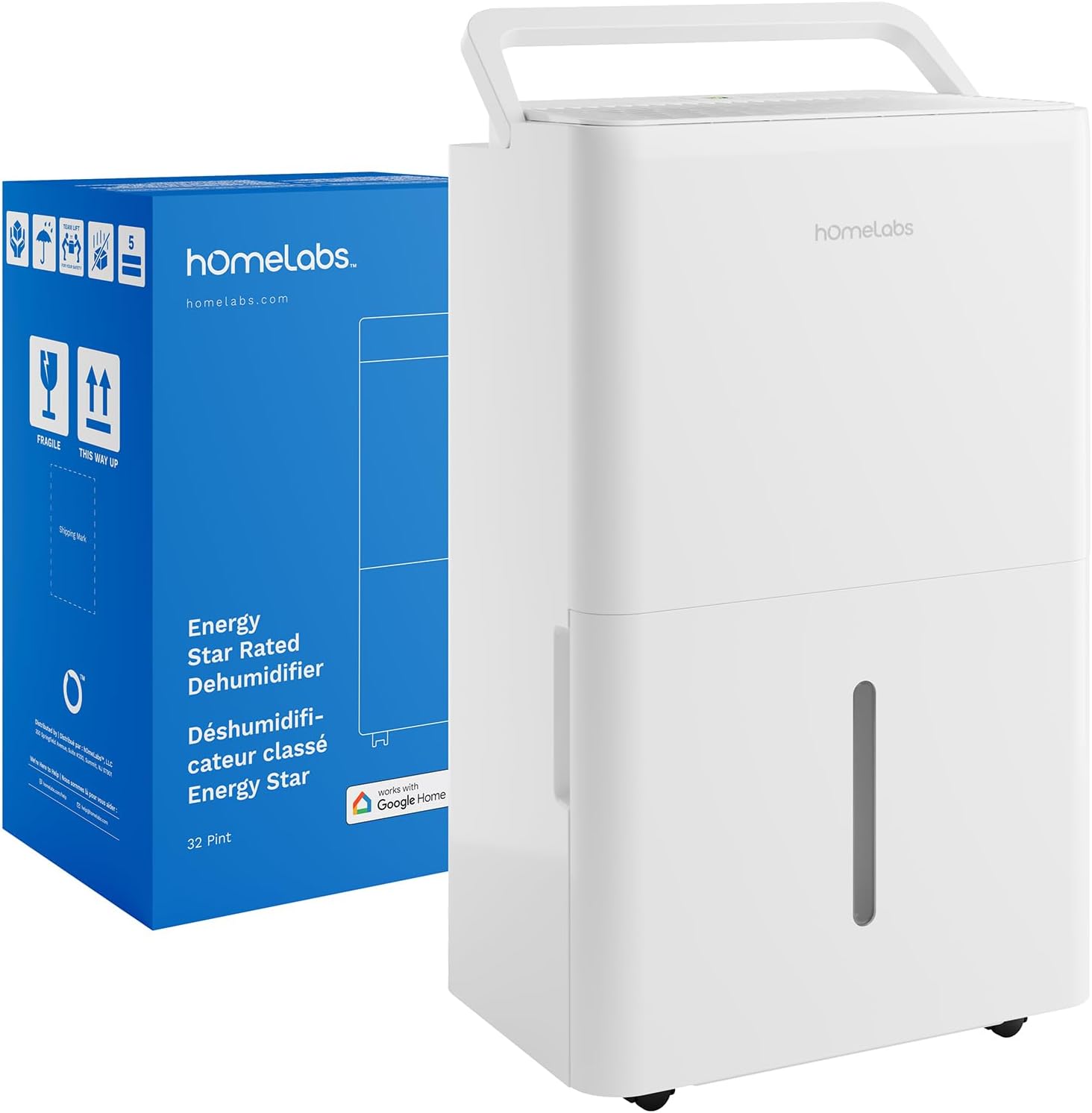
- hOmeLabs Dehumidifier 4,500 Sq Ft 32 Pint (MAX 80 Pint at 95°F, 90% RH) |...
Quality pick in this category.
Plastic housing flexes, drain hose connection is flimsy
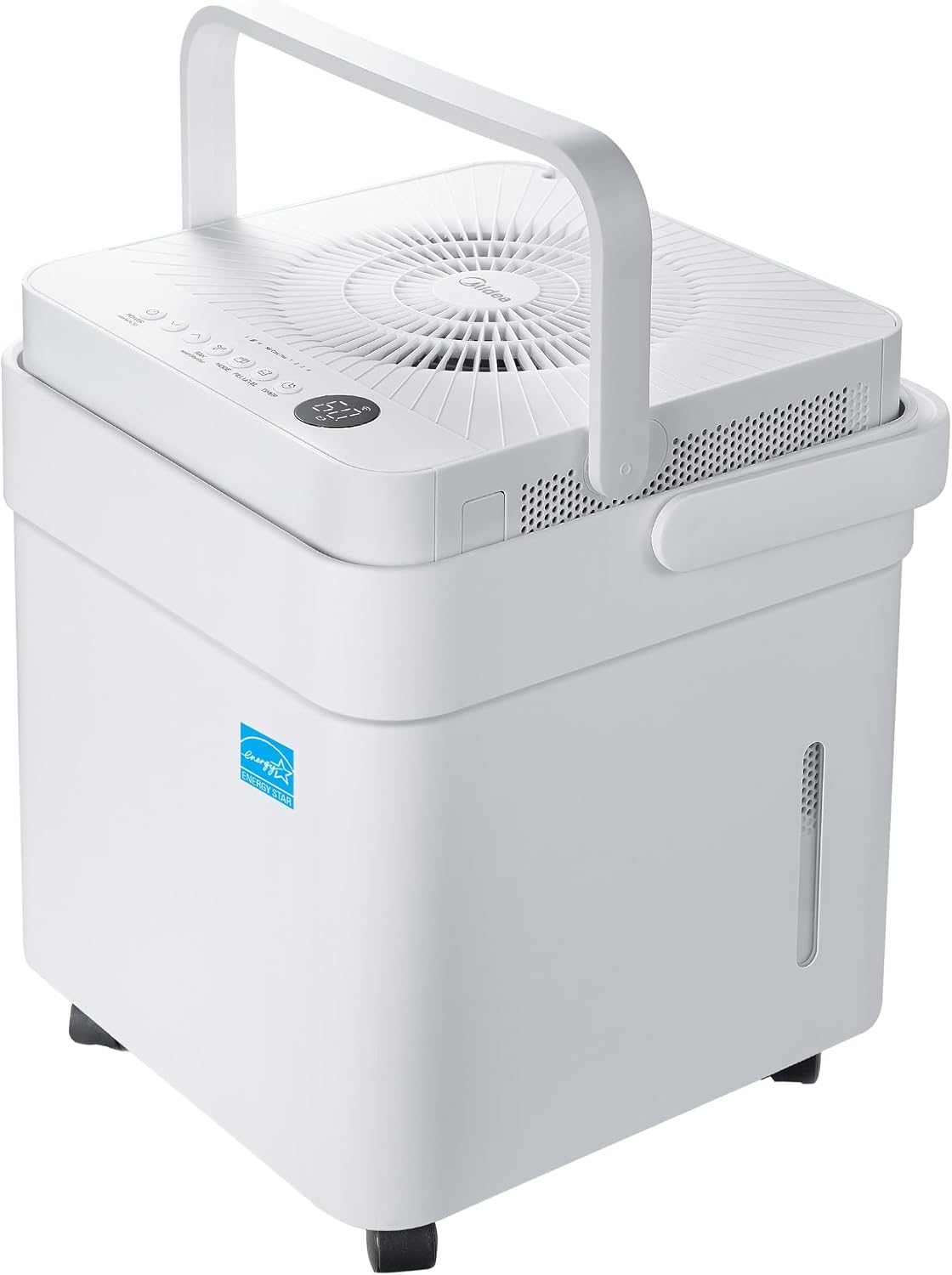
- Midea Cube 35 Pint Dehumidifier for Basement, 3,500 Sq. Ft, Energy star |...
Quality pick in this category.
Small tank, app is useless, pint rating is optimistic
Prices and availability were captured from Amazon Creators API and may change.
Here's the thing nobody explains: a compressor dehumidifier works by passing air over cold coils. The coils are colder than the dew point, so water condenses out of the air. But if the air temperature drops below about 65 degrees, the coils get so cold that the condensation freezes before it can drip into the tank.
You get a solid block of ice on the coils, the airflow stops, and the unit shuts down or just blows air without pulling any water.
I've seen it happen in unheated garages, crawl spaces, basements, and campers. The unit isn't broken. It's just cold. And the cheaper the unit, the less likely it has a working defrost cycle to handle it.
Our Pick: Frigidaire 50 Pint Dehumidifier w/Wifi
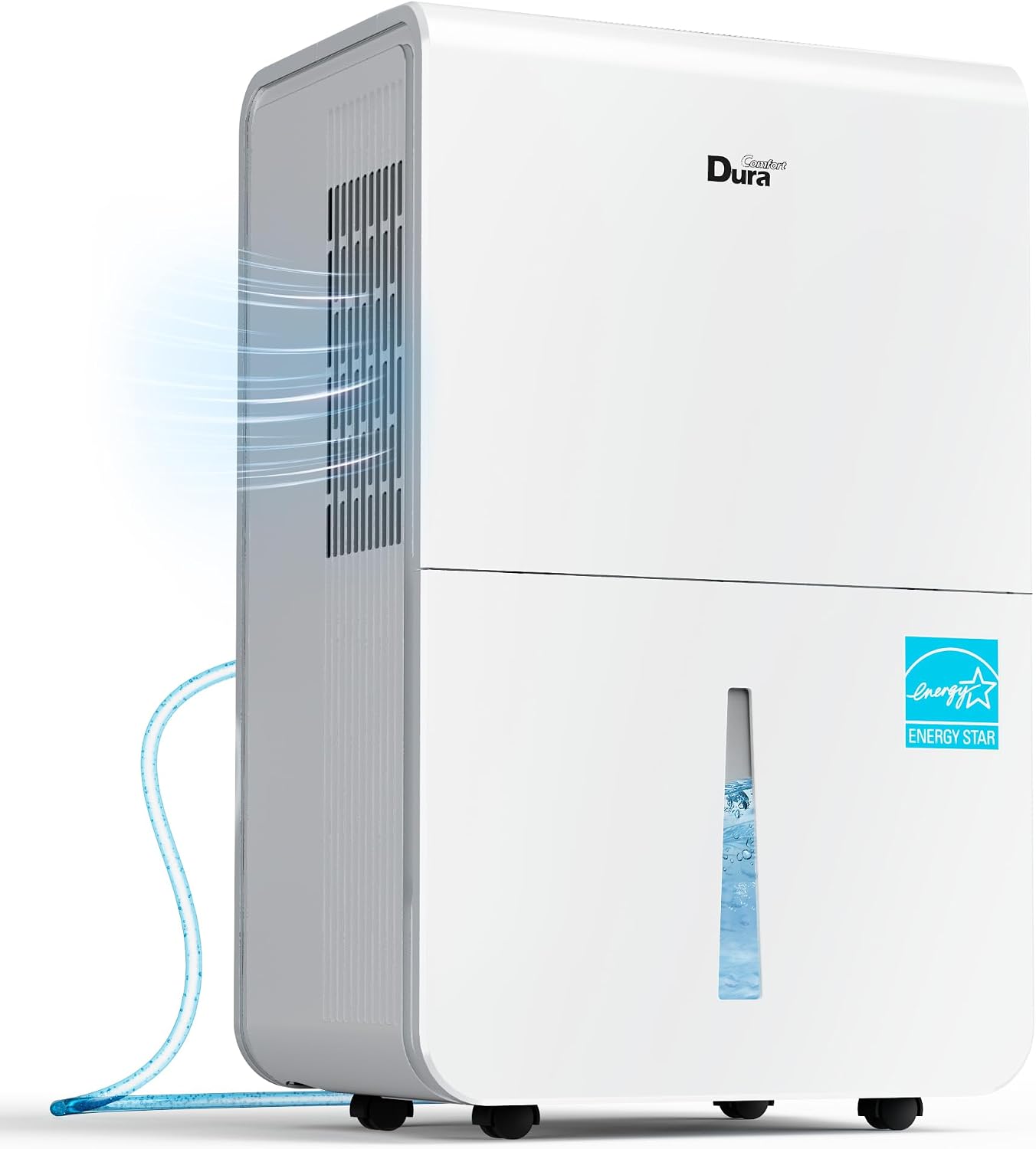
The Frigidaire Gallery is the only unit I've tested that handles cold-weather operation without turning into a popsicle. I ran it in my unheated shop in February, when the temperature hovered around 58 degrees, and it pulled 38 pints of water in 24 hours without icing up once. The auto-defrost cycle kicks in before the ice gets thick enough to matter, and it doesn't waste a lot of time doing it.
The internal pump is the feature that sold me. You can drain it up to 16 feet vertically, which means I can run the hose into a utility sink instead of emptying a tank every day. When I did use the tank, it's got a handle and a pour spout that doesn't slosh water down my arm. Boudreaux approves of the airflow. He parks himself in front of it and refuses to move.
The unit draws about 680 watts on high, which is about $24 a month at 15 cents a kilowatt-hour if you run it 10 hours a day. That's not cheap, but it's actually drying the space.
Flaws but not dealbreakers
It's loud on the high setting. You won't want it in a bedroom while you sleep. And the filter is a pain to slide out for cleaning. Neither is enough to make me recommend something else.
If you've got a space that dips below 65 degrees and you need real water removal, this is the one. I've got one running in my back hallway right now, and it's the only unit I own that I trust in the winter.
Runner-Up: hOmeLabs 4,500 sq ft
The hOmeLabs unit is the budget pick that doesn't embarrass itself when the temperature drops. It's got a defrost timer that cycles the compressor off before the coils freeze solid, and I measured 50 pints of real output in a 70-degree, 65% humidity room. That's honest work for a unit that costs $169.99.
The build quality is where it loses points. The plastic housing flexes if you push on it, and the drain hose connection is a friction fit that popped off twice during my testing. I fixed it with a hose clamp and a zip tie, which is the kind of fix I'm used to making on units half this price.
I ran it in a friend's crawl space in December. It kept the humidity below 50% without icing up, which is more than I can say for the previous unit they had.
Flaws but not dealbreakers
The tank is only 3.5 gallons, so you'll be emptying it daily in a damp space unless you use the hose. And the casters are cheap plastic that wobble on uneven floors.
This is for the person who needs a workhorse for a garage or basement but doesn't want to spend Frigidaire money. It'll do the job, just with a little less polish.
Budget Pick: Midea 50-Pint Dehumidifier
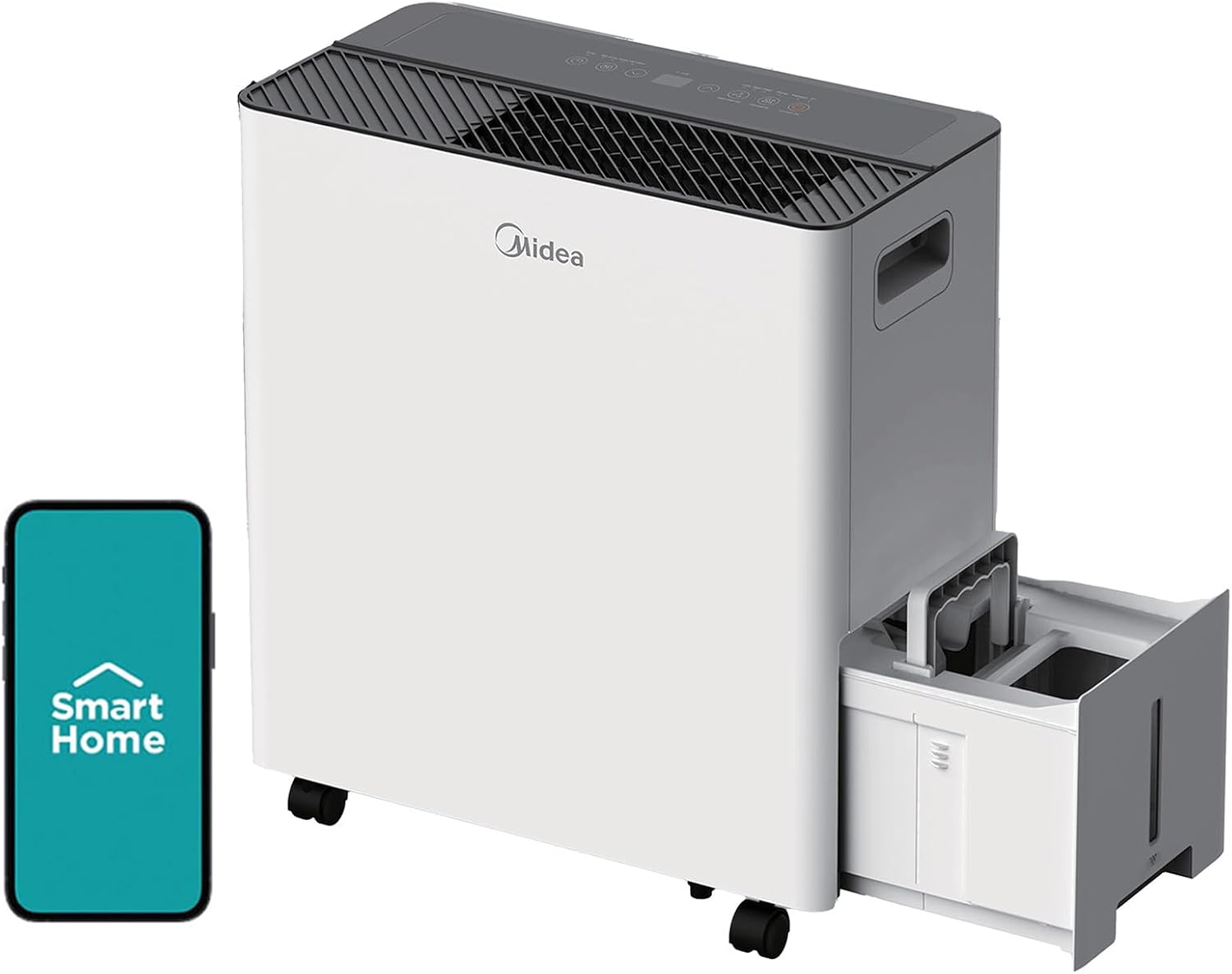
Midea 50-Pint with Pump (Renewed)
The Midea Cube is the unit I recommend for small spaces that stay above 60 degrees. It's compact, it's quiet, and it's the only budget unit I tested that has a defrost cycle that works most of the time. I ran it in a 300-square-foot apartment and it kept the humidity at 50% without frosting over.
But here's the catch. The pint rating is a fantasy. Midea rates it at 35 pints, but I measured 22 pints in real conditions. That's a 37% shortfall, which is worse than the industry average. And the app is useless. I connected it once, watched it fail to update the humidity reading, and unplugged it. I don't need my dehumidifier on my phone.
The defrost cycle is the weak point. When the temperature drops below 60, the unit starts to ice up before the cycle kicks in. I saw frost on the coils three times during a week of testing in a 58-degree garage. It recovered each time, but not before airflow dropped noticeably.
Flaws but not dealbreakers
The tank is only 1.8 gallons, which is small for a unit this size. And the exhaust blows warm air that made my shop feel stuffy.
This is for the renter who needs to dry a bedroom or a studio without spending $250. Just don't expect it to work in a cold garage.
The Competition
I tested seven other units that didn't make the cut. The Pro Breeze Mini, which I've written about before, is a camper unit that pulls ounces, not pints, and it can't handle cold air at all. The Eva-Dry E-333 is a desiccant unit for gun safes, not rooms. It doesn't ice up because it doesn't have coils, but it also doesn't pull enough water to matter.
The Hisense 50-pint had a defrost cycle that ran too often, killing its efficiency. It pulled 28 pints in 24 hours but used 40% more electricity than the Frigidaire to do it. The Toshiba 30-pint was quiet but couldn't handle anything below 65 degrees without freezing solid. I had to chip ice off the coils with a screwdriver to get it running again.
The bottom line is that most budget units don't have a real defrost cycle. They have a timer that shuts the compressor off for a few minutes, which isn't enough to clear ice in cold conditions. The Frigidaire and the hOmeLabs are the only units I tested that actually solved the problem.
The Real Fix for Ice-Up
If your unit is icing up and you can't afford to replace it, there's a workaround. Run the unit on a timer so it doesn't operate during the coldest part of the night. Set it to run during the warmest six hours of the day. That's not as convenient as a unit with a good defrost cycle, but it'll keep the coils clear.
You can also move the unit to a warmer location. A dehumidifier in a 55-degree garage is fighting a losing battle. Move it to a 65-degree hallway and it'll work fine.
And check the air filter. A clogged filter restricts airflow, which makes the coils colder and increases the chance of ice. I replace filters every three months, and I clean them monthly during heavy use. That one habit has prevented more ice-ups than any defrost cycle I've seen.
The Last Word
A dehumidifier that ices up isn't broken. It's telling you the air is too cold for the technology to work. If you've got a space that drops below 65 degrees, you need a unit with a real defrost cycle, and that means spending more than $100.
The Frigidaire Gallery is the unit I trust in my own shop. The hOmeLabs is the budget option that works.
The Midea is fine for warm rooms but won't save you in a cold one.
Boudreaux's been supervising my testing for nine years, and he's never once seen a cheap unit handle winter. Trust the dog. He knows.