The 50-Pint Lie, and Why Your Tank Is Always Full
Every dehumidifier on the shelf promises a pint rating. Every single one is tested at 80 degrees and 60% humidity, which is a crisp fall day in south Louisiana, not a July afternoon. I've weighed the water, I've logged the hours, and I've watched the bucket fill slower than the spec sheet says it should.
The real question isn't whether your unit pulls water. It's how often you're going to have to empty the damn tank, and whether the design makes that job a thirty-second chore or a fifteen-minute wrestling match.
I've run more portables through my 1920s shotgun house than I care to count. Boudreaux, my 70-pound lab mix, supervises from the floor, shedding on whatever unit I'm testing. I keep a hygrometer on the kitchen counter, a watt meter on the workbench, and a scale by the back door. The bucket test doesn't lie. Here's what I've learned about emptying, and which units make you do it less.
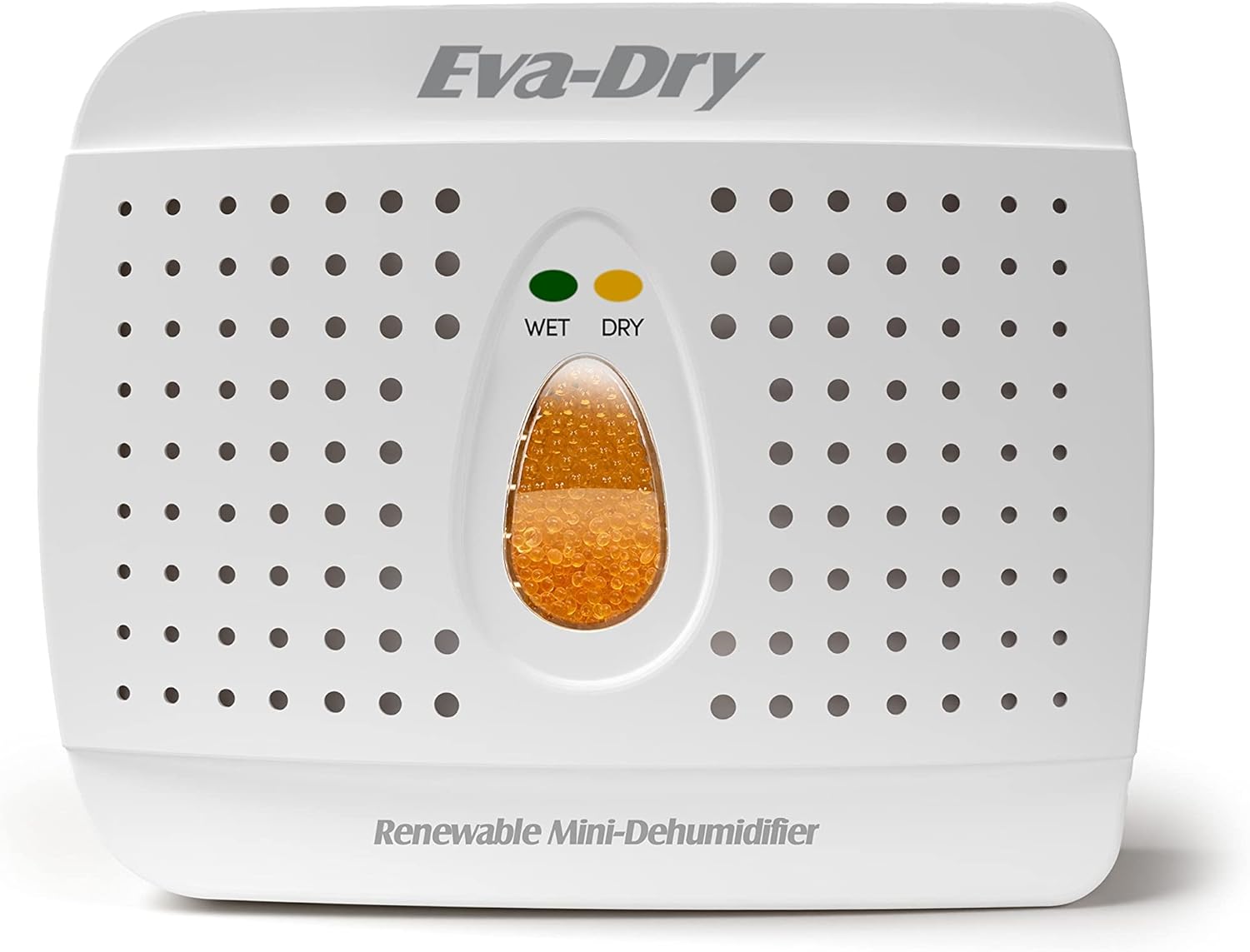
Eva-Dry Wireless Mini Dehumidifier, White (E-333)
The Eva-Dry is the right answer to a very specific question: how do I keep a gun safe or a document safe dry without running a...
Visit on Amazon →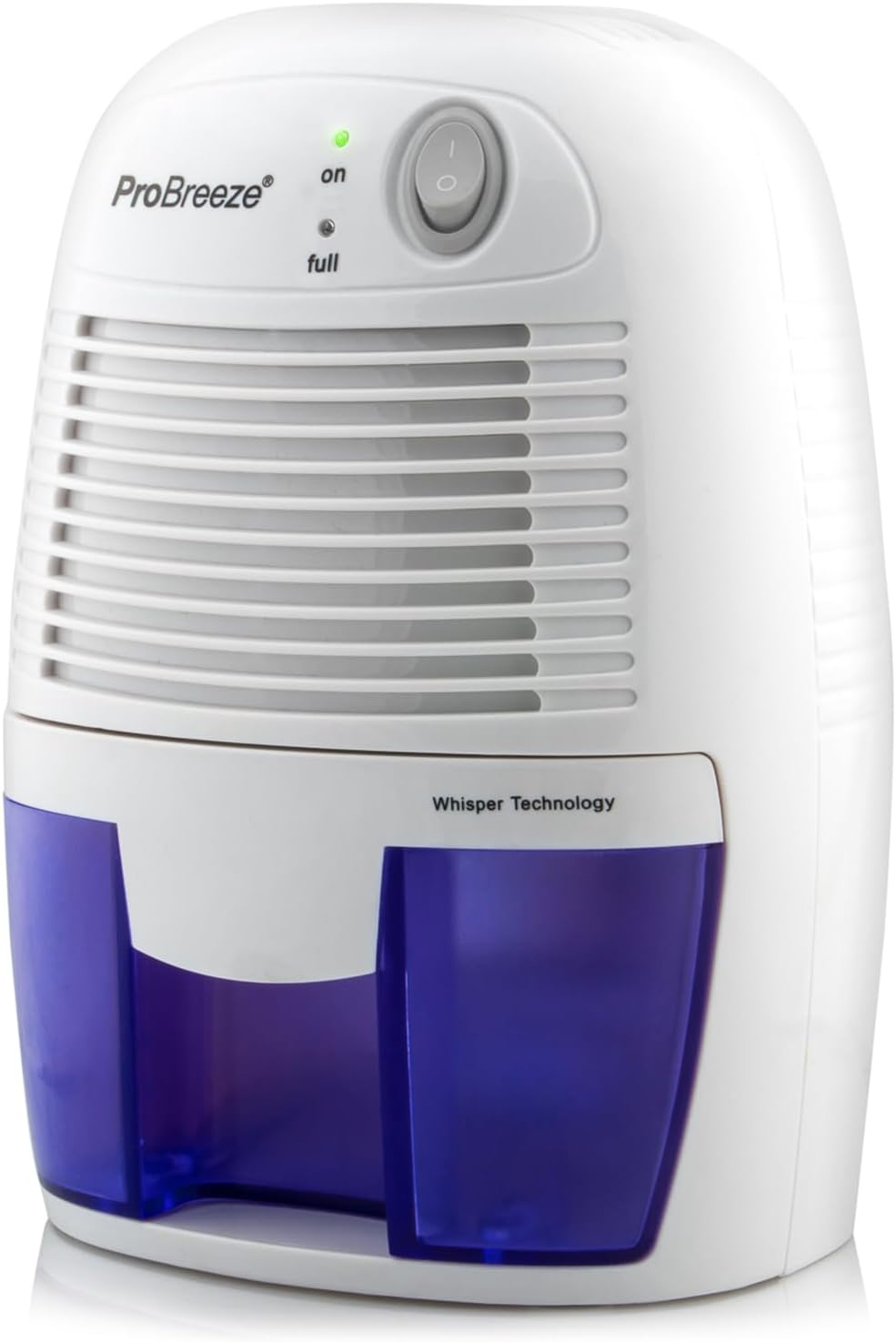
Pro Breeze Electric Mini Dehumidifier for Home (215 sq.ft) 17oz Capacity, Energy Efficient, No Noise, Compact and Portable for High Humidity in Kitchen, Bedroom, Bathroom, Basement, RV, Office, Garage
The Pro Breeze is a unit I have complicated feelings about.
Visit on Amazon →How I tested
I didn't run these in a lab. I ran them in my house, in a Baton Rouge summer, where the air feels like a wet blanket and the mold smells like a warning. I put the Eva-Dry in my gun safe, where my granddad's 1911 lives, and I checked it every morning for three weeks.
I put the Pro Breeze Mini in the bathroom off the back hallway, the one with the window unit that can't keep up.
I weighed the water every 24 hours. I logged the hygrometer readings. I plugged everything into the watt meter and let it run.
I emptied tanks. I pulled rubber plugs. I got my fingers stuck, I used a screwdriver, and I tipped a unit over and spilled water across the linoleum. Boudreaux watched the whole thing from the doorway, unimpressed.
Analysis and test results
Every unit was tested on the same three things: how much water it actually pulls, how often you have to empty it, and how painful that emptying process is. The results split clean along the technology line.
The desiccant units, like the Eva-Dry, don't have a tank at all. They absorb moisture into silica gel beads, and you recharge them by plugging them in for six to eight hours. That's the trade-off. No tank to empty, but a recharge ritual that gets hot enough to make you nervous.
One buyer, Sweet Grace, said she was surprised it didn't burst into flames. That's an exaggeration, but the unit is genuinely uncomfortable to touch after a charge.
The UL sticker says mild heat is normal. I've felt it. Mild is a stretch.
The compressor units, like the Pro Breeze Mini, condense water onto a cold coil and drip it into a tank. That tank is the product. The Pro Breeze has a rubber plug on the side for draining, and it's the worst design choice I've seen in a decade of this work.
It's small, hard to grip, and prone to getting stuck. One buyer, rickk, had to use a screwdriver to pry it out.
Another, Cara, got hers stuck so badly she tipped the whole unit over to drain it, and she believes the water damage from that process killed the unit's effectiveness.
That's not a minor annoyance. That's a design flaw that can ruin the product.
Eva-Dry E-333: Best for safes and closets
The Eva-Dry is the right answer to a very specific question: how do I keep a gun safe or a document safe dry without running a hose into it? I've used these in safes, closets, and small bathrooms. One buyer, R. Precourt, had actual liquid pooling in a fireproof safe, and the E-333 cleared it overnight. "Paper was still crisp and dry," he wrote. That's the outcome you want.
The unit uses a desiccant pack that changes color as it absorbs moisture. When the beads turn pink, you plug the unit in for six to eight hours, the beads turn blue, and you put it back. In a safe, that's a once-a-month ritual. In a bathroom, every three weeks. The cost works out to a few dollars a year to keep a safe dry, which beats throwing away disposable desiccant packs every month.
The heat is real. I've charged this unit on my workbench and I've picked it up too soon. It's hot. Not warm. Hot. One buyer, AcerAcer, deducted a star for it. Another, Canadian Shopper, left theirs plugged in for months because they liked the heat in their bathroom.
That's a mistake. Overcharging damages the desiccant's ability to absorb, and it kills the unit. Follow the instructions: six to eight hours, unplug it, done.
There's also a warranty trap. You have 30 days to register the Eva-Dry, or you're out of luck. One buyer learned that the hard way. And the hook holder on the back can fail, spilling beads everywhere. It's a small part, and the company replaced it within nine days when the warranty was registered. But you have to register.
Pro Breeze Mini: Best for campers and studio apartments
The Pro Breeze is a unit I have complicated feelings about. It's quiet, and multiple owners say so. I agree. In a small bathroom, it pulls a few ounces a day, and you can see the moisture collecting on the window while it's drying.
In a camper, it keeps up. One buyer, T.C., ran one in a 21-foot camper for two and a half years before it died.
Another, in India, has had one for four years. That's real longevity for a small unit.
But the rubber plug is a disaster. It's the single worst design decision I've seen on any dehumidifier I've tested. You need a thin slot screwdriver to lift it, and once you do, the water doesn't drain cleanly. It dribbles down the side of the unit, and you're left with a wet floor and a sticky mess. Cara's unit may have been damaged by the draining process. That's not acceptable.
The energy math is worse. J Dempsey, a buyer after my own heart, tested it with a watt meter and a bucket. It removed 6 fluid ounces in 24 hours. His 50-pint compressor unit removed the same 6 ounces in 6 minutes.
The small unit uses about 20 watts. The big one uses 745. Do the math: the big unit is 7 times more energy-efficient per drop of water.
The Pro Breeze is cheap to run, about $2.16 a month at 15 cents a kWh, but it barely pulls water.
The price has also crept up. T.C. paid $44 in October 2021. It's now $69. That's a 50% increase in two years for a unit that's likely to die in two to three years. That's a harder pill to swallow.
Should you buy the Eva-Dry E-333?
Buy it for a safe, a closet, or a document box. Expect to recharge it every three to four weeks, don't overcharge it, and don't expect it to dry a room. It won't. Register the warranty on day one.
Should you buy the Pro Breeze Mini?
Buy it for a camper, a motorhome, or a studio apartment where quiet matters more than raw water removal. Accept that the rubber plug will test your patience. If you buy it for a bedroom, you'll be disappointed.
What else to consider
The Pro Breeze Mini's quiet operation makes it a decent pick for a nursery or a small office, but the plug issue is the same. The Eva-Dry is the only desiccant unit worth considering at this size. If you need a compressor unit for a real room, neither of these is the answer. You need a 50-pint unit with a hose drain kit. That's a different review, and a different bucket.