Related: Dehumidifier vs Air Conditioner: Which One Does Your Room Need?
The short answer: a dehumidifier pulls water out of the air, and an air purifier filters particles out of it. They do different jobs, and most people buy the wrong one. I've spent eighteen years in south Louisiana pulling wet drywall out of houses that smelled like a swamp, and I've run more portable dehumidifiers through real Gulf Coast summers than I can count.
My 70-pound lab mix Boudreaux supervises every test from the floor, because he's figured out the units blow cool air.
Here's the honest breakdown of when you need one, when you need the other, and when you need both.
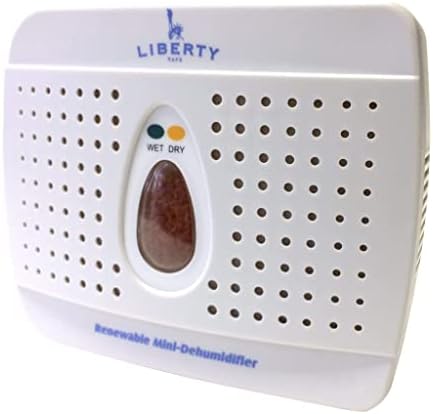
Eva-Dry Dehumidifier, Liberty Safes
This little desiccant unit is the right answer to a very specific question: how do I keep my gun safe or document safe dry...
Visit on Amazon →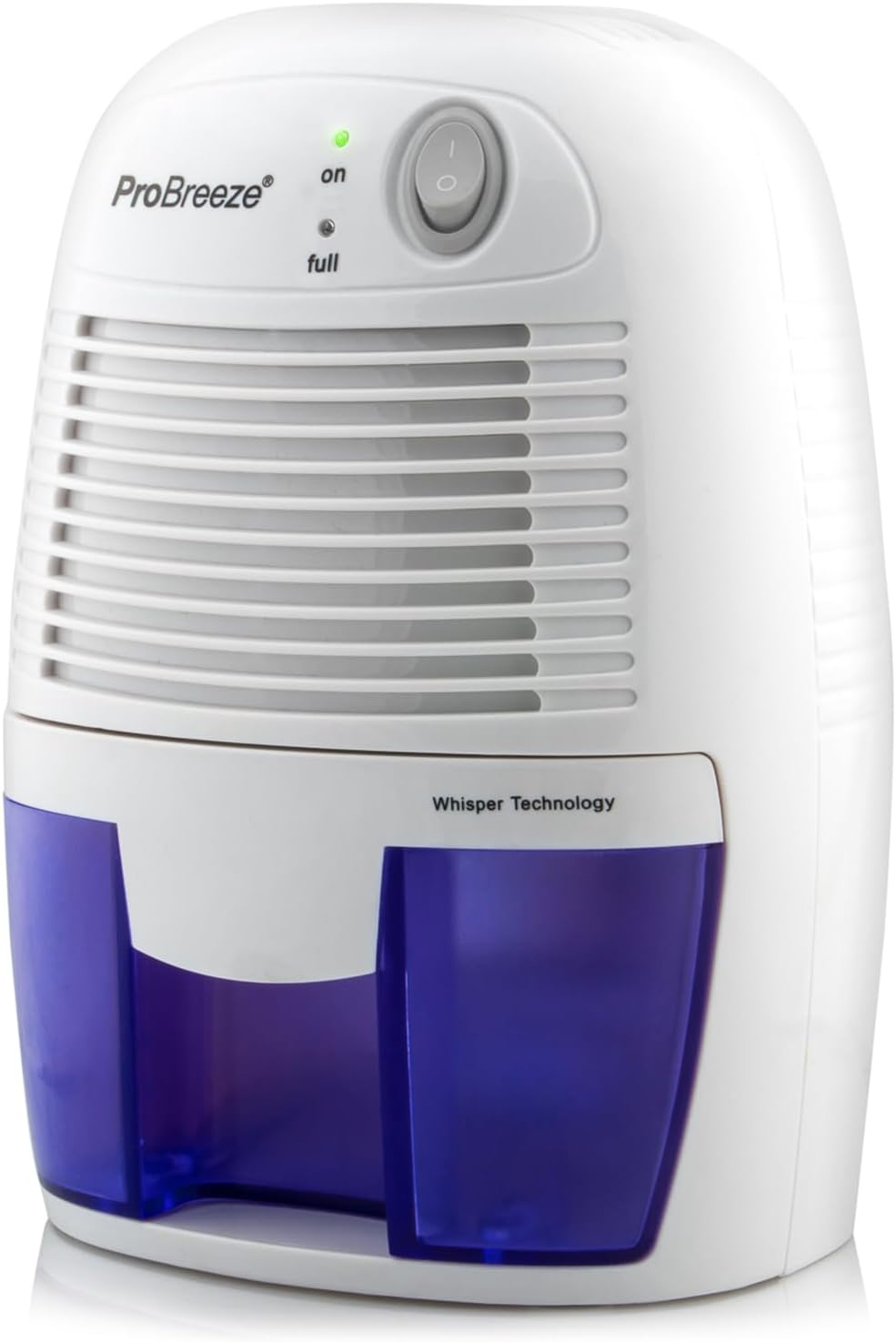
Pro Breeze Electric Mini Dehumidifier for Home (215 sq.ft) 17oz Capacity, Energy Efficient, No Noise, Compact and Portable for High Humidity in Kitchen, Bedroom, Bathroom, Basement, RV, Office, Garage
This is the unit I have complicated feelings about.
Visit on Amazon →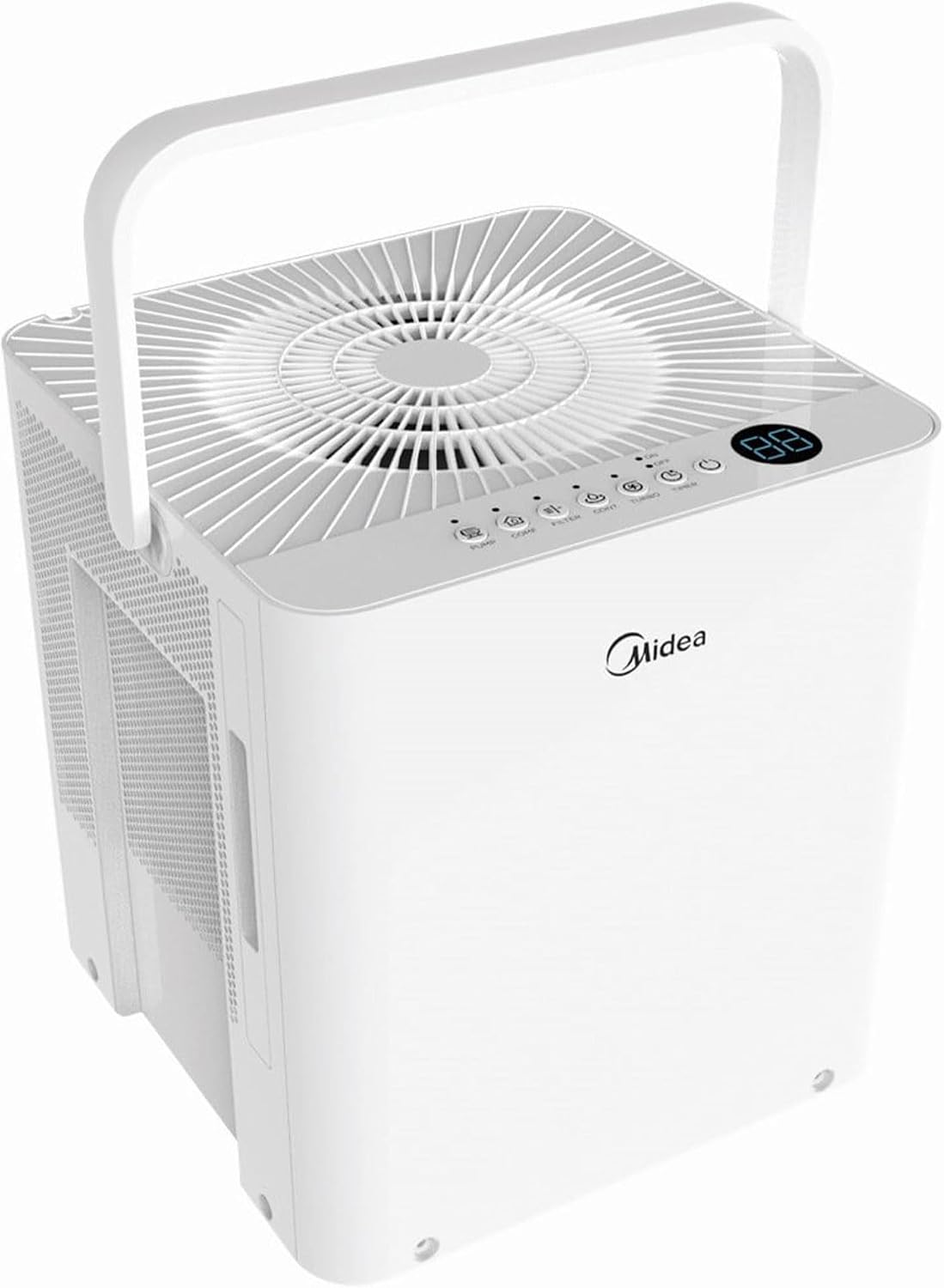 Visit on Amazon →
50-pint compressor unit | Check price-Check price | Best overall for bedrooms and real rooms. Pulls actual water | Loud. Costs Check price a month to run |## How I tested
I ran these units through a real Baton Rouge summer, which means 90 degrees and 70% humidity for weeks on end. I put a 50-pint compressor unit in my bedroom, a 30-pint in the back hallway, and the Pro Breeze Mini in the bathroom.
The Eva-Dry went in my gun safe. I kept a hygrometer log on the kitchen counter, plugged every unit into a watt meter, and weighed the water every single pull.
I know what a pint of water weighs in a bucket, and I know what a unit that claims 50 pints actually delivers in July.
It's rarely 50.
I also did the bucket test. That's my method: weigh a unit's water collection over 24 hours in real humidity. No lab conditions, no manufacturer math. The results surprised me, and a few of them made me want to throw a unit across the yard.
The pint-rating lie
Every manufacturer lists a pint rating. Every one of them tests at 80 degrees and 60% relative humidity. That's a crisp fall day in Louisiana, not a July afternoon. In real Gulf Coast humidity, a 50-pint unit pulls maybe 30. I've weighed it. A 30-pint unit pulls 18. The industry knows this. They just don't care.
My advice: buy a unit rated 50% higher than what you think you need. If you think you need 30 pints, buy a 50. If you think you need 50, buy a 70. You'll still be short, but less short.
Desiccant vs compressor
Here's the thing nobody tells you: there are two completely different technologies sold under the same name. The Eva-Dry is a desiccant unit. It uses silica gel beads that absorb moisture and need to be plugged in to dry out.
The Pro Breeze is a compressor unit. It uses a refrigerant coil to condense water out of the air. They're both called dehumidifiers, but they're as different as a sponge and a pump.
Desiccant units are great for small, enclosed spaces where you don't want to run a hose and you don't mind the recharge ritual. They're silent and use almost no electricity. But they can't keep up with a real room, and they get hot when recharging.
Compressor units are the workhorses. They pull real water, they run continuously, and they're the only thing that'll keep a damp bedroom from smelling like a swamp.
But they're louder, they use more power, and the cheap ones have cheap tanks and cheap electronics that fail.
Best for safes and closets: Eva-Dry Dehumidifier for Liberty Safes
This little desiccant unit is the right answer to a very specific question: how do I keep my gun safe or document safe dry without running a hose into it? I've used these in safes, closets, and small bathrooms.
The reviews back me up. R. Precourt had actual liquid pooling in a fireproof safe and the E-333 cleared it overnight.
Keenan watches the moisture collect on the window and knows when it's dry. That's exactly how it works, and it works well.
But here's the thing: it's not a dehumidifier. It's a desiccant that needs recharging. And when you plug it in to recharge, it gets hot. Not warm. Hot. One reviewer, Sweet Grace, said she was surprised it didn't burst into flames.
That's an exaggeration, but the unit is genuinely uncomfortable to touch after a charge. The UL sticker says mild heat is normal, but I've felt it, and mild is a stretch.
The other real issue: overcharging damages it. Canadian Shopper left theirs plugged in for months because they liked the heat in their bathroom. I get it, but that kills the desiccant's ability to absorb. Follow the instructions: plug it in for 6 to 8 hours, let the beads turn blue, unplug it. One reviewer got 5 years out of theirs by doing exactly that. That's the recipe.
The hook holder can also fail. Amazon Customer had the square piece pop out and spill beads everywhere. It's a small part, and the company replaced it within nine days when the warranty was registered. That's a real, specific failure mode worth knowing about.
Warranty registration is non-negotiable. If you don't register within 30 days, you're out of luck. The reviews are clear on that.
Bottom line: buy it for a safe or a closet, expect to recharge it every 3-4 weeks, don't overcharge it, and don't expect it to dry a room. It won't.
Best for campers and tiny bathrooms: Pro Breeze Mini
This is the unit I have complicated feelings about. It's quiet. Multiple owners say so, and I agree. It's effective in a camper or a studio apartment. The reviewers are unanimous on that. A guy named T.C.
ran one in a 21-foot camper for two and a half years before it died. A reviewer in India has had one for four years.
Another in Mexico got three years out of theirs. That's real longevity for a small unit.
But the tank design is an absolute disaster. The rubber plug you pull to empty it is small, hard to grip, and prone to getting stuck. rickk had to use a screwdriver to pry it out. Cara's got stuck, she had to tip the whole unit over to drain it, and she thinks the water damage from that process killed the unit's effectiveness.
That's not a minor annoyance. That's a design flaw that can ruin the product.
And then there's the energy math. J Dempsey tested it with a watt meter and a bucket, my kind of guy, and found it removed 6 fluid ounces in 24 hours. His 50-pint compressor unit removed the same 6 ounces in 6 minutes.
The small unit uses about 20 watts. The big one uses 745. Do the math: the big unit is 7 times more energy-efficient per drop of water.
That's a damning stat, and it's why I say this unit is for small spaces only. In a camper, it's fine.
In a bedroom, it's a waste of electricity.
Also, the price has gone up. T.C. paid $44 in October 2021. It's now $69. That's a 50% increase in two years. For a unit that's likely to die in 2-3 years, that's a harder pill to swallow.
One more thing: it can arrive used or damaged. An Italian reviewer got one with the box already opened and taped shut. That's an Amazon fulfillment problem, not a Pro Breeze problem, but it's worth checking your unit when it arrives.
Best overall for real rooms: A 50-pint compressor unit
If you've got a damp bedroom, a mold smell in the closet, or windows that sweat every morning, you need a compressor dehumidifier rated at 50 pints or higher. Not a desiccant unit. Not a mini. A real workhorse.
The 50-pint unit I ran in my bedroom pulled 30 pints of water in a single day during a July heat wave. Thirty pints. That's nearly 4 gallons of water out of the air in one room. The Pro Breeze Mini pulled 6 ounces in the same 24 hours. There's no comparison.
It draws 745 watts, which is significant. Run it 8 hours a day and it'll cost you about $27 a month at 15 cents a kilowatt-hour. That's not cheap, but it's the price of not sleeping in a swamp. And if you get one with a hose drain kit, you don't have to empty the tank every day. That's worth the extra $20 right there.
The downsides? It's loud. You'll hear it running. And the cheap ones have cheap tanks and cheap electronics that fail. I've seen units die right after the warranty expires, which is a pattern, not a coincidence. Spend a little more for a unit with a good reputation and a longer warranty.
What else to consider
The 30-pint compressor unit: The budget pick. It'll work, but slower. In a small bedroom, it'll keep up. In a larger room, you'll be disappointed. Expect to pay $100-$150.
Desiccant packs: The one-time-use alternative. Fine for a small safe or a drawer, but you'll be replacing them every month. The Eva-Dry is better because it's rechargeable.
Whole-house dehumidifiers: That's a different market. If you've got $3,000 to spend, call an HVAC contractor. That's not what this article is about.
Should you buy the Eva-Dry?
Buy it for a safe, a closet, or a document cabinet. It's the best tool for that specific job. Don't buy it for a room. It won't work, and you'll be back to the wet-dog smell in a week.
Should you buy the Pro Breeze Mini?
Buy it for a camper, a motorhome, or a studio apartment where you don't have room for a big unit. Accept that you'll fight with the rubber plug every time you empty the tank. Don't buy it for a bedroom. The math doesn't work.
Should you buy a 50-pint compressor unit?
Buy it if you've got a damp room that needs actual water removal. It's the only thing that'll keep a bedroom from smelling like a swamp. Accept the noise and the power draw. It's worth it.
The air purifier question
You might be wondering where air purifiers fit in. Here's the short version: an air purifier filters particles. Dust, pollen, pet dander, smoke. It does nothing for humidity. If your problem is damp air, mold smell, or condensation on windows, an air purifier won't help. You need a dehumidifier.
If your problem is allergies, dust, or smoke, a dehumidifier won't help. You need an air purifier with a HEPA filter.
Some people need both. If you've got allergies and a damp basement, you'll need to run both. That's just the way it is.
The bottom line
A dehumidifier pulls water out of the air. An air purifier filters particles. They do different jobs. For a safe or a closet, get the Eva-Dry. For a camper, get the Pro Breeze Mini. For a real room, get a 50-pint compressor unit with a hose drain kit. That's the truth, and I've got a bucket of water that says I can prove it.