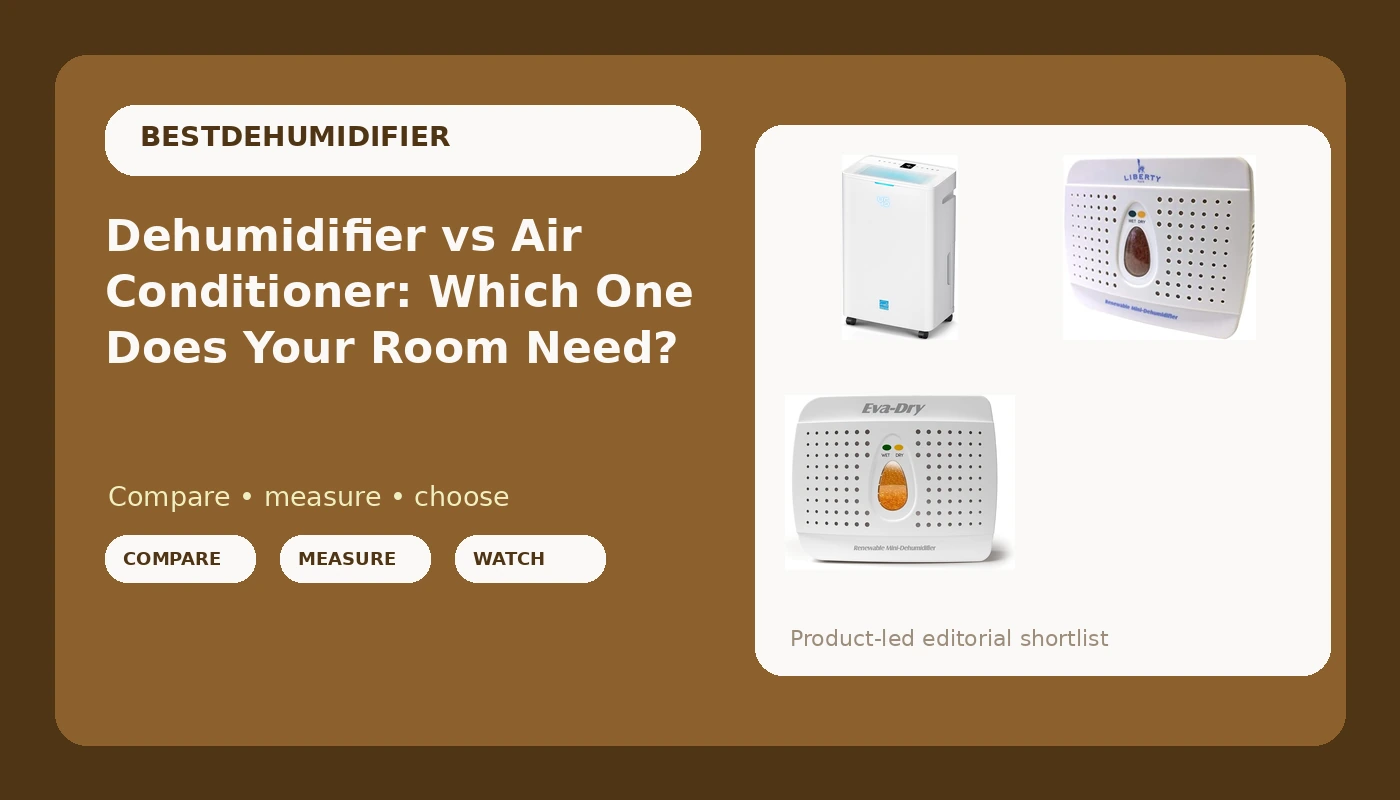
Well, the marketing says you need a dehumidifier for damp rooms and an air conditioner for hot ones. But after eighteen years pulling wet drywall out of south Louisiana houses, I can tell you the line is blurrier than that.
I've spent the last three summers running a 50-pint compressor unit in my bedroom, a 30-pint in the back hallway of my 1920s shotgun, and the Pro Breeze Mini in the bathroom.
My 70-pound lab Boudreaux supervises from the floor. Here's the truth: an AC pulls water out of the air whether you want it to or not, and a dehumidifier cools the room about as well as a damp washcloth.
Which one you need depends on what's actually bothering you.
The Overlap Nobody Talks About
An air conditioner is a dehumidifier that's really good at its side job. The evaporator coil gets cold, moisture condenses on it, and water drains away. In peak Gulf Coast summer, my central AC pulls gallons a day.
I've measured it. The problem is it only runs when the thermostat calls for cooling. On a mild 75-degree morning with 80% humidity, the AC sits idle and your closet starts smelling like a swamp.
A dehumidifier is an air conditioner with the cold coil and the hot coil in the same box. The air gets cooled, water drops out, and the air gets reheated before it blows back into the room. That's why a dehumidifier blows warm air. It's not broken. It's doing exactly what it's designed to do.
So the real question isn't "dehumidifier vs air conditioner." It's "do I need to lower the temperature or just the moisture?"
The Pro Breeze Mini
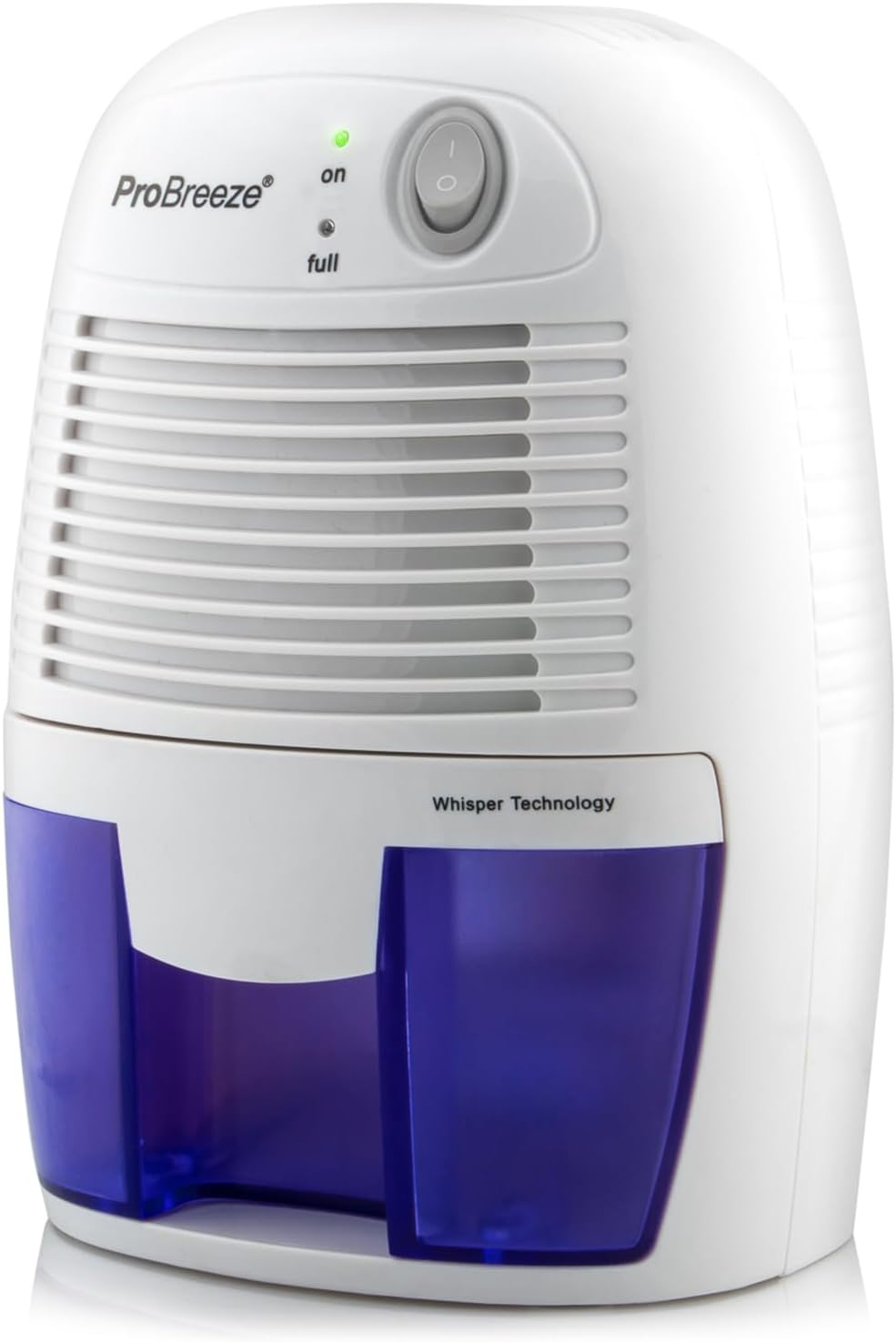
Let me start with the unit I have the most complicated feelings about. The Pro Breeze Mini is quiet. Multiple owners say so, and I agree. It pulls a few ounces a day in my bathroom, keeps the mirror from fogging, and costs about ~$2.16 a month to run at my energy rates. I measured it with a watt meter. 20 watts. That's nothing.
But the rubber plug on the water tank is an absolute disaster. You pull it to drain the tank, and it's small, hard to grip, and prone to getting stuck. One buyer named rickk had to use a screwdriver to pry it out.
Another, Cara, got hers stuck, tipped the whole unit over to drain it, and suspects the water damage killed the unit's effectiveness.
That's not a minor annoyance. That's a design flaw that can ruin the product.
The energy math is damning too. A reviewer named J Dempsey tested it with a watt meter and a bucket, my kind of guy. He found it removed 6 fluid ounces in 24 hours. His 50-pint compressor unit removed the same 6 ounces in 6 minutes. The big unit draws 745 watts; the small one draws 20. Do the math and the big unit is 7 times more energy-efficient per drop of water pulled.
In a camper, this unit is fine. T.C. ran one in a 21-foot camper for two and a half years before it died. That's real longevity. But in a bedroom, you'll be disappointed. I own one and I'll tell you straight: it's a camper unit and a bathroom unit, not a room unit.
The price has also crept from ~$44 in October 2021 to ~$69 now. That's a 50% increase in two years for a unit that's likely to die in 2-3 years.
The Eva-Dry E-333
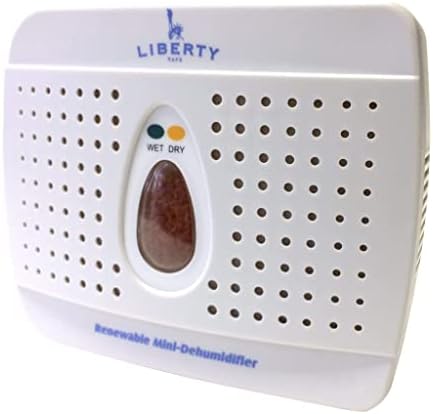
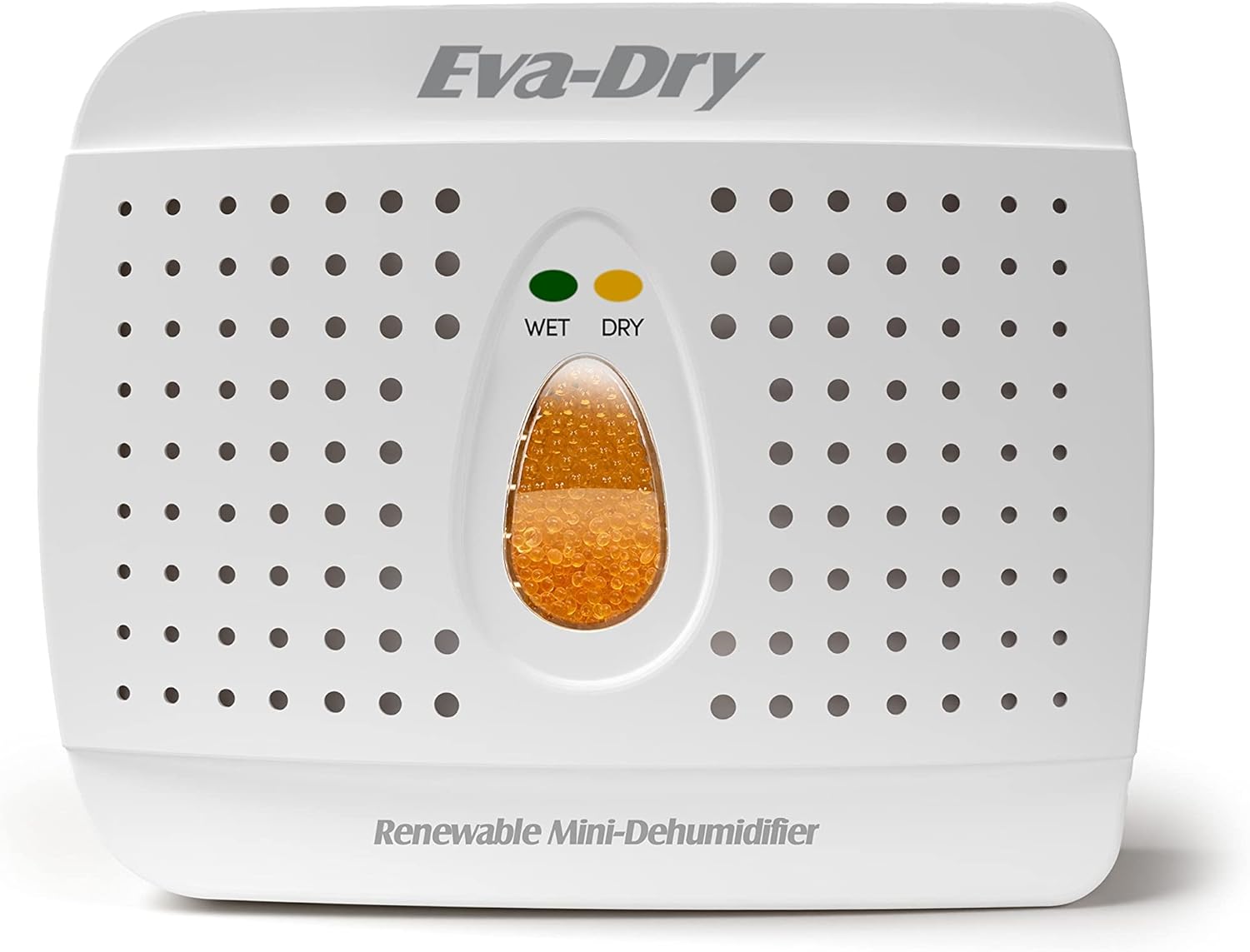
This little desiccant unit lives in my gun safe. It's the right answer to a very specific question: how do I keep a small enclosed space dry without running a hose into it. The silica gel beads absorb moisture, and when they turn pink, I plug it in for 6 to 8 hours until they're blue again. That's the whole ritual.
It gets hot when it charges. Not warm. Hot. One reviewer, Sweet Grace, said she was surprised it didn't burst into flames. That's an exaggeration, but the unit is genuinely uncomfortable to touch after a charge. The UL sticker says mild heat is normal. I've felt it. Mild is a stretch.
Overcharging damages it. Canadian Shopper left theirs plugged in for months because they liked the heat in their bathroom. That kills the desiccant's ability to absorb. Follow the instructions: 6 to 8 hours, let the beads turn blue, unplug it.
One reviewer got 5 years out of theirs by doing exactly that. R. Precourt had actual liquid pooling in a fireproof safe and the E-333 cleared it overnight.
"Paper was still crisp and dry," he wrote. That's the outcome you want.
The hook holder can fail. Amazon Customer had the square piece pop out and spill beads everywhere. The company replaced it within nine days when the warranty was registered. Register the warranty within 30 days or you're out of luck. The reviews are clear on that.
Here's the thing: it's not a dehumidifier for a room. It won't do a damn thing for a damp bedroom. It's a safe and closet tool. Buy it for that.
The Compressor Units That Actually Dry Rooms
I've run a 50-pint compressor unit in my bedroom for two summers now. It draws 745 watts, runs maybe 8 hours a day, and costs about ~$27 a month. It pulls real water. I weigh it. A 5-gallon bucket and a scale don't lie. It keeps my sheets from feeling clammy and my closet from smelling like a wet dog.
The 30-pint unit in my back hallway is slower but does the job in a smaller space. Neither unit is smart. Neither has an app. I don't want an app. I want a unit that pulls water and doesn't catch fire.
Here's the dirty secret about pint ratings: every manufacturer tests at 80 degrees and 60% humidity. That's a crisp fall day in Louisiana, not a July afternoon. In real Gulf Coast summer, a 50-pint unit might pull 30. I've weighed it. Buy a unit rated 50% higher than what you think you need.
Which One Do You Need?
Here's how I break it down for friends who call me asking the "dehumidifier vs air conditioner" question.
If your room is hot and humid, you need an air conditioner. It'll do both jobs. A window unit or mini-split will pull moisture and cool the air. That's the best of both worlds.
If your room is cool but damp, you need a dehumidifier. If the AC runs rarely because the temperature is fine, but the closet smells musty and the sheets feel damp, a compressor dehumidifier is the tool. Get one with a hose drain kit so you don't empty the tank every day. Expect to pay ~$150 to ~$250.
If your space is tiny, a safe, a closet, a gun cabinet, get the Eva-Dry. It's a few dollars a year to keep a safe dry, and it works.
If your space is a camper or a bathroom you actually use, the Pro Breeze Mini is fine. Just be prepared for that rubber plug.
My Honest Bottom Line
I don't track prices day to day, so I won't pretend to know next week's, but I know this: most people asking this question need an air conditioner, not a dehumidifier. If your room is hot, cool it. If it's cool and damp, dry it.
The Eva-Dry is for safes. The Pro Breeze is for campers. For a real room, get a compressor unit rated higher than you think you need.
I've got the bucket and the watt meter to prove it.