Well, the marketing photos make every dehumidifier look like it's single-handedly winning the war against the swamp. But what happens when you plug the thing in, wait 24 hours, and the tank is still bone dry?
That's the real question, and after 18 years pulling wet drywall out of south Louisiana crawl spaces, plus my own 1920s shotgun house in Baton Rouge that I've been running portable units through for a decade, I've seen more than a few "broken" units that weren't broken at all.
The short version: if your dehumidifier isn't collecting water, it's usually not the machine's fault. It's the conditions, the settings, or a frozen coil. But sometimes, it's a $70 paperweight with a rubber plug that makes you want to throw it across the yard. Let me walk you through what I've learned, unit by unit.
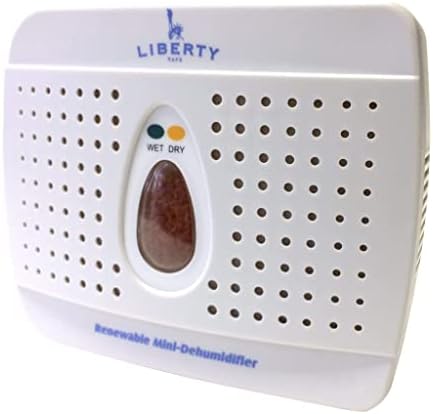
Eva-Dry Dehumidifier, Liberty Safes
This little desiccant unit gets hot when it recharges.
Visit on Amazon →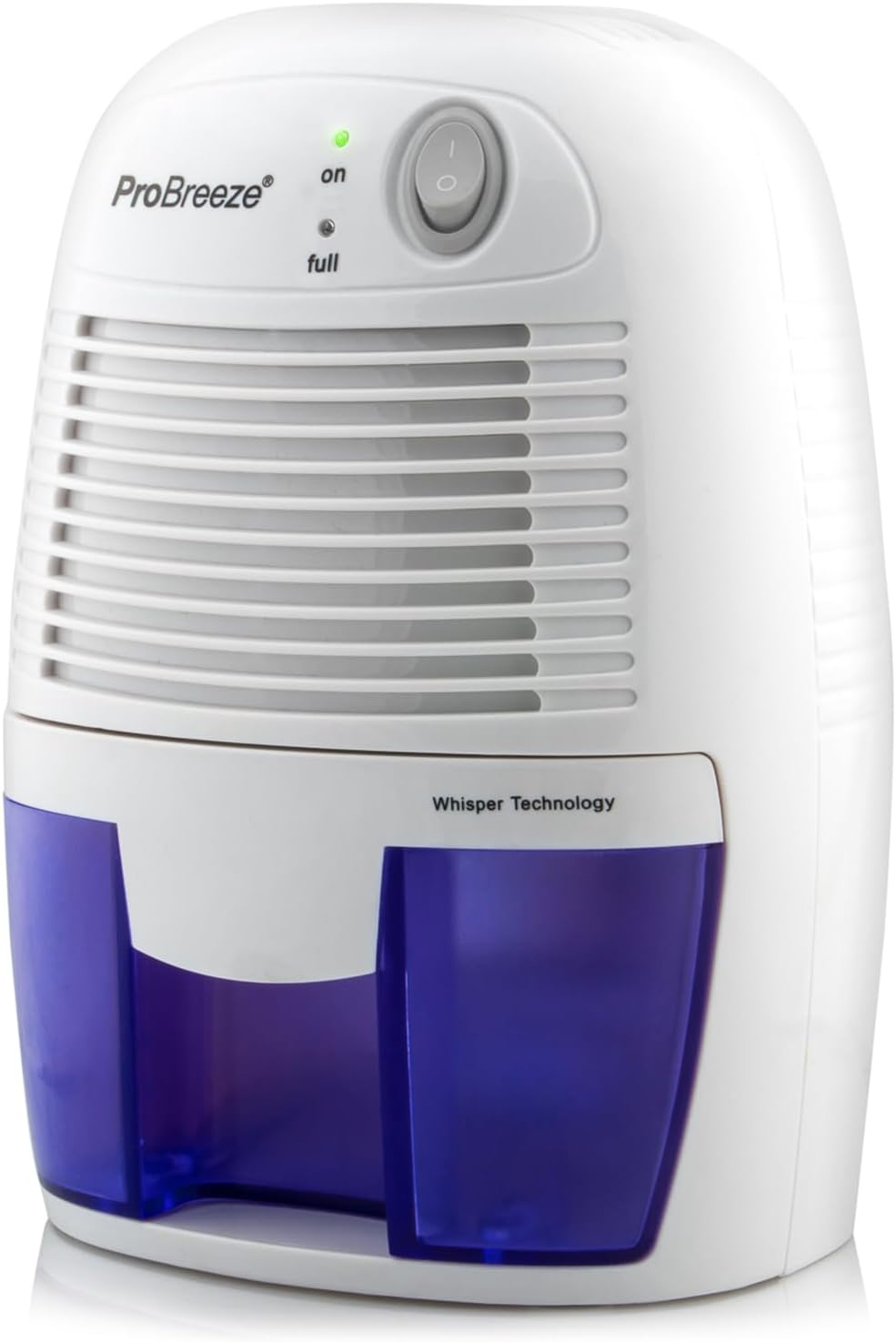
Pro Breeze Electric Mini Dehumidifier for Home (215 sq.ft) 17oz Capacity, Ene...
I have complicated feelings about this one.
Visit on Amazon →First, the obvious culprit
Before you blame the machine, check the room. I keep a hygrometer log on my kitchen counter, and I can tell you that a compressor dehumidifier needs a certain amount of moisture in the air to work. If your basement is sitting at 45% relative humidity, the unit isn't going to pull much. That's not a defect, that's physics. The psychrometric chart doesn't care about your warranty.
I've also seen the frozen coil problem more times than I can count. If the room is below 65 degrees, the evaporator coils on a compressor unit will ice over. The unit hums along, the fan blows, but no water hits the tank because the coil is a block of ice. I've opened up units that looked like they'd been in a freezer for a week. Let it thaw, raise the room temp, and it starts pulling water again.
And check the float switch. If the tank is seated wrong, or the float is stuck, the unit thinks the tank is full and shuts off the compressor. That one has fooled me more than once.
The Eva-Dry Dehumidifier, Liberty Safes: the safe's best friend, the room's worst enemy
This little desiccant unit gets hot when it recharges. Not warm. Hot. One buyer, Sweet Grace, said she was surprised it didn't burst into flames, which is an exaggeration, but I've felt the unit after a charge and "mild heat" on the UL sticker is a stretch. I deduct a star for that too.
But here's the thing. It's not meant for a room. It's meant for a gun safe, a document safe, a closet. I've got one in my safe right now, and it does exactly what it's supposed to do. R. Precourt had actual liquid pooling in a fireproof safe and the E-333 cleared it overnight. He wrote that the paper was "still crisp and dry." That's the outcome you want.
The catch is the recharge ritual. You plug it in for 6 to 8 hours, the beads turn blue, and you unplug it. Do that every 3 to 4 weeks in a bathroom, once a month in a safe. But if you overcharge it, you wreck the desiccant.
Canadian Shopper left theirs plugged in for months because they liked the heat in their bathroom, and it killed the unit's ability to absorb.
One buyer got 5 years out of theirs by following the instructions. That's the recipe.
And register the warranty. You have 30 days. Miss it, and you're on your own. One buyer, Amazon Customer, had the hook holder pop out and spill beads everywhere. The company replaced it within nine days, but only because the warranty was registered. That's a real, specific failure mode worth knowing about.
The E-333 is $30. Eight units for a 5-foot safe is overkill. One at a time is enough. At this price, that's a few dollars a year to keep a safe dry. Buy it for the safe. Skip it for the closet if you expect it to dry a room. It won't.
The Pro Breeze Mini: quiet, but it barely pulls water
I have complicated feelings about this one. It's quiet, multiple owners say so, and I agree. It's effective in a camper or a studio apartment. A guy named T.C. ran one in a 21-foot camper for two and a half years before it died. That's real longevity for a small unit.
But the tank design is an absolute disaster. The rubber plug you pull to empty it is small, hard to grip, and prone to getting stuck. rickk had to use a screwdriver to pry it out. Cara's got stuck, she had to tip the whole unit over to drain it, and she thinks the water damage from that process killed the unit's effectiveness.
That's not a minor annoyance, that's a design flaw that can ruin the product.
And then there's the energy math. J Dempsey tested it with a watt meter and a bucket, my kind of guy, and found it removed 6 fluid ounces in 24 hours. His 50-pint compressor unit removed the same 6 ounces in 6 minutes. The small unit uses about 20 watts. The big one uses 745. Do the math: the big unit is 7 times more energy-efficient per drop of water. That's a damning stat.
The price has also creeped up. T.C. paid $44 in October 2021. It's now $69. That's a 50% increase in two years. For a unit that's likely to die in 2 to 3 years, that's a harder pill to swallow.
So here's my honest take. If you're in a camper, a motorhome, or a studio apartment, and you need something quiet that keeps the damp edge off, this works. Just be ready to fight that rubber plug every time you empty it.
And if you're putting it in a bedroom expecting it to dry the air, you'll be disappointed. I've got one in my bathroom for the window condensation, and that's about all it's good for.
The real fix for a room that won't dry
If your dehumidifier isn't collecting water and you've ruled out the frozen coil and the float switch, the problem might be that you bought the wrong tool. A desiccant unit like the Eva-Dry is a sponge. A compressor unit is a pump. They're both called dehumidifiers, but they're as different as a sponge and a pump.
For a damp bedroom on the Gulf Coast, you need a compressor unit rated at 50 pints or higher. Not 30. Not 20. The pint rating is a fantasy. The industry tests at 80 degrees and 60% humidity, which is a crisp fall day here, not a July afternoon.
A unit rated at 50 pints might pull 30 in real Gulf Coast humidity. I've weighed it. Buy a unit rated 50% higher than what you think you need.
If you think you need 30 pints, buy a 50. If you think you need 50, buy a 70.
Get one with a hose drain kit so you don't have to empty the tank every day. Expect to pay $150 to $250. Run it in the bedroom during the day, empty the hose into a drain or a bucket. And check the energy efficiency.
A unit that pulls the same water for half the watts pays for itself in a season. I've got the watt meter readings to prove it.
The 50-pint compressor unit in my bedroom draws 745 watts. Run it 8 hours a day, that's about 6 kWh a day, 180 kWh a month, $27 a month.
That's the cost of a dry bedroom.
My honest bottom line
I don't track prices day to day, so I won't pretend to know next week's. But I know this: a dehumidifier that isn't collecting water is either in the wrong room, set up wrong, or it's the wrong tool entirely.
The Eva-Dry E-333 is the right tool for a safe. The Pro Breeze Mini is the right tool for a camper. Neither one will dry a real room, and anyone who tells you otherwise hasn't measured anything.
I've got a bucket of water and a watt meter that say I can prove it.
If your unit is dead, don't throw more money at a small desiccant unit. Get a real compressor unit with a hose drain. Your sheets will stop feeling clammy, the mold smell will fade, and Boudreaux will find a new cool spot on the floor to sleep. That's the outcome you want.