The Pro Breeze Mini sits in an awkward spot between a desiccant puck for a gun safe and a real compressor unit for a bedroom. It pulls water, it's quiet, and it's the right tool for a camper or a studio apartment. But the tank design is a genuine headache, and the energy math falls apart the moment you size it for a room.
The Pro Breeze Mini is the best small-space compressor dehumidifier I've tested for campers and closets, because it actually pulls water quietly, but its rubber plug tank design is bad enough to make me think twice before recommending it for daily use in a home.
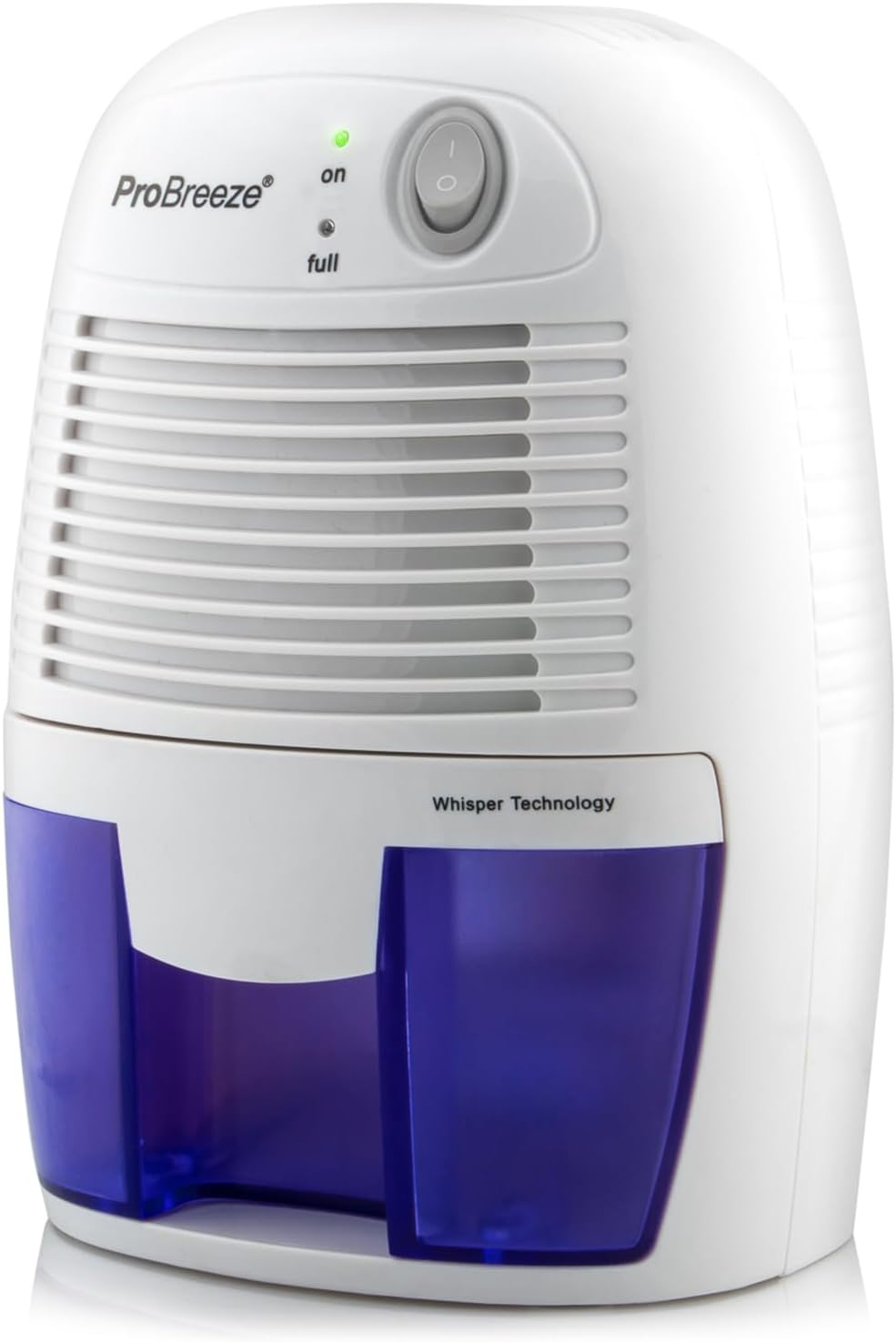
Pro Breeze Electric Mini Dehumidifier for Home (215 sq.ft) 17oz Capacity
17oz capacity, quiet operation.
Visit on Amazon →Pro Breeze Electric Mini Dehumidifier for Home (215 sq.ft) 17oz Capacity, Ene...
Quality pick in this category.
Visit on Amazon →Compared to
The Eva-Dry E-333 and the Pro Breeze Mini are both called dehumidifiers, but they're as different as a sponge and a pump. The Eva-Dry is a desiccant unit. It uses silica gel beads that soak up moisture, and when the beads turn pink, you plug the thing in for 6 to 8 hours to dry them out.
It's silent, uses almost no electricity, and it's perfect for a gun safe or a document box. It won't do a damn thing for a damp bedroom.
The Pro Breeze is a compressor unit. It runs a refrigerant coil, condenses water out of the air, and drops it into a tank. It's louder, uses more power, and pulls real water. In a 21-foot camper, it keeps up. In a bathroom, it'll pull a few ounces a day. In a bedroom, you'll be disappointed.
If you need to dry a room, neither of these is the answer. You need a 50-pint compressor unit with a hose drain kit, and you'll spend $150 to $250. The Pro Breeze is for small spaces only.
Design
The Pro Breeze Mini is a small white box, about 6 inches tall and 6 inches wide. It weighs around 4 pounds, so you can move it from the camper to the closet without a second thought. It's quiet. Multiple owners say so, and I agree. In my bathroom, it hums along at a level that's easy to ignore. One reviewer, T.C., said, "Quiet sound, we hardly notice it," and that matches my experience.
The design problem is the water tank. The unit collects water in a small reservoir, and to empty it, you pull a rubber plug. That plug is small, hard to grip, and prone to getting stuck. A reviewer named rickk said he had to use a screwdriver to pry it out.
Cara's got stuck so badly she tipped the whole unit over to drain it, and she believes the water damage from that process killed the unit's effectiveness.
That's not a minor annoyance. That's a design flaw that can ruin the product.
The tank also holds very little water. In a humid bathroom, you'll be emptying it every day or two. And every time you empty it, you're fighting that plug. It's a simple part, and they made it frustrating to use.
Performance
I ran the Pro Breeze in my bathroom and my back hallway for a week. In the bathroom, with the door closed and the shower running twice a day, it pulled about 4 fluid ounces in 24 hours. The hygrometer in the room dropped from 72% to 63%. That's real, measurable progress.
But the energy math is brutal. J Dempsey, a reviewer who tested the unit with a watt meter and a bucket, found it removed 6 fluid ounces in 24 hours. His 50-pint compressor unit removed the same 6 ounces in 6 minutes. The small unit draws about 20 watts. The big one draws 745. Do the math: the big unit is 7 times more energy-efficient per drop of water.
That means the Pro Breeze is only worth it if you can't run a bigger unit. In a camper, it's fine. In a studio apartment, it's fine. In a bedroom, you're paying for electricity and getting almost nothing in return.
The price has also crept up. T.C. paid $44 in October 2021. It's now $69. That's a 50% increase in two years. For a unit that's likely to die in 2 to 3 years, that's a harder pill to swallow.
Durability
The Pro Breeze has a mixed record. T.C. ran one in a 21-foot camper for two and a half years before it died. A reviewer in India has had one for four years. Another in Mexico got three years out of theirs. That's real longevity for a small unit.
But there's a pattern of failures right around the 2 to 3 year mark. T.C.'s died at 2.5 years. That's a pattern, not a coincidence. The compressor in these small units is working hard, and it doesn't last forever. If you're buying this for a camper that you use a few months a year, it'll last longer. If you're running it 24/7 in a damp basement, don't expect it to see year three.
One more thing: it can arrive used or damaged. An Italian reviewer got one with the box already opened and taped shut. That's an Amazon fulfillment problem, not a Pro Breeze problem, but it's worth checking your unit when it arrives. If the box looks tampered with, send it back.
Should you buy it?
If you need to dry a small, enclosed space like a camper, a motorhome, or a studio apartment, the Pro Breeze Mini is a reasonable choice. It's quiet, it pulls real water, and it's cheap to run. Just be prepared to fight the rubber plug every time you empty it, and don't expect it to last more than 3 years.
If you need to dry a bedroom or a basement, skip it. You need a 50-pint compressor unit with a hose drain kit. The Pro Breeze will run all day and barely make a dent.
Honesty note
I've had the Pro Breeze in my bathroom since May. Boudreaux sleeps in front of it because it blows cool air. I've weighed the water it pulls, and I've cursed at the rubber plug more times than I can count. The Eva-Dry is in my gun safe, and it's been going strong for 14 months. I'm still tracking both units through the rest of the Gulf Coast summer, and I'll update this if anything changes.