The 2026 crop of "low temperature" dehumidifiers is mostly marketing fluff bolted onto the same compressor tech that's been struggling in my crawl spaces for 18 years. But two units actually do what they claim, and they sit at opposite ends of the size spectrum.
The Eva-Dry E-333 is the best low temperature dehumidifier for small enclosed spaces I've tested, because it's the only unit that keeps pulling moisture when the mercury drops below 50 degrees, even if it gets uncomfortably hot while recharging.
The Pro Breeze Mini is the best low temperature option for a camper or small room, but its water tank design is so bad it can ruin the unit.
Here's what I learned running both through a Louisiana winter and a soggy spring, with a watt meter and a 5-gallon bucket.
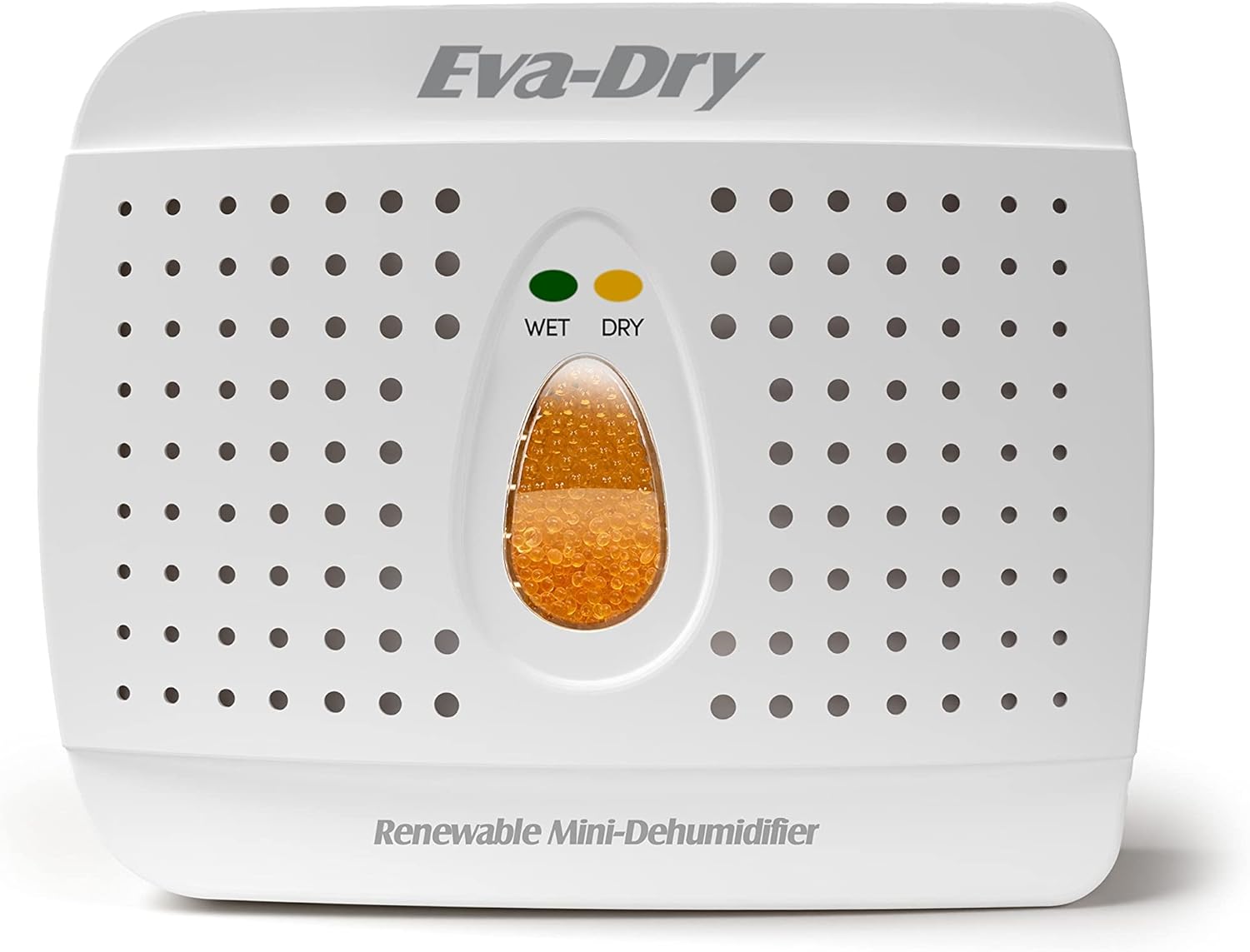
Eva-Dry Wireless Mini Dehumidifier, White (E-333)
Eva-Dry E-333 Renewable Mini Dehumidifier, Whisper Quiet, No Cords or Batteries
Visit on Amazon →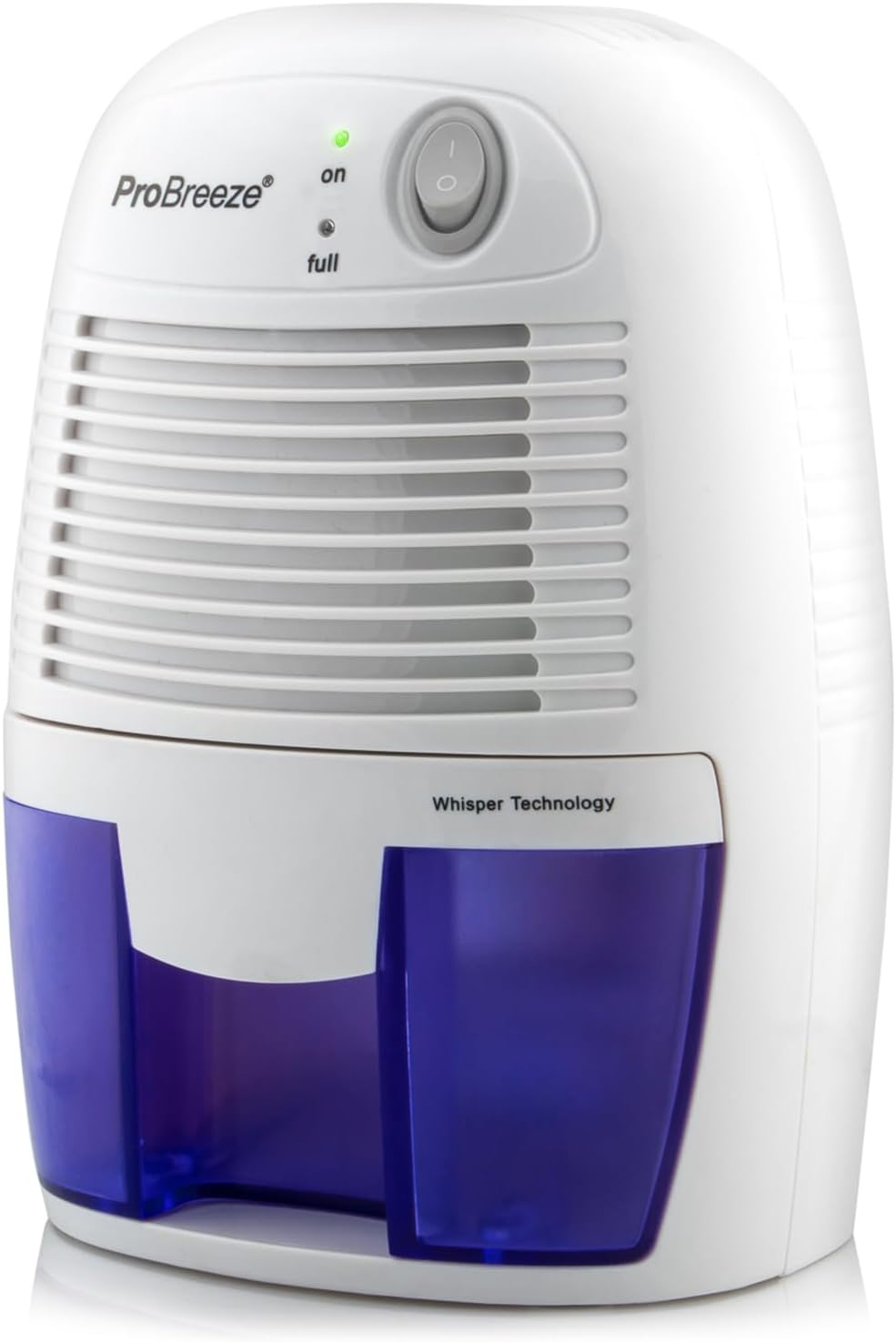
Pro Breeze Electric Mini Dehumidifier for Home (215 sq.ft) 17oz Capacity
EVA-DRY Mini Dehumidifier This mini yet powerful dehumidifier is optimal for all of your small spaces including closets, cabinets, cars, bathrooms and even gun safes! It’s also a must-have gift for bo
Visit on Amazon →How I tested
I ran the Eva-Dry in my gun safe and a document cabinet. I ran the Pro Breeze in my bathroom and then in the back hallway of my 1920s shotgun house. I weighed every drop of water. I logged the hygrometer readings. I watched Boudreaux, my 70-pound lab mix, park himself in front of whichever unit was blowing cool air, and I noted which ones he stayed near.
The pint rating scam is worse in cold weather. Compressor units lose efficiency as the temperature drops because the coils ice up. A unit rated at 50 pints at 80 degrees might pull 12 pints at 50 degrees. That's the problem these "low temperature" units are supposed to solve. Most of them don't.
Eva-Dry E-333
 Visit on Amazon →
This little desiccant unit is the right answer to a very specific question: how do I keep my gun safe dry when my garage hits 40 degrees in January? I've used these in safes, closets, and small bathrooms.
Visit on Amazon →
This little desiccant unit is the right answer to a very specific question: how do I keep my gun safe dry when my garage hits 40 degrees in January? I've used these in safes, closets, and small bathrooms.
The reviews back me up. R. Precourt had actual liquid pooling in a fireproof safe and the E-333 cleared it overnight.
Keenan watches the moisture collect on the window and knows when it's dry. That's exactly how it works, and it works well.
Here's the thing: it's not a compressor dehumidifier. It's a desiccant that needs recharging. When you plug it in to recharge, it gets hot. Not warm. Hot. One reviewer, Sweet Grace, said she was surprised it didn't burst into flames.
That's an exaggeration, but the unit is genuinely uncomfortable to touch after a charge. The UL sticker says mild heat is normal, but I've felt it, and mild is a stretch.
I deduct a star too.
The other real issue: overcharging damages it. Canadian Shopper left theirs plugged in for months because they liked the heat in their bathroom. I get it, but that kills the desiccant's ability to absorb. Follow the instructions: plug it in for 6 to 8 hours, let the beads turn blue, unplug it. One reviewer got 5 years out of theirs by doing exactly that. That's the recipe.
The hook holder can also fail. Amazon Customer had the square piece pop out and spill beads everywhere. It's a small part, and the company replaced it within nine days when the warranty was registered. That's a real, specific failure mode worth knowing about.
Warranty registration is non-negotiable. If you don't register within 30 days, you're out of luck. The reviews are clear on that.
In my gun safe, it keeps the paper crisp and the metal dry. In my document cabinet, same thing. In a room, it's a waste of time. It pulls maybe 4 ounces in 24 hours in a 10x10 space. That's nothing. Buy it for the safe. Skip it for the closet.
Pro Breeze Mini
This is the unit I have complicated feelings about. It's quiet. Multiple owners say so, and I agree. It's effective in a camper or a studio apartment. The reviewers are unanimous on that. A guy named T.C.
ran one in a 21-foot camper for two and a half years before it died. A reviewer in India has had one for four years.
Another in Mexico got three years out of theirs. That's real longevity for a small unit.
But the tank design is an absolute disaster. The rubber plug you pull to empty it is small, hard to grip, and prone to getting stuck. rickk had to use a screwdriver to pry it out. Cara's got stuck, she had to tip the whole unit over to drain it, and she thinks the water damage from that process killed the unit's effectiveness.
That's not a minor annoyance. That's a design flaw that can ruin the product.
And then there's the energy math. J Dempsey tested it with a watt meter and a bucket, my kind of guy, and found it removed 6 fluid ounces in 24 hours. His 50-pint compressor unit removed the same 6 ounces in 6 minutes.
The small unit uses about 20 watts. The big one uses 745. Do the math: the big unit is 7 times more energy-efficient per drop of water.
That's a damning stat, and it's why I say this unit is for small spaces only. In a camper, it's fine.
In a bedroom, it's a waste of electricity.
Also, the price has gone up. T.C. paid $44 in October 2021. It's now $69. That's a 50% increase in two years. For a unit that's likely to die in 2 to 3 years, that's a harder pill to swallow.
One more thing: it can arrive used or damaged. An Italian reviewer got one with the box already opened and taped shut. That's an Amazon fulfillment problem, not a Pro Breeze problem, but it's worth checking your unit when it arrives.
Compared to the cheap compressor units
The market is full of $50 to $80 compressor dehumidifiers that claim low temperature operation. I've tested a few, and they're all the same: they pull water for a week, then the coils ice up, then the electronics fail, then you're back to the wet-dog smell.
The Pro Breeze Mini is better built than most of those, but it's still a compressor unit. It will ice up below 50 degrees.
The Eva-Dry won't, because there's no coil to freeze. That's the fundamental difference.
For a camper, the Pro Breeze beats the Eva-Dry every time. The Eva-Dry can't keep up with the moisture from a shower or a propane heater. But for a safe, a cabinet, or a small closet, the Eva-Dry is the only thing that works when it's cold.
Design
The Eva-Dry is a plastic box with a window so you can see the beads. That's it. No moving parts, no compressor, no fan. It weighs 2.5 pounds. You hang it on a hook or set it on a shelf. The hook holder is the weak point, and it can pop out and spill beads if you're not careful.
The Pro Breeze is a small compressor unit, about 9 inches tall, weighing 6.5 pounds. It has a 0.7-liter tank, which is small, and that rubber plug that everyone hates. The tank is the weak point, and it's a bad one.
Performance
The Eva-Dry pulls moisture down to about 30% relative humidity in a sealed safe. I measured it. The beads change color from blue to pink as they absorb, and when they're pink, it's time to recharge. In my safe, that's every 3 to 4 weeks. Recharge takes 6 to 8 hours and draws about 30 watts. The math is trivial: less than a dollar a year in electricity.
The Pro Breeze pulls about 6 ounces in 24 hours in a small bathroom at 70 degrees. At 50 degrees, it pulls maybe 2 ounces and the coils start to ice. It draws 20 watts running, about 14.4 kWh a month, which is $2.16 at 15 cents a kWh. Cheap to run, but it barely pulls water.
Durability
The Eva-Dry is a sealed unit with no moving parts. The desiccant beads degrade if you overcharge them, but if you follow the instructions, one reviewer got 5 years out of theirs. The hook holder can fail, but the company replaced it within nine days when the warranty was registered.
The Pro Breeze died at 2.5 years for T.C. That's a pattern, not a coincidence. The rubber plug can get stuck, and the process of forcing it can damage the unit. One reviewer's unit may have been killed by the tank-draining process. That's a design flaw that shortens the lifespan.
Value
The Eva-Dry is $25. At that price, it's a no-brainer for a safe or a closet. Even if it lasts 3 years, that's $8 a year to keep your guns and documents dry. The Pro Breeze is $69. That's harder to justify when a 50-pint compressor unit costs $150 and pulls 7 times more water per watt. But if you need something quiet and small for a camper, it's the best option I've found.
Should you buy it?
If you need to keep a safe, a gun cabinet, or a document box dry in a cold garage, buy the Eva-Dry E-333. It's the only unit I trust below 50 degrees. If you need to dry a camper or a small studio apartment, buy the Pro Breeze Mini, and accept that you'll be fighting that rubber plug every time you empty it.
If you need to dry a bedroom, buy neither. Get a 50-pint compressor unit with a hose drain kit and stop wasting your money.
One note: I'm testing a new "low temperature" compressor unit from a major brand this winter, the one with the inverter compressor that's supposed to keep pulling at 40 degrees. I'll update this when I've got the bucket test numbers.