Water in a basement does not announce itself. It shows up as a white bloom on the floor joists, a musty smell at the bottom of the stairs, and a hygrometer that reads 68 percent while the rest of the house feels fine. If you are shopping for a dehumidifier with pump for basement use, the box gives you pints and square feet and almost nothing about whether the machine will still be working at 3 a.m. in the worst week of July.
This guide covers six products: compact 80-pint home units, a 150-pint basement machine, two low-profile crawl space designs with pumps and drain hoses, and one entry that is not a dehumidifier at all. I say that up front rather than pad the list. What follows is a comparison of stated capacity, stated coverage, drain provisions, and format, plus the questions worth asking before you spend.
Related: How to Run a Dehumidifier Drain Hose Without a Floor Drain
Quick answer
The Waykar 150 Pints 7000 Sq.Ft Energy Star Dehumidifier with Pump for Basement is the strongest fit for a large, damp basement because it pairs the highest stated capacity and coverage in this group with a built-in pump and an Energy Star listing. Choose the AIRPLUS Max 80 Pint Dehumidifier for Home Basement up to 5500 Sq Ft instead when you are treating a smaller finished basement or a damp main floor, where 80 pints of stated capacity and a smaller body make more sense.
Dehumidifiers worth comparing
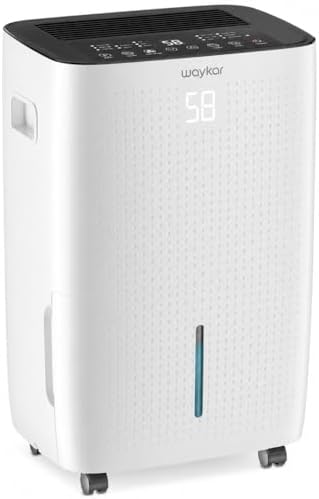
Waykar 150 Pints 7000 Sq.Ft Energy Star Dehumidifier with Pump for Basement
A 150-pint basement dehumidifier rated for spaces up to 7,000 square feet, with a built-in pump and an Energy Star listing. The pump is the part that matters, because it lets condensate go to a drain instead of a tank you have to empty.
Visit on Amazon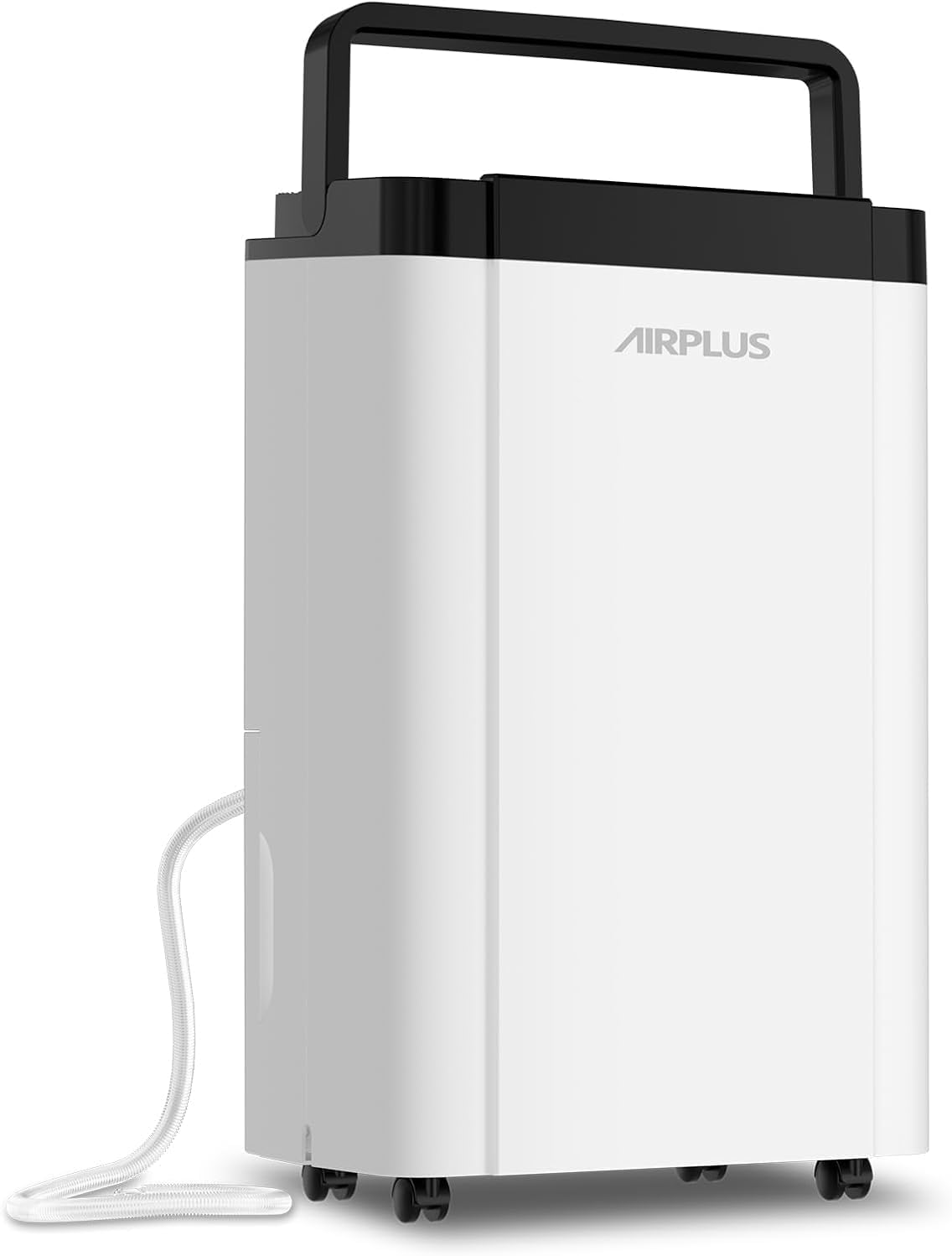
AIRPLUS Max 80 Pint Dehumidifier for Home Basement up to 5500 Sq Ft
An 80-pint home and basement unit rated for up to 5,500 square feet. A reasonable fit for a finished basement or a damp main floor where the machine lives in the open rather than under the house.
Visit on Amazon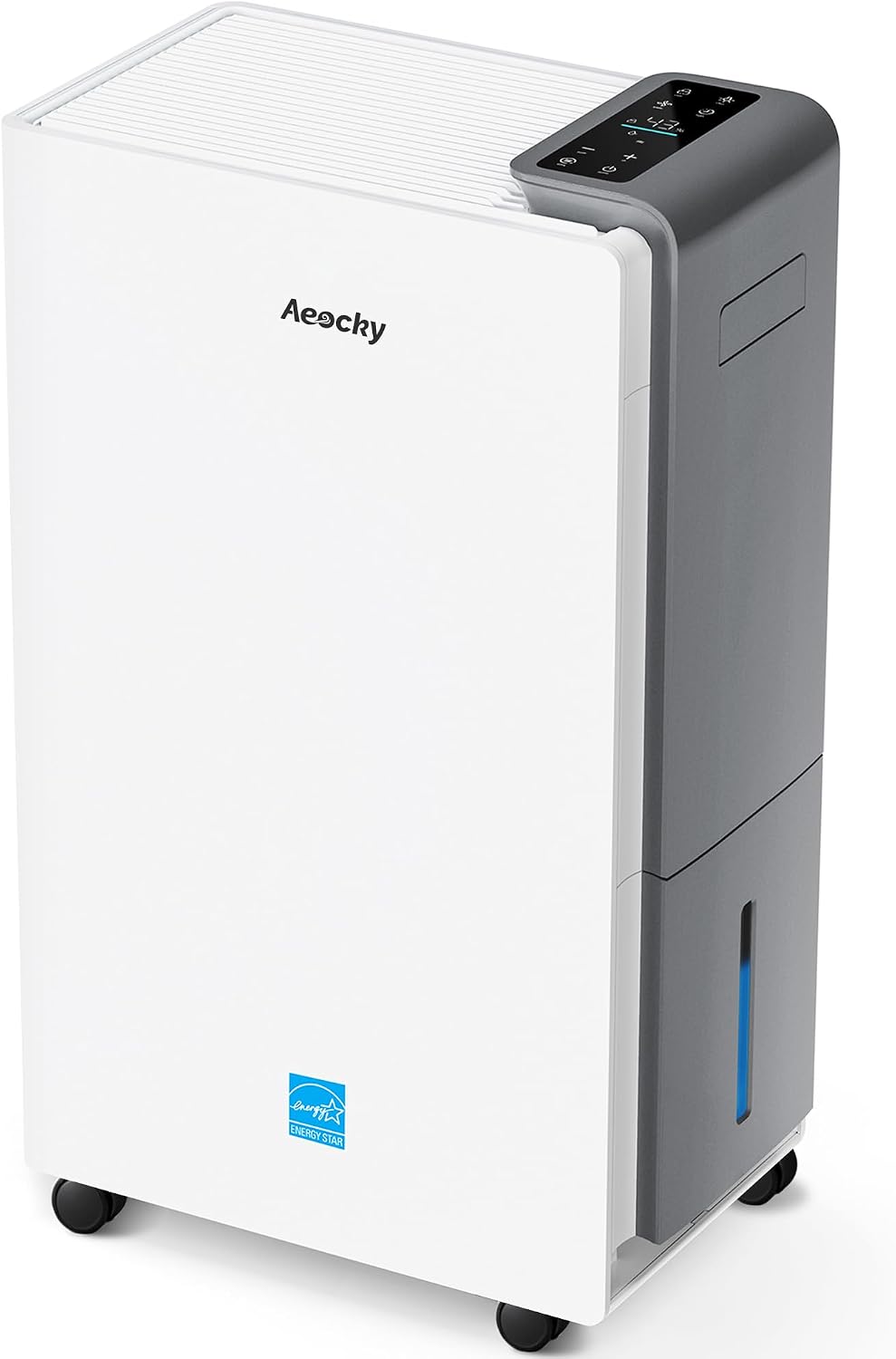
AEOCKY 5000Sq.Ft Energy Star Version 6.0 Dehumidifier for Basement
An Energy Star listed basement unit rated for up to 5,000 square feet, sitting at the smaller end of this group's coverage range. Worth a look when your space is modest and the energy listing is a priority.
Visit on Amazon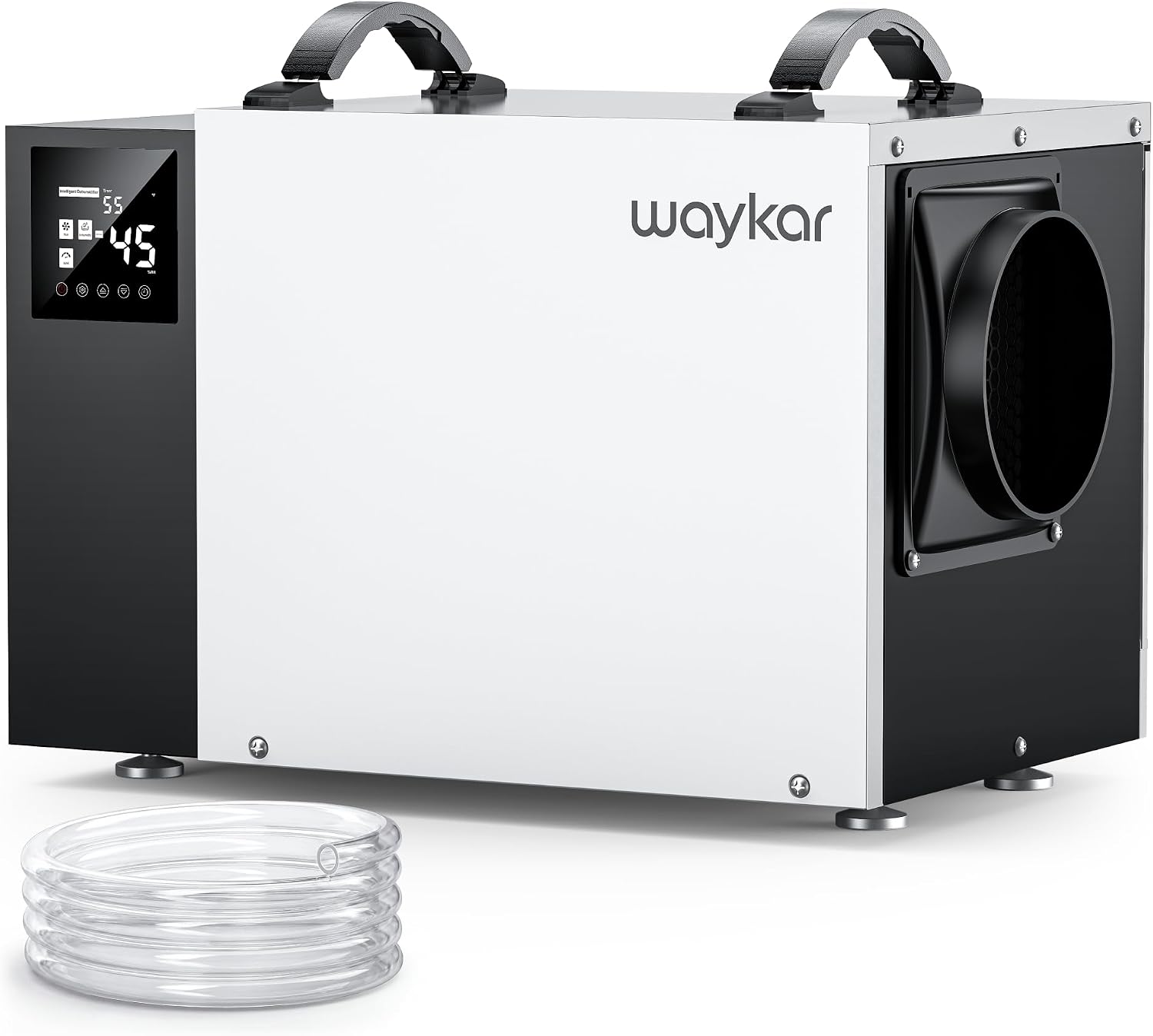
CADPXS 80 Pints Crawl Space/Commercial Dehumidifier with Pump & Drain Hose
An 80-pint crawl space and commercial design that ships with a pump and a drain hose. The low-profile format suits tight crawl spaces and job sites where a freestanding basement unit will not fit.
Visit on Amazon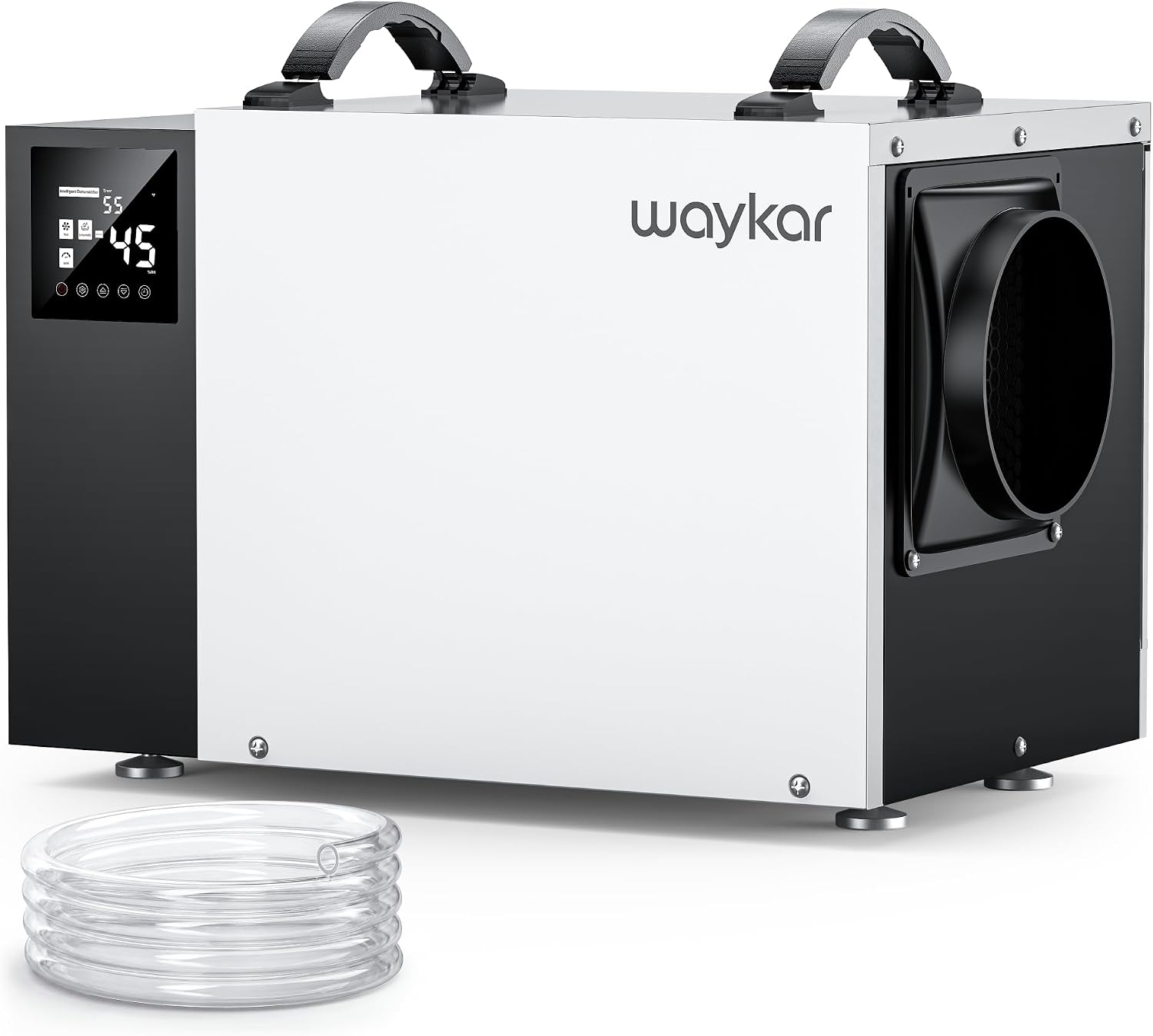
Waykar 125 Pint Crawl Space Dehumidifier with Pump & Drain Hose for Basements, Commercial & Water Damage Spaces up to 6500 Sq. Ft., Compact, Strong Dehumidification, 5-Year Quality Coverage
A 125-pint crawl space unit rated for up to 6,500 square feet, with a pump, a drain hose, and 5-year quality coverage. Compact body, aimed at basements, commercial spaces, and water damage drying.
Visit on Amazon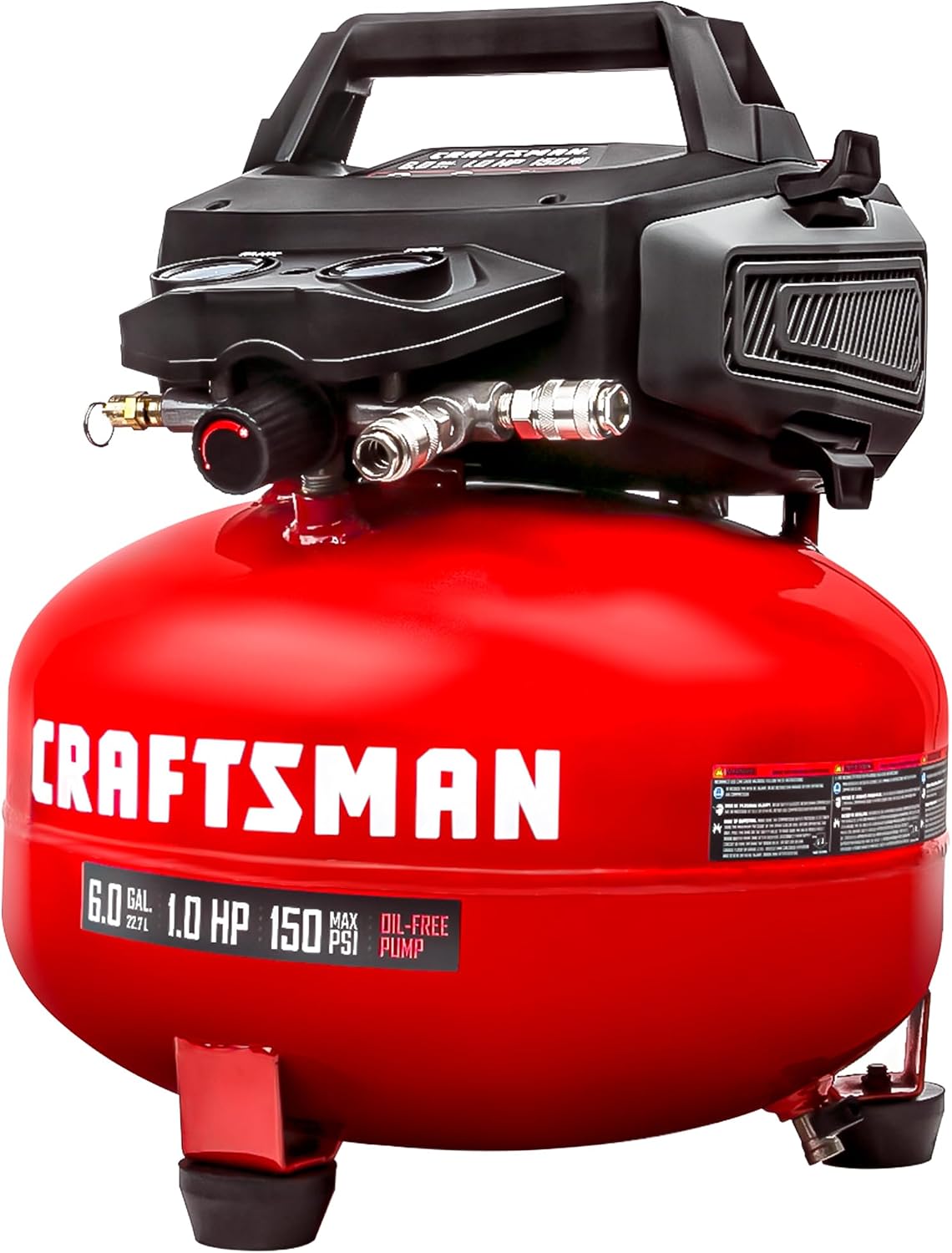
CRAFTSMAN 6 Gallon 150 PSI Oil-Free Pancake Air Compressor CMXECXA02106410
A 6-gallon, 150 PSI oil-free pancake compressor. Not a dehumidifier, and this guide will not pretend otherwise. It is here as the companion tool: compressed air for clearing a blocked drain line or blowing dust off a condenser coil.
Visit on AmazonPrices and availability may change. Check the retailer for current details.
How these products were compared
This guide compares stated pint capacity, stated square-foot coverage, drain provisions, energy listings such as Energy Star, and physical format, meaning a freestanding basement unit versus a low-profile crawl space design. Product names, images, and retailer links are matched by product identifier so that every card points to the product shown.
Nothing here is a lab test. The capacity and coverage figures are the manufacturer's stated ratings, and real performance depends on air temperature, door gaps, and how wet the space actually is. I have not weighed water from these six units and I am not going to pretend otherwise. Use the cards to confirm current price and availability.
How to choose the right dehumidifier
The pint rating on the box is a lab number, taken at warm, humid conditions. In a real basement, with a door that does not seal and a floor that stays cool, plan on getting noticeably less than the sticker claims. That is the main reason I tell people to size up rather than size exactly. A unit slightly above the job will cycle and hold the space, while a unit sitting exactly at its limit runs continuously and never quite catches up.
Match the format to the room. A freestanding unit is fine in a finished basement where you walk past it every day. A crawl space, a commercial space, or a water damage job calls for a low-profile design that sits under the joists, and at that point the pump and drain hose stop being conveniences and become the whole reason to buy. Nobody crawls under a house to empty a tank.
Temperature matters as much as capacity. Compressor dehumidifiers, which is what every dehumidifier in this group uses, are at their best in warm air. In a space that stays below roughly 60 degrees, output falls off and a desiccant unit becomes the better tool. None of the products here are desiccant, so if you are treating a cold cellar or a sealed crawl space in a northern climate, that is a different shopping list.
Then think about where the water goes. A pump gives you options a gravity hose does not, because it can lift condensate up and over a rim joist to a utility sink, a floor drain, or a condensate line. If you have no drain at all, How to Run a Dehumidifier Drain Hose Without a Floor Drain walks through the alternatives before you buy a machine you cannot plumb. Treat the onboard humidistat as a rough control rather than an instrument, and cross-check it against a standalone hygrometer once a month.
Waykar 150 Pints 7000 Sq.Ft Energy Star Dehumidifier with Pump for Basement
The Waykar 150 Pints is the largest machine in this group on paper: a stated 150-pint capacity and stated coverage of up to 7,000 square feet, with a built-in pump and an Energy Star listing. For a whole-basement job, that combination is the one that matters. High capacity means the unit can pull hard during the first week, when a damp space is releasing water stored in concrete, framing, and stored boxes, and the pump means you are not hauling a tank up the stairs every day just to keep it running.
The Energy Star listing is worth noting for a different reason. A dehumidifier in a wet basement runs for months, so efficiency shows up on the electric bill rather than on the spec sheet, and I keep a watt meter on units I service for exactly that reason.
The trade-off is physical. A 150-pint class machine is big and heavy, it needs clearance for airflow, and it needs a drain path the pump can reach. If your space is a single damp bedroom or a basement under about 1,500 square feet, this is more machine than the job requires, and you are paying for capacity you will never use. It also assumes a warm space, like every compressor unit here.
Alternatives to consider
The AIRPLUS Max 80 Pint Dehumidifier for Home Basement up to 5500 Sq Ft is better suited to a finished basement or a main floor up to 5,500 square feet, where 80 pints of stated capacity and a smaller body make more sense than a 150-pint machine. The AEOCKY 5000Sq.Ft Energy Star Version 6.0 Dehumidifier for Basement is a stronger fit when your space is closer to 5,000 square feet and you want an Energy Star listing in a smaller package.
The CADPXS 80 Pints Crawl Space/Commercial Dehumidifier with Pump & Drain Hose and the Waykar 125 Pint Crawl Space Dehumidifier with Pump & Drain Hose for Basements, Commercial & Water Damage Spaces up to 6500 Sq. Ft., Compact, Strong Dehumidification, 5-Year Quality Coverage cover the low-profile end of the list, both with a pump and a drain hose, aimed at crawl spaces and job sites. The CRAFTSMAN 6 Gallon 150 PSI Oil-Free Pancake Air Compressor CMXECXA02106410 covers none of that. It is a tool, not a dehumidifier, and it earns a place in a damp-basement kit for clearing a blocked drain line or blowing dust out of a condenser coil.
Day-to-day use and maintenance
Maintenance on any of these is mostly about airflow and drainage. Rinse or vacuum the intake filter every couple of weeks during heavy season, because a clogged filter makes the machine work harder and can ice the coil. Check the drain hose for kinks and for a low spot where water can sit, and confirm the hose outlet sits below the unit if you are relying on gravity. If the unit has a pump, test it by running the machine and watching the discharge line rather than assuming it works.
Set the humidistat in the 45 to 50 percent range and leave it alone. Chasing 30 percent in a Louisiana summer means a machine that never shuts off. Cross-check the onboard humidistat with a separate hygrometer once a month, because sensors drift, and a unit that thinks the room is drier than it is will short-cycle and leave you wondering why the smell came back.
Two safety notes worth stating plainly. A dehumidifier in a wet space should run on a GFCI-protected outlet, and the cord should not be run through standing water or under a door where it can be pinched. Give the unit the clearance the manual asks for and do not stack anything on top of it. If you are dealing with active water intrusion, mold growth on drywall, or a space that floods repeatedly, that is a drainage and remediation problem. A dehumidifier manages the air after the water source is handled, not instead of handling it.
For the compressor, treat it like the tool it is. Drain the tank after use, keep it out of the wet area, and do not aim compressed air at a live electrical panel or at a coil while the unit is running.
Buying checklist
- Measure the floor area and ceiling height of the space, plus the doorway the unit has to pass through.
- Measure the clearance the manual requires around the intake and exhaust before you commit to a corner.
- Choose stated capacity based on normal conditions in your space, not on the worst week you can imagine.
- Confirm the exact model includes a pump or a hose drain if the space will be unattended for days at a time.
- Check the temperature the space holds in winter before assuming a compressor unit is the right choice.
- Read the cleaning and maintenance instructions, especially how the filter and coil are accessed.
- Verify the current retailer price, availability, and return terms.
Final recommendation
Choose the Waykar 150 Pints 7000 Sq.Ft Energy Star Dehumidifier with Pump for Basement when you are treating a large basement or a whole-floor space and you have a drain path the pump can reach. Choose the AIRPLUS Max 80 Pint Dehumidifier for Home Basement up to 5500 Sq Ft when the space is smaller, finished, and easy to access. If the machine is going under a house, start with the crawl space units and treat the pump and drain hose as the deciding feature rather than an accessory. And if the compressor is the only thing on this list you actually needed, that is a fair outcome too.