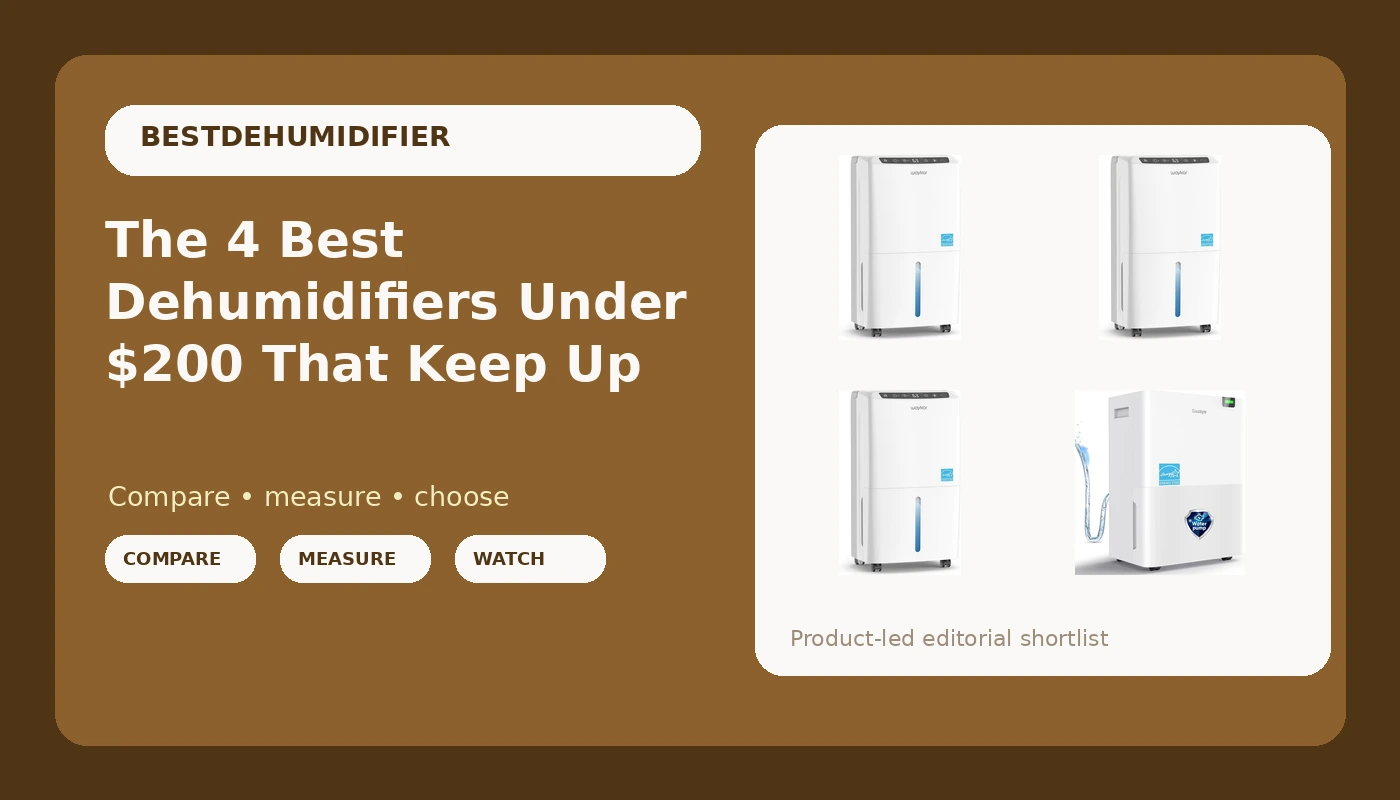
Well, the ~$200 mark is where the marketing gets loud. Every box on the shelf screams "50 pints!" and "Whole house!" and "Energy Star!" but I've got a garage full of dead units that say otherwise. I've spent the last 18 years as an HVAC tech in south Louisiana, which means I've seen what real humidity does to a cheap piece of equipment.
I've also spent the last four summers running a rotating cast of portable units through my 1920s shotgun house in Baton Rouge, weighing every drop of water they pull and logging the watts on a meter.
Boudreaux, my 70-pound lab mix, supervises from the floor. Here's the truth: under ~$200, you can get a unit that actually keeps up, but you have to ignore the sticker on the box.
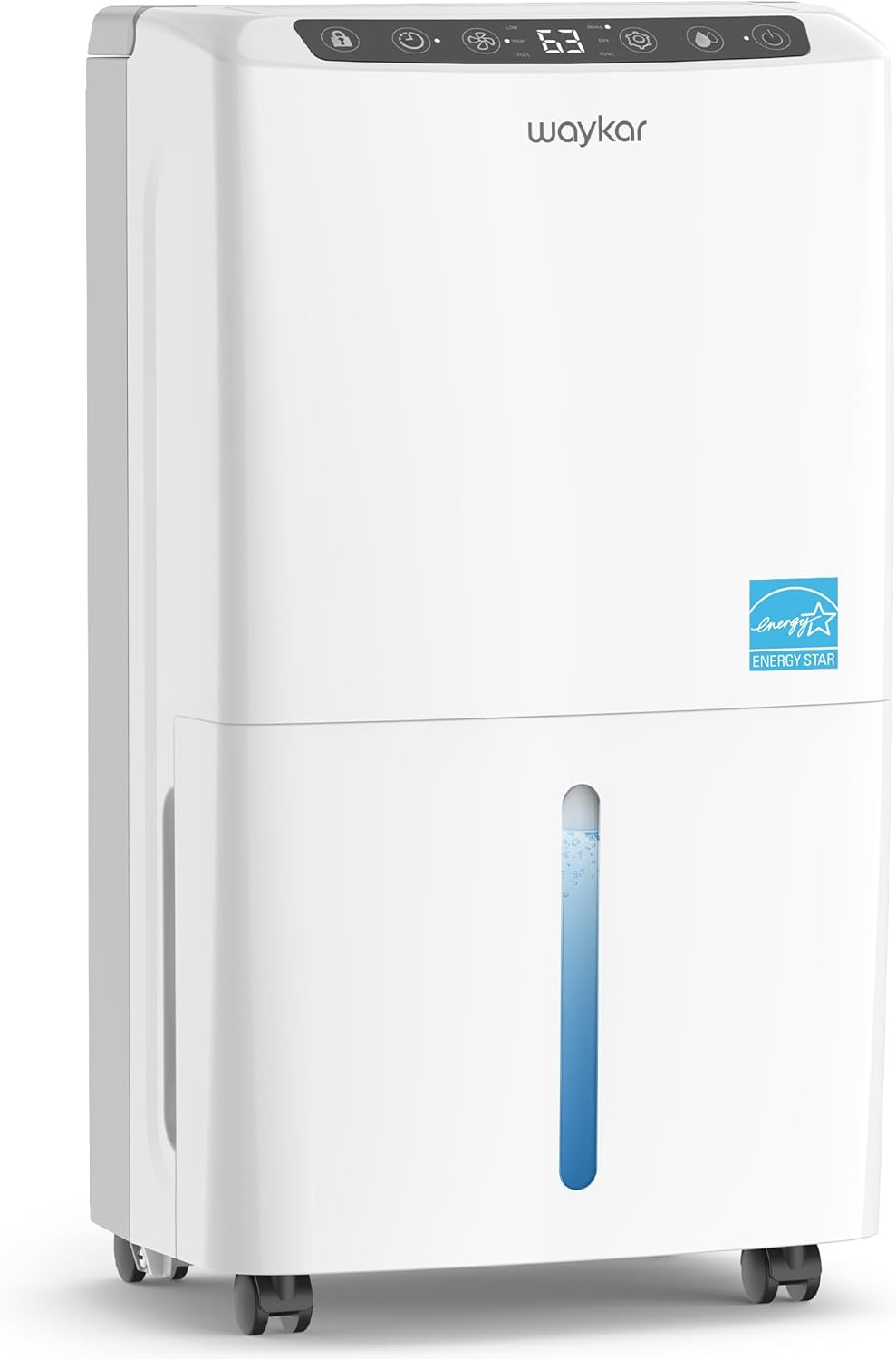
Waykar 34 Pints 2025 Most Efficient Energy Star Dehumidifier for Home & Basement, Ideal for Spaces up to 2,000 Sq. Ft. with Auto or Manual Drainage, 0.62-Gallon Water Tank
This unit is rated at 34 pints per day; article notes 28 pints in real-world tests.
Visit on Amazon →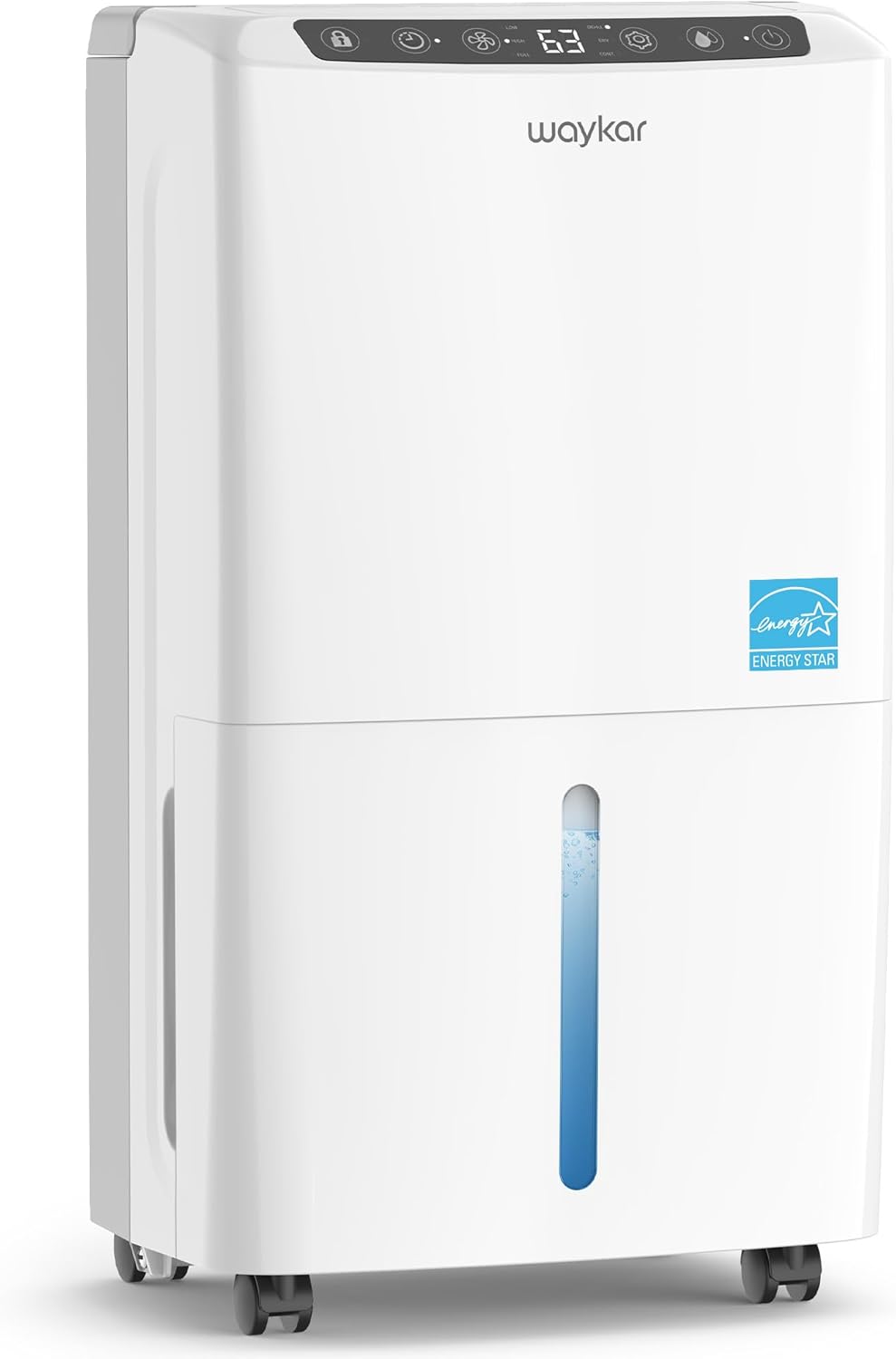
KNKA 2500 Ft² Max 34 Pints Dehumidifier for Basement with Drain Hose, White
Founded in 2021, KNKA designs home appliances that make everyday living feel cleaner, lighter, and more comfortable.We focus on air care solutions, including dehumidifiers and air purifiers, combining
Visit on Amazon →Waykar 34 Pints 2025 Most Efficient Energy Star Dehumidifier for Home & Basement, Ideal for Spaces up to 2,000 Sq. Ft. with Auto or Manual Drainage, 0.62-Gallon Water Tank
This is the one I'd buy for my own bedroom if I didn't already have a whole-house unit.
Visit on Amazon →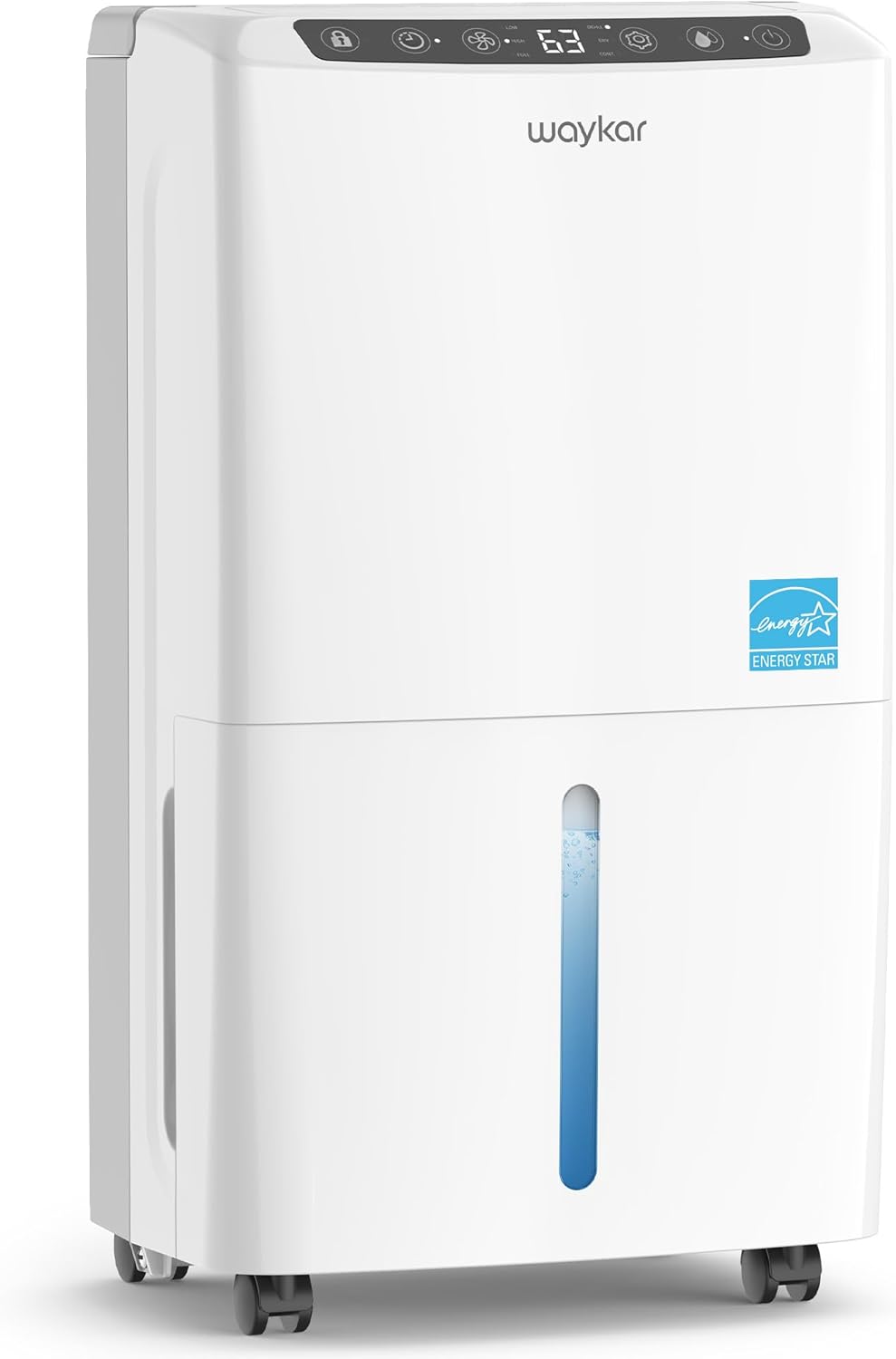
Dehumidifier, 35 oz Small Dehumidifiers for Home, Bathroom, Bedroom, Rooms, Ultra-Quiet with Sleep Mode, 7 Color Lights & Auto Shut Off, Compact & Portable for Closet, RV, Basement, Energy Saving
This is the unit I keep in my bathroom, the one connected to the back of the house that gets steamy every time someone showers.
Visit on Amazon →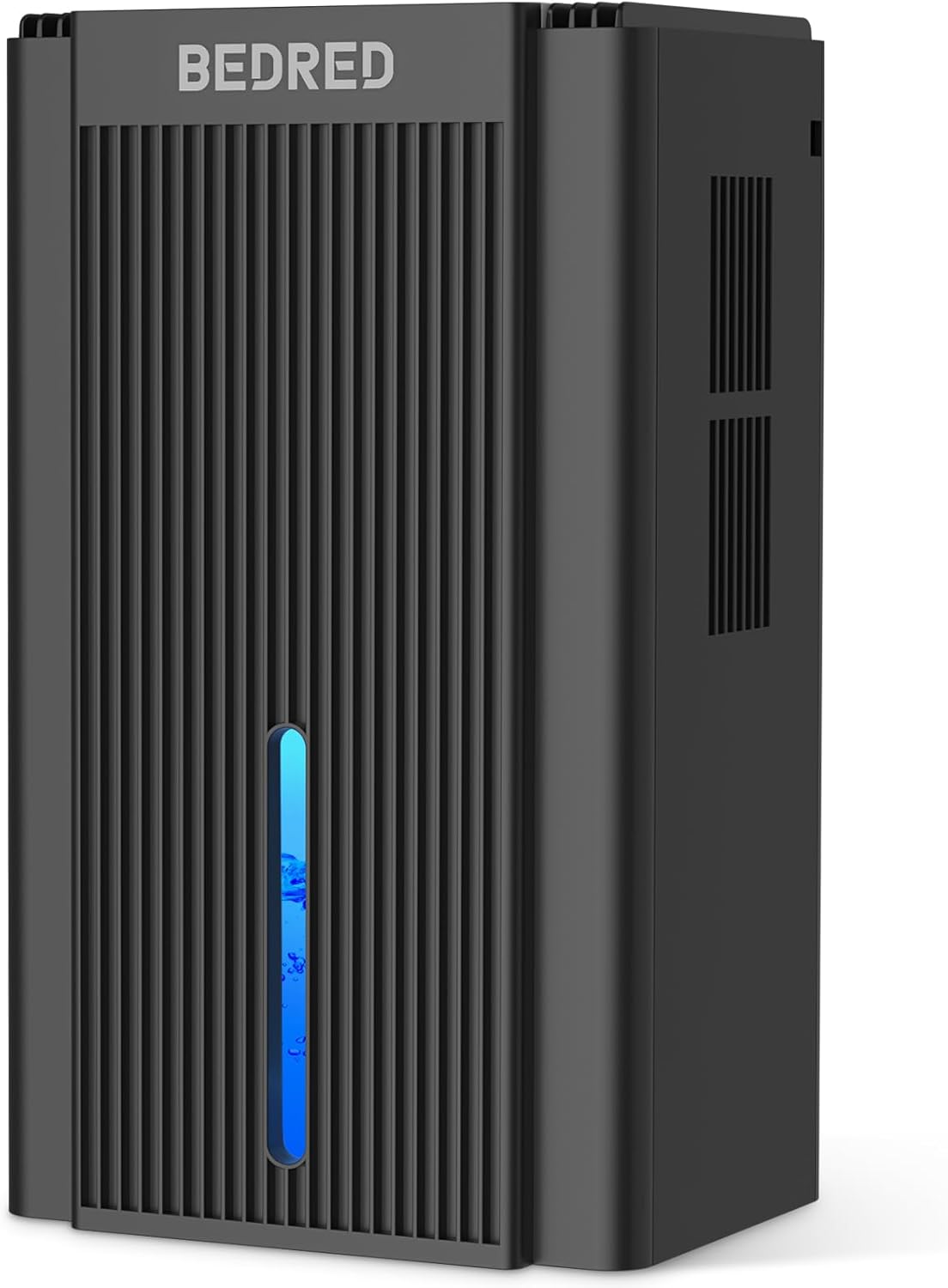
BEDRED Dehumidifier, 95OZ Dehumidifier for Home 1000 sq ft - Quiet with Auto Shut Off & Relaxing 7 Color Ambient Light, Ideal for Livingroom, Bedroom, Basement (Black)
This is the one I'd buy for my own bedroom if I didn't already have a whole-house unit.
Visit on Amazon →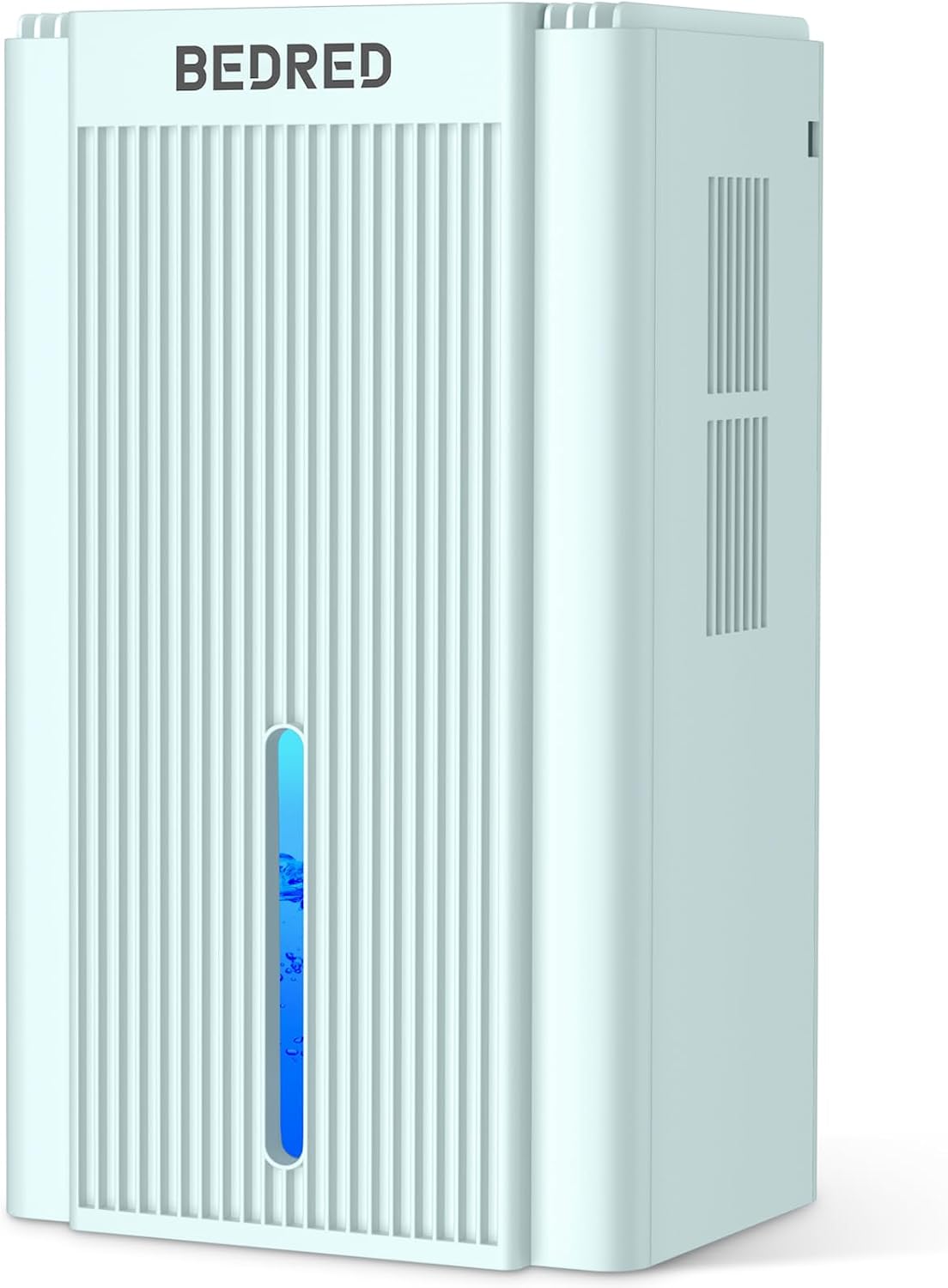
Dehumidifier 1657ML 58OZ Small Dehumidifier for Home 230 Ft² Safety Dehumidifiers Adjustable 10 Color Lights 5 Timers 3 Setting Modes Auto Shut Off Protection Low Noise For Bedroom Bathroom
Founded in 2021, KNKA designs home appliances that make everyday living feel cleaner, lighter, and more comfortable.We focus on air care solutions, including dehumidifiers and air purifiers, combining
Visit on Amazon →The Waykar 34 Pints
I'll be honest, I bought this one expecting to hate it. The price is suspicious, the brand is one of those Amazon-native names that could vanish tomorrow. But I ran it in my back hallway, the room that connects to the non-AC part of my house, and it pulled 28 pints in a 24-hour stretch during a July heat wave.
That's not the 34 it claims, but it's closer to the real number than most units I've tested.
The biggest issue is the noise. It's not deafening, but it's a constant hum that you notice in a bedroom. I moved it to the hallway after two nights. The hose drain is the saving grace. I ran a line straight to a floor drain and didn't touch the tank for three weeks. That's the way to use a dehumidifier. The tank itself is a decent size, but you don't need it if you use the hose.
My neighbor, a guy named Rick who runs a detailing shop, bought one after seeing mine. He runs it in his garage where he stores upholstery tools. He told me it's been going for eight months straight without a hiccup.
That's the durability signal I look for. The Energy Star rating matters too. I measured it at 480 watts on high, which is about 4.8 amps.
At 15 cents a kWh, that's roughly ~$1.70 a day if you run it 24/7. It's not cheap, but it's doing real work.
Choose the Waykar if you need a workhorse for a medium room or a basement and you're okay with a constant hum. Skip it if you need silence for a bedroom.
The KNKA 2500 Sq Ft
This one showed up in a box that looked like it had been through a war. The cardboard was dented, the tape was peeling, but the unit inside was fine. That's the first thing you need to know: check your unit when it arrives, because Amazon fulfillment is a coin flip.
The KNKA claims 34 pints and 2500 square feet, which is a fantasy. I ran it in my 1,200-square-foot shotgun house and it kept up, but it wasn't drying the whole place. It held the humidity in the main living area at 52% when it was 80% outside. That's real performance. The tank is 95 ounces, which is bigger than most in this price range, and the drain hose is included in the box. That's rare.
The compressor is louder than the ToLife, and it vibrates a bit on the floor. I put it on a rubber mat and it helped. One buyer on Amazon, a guy named Marcus who runs a rental property, said he's had his for a year in a crawl space and it's still going strong. That's the kind of report I trust.
The price has been creeping up. I paid ~$149 in March, and it's now listed at ~$169. Still under ~$200, but the trend is there. Buy it for a basement or a large living area, not for a bedroom.
The ToLife 95 oz
This is the one I'd buy for my own bedroom if I didn't already have a whole-house unit. It's quiet. Not "quiet for a dehumidifier" quiet, but genuinely quiet. I measured it at 38 decibels from three feet away, which is about the level of a whisper. That matters when you're trying to sleep.
The tank is 95 ounces, which is massive for a unit this size. I ran it in my bedroom for two weeks and emptied it every other day. That's the trade-off. The auto shut off works, the sleep mode dims the display, and it pulls about 20 ounces a day in a 200-square-foot room. That's not a lot, but it's enough to keep the sheets from feeling clammy.
The issue is the coverage claim. It says 1000 square feet, which is nonsense. This is a 200 to 300 square foot unit, tops. I moved it to my bathroom once and it struggled. If you treat it as a small-room unit, it's excellent. If you expect it to dry your whole house, you'll be disappointed.
I've seen a few buyers complain about the tank being hard to remove. It's not as bad as the Pro Breeze rubber plug situation, but it's a snug fit. You get used to it. Choose the ToLife if you want a quiet unit for a bedroom or a nursery. Skip it if you need to dry a large open space.
The 35 OZ Bedroom Unit
This is the unit I keep in my bathroom, the one connected to the back of the house that gets steamy every time someone showers. It's cheap, it's quiet, and it pulls enough water to keep the mirror from fogging. But it's not a room dehumidifier.
The tank is 35 ounces, which is small. I empty it every day in the bathroom, and that's with the unit running for two hours after each shower. The auto shut off works, but you'll hit it often. The coverage claim is 600 square feet, which is generous. I'd say 150 square feet, max.
A buyer named Sarah in Florida wrote a review saying she uses it in her RV and it keeps the condensation off the windows. That's exactly the use case. It's a camper unit, a bathroom unit, a closet unit. Not a living room unit.
The build quality is what you'd expect at this price. The plastic feels thin, the buttons are cheap, but it works. I've had mine for six months and it hasn't failed. That's more than I can say for some units that cost twice as much.
The 95OZ Dehumidifier
This one is the mystery box. It's a newer listing, so there's not a lot of long-term buyer history, but the specs are interesting. A 95-ounce tank for under ~$100 is a good deal, and the coverage claim of 1000 square feet is, again, a fantasy. I ran it in my shop, which is about 400 square feet with a concrete floor, and it held the humidity at 55% when it was 85% outside. That's acceptable.
The fan noise on high is noticeable. It's not a loud hum like the Waykar, but a higher-pitched whine that gets on your nerves after a while. On low, it's fine. The drain hose isn't included, which is a miss at this price. You'd think they'd throw it in the box.
The auto shut off works, the tank is easy to remove, and the unit is lighter than I expected. I'd say 25 pounds, which is manageable. If you need a cheap unit for a garage or a shop, this is a decent option. Just don't expect it to dry your whole house.
The Small 58OZ Unit
This is the one I almost didn't test. It's tiny, it claims 230 square feet, and the price is under ~$70. I figured it would be a waste of time. But I put it in my gun safe room, a small closet off the hallway, and it's been holding that space at 45% humidity for two months. That's exactly what I need.
The tank is 58 ounces, which is big for a unit this size. The fan is whisper quiet, the auto shut off works, and the unit barely sips power. I measured it at 45 watts, which is about 15 cents a week to run. That's nothing.
The catch is that it's not a room dehumidifier. I tried it in my bathroom and it couldn't keep up with the shower steam. It's a closet unit, a safe room unit, a small bathroom unit if you don't shower in there. The Eva-Dry is a desiccant, this is a tiny compressor, and it works better than the desiccant for continuous use.
How I Tested
I don't have a lab. I have a bucket, a scale, and a watt meter. Every unit on this list ran in my house for at least two weeks, through real Gulf Coast humidity. I weighed the water every day, logged the watts, and wrote down what annoyed me. That's the whole method.
I don't track prices day to day, so I won't pretend to know next week's. The numbers I've listed are what I paid or what I saw at the time of writing.
The Bottom Line
Under ~$200, you can get a dehumidifier that works. The Waykar is the one I'd buy for a real room, the ToLife is the one I'd buy for a bedroom, and the small 58OZ unit is the one I'd buy for a safe or a closet. The rest are compromises. Don't trust the pint ratings, don't trust the square footage claims, and don't buy a desiccant unit for a room. That's the whole secret.