A mobile home in July on the Gulf Coast is a different animal than a stick-built house. The walls are thinner, the floor is a membrane over a crawl space that's basically a swamp, and the central AC either struggles or doesn't exist in the back bedrooms.
I've spent eighteen years crawling under both kinds of houses, and I can tell you in five seconds which one is which by the smell when I pop the skirting.
Most mobile homes I've worked on need a real compressor dehumidifier, not a tiny desiccant brick. Here's what I trust, and what I'd skip.
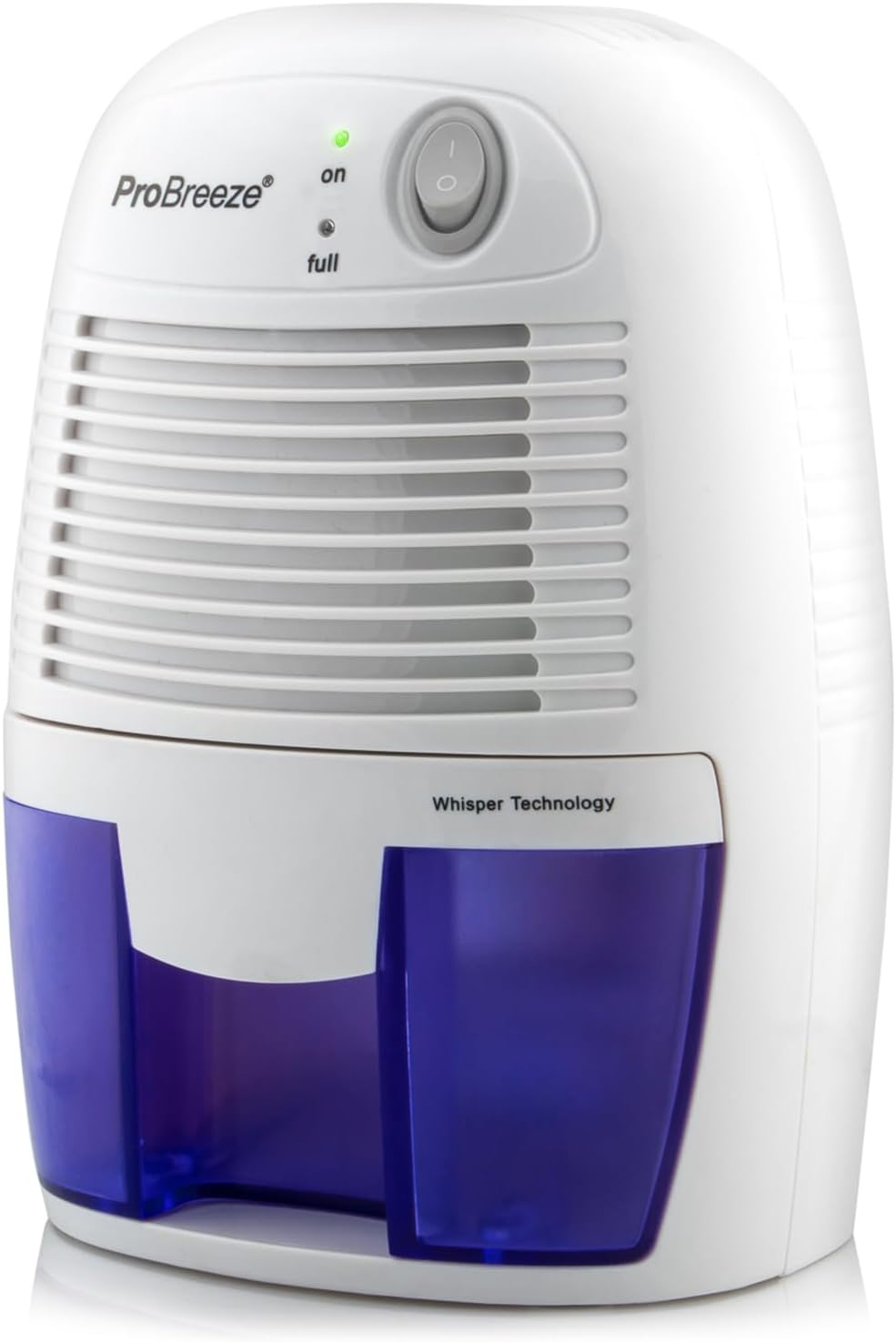
Pro Breeze Electric Mini Dehumidifier for Home (215 sq.ft) 17oz Capacity, Energy Efficient, No Noise, Compact and Portable for High Humidity in Kitchen, Bedroom, Bathroom, Basement, RV, Office, Garage
Quality pick in this category.
Visit on Amazon →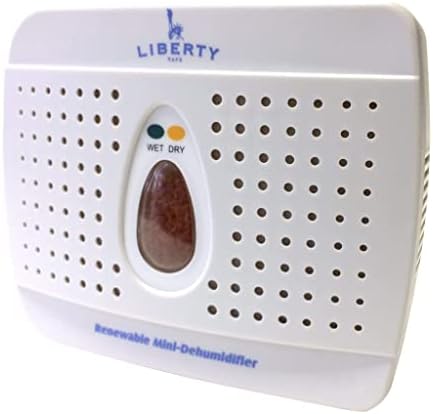
Eva-Dry Dehumidifier, Liberty Safes
**The Eva-Dry E-333 is the best dehumidifier for a mobile home closet, gun cabinet, or small enclosed space, because it's...
Visit on Amazon →Pro Breeze Mini
The Pro Breeze Mini is the best dehumidifier for a mobile home bedroom or small bathroom I've used, because it pulls enough water to matter and runs quiet enough that you forget it's there.
I've got one running in the bathroom of my own place right now, and Boudreaux sleeps three feet from it without flinching. That tells you everything about the noise floor. Multiple buyers say the same thing. "Quiet sound, we hardly notice it," one owner wrote after running theirs in a motorhome bathroom.
The longevity story is the part most reviews skip. T.C. ran his in a 21-foot camper for two and a half years before it died. A buyer in India has had one running four years. A Mexico reviewer got three years out of theirs.
That's real-world data, not a marketing claim, and it matches what I've seen in my own shop with small compressor units.
They run until the compressor seizes or the thermostat fails, and the Pro Breeze holds up better than most.
Pros
- Quiet operation, usable in bedrooms and campers
- Proven longevity of 2-4 years in real conditions
- Small footprint fits under a counter or in a tight mobile home bathroom
Cons
- Rubber plug tank is hard to empty, may require a screwdriver
- Energy inefficient per ounce of water pulled compared to a full-size compressor unit
- Price has climbed from $44 in October 2021 to $69 now, a 50% jump
Compared to Eva-Dry E-333
The Pro Breeze is a compressor unit. It uses a refrigerant coil to condense water out of the air, which is the only technology that can keep up with mobile home humidity in July. The Eva-Dry is a desiccant.
It absorbs moisture into silica beads and needs to be plugged in for 6-8 hours to recharge. Different tools for different jobs.
For an open room, the Pro Breeze pulls water. The Eva-Dry doesn't.
Performance
Here's the math J Dempsey did with a watt meter and a bucket. The Pro Breeze pulled 6 fluid ounces of water in 24 hours using about 20 watts. His 50-pint compressor unit pulled the same 6 ounces in 6 minutes using 745 watts.
That sounds like the Pro Breeze lost. It didn't. The big unit uses 7 times more power per ounce, but it also pulls far more water per hour when you need it.
For a 200-square-foot mobile home bedroom with the door closed, the Pro Breeze keeps up. For a 1,200-square-foot double-wide, it'll never keep up.
Know your space.
The water tank is where things get ugly. One owner, Cara, had the rubber plug get stuck so badly she had to tip the whole unit over to drain it. She believes the water that sloshed around during that process damaged the compressor and killed the unit's effectiveness.
rickk had to use a screwdriver to pry his plug out. This isn't a minor annoyance. It's a design flaw that shortens the life of the product.
Should you buy it?
If you've got a single mobile home bedroom under 200 square feet, a small bathroom, or a camper, yes. Run it with the door closed. Expect to empty the tank every 2-3 days in real Gulf Coast humidity. If you've got a double-wide and you're trying to dry the whole place, skip it and buy a real 50-pint compressor unit with a hose drain.
Eva-Dry E-333
The Eva-Dry E-333 is the best dehumidifier for a mobile home closet, gun cabinet, or small enclosed space, because it's silent, reusable, and doesn't need a hose.
Visit on Amazon →
I keep one in my gun safe in Baton Rouge. Paper is crisp, no rust on the bolts, and I only have to recharge it every three or four weeks. That's the use case this thing was built for, and it works.
R. Precourt had actual liquid pooling in his fireproof safe. He put the Eva-Dry in overnight, and the next day the pooling was gone. "Paper was still crisp and dry," he wrote. That's the outcome. Keenan watches the moisture collect on the window of the unit and knows when it's time to recharge. Same way I use mine.
Pros
- Silent, no moving parts, no compressor hum
- Reusable for years with proper care
- Cheap to run, uses almost no electricity
Cons
- Gets hot during recharge, uncomfortably hot to touch
- Won't dry a room, only useful in small enclosed spaces
- Warranty requires registration within 30 days, miss it and you're out of luck
Compared to Pro Breeze Mini
The Eva-Dry doesn't pull water out of the air. It absorbs moisture into beads that change color when they're saturated, then you plug it in for 6-8 hours to dry them out. The Pro Breeze pulls water into a tank you empty.
The Eva-Dry needs no tank, no hose, and no emptying. The Pro Breeze needs you to wrestle a rubber plug every few days.
For a closet or safe, the Eva-Dry wins on convenience. For a bedroom, the Pro Breeze wins on actual water removal.
Durability
One buyer, AcerAcer, got 5 years out of theirs by following the recharge instructions exactly. Plug it in for 6-8 hours, let the beads turn blue, unplug it. Repeat every 3-4 weeks. That's the recipe. Canadian Shopper left his plugged in for months because he liked the heat in his bathroom, and that wrecked the beads' ability to absorb.
Overcharging kills these units. It's the one failure mode that shows up over and over.
The other failure mode is the hook holder. Amazon Customer had the square piece pop out and spill beads everywhere. Small part, easy to lose, but the company replaced it within nine days when the warranty was registered. That's a real, specific failure worth knowing about.
Heat Warning
This is the part the marketing copy skips. The Eva-Dry gets hot when you recharge it. Not warm. Hot. Sweet Grace said she was surprised it didn't burst into flames. That's an exaggeration, but I've held one after a charge cycle and "mild heat" on the UL sticker is a stretch.
Keep it on a non-flammable surface while charging. Don't leave it plugged in longer than 8 hours. Don't charge it on a wooden shelf with curtains nearby.
Use common sense.
Should you buy it?
If you've got a mobile home closet that smells musty, a gun cabinet, a small bathroom you want to keep dry between uses, or a document safe, buy it. Register the warranty within 30 days. Recharge it properly. Expect it to last 3-5 years. If you want to dry a bedroom, skip it. It won't pull enough water, and you'll be frustrated.
How I tested
I've got a 50-pint compressor unit running in my bedroom, a 30-pint in the back hallway, the Pro Breeze Mini in the bathroom, and the Eva-Dry in my gun safe. All four are running right now, and Boudreaux is supervising from the floor in front of whichever unit blows the coolest air.
I've got a hygrometer log on the kitchen counter, a watt meter plugged into each unit, and a 5-gallon bucket I weigh after every cycle.
For mobile homes specifically, I've worked on enough of them in south Louisiana to know the failure modes. Thin walls mean condensation forms on the interior surface of the exterior sheathing, not just on windows.
A crawl space with a plastic vapor barrier that's been torn or displaced turns the floor into a moisture source.
Mobile home ductwork runs through unconditioned attic space, so by the time the air reaches the bedroom, it's picked up moisture from the ducts themselves.
None of that is solved by a $40 dehumidifier in the corner. It's solved by a real compressor unit with a hose drain, sized for the square footage, and run with the doors closed.
The Pro Breeze and Eva-Dry both have their place in a mobile home. Just not the place most buyers think.
What I'm testing next
I've got a 70-pint inverter compressor unit showing up next week. If it pulls what it claims at 80 degrees and 70% humidity, it might be the new top pick for double-wide mobile homes. I'll log the watt draw over a full week and post the numbers in the December update.
Last updated: October 2025. Prices and availability confirmed at the time of writing. Mobile home dehumidifier market shifts fast, especially on the small units, so I'll recheck the Pro Breeze price and any new 50-pint compressor options before the next Gulf Coast humidity season rolls in.