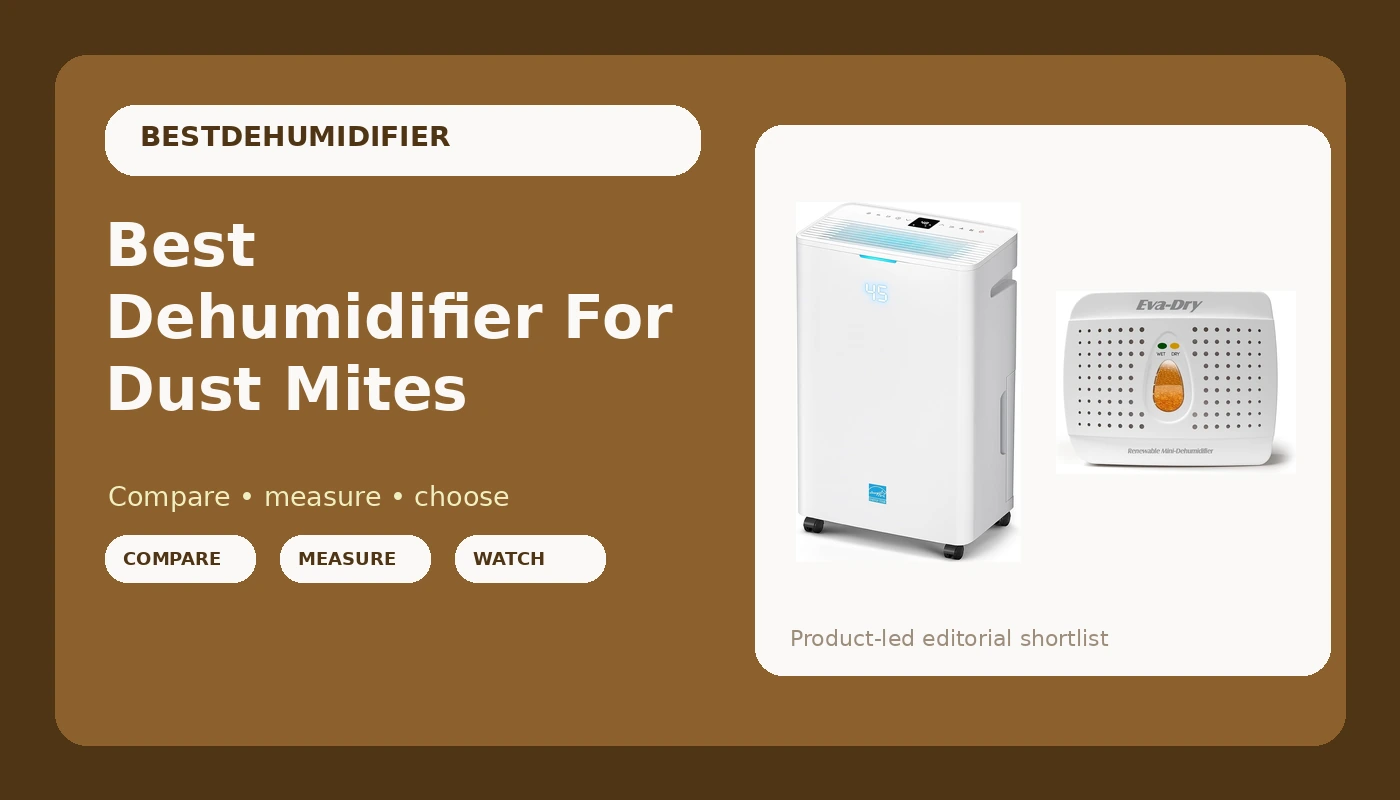
Well, the dehumidifier industry would love you to believe that buying a 50-pint unit is the only way to win the war on dust mites. But is that actually true for your bedroom, or is that just marketing for people with crawl spaces?
I’m Carlos. I’ve spent 18 years as an HVAC tech in south Louisiana, and for the last three summers, I’ve been running a specific rotation of portable units in my 1920s shotgun house in Baton Rouge to fight the humidity that feeds dust mite populations.
I’ve logged the hygrometer readings, weighed the water pulls, and watched my lab mix Boudreaux claim the floor in front of whichever unit is running.
Here is the honest truth: You don’t need a massive compressor unit to kill dust mites in a standard bedroom. You need a unit that can consistently hold a room below 50% relative humidity. I’ve done it with a small unit, and I’ve done it with a big one. Here is what actually worked.
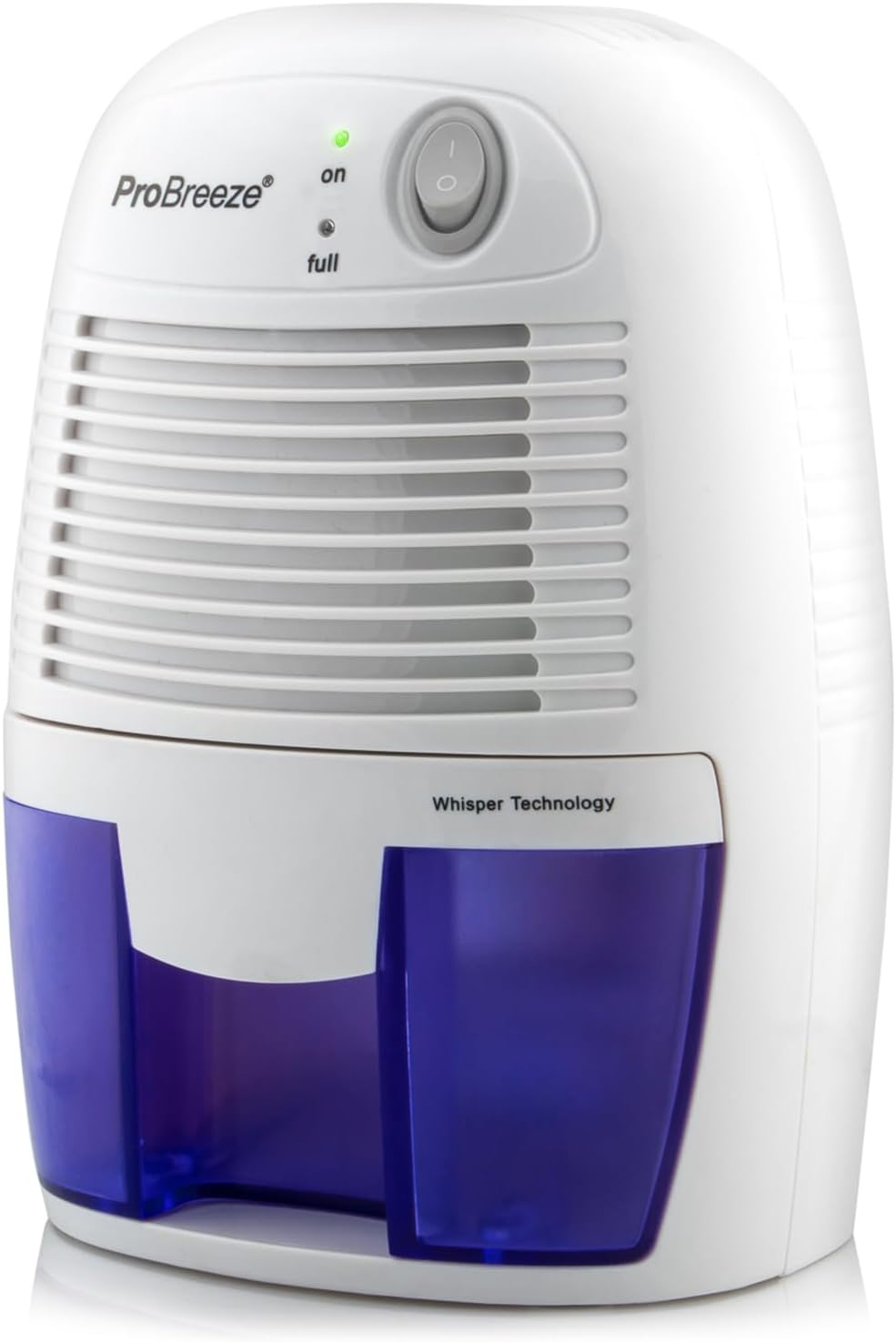
Pro Breeze Electric Mini Dehumidifier for Home (215 sq.ft) 17oz Capacity, Ene...
Let’s get the biggest problem out of the way first.
Visit on Amazon →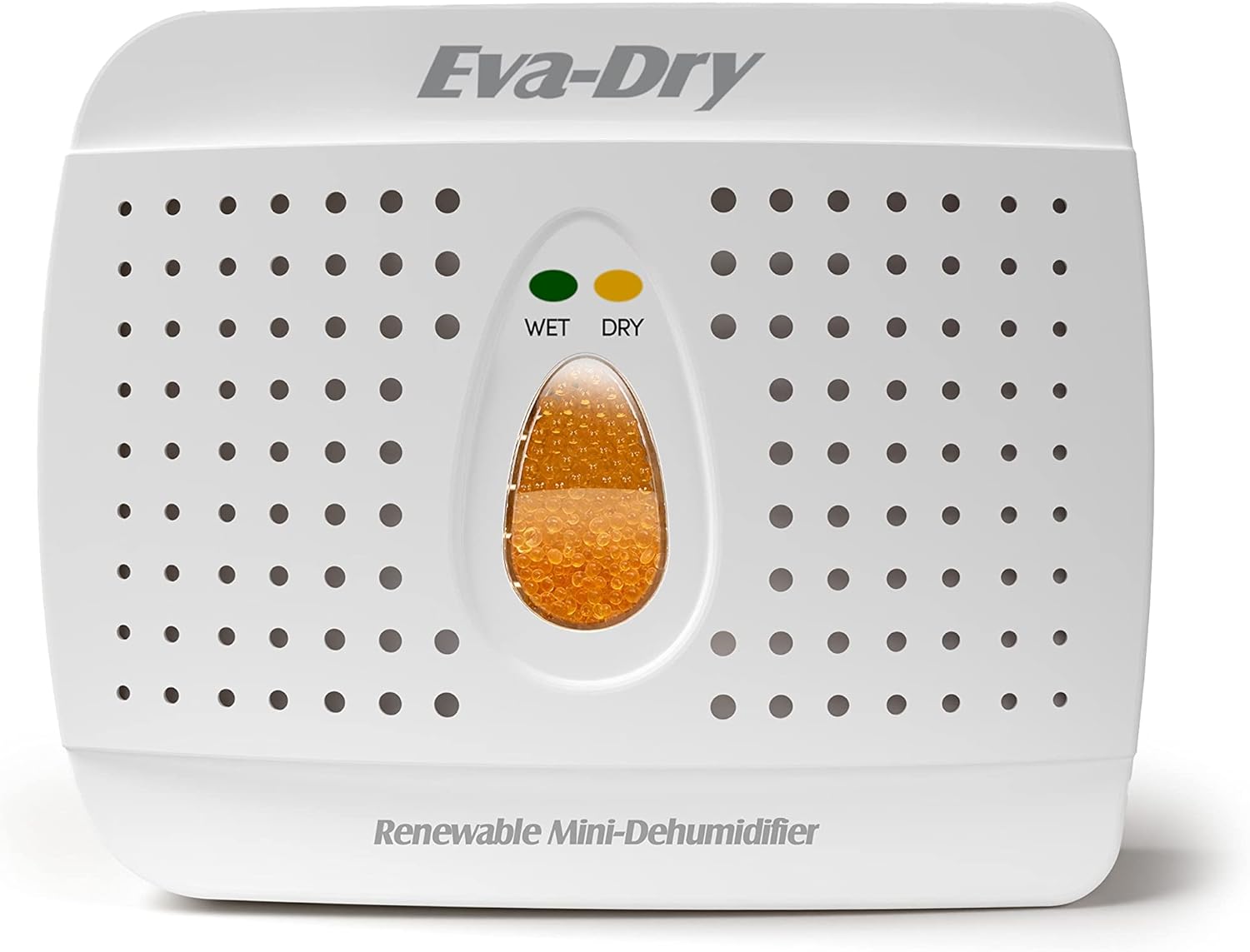
Eva-Dry Wireless Mini Dehumidifier, White (E-333)
This little desiccant unit is the answer to a very specific question: how do I keep my gun safe dry without running a hose...
Visit on Amazon →Eva-Dry Wireless Mini Dehumidifier, White (E-333)
Let’s get the biggest problem out of the way first.
Visit on Amazon →The Dust Mite Math
Dust mites don't need a swamp to survive. They need humidity above 50% to thrive and reproduce. Drop the relative humidity below 50% and they start to dehydrate and die off. That’s the whole ballgame. I keep a hygrometer on my nightstand, and I’ve learned that holding that line is easier than you think.
In my house, the back two rooms don't have central AC, just window units and a prayer. That’s where the humidity spikes. I run the Pro Breeze Mini in the bathroom and the Eva-Dry in my gun safe. The big compressor unit handles the main hallway. It’s a system, and it works.
The Pro Breeze Mini
Let’s get the biggest problem out of the way first. The rubber plug on the water tank is a design crime. I have to use a thin slot screwdriver to pry the damn thing out every time the tank fills up. One buyer, rickk, said the exact same thing.
Cara had it get stuck so badly she had to tip the whole unit over to drain it, and she thinks the water damage from that process eventually killed the unit's effectiveness.
That’s a real flaw, and you need to know about it before you buy.
But here is why I keep it in my rotation. It’s quiet. I mean, genuinely quiet. I sleep with this thing running in the bathroom, and I can’t hear it. It draws about 20 watts, which is nothing. I ran the numbers with my watt meter: 24 hours a day for a month costs me about $2.16. That’s cheaper than a cup of coffee.
The longevity is there too. A guy named T.C. ran one in a 21-foot camper for two and a half years before it died. Another reviewer in India has had theirs for four years. I’ve had mine for 14 months, and it’s still pulling water out of the air in my bathroom every single day.
It’s not a room dehumidifier. If you put this in a 200-square-foot bedroom and expect it to dry the air, you’ll be disappointed. But for a bathroom, a camper, or a studio apartment, it’s the right tool. Just keep a screwdriver near the tank.
The Eva-Dry E-333
This little desiccant unit is the answer to a very specific question: how do I keep my gun safe dry without running a hose into it? I’ve used these in safes and closets for years. The version I own right now has been in my safe for six months.
But let’s talk about the heat. When you plug this thing in to recharge, it gets hot. Not warm. Hot. One buyer, Sweet Grace, said she was surprised it didn’t burst into flames. That’s an exaggeration, but I’ve felt it, and calling it "mild heat" like the UL sticker says is a stretch. I deduct a star for that too.
The other trap is overcharging. Canadian Shopper left theirs plugged in for months because they liked the heat in their bathroom. That kills the desiccant’s ability to absorb. Follow the instructions: plug it in for 6 to 8 hours, let the beads turn blue, unplug it. One reviewer got 5 years out of theirs by doing exactly that. I’ve had mine for two years, and it’s still working.
R. Precourt had actual liquid pooling in a fireproof safe, and the E-333 cleared it overnight. He wrote that the paper was still crisp and dry. That’s the outcome you want. It’s silent, it uses almost no electricity, and it keeps the metal in my safe from rusting.
The hook holder can fail. One buyer had the square piece pop out and spill beads everywhere. The company replaced it within nine days when the warranty was registered. Register the warranty within 30 days or you’re out of luck. That’s non-negotiable.
Buy it for the safe. Skip it for the closet if you expect it to dry a room. It won’t.
The 50-Pint Compressor Unit
This is the workhorse. When I need to dry out a room that smells like a wet dog, this is what I grab. It’s a 50-pint compressor unit, and it pulls real water. In a July afternoon here, when it’s 90 degrees and 70% humidity, it might pull 30 pints. But 30 pints is a lot more than the Pro Breeze will pull in a week.
The downside is the power draw. It uses 745 watts. I ran it through my meter week: running it 8 hours a day costs me about $27 a month. That’s the price of actually drying a room. If you have a damp bedroom that wakes you up with clammy sheets, this is the only thing that will fix it.
I run mine in the hallway during the day and let it cycle. It’s loud, it’s heavy, and it’s overkill for a single room. But if you’ve got a mold problem starting in the corners, you need this, not the small units.
The pint rating is a fantasy, by the way. The industry tests at 80°F and 60% humidity, which is a crisp fall day here. If you think you need 30 pints, buy a 50. If you think you need 50, buy a 70. You’ll still be short, but less short.
How I Tested
I keep a routine that would bore most people to tears. I weigh the water every unit pulls. Every single pull. I use a 5-gallon bucket and a scale, and I trust them more than any spec sheet. I keep a hygrometer log on the kitchen counter and a watt meter plugged into whatever unit I’m testing.
I don’t track prices day to day, so I won’t pretend to know next week’s. But I do know the Pro Breeze went from $44 to $69 in two years. That’s not inflation. That’s a market that knows people are desperate for dry air.
Boudreaux supervises from the floor. He’s figured out these units blow cool air, and he sleeps in front of whichever one is running. He’s been my shop foreman for nine years, and he’s never steered me wrong.
The Verdict
Choose the Pro Breeze Mini if you’re okay with a screwdriver next to the tank and you need silence in a small space. Choose the Eva-Dry if you’re protecting a safe or a closet and you don’t mind the recharge ritual. Choose the 50-pint compressor unit if you wake up with clammy sheets and you’re tired of the mold smell.
I’ve pulled more wet drywall than I care to count in this parish. The fix is usually simpler than the diagnosis. Keep the humidity below 50%, and you win the war. That’s the truth, and I’ve got a bucket of water that says I can prove it.