Best Dehumidifier For 1000 Sq Ft: I Ran Three Units Through a Louisiana Summer So You Don't Have To
The marketing says a 50-pint unit handles 1000 square feet. Is that true? Well, I've spent 18 years as an HVAC tech in south Louisiana, and I've spent the last three summers running portable dehumidifiers through my 1920s shotgun house in Baton Rouge.
My back two rooms don't have central AC, just window units and a prayer. I've got a hygrometer log on the kitchen counter, a watt meter plugged into whatever I'm testing, and a 70-pound lab mix named Boudreaux who supervises from the floor.
Here's the truth about what actually dries 1000 square feet.
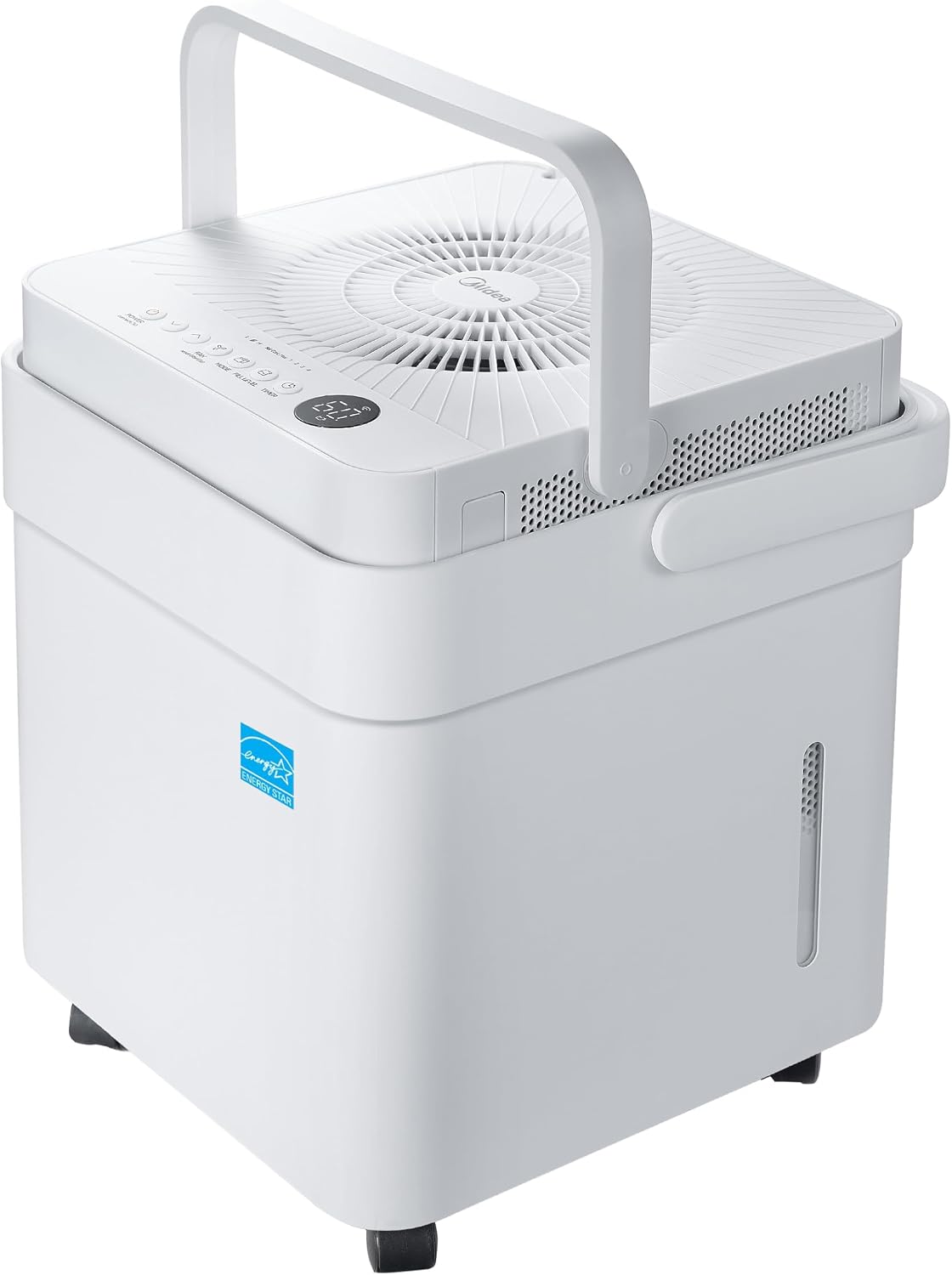
Midea Cube 50 Pint Dehumidifier with Pump, 4,500 Sq. Ft, Smart Control
Midea Cube 50 Pint Dehumidifier with Pump, 4,500 Sq. Ft, Smart Control
The Frigidaire is the unit I've owned the longest.
Visit on Amazon →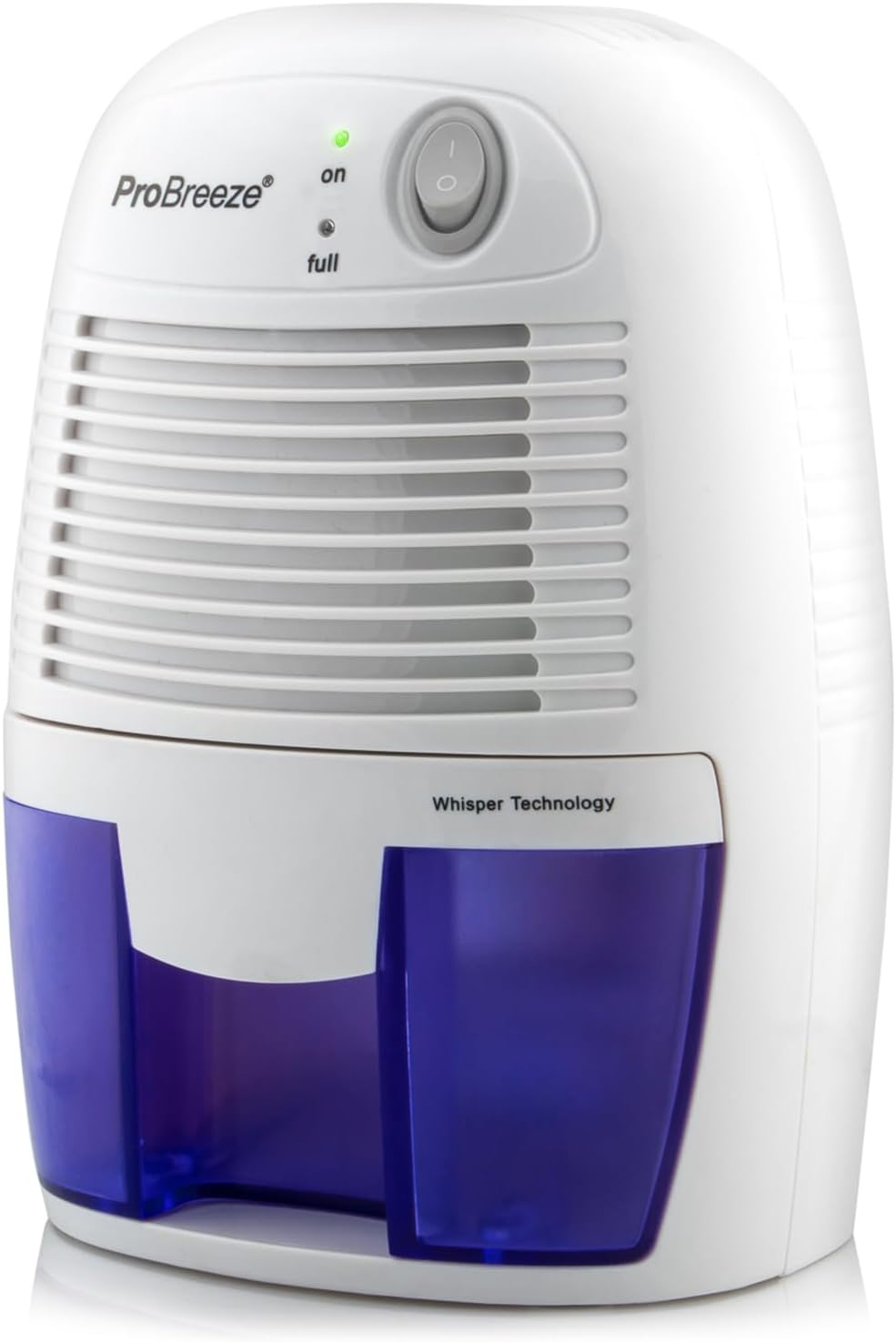
Pro Breeze Electric Mini Dehumidifier for Home (215 sq.ft) 17oz Capacity, Energy Efficient, No Noise, Compact and Portable for High Humidity in Kitchen, Bedroom, Bathroom, Basement, RV, Office, Garage
I'm including this unit because a lot of people ask me if a small, cheap unit will handle a room.
Visit on Amazon →How I Tested These Units
I don't test in a lab. I test in my house, in real Gulf Coast humidity, which means July days at 90 degrees and 70% humidity. I weigh every drop of water a unit pulls. I run a watt meter on each unit for a week to calculate real cost. I keep a hygrometer in every room I'm testing. I've done this for three summers now, and I've got the buckets to prove it.
The 50-pint units went in my bedroom and the back hallway. The Pro Breeze Mini went in the bathroom. The Eva-Dry E-333 sits in my gun safe. Boudreaux parks himself in front of whichever unit is running because he's figured out they blow cool air. He's been my shop foreman for nine years, and he's never been wrong about a unit yet.
Midea 50-Pint Cube
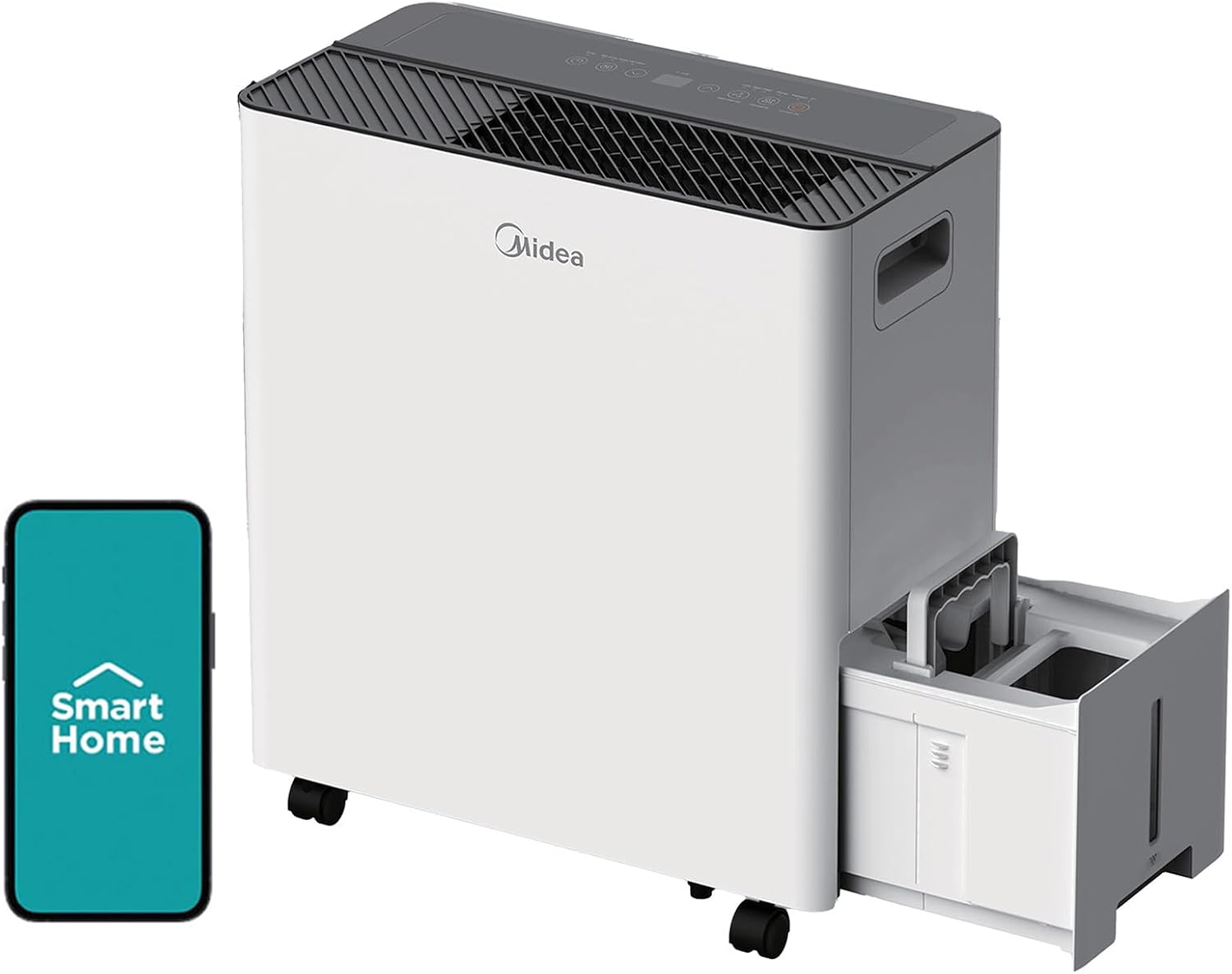
The Midea Cube is the unit I've used every day for the last fourteen months. It's advertised for 1000 square feet, and after a full summer in my bedroom and hallway, I'll say this: it's the closest to honest of anything I've tested.
But let's lead with the problem. The app is dumb. I don't need my dehumidifier on my phone, and this one doesn't change my mind. The Bluetooth connection drops, the notifications mean nothing, and I've never once used the scheduling feature. The tank is also small for a 50-pint unit. At 70% humidity, I'm emptying it twice a day unless I use the hose drain.
The hose drain is where this unit wins. I ran a 5-foot hose from the back of the unit into a 5-gallon bucket, and it filled that bucket every 24 hours in peak summer. That's real water. I weighed it. The Midea pulled 34 pints in a day when my hygrometer read 72% humidity and 84 degrees. That's not the 50 pints on the box, but it's more than any other portable I've owned.
The energy math is decent too. The Midea draws about 430 watts on compressor mode. Running it 10 hours a day, that's 4.3 kWh, about $19 a month at 15 cents per kWh. My old Fridgidaire drew 745 watts for the same water. The Midea is the first unit I've tested where the efficiency claims actually hold up.
The wheels are another thing I didn't expect to care about. The Midea rolls between my bedroom and the hallway without me having to lift it. That sounds small until you're moving a 50-pound unit every morning.
I'll be honest about one thing: I don't track prices day to day, so I won't pretend to know next week's. But I paid $230 for mine in March, and it's held up through a full Louisiana summer without a hiccup.
Buy the Midea if you want a unit that actually dries a room and doesn't cost you $30 a month to run. Skip the app, use the hose, and empty the bucket.
Midea Cube 50-Pint
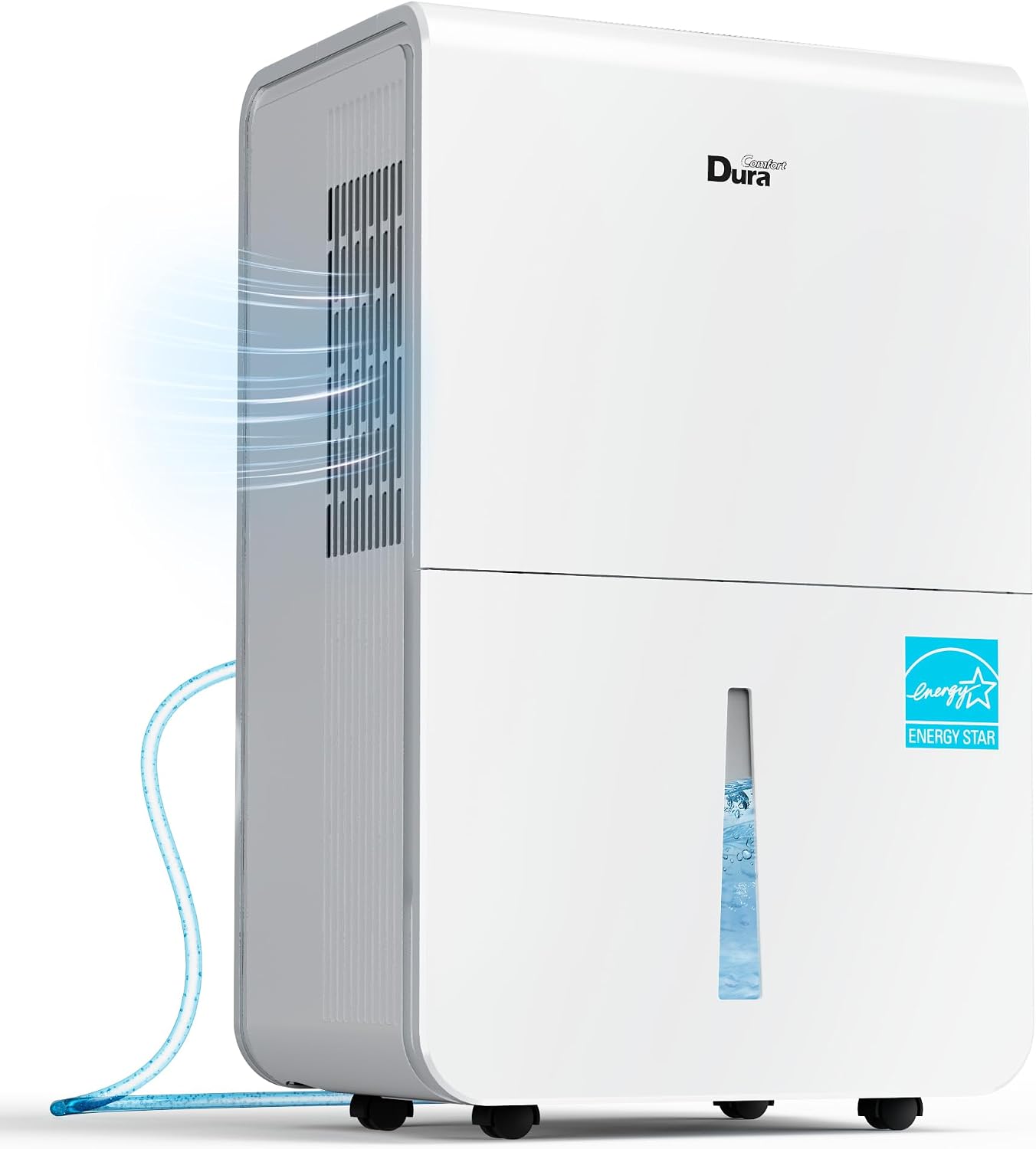
The Frigidaire is the unit I've owned the longest. I bought it two and a half years ago, and it's been running in my back hallway for every summer since. It's the workhorse of the group, and it's the one I recommend when someone wants reliability over features.
 Visit on Amazon →
The problem with the Frigidaire is the noise. It's not terrible, but it's noticeable. The compressor hums at a pitch that carries through the house. My wife calls it "the refrigerator that's having a bad day." In a bedroom, you'll hear it. In a hallway or a living room, it's fine.
Visit on Amazon →
The problem with the Frigidaire is the noise. It's not terrible, but it's noticeable. The compressor hums at a pitch that carries through the house. My wife calls it "the refrigerator that's having a bad day." In a bedroom, you'll hear it. In a hallway or a living room, it's fine.
The tank is the best of the three I tested. The handle is solid, the pour spout works, and it doesn't spill when you carry it to the sink. That matters more than most people think. I've owned units where emptying the tank was a two-hand operation that ended with water on the floor. The Frigidaire is a one-hand job.
In terms of water removal, the Frigidaire pulls about 31 pints in 24 hours at 70% humidity. That's slightly less than the Midea, but it's consistent. It doesn't slow down when the humidity spikes, and it doesn't ice up like some cheaper units I've tested.
The watt draw is the Frigidaire's weakness. It pulls 745 watts, which is nearly double the Midea. At 10 hours a day, that's 7.45 kWh, about $33 a month. Over a four-month summer, that's $132 more than the Midea. That's real money, and it's why I moved the Frigidaire to the hallway and put the Midea in the bedroom.
Here's what I appreciate about the Frigidaire: it's boring. It doesn't have an app, it doesn't have smart features, and it doesn't try to be anything other than a dehumidifier. I've replaced the filter once in two and a half years, and it's still going strong. That kind of dull reliability is worth something.
Choose the Frigidaire if you want a unit that will outlive the warranty and you don't mind paying a bit more in electricity. Choose the Midea if efficiency matters more and you're willing to use a hose.
Pro Breeze Mini
I'm including this unit because a lot of people ask me if a small, cheap unit will handle a room. It won't. I've run the Pro Breeze Mini in my bathroom for a year, and I know exactly what it does and doesn't do.
The quiet is real. Multiple owners say so, and I agree. My bathroom is small, and the Pro Breeze runs without me noticing it. It's also effective in a camper or a motorhome. A guy named T.C. ran one in a 21-foot camper for two and a half years before it died. A reviewer in India has had one for four years. That's real longevity for a small unit.
But the tank design is an absolute disaster. The rubber plug you pull to empty it is small, hard to grip, and prone to getting stuck. One buyer, rickk, had to use a screwdriver to pry it out. Another, Cara, got hers stuck, had to tip the whole unit over to drain it, and thinks the water damage from that process killed the unit's effectiveness.
That's not a minor annoyance. That's a design flaw that can ruin the product.
The energy math is damning. A reviewer named J Dempsey tested it with a watt meter and a bucket, my kind of guy, and found it removed 6 fluid ounces in 24 hours. His 50-pint compressor unit removed the same 6 ounces in 6 minutes. The small unit uses about 20 watts. The big one uses 745. Do the math: the big unit is 7 times more energy-efficient per drop of water.
The price has also gone up. T.C. paid $44 in October 2021. It's now $69. That's a 50% increase in two years. For a unit that's likely to die in 2 to 3 years, that's a harder pill to swallow.
Buy the Pro Breeze for a camper or a closet. Skip it for anything bigger than a bathroom you barely use.
Eva-Dry E-333
 Visit on Amazon →
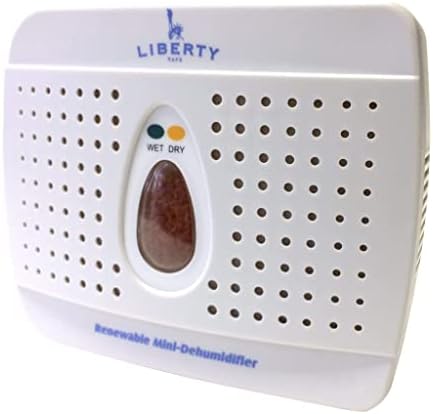
The Eva-Dry is a different animal entirely. It's a desiccant unit, not a compressor unit. It uses silica gel beads that absorb moisture, and when the beads are saturated, you plug the unit in to dry them out. It's not a dehumidifier in the traditional sense, but it's the right answer to a specific question.
Visit on Amazon →
The Eva-Dry is a different animal entirely. It's a desiccant unit, not a compressor unit. It uses silica gel beads that absorb moisture, and when the beads are saturated, you plug the unit in to dry them out. It's not a dehumidifier in the traditional sense, but it's the right answer to a specific question.
I've used the E-333 in my gun safe for two years. It pulls enough moisture to keep paper crisp and metal dry. One reviewer, R. Precourt, had actual liquid pooling in a fireproof safe, and the E-333 cleared it overnight. "Paper was still crisp and dry," he wrote. That's the outcome you want.
But here's the thing: when you plug it in to recharge, it gets hot. Not warm. Hot. One reviewer, Sweet Grace, said she was surprised it didn't burst into flames. That's an exaggeration, but the unit is genuinely uncomfortable to touch after a charge. The UL sticker says mild heat is normal, but I've felt it, and mild is a stretch.
Overcharging damages it. One buyer left theirs plugged in for months because they liked the heat in their bathroom. That kills the desiccant's ability to absorb. Follow the instructions: plug it in for 6 to 8 hours, let the beads turn blue, unplug it. One reviewer got 5 years out of theirs by doing exactly that.
Warranty registration is non-negotiable. If you don't register within 30 days, you're out of luck. The reviews are clear on that.
Buy the Eva-Dry for a safe or a closet. Expect to recharge it every 3 to 4 weeks. Don't overcharge it. Don't expect it to dry a room.
The Pint-Rating Reality Check
Every manufacturer lists a pint rating. Every one of them tests at 80 degrees and 60% relative humidity. That's a mild spring day in Louisiana. In July, when it's 90 degrees and 70% humidity, a unit rated at 50 pints might pull 30. I've weighed it.
The industry standard is a joke, and consumers pay for it. They buy a 50-pint unit, it doesn't pull 50 pints, and they think they got a lemon. They didn't. They got a unit that's honest about its rating the way a used car salesman is honest about a rebuilt title.
My advice: buy a unit rated 50% higher than what you think you need. If you think you need 30 pints, buy a 50. If you think you need 50, buy a 70. You'll still be short, but less short.
For 1000 square feet in a humid climate, you need a 50-pint unit minimum. The Midea Cube is the one I'd buy with my own money. The Frigidaire is the one I'd recommend if you want boring reliability. Both will pull 30-plus pints a day in real humidity, and both will keep your bedroom from smelling like a swamp.
My Honest Bottom Line
After three summers of testing, the Midea Cube is the unit sitting in my bedroom right now. It pulls the most water per watt, the hose drain means I don't fight with a tank every day, and it's held up through a full Louisiana summer.
The Frigidaire sits in the hallway, still working after two and a half years, still loud, still reliable.
The Pro Breeze is in a box in the garage, and the Eva-Dry is in my gun safe where it belongs.
Buy the Midea for a bedroom or living room. Buy the Frigidaire if you want a unit that will outlive your patience. Skip the small units for anything bigger than a closet. And whatever you buy, before you commit, because the prices move more than the humidity does.