I have spent eighteen years as an HVAC tech in New Orleans, and a big part of that work is mold remediation: cutting out drywall, treating studs, and explaining to a homeowner that the machine in the corner never had a chance. A home dehumidifier comparison that only repeats pint ratings is close to useless, because pint ratings are measured in a lab and your bedroom is not a lab. What decides whether a unit actually helps you is the tank, the drain, and whether the compressor is sized for the room it is standing in.
I keep a hygrometer log on my own house, a 1920s shotgun with no central air in the back rooms, and I have run more portable units through Gulf Coast summers than I want to count. The four products below sit at three very different price points: two small tank units in the fifty dollar range, one larger tank model, and a commercial crawl space machine with a built-in pump. Two of them are bedroom appliances. One is a floor appliance. One is real equipment.
Short answer: for a damp bedroom, closet, bathroom, or RV, the 95-ounce unit is the one most people should buy, because tank size is the difference between a machine that runs all night and a machine that quits at 2 a.m. For a crawl space, basement, or a whole damp floor, the ALORAIR Helios MP35 is the only product in this group built for that job.
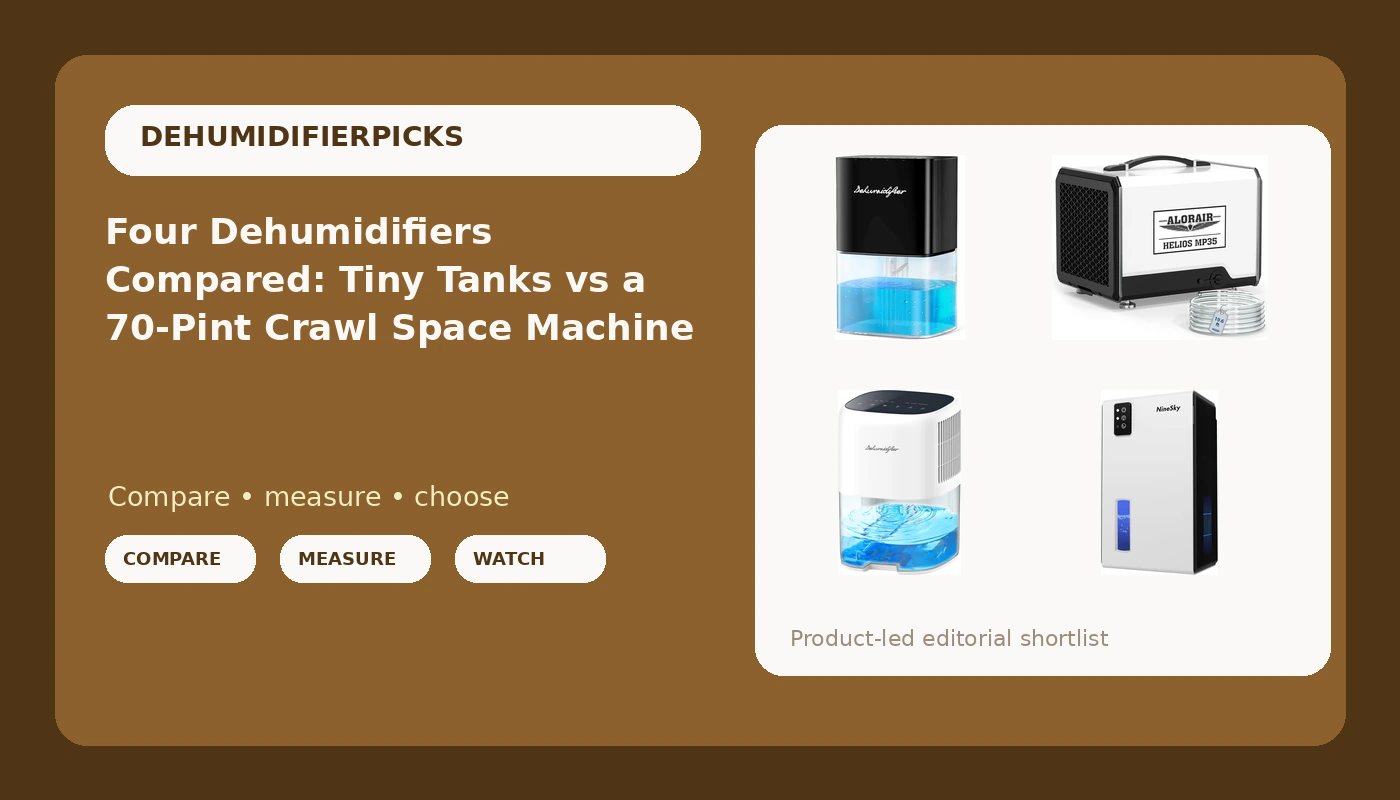
Small Dehumidifier for Home 44OZ Quiet with Auto Off & Defrost 5 Timers 3 modes 10 Color Lights 3 260 Sq.ft Portable Dehumidifiers for Basement Bedroom Bathroom RV Closet
Lowest cost here, defrost cycle for cool rooms, quiet enough to sleep next to
44-ounce tank is the smallest in the group, and 260 square feet is an optimistic number
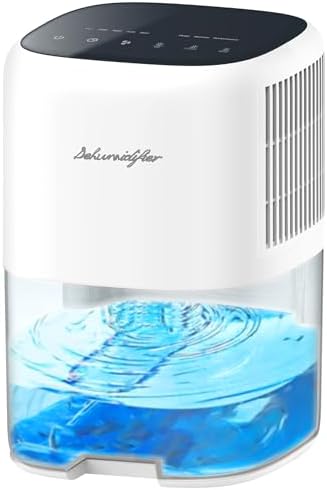
Dehumidifier 58OZ 1657ML Small Dehumidifier for Home Safety Dehumidification 5 Timers 3 Setting Modes Auto Shut Off Protection Adjustable 10 Color Lights Low Noise For Bedroom Bathroom 230 Ft²
Bigger tank than the 44-ounce unit for the same money, timers and auto shutoff are useful in a bathroom
230 square foot claim is smaller than its sibling, and this class of unit still needs daily emptying
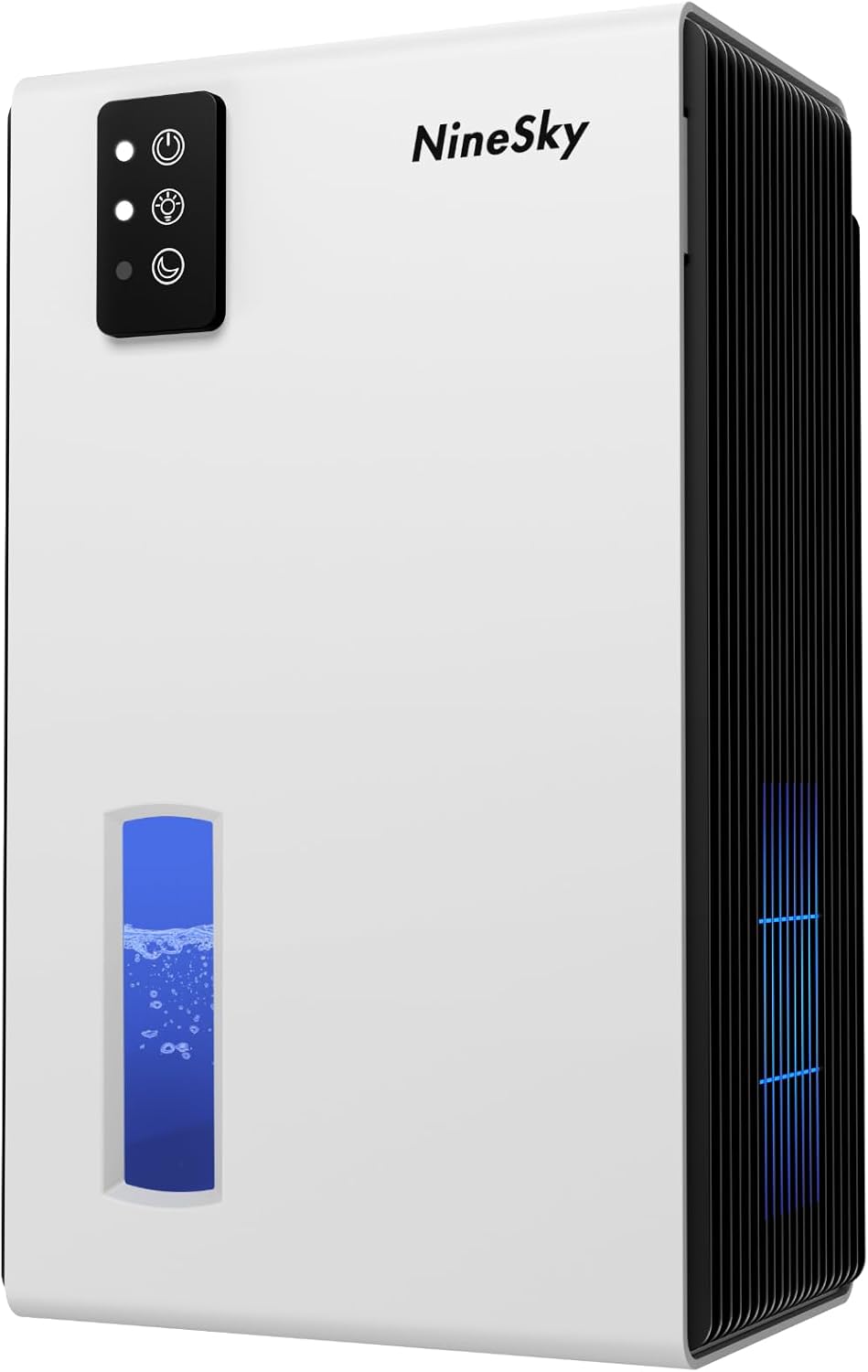
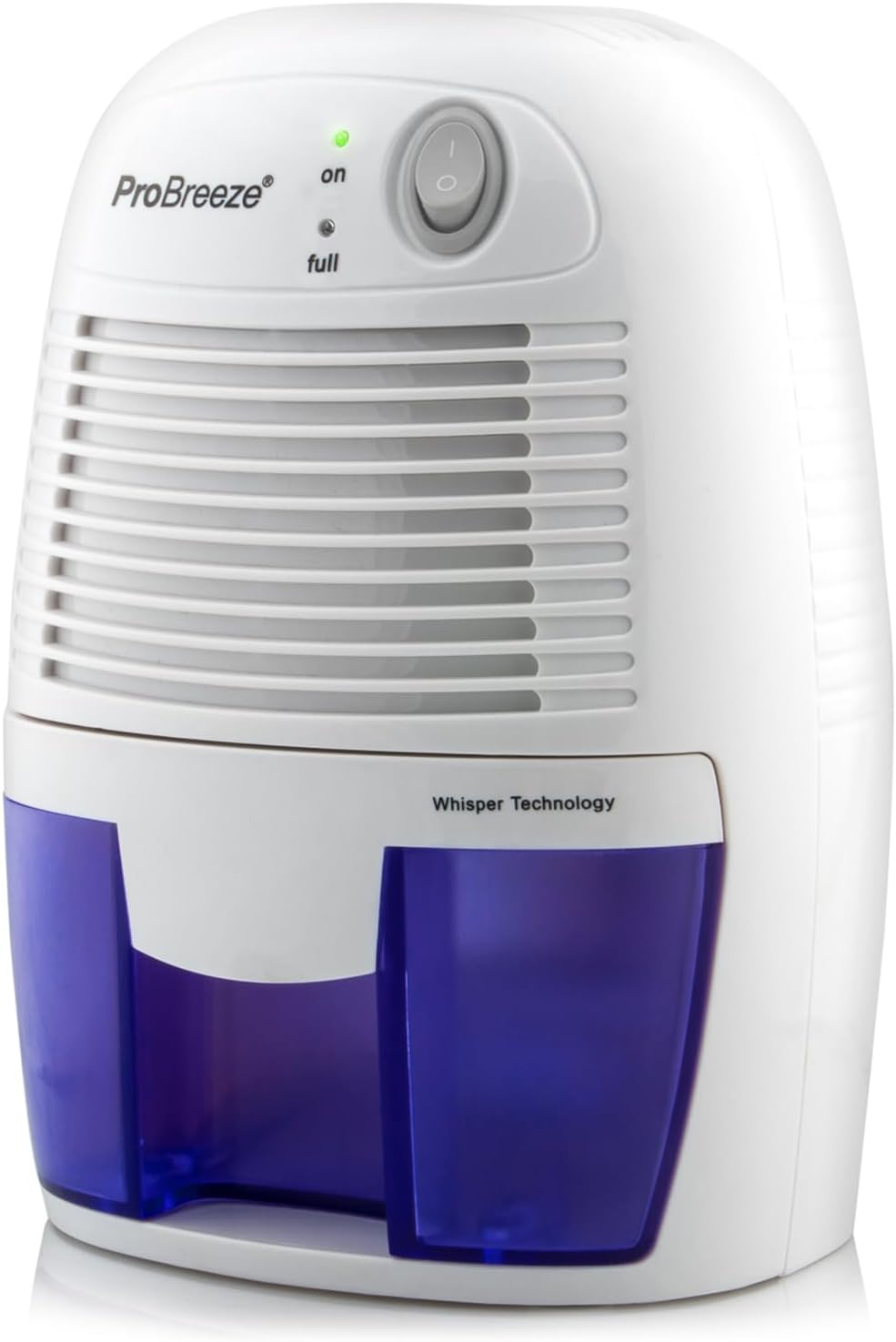
Dehumidifiers for Home, 1000 Sq Ft Dehumidifier with 95oz Tank Auto Shutoff
Largest tank of the portable three, best ratio of tank volume to price, auto shutoff protects the floor
The 1,000 square foot claim is marketing, not engineering, and there is no pump
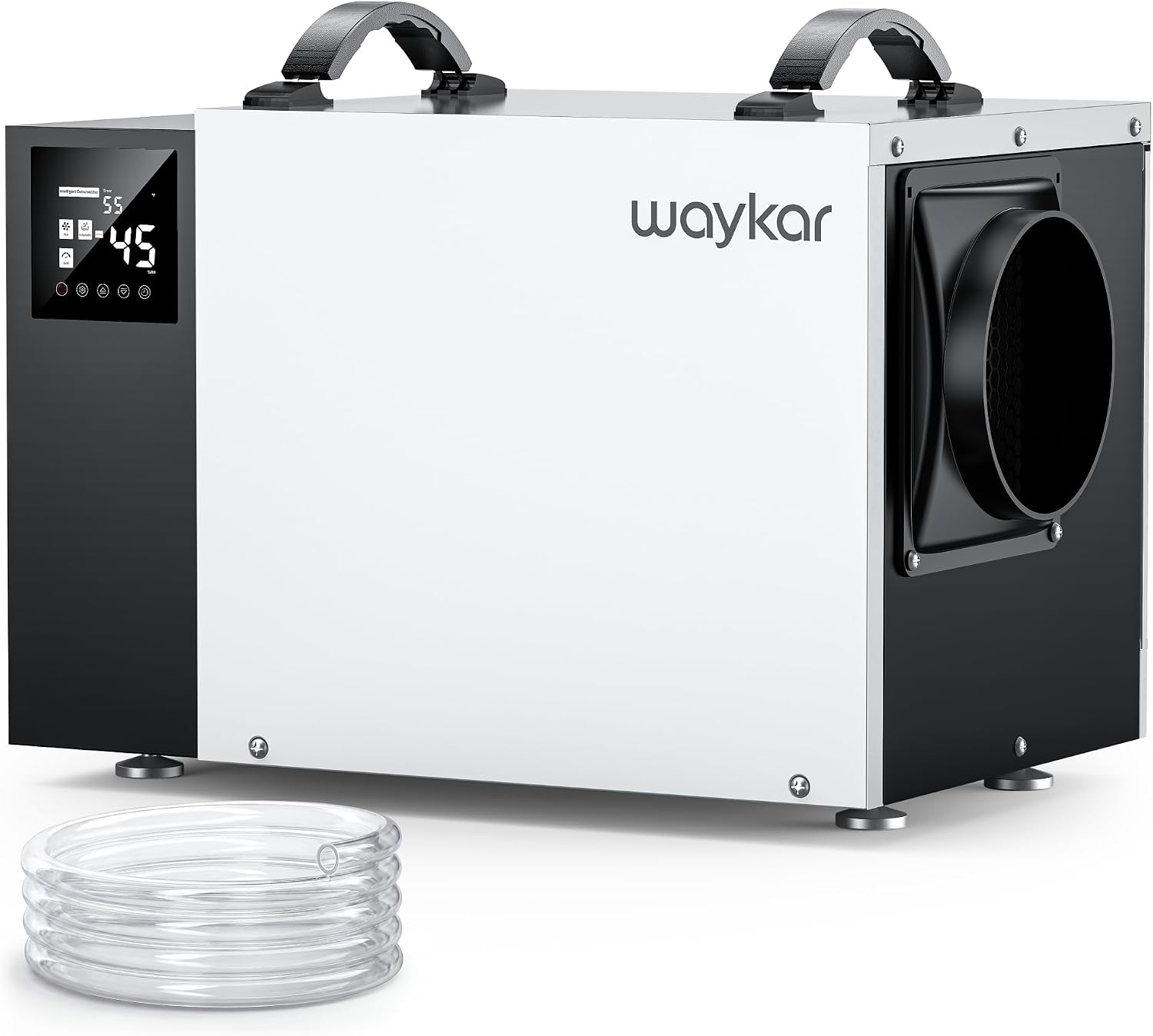
ALORAIR 70 Pints Crawl Space/Commercial Dehumidifier with Pump(Helios MP35)
Real 70-pint compressor, built-in condensate pump, no tank to empty, rated for spaces the others cannot touch
Costs several times what the small units cost, and it is not a bedroom appliance
Prices and availability were captured from Amazon Creators API and may change.
How I judge a dehumidifier
I care about six things, in this order. Tank volume in ounces or pints. Whether there is a drain port or a pump. What the auto shutoff does when the tank fills. How accurate the humidistat is against my hygrometer. What the unit does after a power outage. And what the filter costs to replace, because a thirty dollar filter that needs changing monthly will cost more than the machine inside two years.
Two of those items are the ones nobody shops for. Auto shutoff sounds like a safety feature and it is, but it is also a hard stop. A unit that shuts off at 2 a.m. with a full tank is a unit that has stopped working for the six wettest hours of the night. And restart behavior matters more than people think: I have dealt with units that come back on in fan-only mode after an outage and then sit there moving air for a week while the homeowner assumes it is dehumidifying. Check both before you buy.
One more rule I apply to every listing: cut the pint rating by 30 to 40 percent. Lab ratings are taken in controlled conditions. Real rooms have door gaps, a window that does not seal, and a bathroom exhaust fan pulling in outside air. If you size to the sticker, you will undersize.
The two small tank units
These two are the same idea at the same money, and the difference between them is mostly the tank.
The 44-ounce unit is the entry point. It has a defrost cycle, which matters more than most shoppers realize, because a coil that ices up stops moving water. It runs quiet, it has the same five timers, three modes, and ten color lights as its sibling, and it is rated for 260 square feet. Forty-four ounces is about a third of a gallon, which in a humid Louisiana bedroom is not a full night of work.
The 58-ounce unit, listed at 1657 milliliters, carries roughly a third more water per fill and is rated at 230 square feet. Same timers, same modes, same lights, same auto shutoff protection, and it sits in the same price bracket. If I am choosing between these two on specs alone, I take the bigger tank every single time. Tank volume is the only spec in this class that changes your daily routine, and you will feel the difference on day two, not day two hundred.
What I will say plainly: units in this size class are usually thermoelectric, not compressor driven, and thermoelectric units pull far less water per day than a compressor unit of the same footprint. That is not a defect, it is a category. They are fine for a closet, a bathroom after showers, a gun safe area, or an RV. They are not going to dry out a wet basement, and any listing that implies otherwise is selling you a square footage number rather than a machine.
The 95-ounce unit: the one most people should start with
The 95-ounce model is the sweet spot of this group for a bedroom, a small apartment, or a single damp room. Ninety-five ounces is a little over a half gallon more than the 58-ounce unit, and the auto shutoff is there to protect the floor when it fills.
Ignore the 1,000 square foot claim on the listing. A 95-ounce tank and a 1,000 square foot space do not belong in the same sentence unless that space is already sitting near 40 percent relative humidity. In a genuinely damp thousand square feet, this tank would need emptying more than once a day in July, and no homeowner keeps that up past the first week. Read the claim as "this unit can maintain a large room that is already under control," which is a legitimate job.
Where it wins is routine. A larger tank means fewer trips to the sink, and fewer trips means you actually keep running it. The machines that fail homeowners are rarely the ones that broke. They are the ones that got unplugged in week two because the tank was a chore.
The ALORAIR Helios MP35: the only real machine here
The Helios MP35 is a 70-pint crawl space and commercial dehumidifier with a built-in pump, and it is playing a different sport than the other three.
Seventy pints per day is a compressor rating, and it is the number that matters if you have standing damp under a house. The pump is the feature I would pay for by itself. In a crawl space, gravity usually drains condensate to a low point where it sits and feeds the problem you are trying to solve. A condensate pump pushes that water up and out to a drain, a sump, or outside, which means no tank to empty, no crawl space trips, and no unit that shuts off while you are at work.
Understand the temperature split before you buy one. This is a compressor unit, so it performs best in warm, humid air, which is exactly the crawl space condition in the Gulf South. If you have a cold northern basement in January, a compressor unit loses capacity as the coil temperature drops, and a desiccant unit becomes the better tool. That is a climate decision, not a brand decision.
At several times the price of the small units, this is not an impulse purchase. It is the correct purchase if you have a crawl space, a basement, or a whole floor that stays above 55 percent relative humidity. If that describes your house, the fifty dollar units in this comparison are not a cheaper option. They are a different category that will not solve your problem.
Tank versus hose is the real decision
Here is the rule I give every homeowner. Tank is fine for a bedroom. A hose drain is mandatory for a basement, a crawl space, or anything that runs while you are asleep or at work.
The reasoning is simple. A tank is a container that stops the machine when it fills. If the space needs continuous drying, the tank becomes the weakest part of the system, and you become the pump. I install hose kits about as often as I install units, and the Helios MP35 solves it at the factory with a built-in pump. If you are buying one of the smaller units, check the listing carefully for a continuous drain option before you commit, because on this class of product it is often absent, and adding it after the fact is not always possible.
Compressor versus desiccant, in one paragraph
Compressor units win in warm, humid air. Desiccant units win in cold basements, because they do not depend on a cold coil to condense water and they keep working when temperatures drop into the fifties and below. The Helios MP35 is a compressor machine and it belongs in a warm crawl space. The three small units are room appliances for conditioned living space. If your problem room is cold and damp, none of the compressor logic in this article applies to you, and you should be shopping desiccant instead.
The energy math nobody does
A dehumidifier runs for months, so wattage is a monthly bill, not a spec sheet line. On the units I keep in my own house, I run a watt meter for a week and multiply out to thirty days, then compare that against my electric rate. The gap between a good unit and a bad one is often twenty to thirty dollars a month in a Louisiana summer, which over one season is most of the purchase price of a small unit.
Inverter compressors are the direction this category is heading, and the efficiency difference is measurable rather than marketing. None of the three small units here are in that conversation. The Helios is a commercial-duty compressor and its power draw is proportional to the job it is doing, which is the tradeoff you accept when you buy equipment instead of an appliance.
What I would buy for which room
A bedroom or a home office: the 95-ounce unit. Biggest tank of the portable three, auto shutoff, and it will hold a normal night without you getting up to deal with it.
A bathroom, closet, RV, or a small space you check daily: either the 44-ounce or the 58-ounce unit. Take the 58-ounce one unless the smaller footprint is the deciding factor, because the extra tank volume is free in practical terms.
A crawl space, basement, or whole damp floor: the ALORAIR Helios MP35, and nothing else in this article. Budget for it, and put the money you would have spent on two small units toward the one machine that will actually pull the moisture out.
The trade-offs, named
The small units are cheap, quiet, and easy to live with, and they are limited by physics. Small tanks, no pump, and square footage claims written by a marketing department. They solve a damp room, not a damp house.
The 95-ounce unit is the best balance of tank and price here, and it still needs a drain solution if you want it to run unattended.
The Helios MP35 is the only product in this group I would call equipment, and it is priced like equipment. Buy it for a crawl space or a basement. Do not buy it for a bedroom, because you are paying for a pump and a compressor duty cycle you will never use.
Match the machine to the room. That is the whole decision, and no spec sheet makes it for you.