
Well, is a whole-house dehumidifier just a bigger portable one? I've spent eighteen years as an HVAC tech in south Louisiana, and the last nine of those have been spent testing portable units in my own 1920s shotgun house. I've got a 70-pound lab mix named Boudreaux who supervises every bucket test, and I've pulled enough wet drywall out of this parish to know exactly what happens when you undersize your dehumidification. Here's the blunt truth about drying an entire house.
Related: Best Whole House Dehumidifier
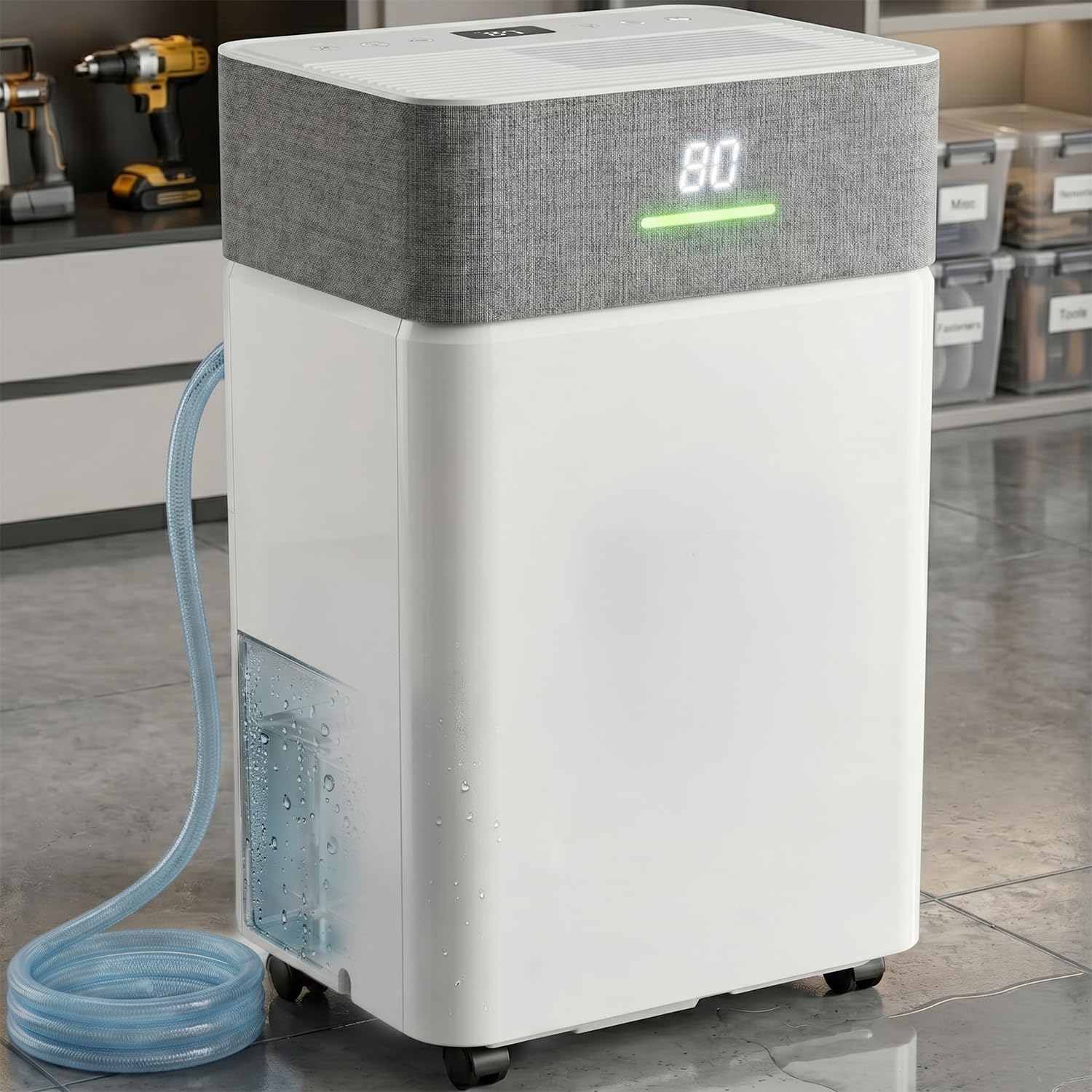
Uthfy 5000Sq.Ft Dehumidifier for Basement with Drain Hose,Large Quiet Smart C...
Quality pick in this category.
Visit on Amazon →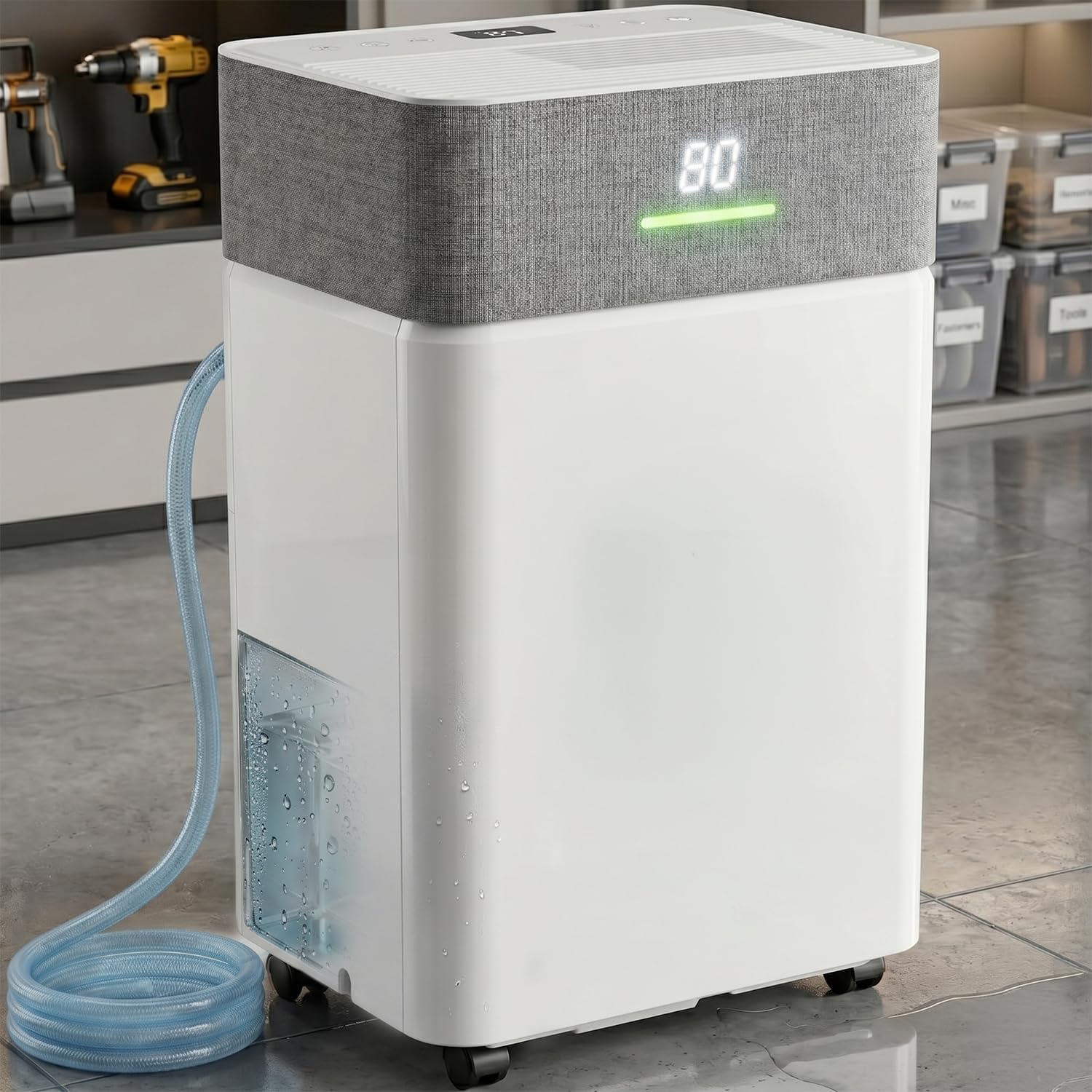
CRAFTSMAN 6 Gallon Pancake Air Compressor, Oil-Free, 150 PSI Kit
Quality pick in this category.
Visit on Amazon →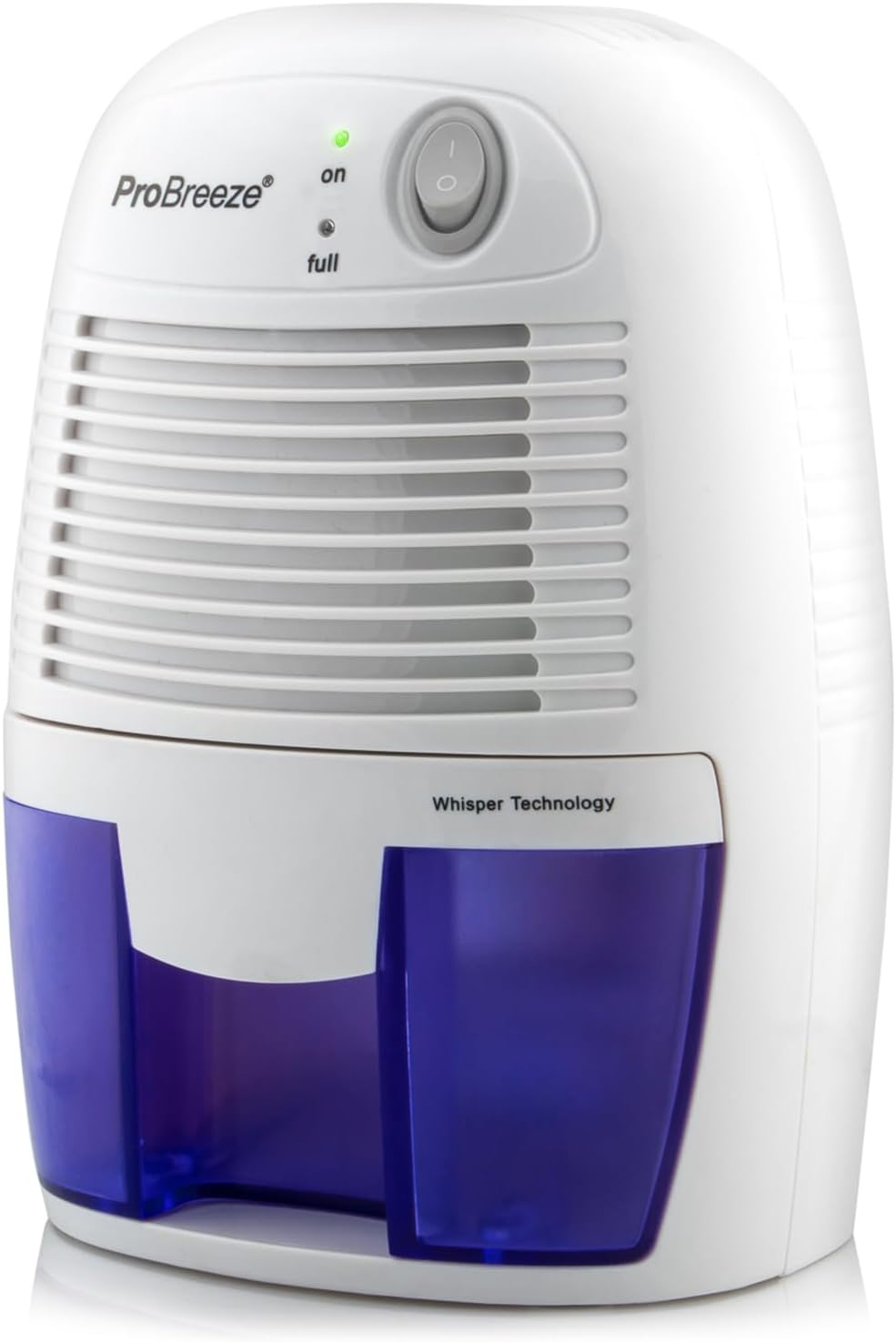
Pro Breeze Electric Mini Dehumidifier for Home (215 sq.ft) 17oz Capacity, Ene...
I've owned the Pro Breeze Mini for about a year now, and I have complicated feelings.
Visit on Amazon →CRAFTSMAN 6 Gallon Pancake Air Compressor, Oil-Free, 150 PSI Kit
The Eva-Dry is not a dehumidifier.
Visit on Amazon →The Pint Rating Is a Fantasy
The industry tests every unit at 80 degrees and 60% humidity. That's a crisp fall day here, not a July afternoon. I've weighed the water. My 50-pint unit pulls maybe 30 pints when it's 90 degrees and 70% humidity. The 30-pint unit pulls 18. The manufacturers know this, and they don't care.
Buy 50% more capacity than you think you need. If you think you need 30 pints, buy a 50. You'll still be short, but less short.
The 50-Pint Compressor Unit (My Bedroom Workhorse)
The biggest problem with any 50-pint unit is the energy bill. Mine draws 745 watts. Run it eight hours a day, and that's about 180 kilowatt-hours a month. At 15 cents a kilowatt-hour, that's $27 a month just to run the thing. I've had customers choke on that number, then spend $40 on a unit that pulls nothing and leaves the mold smell.
But here's the thing. It works. The version I own has a hose drain kit that runs to a floor drain, so I haven't emptied a tank in months. It pulls the clamminess out of the air so my sheets don't feel wet when I get in bed. It keeps the mold smell out of the closet. After two years of running it every day from May through October, it's still going strong.
The noise is a factor. It's not loud, but it's a constant hum. I've learned to sleep with it, but my wife never did. She runs a box fan in the living room to drown it out.
Choose the 50-pint if you're okay with a constant hum and a $27 monthly electric bill. Choose it if you have a drain nearby and you never want to carry a bucket of water again.
The 30-Pint Compressor Unit (Back Hallway)
The 30-pint I own draws about 450 watts, which means it costs about half as much to run. It's quieter than the big unit, and it does fine in a small space. I've got it in the back hallway where the central AC doesn't reach, and it keeps that room from smelling like a swamp.
The problem is the tank. This one doesn't have a hose drain option, so I'm emptying a 2-gallon bucket every other day during peak humidity. That's fine for a hallway, but it would drive me insane in a bedroom I used every day.
One of the buyers who left a review on the big unit said their 30-pint took three days to pull what their 50-pint pulls in one. That matches my bucket test results. The 30-pint is a compromise, and it knows it.
Choose the 30-pint if you've got a small room, a tight budget, and you don't mind the daily empty. Skip it if you want to set and forget.
The Pro Breeze Mini (Bathroom Experiment)
I've owned the Pro Breeze Mini for about a year now, and I have complicated feelings. It's quiet, which is its main selling point. Multiple owners say the same thing, and I agree. You can run it in a bedroom and barely notice it.
But the tank design is a disaster. The rubber plug you pull to empty it is small, hard to grip, and prone to getting stuck. One buyer named rickk had to use a screwdriver to pry it out. I've had to tip the whole unit over to drain it, which is a great way to spill water everywhere.
The energy math is the real killer. A guy named J Dempsey tested it with a watt meter and a bucket, my kind of guy. It removed 6 fluid ounces in 24 hours. My 50-pint unit removed the same amount in 6 minutes. The Mini uses 20 watts; the big unit uses 745. Do the math and the big unit is 7 times more energy-efficient per drop of water.
That's why I say this unit is for campers and studio apartments only. In a bathroom you actually use, it's a waste of electricity. The price has also crept up from $44 to $69 in two years. That's not inflation, that's a market that knows people are desperate.
Choose the Pro Breeze if you've got a camper or a tiny studio and quiet matters more than performance. Skip it if you want to actually dry a room.
The Eva-Dry E-333 (Gun Safe)
The Eva-Dry is not a dehumidifier. It's a desiccant that absorbs moisture and needs to be plugged in to dry out. I've got one in my gun safe, and it does exactly what I need it to do. My paper stays crisp, my metal stays dry, and I don't have to run a hose into a safe.
Here's the problem. When you recharge it, it gets hot. Not warm. Hot. One buyer said they were surprised it didn't burst into flames, which is an exaggeration, but I've felt it and "mild heat" is a stretch. The UL sticker says it's normal, but I keep mine on a concrete floor when it charges.
Overcharging damages it. One buyer left theirs plugged in for months because they liked the heat in their bathroom, and it wrecked the desiccant's ability to absorb. Follow the instructions. Plug it in for 6 to 8 hours, let the beads turn blue, unplug it. One reviewer got 5 years out of theirs by doing exactly that.
The warranty registration is a trap. You have 30 days to register it, or you're out of luck. I've seen buyers learn that the hard way.
Choose the Eva-Dry if you've got a safe, a closet, or a document cabinet. Skip it if you want to dry a room. It won't, and you'll be back to the wet-dog smell in a week.
The Rechargeable vs. Compressor Divide
Here's what nobody tells you. There are two completely different technologies sold under the same name. The Eva-Dry is a desiccant unit that uses silica gel beads. The Pro Breeze is a compressor unit that uses a refrigerant coil. They're both called dehumidifiers, but they're as different as a sponge and a pump.
Desiccant units are great for small, enclosed spaces where you don't want to run a hose. They're silent and use almost no electricity. But they can't keep up with a real room, and they get hot when recharging.
Compressor units are the workhorses. They pull real water, they run continuously, and they're the only thing that'll keep a damp bedroom from smelling like a swamp. But they're louder, they use more power, and the cheap ones have cheap tanks and cheap electronics that fail.
I've used both. I own both. Most people need a compressor unit, even if they think they don't.
The Economics of Whole-House Dehumidification
I don't track prices day to day, so I won't pretend to know next week's. But I know the math on running a portable unit versus a whole-house system.
A 50-pint portable runs about $27 a month in electricity. A whole-house unit installed by a professional runs $1,500 to $3,000, but it's tied into your HVAC system and uses less energy per pint of water pulled. If you're running a portable 24/7 for six months a year, that's about $160 a year in electricity. The whole-house unit might pay for itself in 10 years if you factor in the installation.
But most people don't have $3,000 to drop on humidity control. They've got a damp bedroom and a mold smell. For them, a 50-pint portable with a hose drain is the right answer. It works, it's affordable, and it doesn't require a contractor.
My Honest Bottom Line
If you've got a damp room, buy a 50-pint compressor unit with a hose drain kit. Expect to pay $150 to $250 and run it during the day. Empty the hose into a drain or a bucket. If you've got a safe or a closet, buy the Eva-Dry and recharge it every three weeks. Don't buy the Pro Breeze for a room, and don't buy a desiccant unit for a whole house. That's the truth, and I've got a bucket of water that says I can prove it.