
Related: Best Dehumidifier for a Bedroom That Actually Sleeps Quiet
I have pulled moldy drywall out of more Louisiana homes than I care to count. Eighteen years of HVAC work, and the pattern never changes: a musty back room, a smell nobody can place, and a homeowner who bought the wrong machine because the box promised 4,500 square feet.
So let me say the thing I say at every service call. A basement dehumidifier with drain hose is the only configuration that survives a real Gulf Coast summer. Tank-only units belong in bedrooms and closets. If you are fighting a basement, a crawlspace, or an entire floor, you want a hose, and you want a pint rating that is honest about what it can pull.
The four units below are what I keep coming back to between 21 and 120 pints. The way I evaluate any machine is the same: a hygrometer in the room, a watt meter on the plug, and a bucket on a scale so I know what a unit actually pulled instead of what the sticker claims. That last part is where most buying advice falls apart.
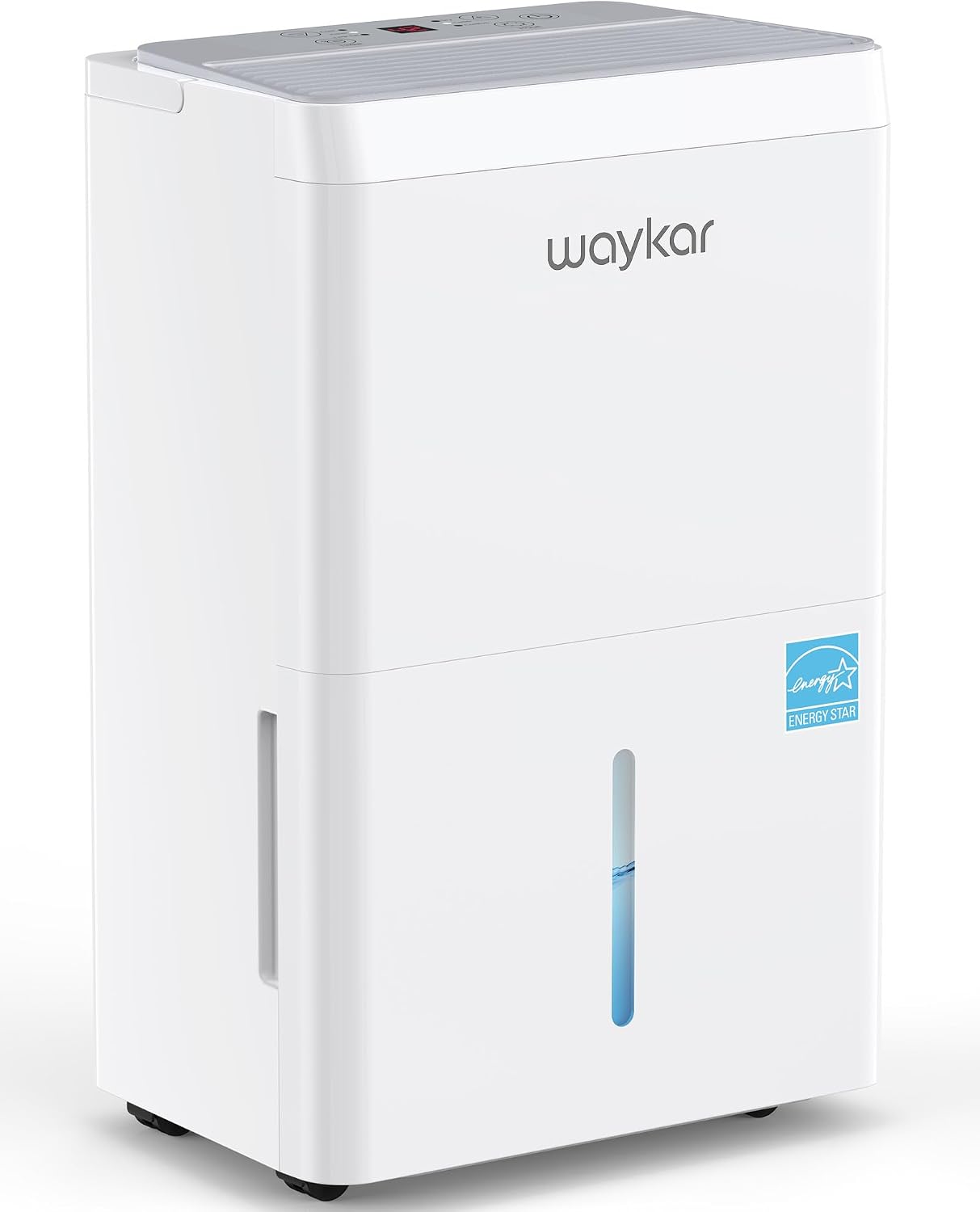
Best Overall: Waykar 120 Pint Energy Star
This is the machine for a whole basement, and it is what I recommend when someone tells me the smell is everywhere and not just in one room. A 120 pint per day rating at this size is in the range where the compressor is built for continuous work rather than for a closet.
The two things that matter here are the drain hose and the tank, and this unit ships with both. That combination is what separates a real whole-floor machine from a bedroom appliance. You run the hose to a floor drain or a condensate pump in July and August, and you never touch the tank. In the shoulder months, when the humidity drops and you do not want a hose snaking across the floor, you use the tank and empty it when it fills.
Energy Star matters more than people give it credit for. A dehumidifier is a compressor and a fan running for weeks at a time. On a watt meter, the gap between a cheap unit and an efficient one is a monthly bill line, not a rounding error. This is the unit I would put in a damp 2,000 to 3,000 square foot basement and let run.
The 40 dB claim is a lab number, the same as every other 40 dB claim on the shelf. It will be quieter than a window AC and louder than a refrigerator. In a basement that is irrelevant. In a bedroom it is not.
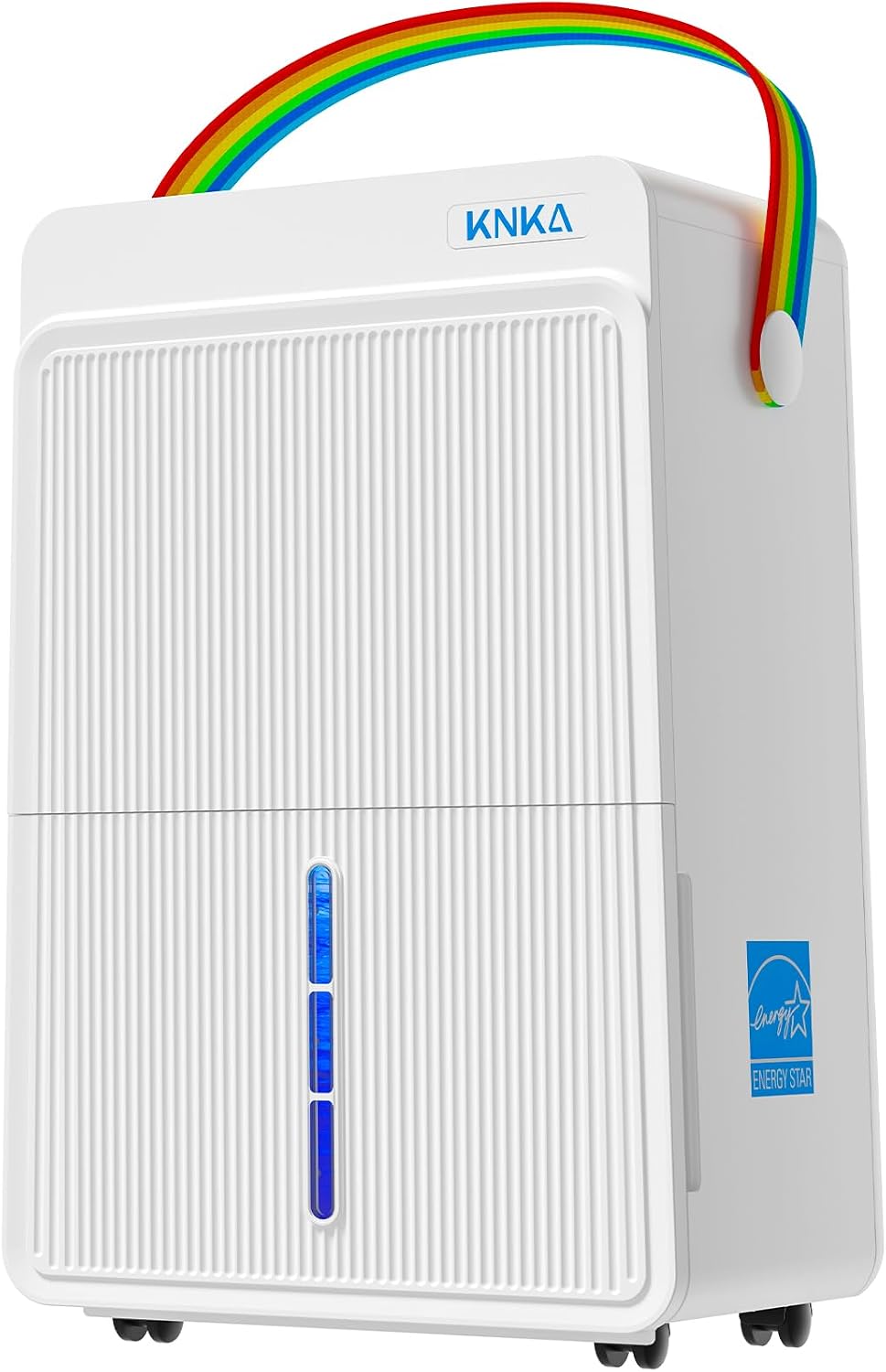
Best Value: 34 Pint with 6.56 ft Drain Hose
This is the unit I point people toward when they have one damp room and a tight budget. Thirty-four pints is not a whole-house number, and anyone who tells you it is has never put a scale under the bucket. For a single room with a door on it, it is enough.
What I like is that the hose is in the box. What I want you to do is measure the run to your drain before you commit, because 6.56 feet is shorter than it sounds. If the floor drain is across the room, you are buying an extension or a condensate pump on top of the unit.
The 2.5 liter tank is the honest weakness. In a room sitting at 70 percent humidity, a tank that size fills faster than most people expect. The auto shut off keeps it from overflowing, and it also stops the machine at 3 a.m. in the worst month of the year. If you are not running the hose, this is a daily emptying job. That is the trade for the price.
Smart humidity control here means a humidistat and a target setting. Treat the built-in number as a suggestion and check it against a real hygrometer. I have never met a built-in humidistat that was not off by several points, and this class of unit is no exception.
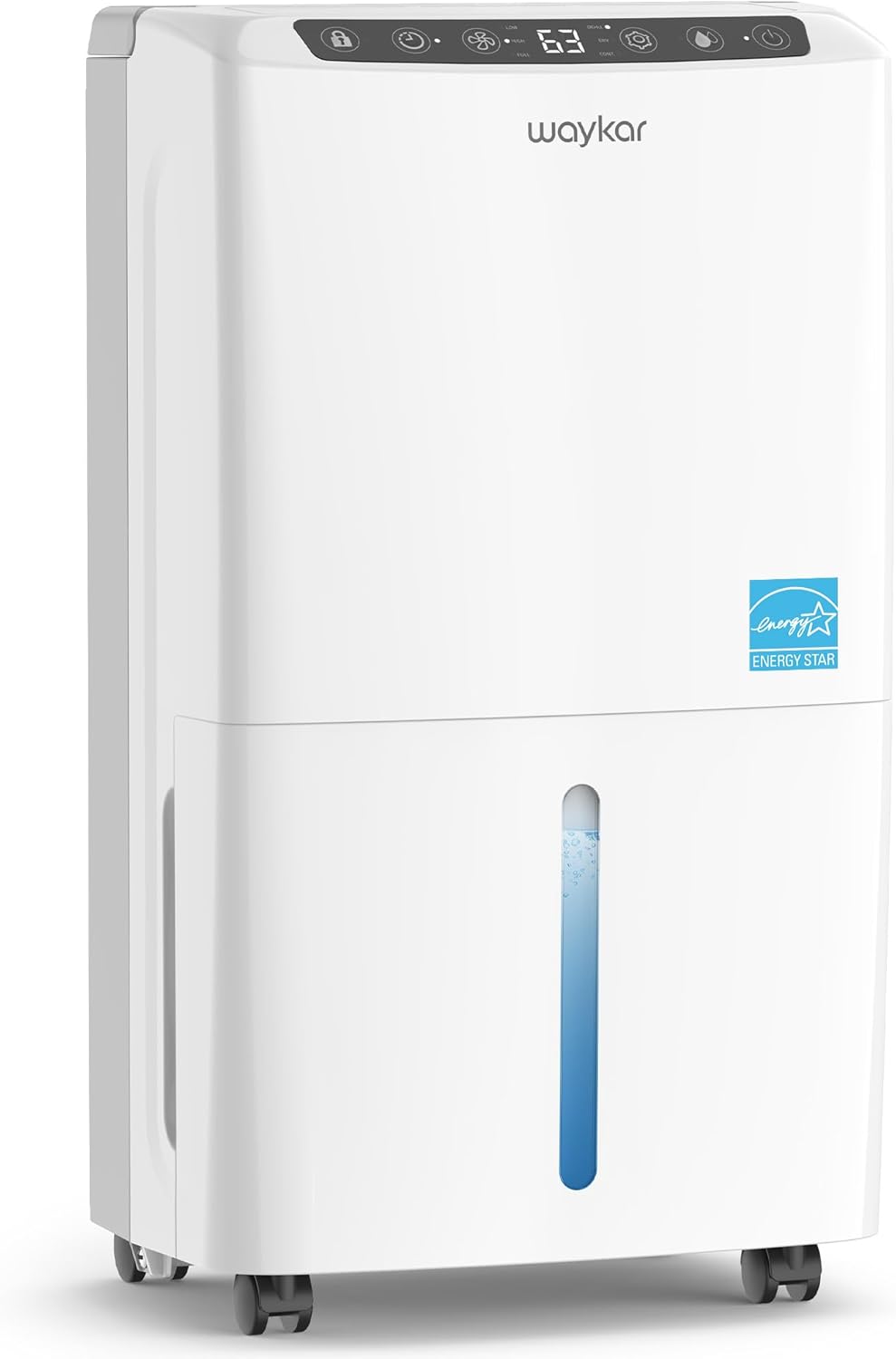
Best for Bedrooms: KNKA 34 Pint
Same pint class as the unit above, slightly higher price, and a cleaner footprint. White cabinet, hose included, and a 2,500 square foot claim that I would cut by a third in a real house with door gaps and a leaky sill.
For a bedroom, the deciding factor is not pints. It is fan noise at night and whether the machine restarts in the same mode after a power blip. That second one is a pet peeve of mine. Units that come back up in fan only after an outage are worse than useless, because you think it is working and it is just moving air around the room.
Where this one earns its place is a bedroom or a small finished basement room where you want the hose option for the wet months and the tank for the dry ones. It is not a whole-basement machine and it does not pretend to be, which is more than I can say for a lot of the boxes on the shelf.
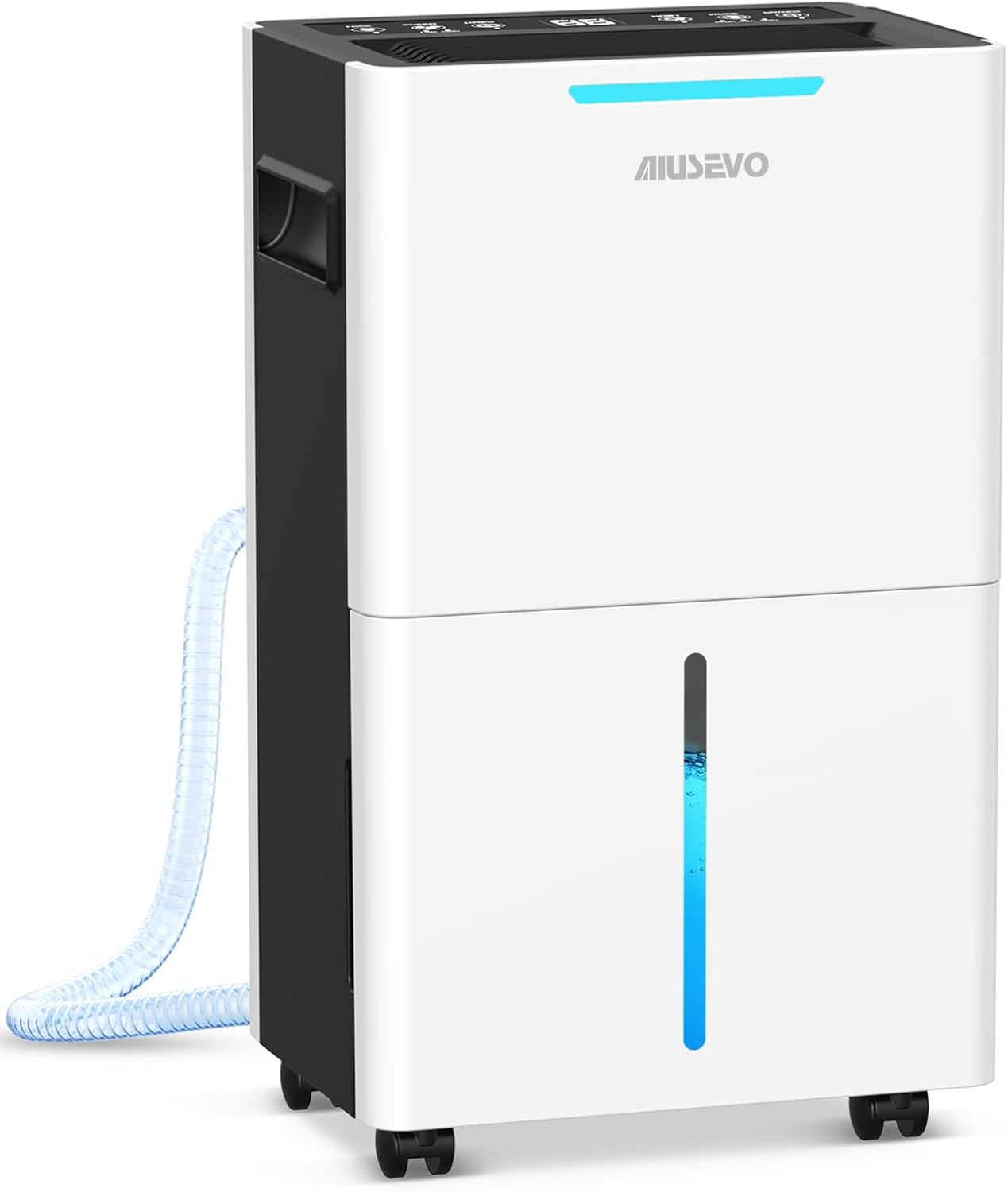
Best for Small Rooms: 21 Pint with Drain Hose
The 21 pint unit is the smallest machine in this group, and it is the one I would put in a closet, a laundry room, a bathroom that never dries out, or a small basement office. The 1,600 square foot claim is optimistic for an open space, but for a closed room it is in the right neighborhood.
It has the hose, which is the whole point. A 21 pint machine without a drain is a chore. With a drain, it is a set-and-forget appliance for a small, sealed room. That is the entire argument for buying this one over a cheaper tank-only box.
Do not put this in an open basement and expect it to fix the house. It will run constantly, pull what it can, and never catch up, because the volume of air it is fighting is bigger than the machine. Size the unit to the room, not to the square footage on the listing.
How I test a dehumidifier
The routine does not change. A calibrated hygrometer goes in the room, a watt meter goes on the plug, and the condensate goes into a bucket on a scale. Weighing the water is the only way to know what a unit actually pulled, because the tank markings lie and the pint rating is measured under conditions your house will never match.
I run every unit the same way for a full week. I log the room humidity before and after, I log the kilowatt hours on the meter, and I do the monthly cost math at Louisiana rates. Then I do the thing reviewers skip: I check how the machine behaves when it is not being watched. Does it restart in the right mode after a power cut? Does the humidistat agree with the hygrometer, or is it off by 15 percent? Does the tank slosh when you carry it up the stairs?
Those are the failures that matter. A unit that pulls water beautifully for six days and then quits at 3 a.m. on day seven because the tank filled and the auto shut off kicked in is a unit that failed, even though the spec sheet says otherwise.
What the numbers actually mean
Pints per day is a lab number. It is measured at a specific temperature and a specific relative humidity, and in a real house with real door gaps you should cut the rating by 30 to 40 percent. That is not a knock on any brand. It is how the test works. A 34 pint unit in a real Gulf Coast bedroom behaves like a 20 to 24 pint unit, and a 120 pint unit behaves like something in the 70s. Plan around that and you will buy the right size the first time.
The temperature split matters as much as the pints, and almost nobody mentions it. Compressor units, which is everything on this list, win in warm, humid air. They are exactly what you want in a Louisiana summer. In a cold basement below about 60 degrees, a compressor starts to frost up and lose efficiency, and that is where a desiccant unit earns its money. If your basement runs cold year round, that is a different shopping trip.
Energy use is a bill, not a spec. A dehumidifier running continuously draws real power, and the difference between an efficient compressor and a cheap one shows up every month. That is why the Energy Star rating on the big Waykar is worth paying attention to, and it is why I keep a watt meter in the truck.
Tank size is the spec I care about most after the pints. A small tank means the machine stops when you are asleep. A hose drain means it does not. If you take one thing from this guide, take that.
The comparison table
| Unit | Rated capacity | Coverage claim | Water management | Best for |
|---|---|---|---|---|
 Visit on Amazon → Visit on Amazon →Waykar 120 Pint Energy Star |
120 pints/day | 6,000 sq ft | Hose and tank | Whole basement, continuous duty |
 Visit on Amazon → Visit on Amazon →34 Pint with 6.56 ft Hose |
34 pints/day | 2,441 sq ft | 6.56 ft hose, 2.5 L tank | One damp room on a budget |
 Visit on Amazon → Visit on Amazon →KNKA 34 Pint |
34 pints/day | 2,500 sq ft | Hose and tank | Bedrooms and finished rooms |
 Visit on Amazon → Visit on Amazon →21 Pint with Drain Hose |
21 pints/day | 1,600 sq ft | Hose drain | Closets, laundry, small offices |
Should you buy the Waykar 120 Pint?
Yes, if you are drying a whole basement or an entire damp floor. It is the most expensive unit here and the only one I would trust on a large open footprint, because the compressor is sized for continuous work and it ships with both a hose and a tank. Energy Star is the part that pays you back every month.
It is also the unit most likely to be overkill. If your problem is one bedroom, you are buying capacity you will never use.
Should you buy the 34 pint units?
It depends on the room, and it depends on your tolerance for emptying a tank. For a single bedroom or a small finished room, 34 pints is the right size and the price is right. For an open basement, it is not enough, and no amount of smart humidity control changes the physics.
Between the two 34 pint machines, the decision comes down to hose length and cabinet. Measure your run to the drain first. If it is short, either one works. If it is long, budget for an extension or a condensate pump before you buy.
Should you buy the 21 pint unit?
Yes, for a closet, a laundry room, a bathroom, or a small basement office. It has the hose, which is the only reason to pick it over a cheaper tank-only box. Do not buy it for an open basement. Size the machine to the room, run the hose, and check the humidistat against a real hygrometer once a month. That is the whole job.