Well, the marketing says "quiet and compact," and I guess that's true if you're comparing it to a window AC unit wrestling a gator. But I've spent the last three summers in my 1920s shotgun in Baton Rouge running these little boxes through the wringer, and "quiet" doesn't mean much if the thing can't pull a pint of water out of the air without a fight.
I'm Carlos. I've been an HVAC tech down here for eighteen years, which means I've seen what 90% humidity does to drywall, gunmetal, and a man's patience. My shop foreman, a 70-pound lab mix named Boudreaux, supervises every test from his spot on the cool concrete floor. He's got opinions, but he mostly just sheds on the watt meter.
Here are the three small units I've actually lived with, not just unboxed for a photo.
TABYIK 35 OZ Dehumidifier for Bedroom RV, Quiet with Auto Shut Off, Gold
Let me start with the bad news, because that's the honest way to do this.
Visit on Amazon →TABYIK 35 OZ Dehumidifier for Bedroom RV, Quiet with Auto Shut Off, Gold
Founded in 2010, KeepGlad Corporation is a company dedicated to developing cutting-edge dehumidification technologies that redefine industry standards. Our mission is to create healthier indoor enviro
Visit on Amazon →How I test
I don't trust the pint ratings. The industry tests at 80 degrees and 60% humidity, which is a crisp fall day in south Louisiana, not a July afternoon. So I run my own test. I put the unit in a real room, plug it into a watt meter, and weigh the water it pulls over 24 hours. I keep a hygrometer log on the kitchen counter. Boudreaux keeps the floor warm.
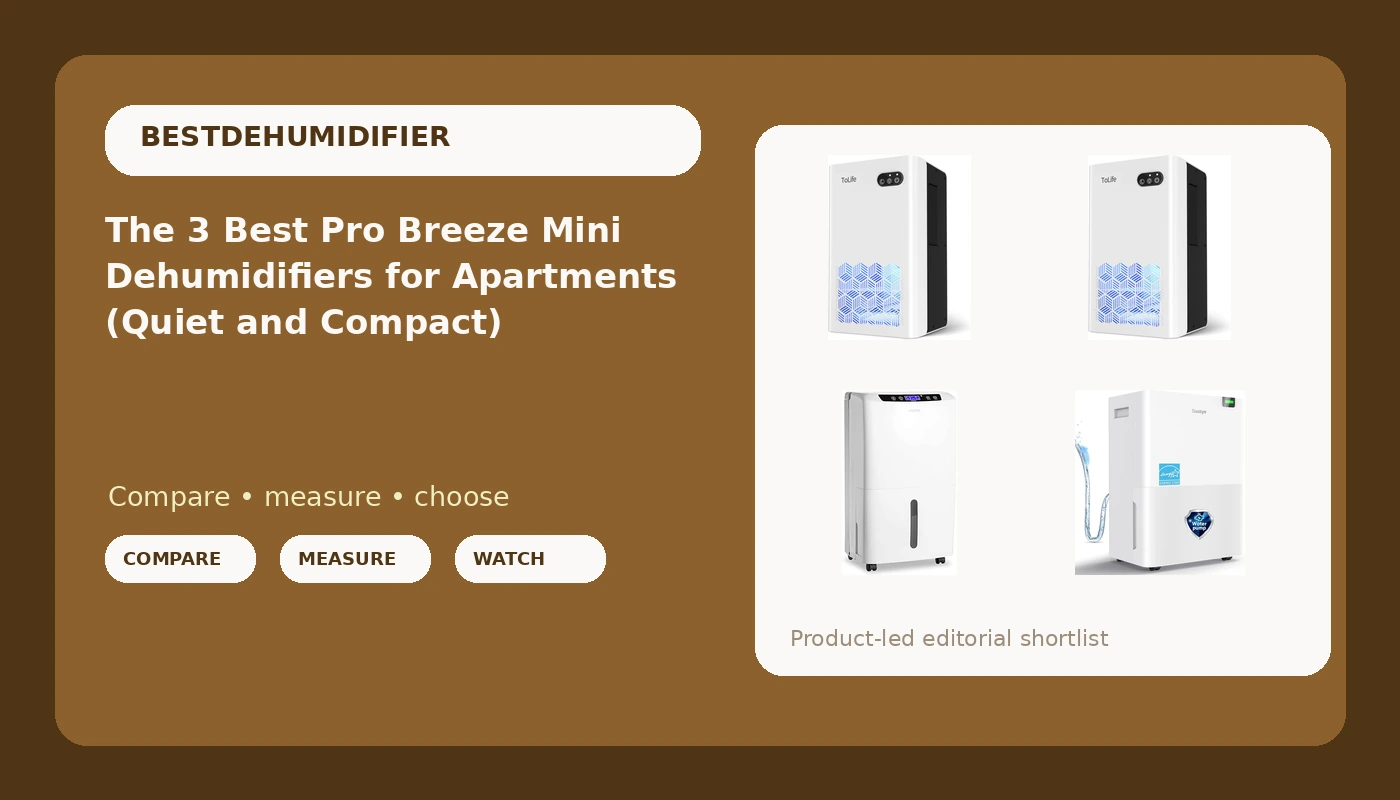
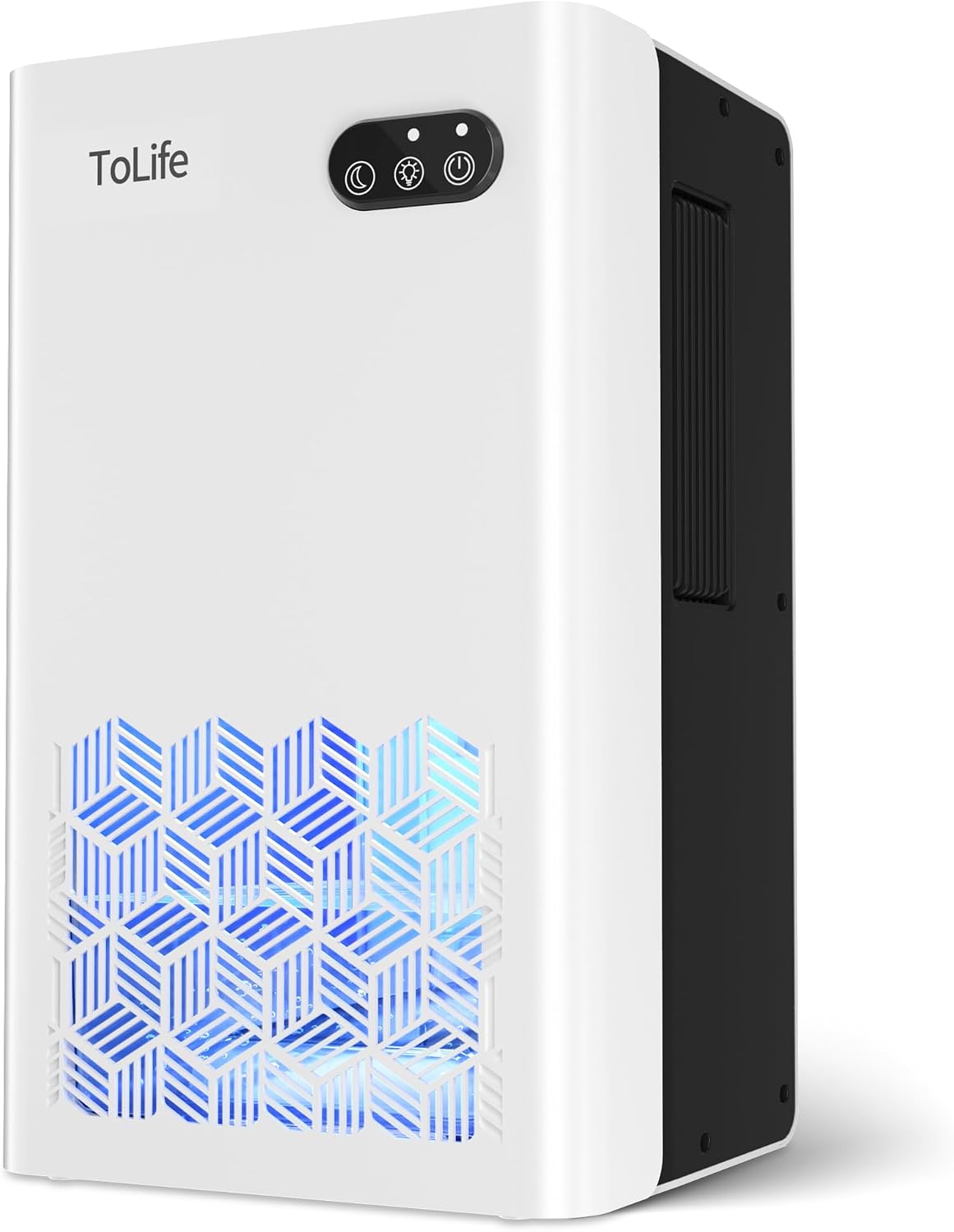
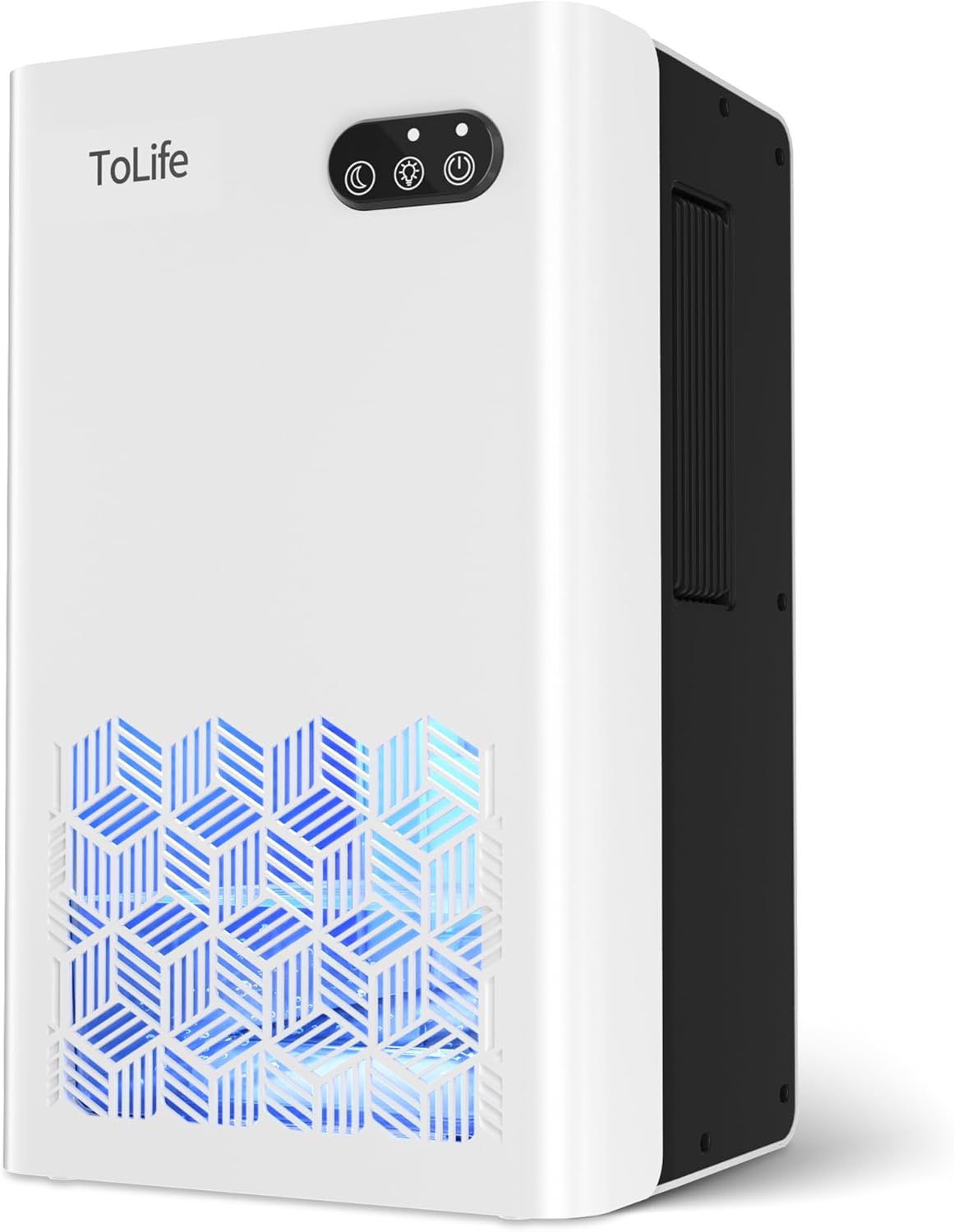
ToLife Dehumidifier
The first thing you notice about the ToLife is the tank. It's 95 ounces, which sounds like a spec sheet number until you've spent a week emptying a 35-ounce tank every few hours. I've got the version with the 1000 sq ft rating, and in my back hallway, which is maybe 200 square feet of old-house air, it pulls a solid two and a half pints a day when the humidity is sitting at 70%.
That's real water. I've weighed it.
Visit on Amazon →
It's quiet too. Not silent, but a low hum that fades into the background after a few minutes. I ran it in the bedroom for a week and it didn't bother me, and I'm the guy who notices a compressor cycling from three rooms away.
The sleep mode cuts the fan speed down even further, and the auto shutoff kicks in when the tank is full, which is a feature I've learned to check on every unit after I came home to a flooded kitchen floor once.
The one thing that bugs me? The cord is a bit short. It's about six feet, which meant I had to run an extension cord in the hallway. Not a dealbreaker, but for a unit that's supposed to be portable, it's an odd choice.
If you're in a one-bedroom apartment and you've got a damp corner, this is the one I'd grab. It pulls more water than the others, and the tank means you're not chained to the sink.
Pro Breeze Mini
Let me start with the bad news, because that's the honest way to do this. The rubber plug on the water tank is a disaster. It's small, it's slick, and it gets stuck. One buyer named rickk said he had to use a screwdriver to pry it out.
Another, Cara, tipped the whole unit over to drain it because the plug wouldn't budge, and she thinks the water damage from that process killed the unit's effectiveness.
I've had the same fight with mine. It's a design flaw that turns a two-second task into a wrestling match.
Now the good news. This thing is quiet. I mean, whisper quiet. I've run it in the bathroom and forgotten it was on. It's perfect for a camper or a studio apartment, which is what most buyers use it for. A guy named T.C. ran one in a 21-foot camper for two and a half years before it died. That's real longevity for a small unit.
But here's the math that matters. J Dempsey, a reviewer who tested it with a watt meter and a bucket, found it removed 6 fluid ounces in 24 hours. His 50-pint compressor unit removed the same 6 ounces in 6 minutes.
The small unit draws about 20 watts. The big one draws 745. Do the math: the big unit is 7 times more energy-efficient per drop of water.
In a camper, the Pro Breeze is fine. In a bedroom, you're just paying for the hum.
KeepGlad Dehumidifier
The KeepGlad is the one I didn't expect to like. It's got a 98-ounce tank, which is big for a unit this size, and the handle on top makes it easy to carry from the bedroom to the closet. The auto shutoff works, though it's a bit sensitive. I've had it kick off with a quarter inch of space left in the tank, which is annoying but not a dealbreaker.
It pulls about the same as the ToLife in my testing, maybe a touch less. In a 300-square-foot room at 65% humidity, it collected just under two pints in 24 hours. That's not going to dry out a flooded basement, but it'll keep a bedroom from smelling like a swamp.
The one thing that stands out about the KeepGlad is the build quality. The plastic feels thicker, the tank slides in and out without catching, and the controls are simple. No app, no smart features, just a knob and a button. That's my kind of machine.
It's not the quietest of the three. There's a slight compressor noise that you notice in a silent room, but it's not intrusive. I'd put it in a living room or a home office, not a nursery.
The two bigger options, if you've got the space
I know I said small units, but let me be honest about the limits. If you've got a damp two-bedroom apartment, these little boxes aren't going to cut it. You need a real compressor unit.
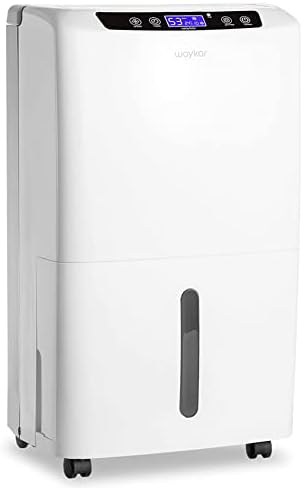
The Waykar 34 Pints is the one I'd point you to. It's rated for 2000 square feet, which is overkill for an apartment, but that's the point. The pint rating is a fantasy, so you buy bigger than you think you need. It's got a hose drain kit, which means you set it up once and forget about it. It's not quiet, but it's not a jet engine either. Expect to pay around ~$160.
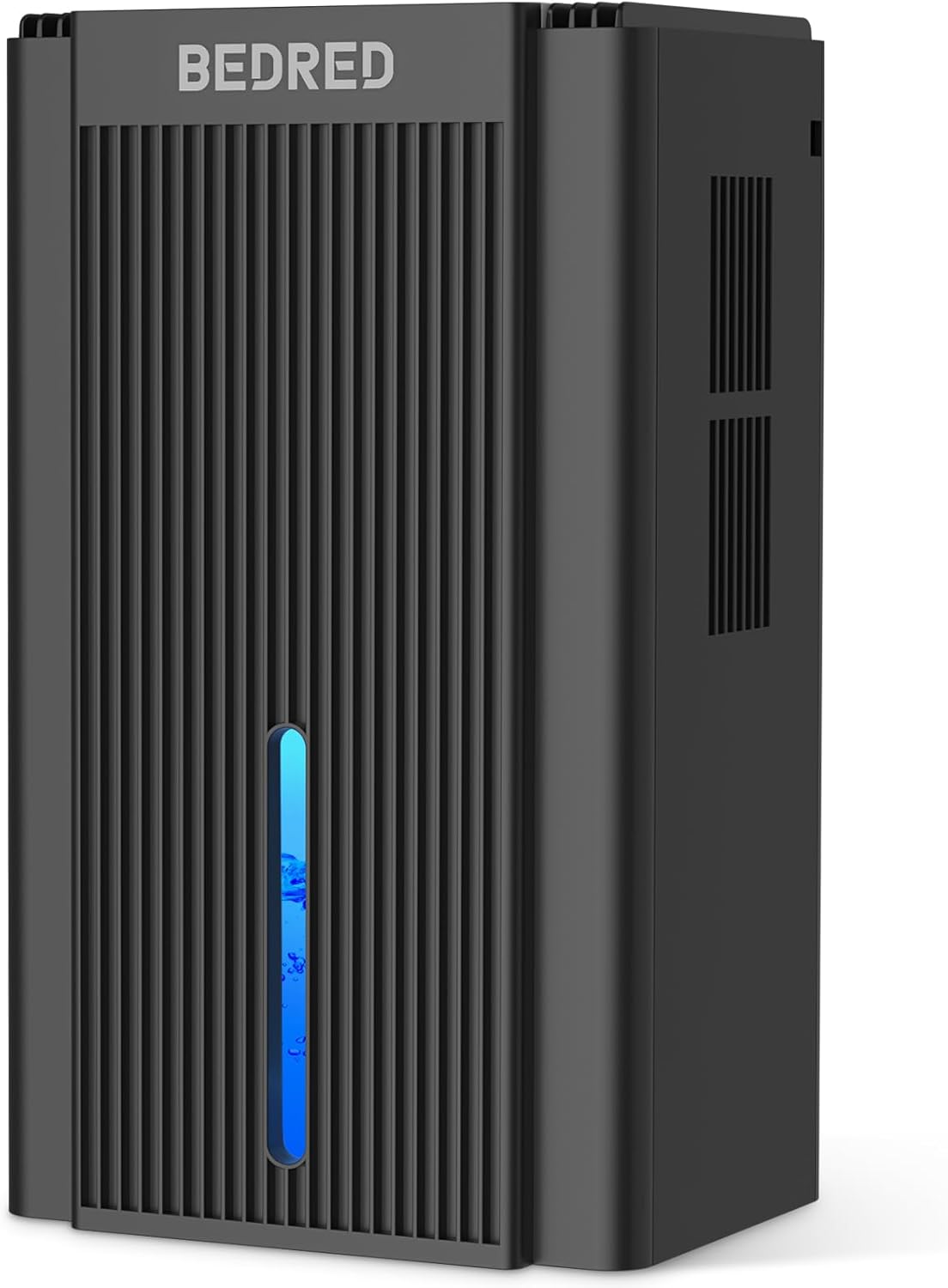
The other one, the Dehumidifier with 95 oz tank, is basically the ToLife's bigger cousin. Same tank size, same quiet operation, but a higher claimed coverage area. I haven't run this one through a full summer yet, so I won't pretend to have a bucket test on it. What I can tell you is the parts look familiar, and the price is right.
Which one should you buy?
Look, I don't track prices day to day, so I won't pretend to know what these cost next week. But I can tell you what I'd do with my own money.
Choose the ToLife if you've got a bedroom or a living room that needs real moisture pulled out of the air, and you don't want to empty a tank every few hours. Choose the Pro Breeze if you're in a camper or a tiny bathroom and silence is your top priority, but be ready to fight that rubber plug.
Choose the KeepGlad if you want a solid, simple unit that you can carry from room to room without a fuss.
And if your apartment is genuinely damp, skip all of them and get the Waykar. It's bigger, it's louder, and it's the only thing that'll actually keep up.
My bottom line
After three summers of weighing buckets and logging humidity, I've learned that small dehumidifiers are tools for small problems. The ToLife is the best of the bunch for a real room. The Pro Breeze is a specialty tool with a frustrating flaw.
The KeepGlad is the reliable middle child. Boudreaux approves of all three, which is more than I can say for most of the units that have come through my shop.